Emotional Storytelling 101: Mastering Campaigns with Impact

The Heartbeat of Emotional Storytelling Campaigns
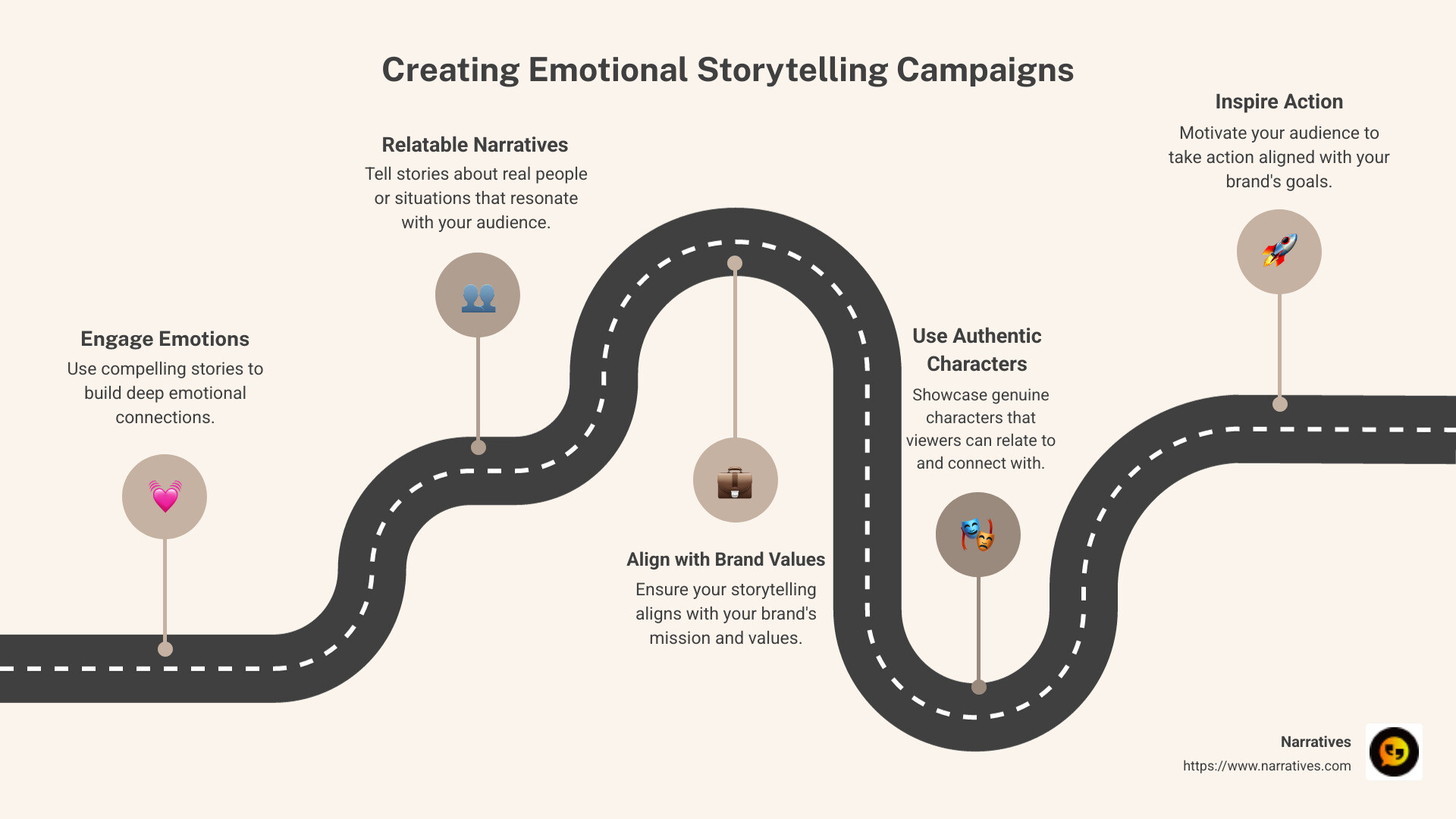
Emotional storytelling campaigns are the secret sauce for cutting through the noise and forming genuine connections with your audience. They harness the power of human emotion, changing viewers into believers and turning casual observers into passionate advocates. Right from the start, it's crucial to grasp the basics:
- Tug at Heartstrings: Engage emotions to build unforgettable bonds.
- Relatable Narratives: Use stories about real people or situations.
- Brand Values: Stay true to your mission and values.
Storytelling is woven into our DNA; it shapes how we share, connect, and remember. A well-told story doesn’t just communicate facts but creates an experience. It’s in this emotional space that brands can truly resonate with their audience, tapping into values that align with empathy, inspiration, and social change.
From a three-legged dog overcoming challenges in Freshpet's ad to Manchester City highlighting Georgia Stanway's triumph in sports, emotionally-driven narratives captivate us. They show us not just a brand's promises but their purpose, creating lasting impressions beyond traditional advertising.
Whether you're a non-profit or a brand with a mission, using the power of storytelling is key to amplifying your message. Accept emotions, authenticity, and a clear narrative to lift your brand—and inspire action.
The Power of Emotional Storytelling
Emotional branding isn't just a buzzword—it's the art of creating deep connections between your brand and your audience. At its core, it involves tapping into human emotions to make your brand unforgettable. When done right, it transforms your brand from a mere logo into a meaningful part of your audience's life.
Why Emotional Branding Matters
People remember how you make them feel. Emotional branding leverages this by engaging feelings like joy, nostalgia, or empathy. For instance, Nike's "Just Do It" campaign isn't just about shoes—it's about empowerment and overcoming challenges. This approach goes beyond selling products; it sells a lifestyle and a set of values.
Consumer Engagement Through Emotion
Engaging consumers is more than just getting their attention—it's about keeping it. Emotional storytelling campaigns do just that by creating narratives that resonate on a personal level. When a story reflects the audience's own experiences or aspirations, it encourages them to share and interact with the brand.
Consider Guinness' "Made of More" campaign, which showcases stories of perseverance and community. These narratives don't just advertise a drink; they celebrate human spirit and resilience, prompting viewers to engage and share these stories within their own networks.
The Role of Narrative Marketing
Narrative marketing is about crafting a compelling story that aligns with your brand's mission. It's not just about the product—it's about the journey, the challenges, and the triumphs. By using conflict and resolution, brands create stories that are relatable and memorable.
For example, Coca-Cola often uses ads that focus on human connections and shared experiences. These stories are not just about a refreshing drink; they're about moments of happiness and togetherness, which are powerful emotional triggers.
Key Takeaways
- Emotion First: Prioritize emotional connections over product features.
- Authenticity: Be genuine in your storytelling to foster trust.
- Relatability: Use scenarios and characters that resonate with your audience.
By focusing on emotional branding, consumer engagement, and narrative marketing, brands can create campaigns that not only capture attention but also foster loyalty and advocacy. Accept the power of storytelling to transform your brand into something truly meaningful.

Emotional Storytelling Campaigns: Key Elements
Creating effective emotional storytelling campaigns requires more than just a good story. It's about connecting deeply with your audience by focusing on three key elements: authenticity, emotional triggers, and brand values.
Authenticity: The Heart of the Story
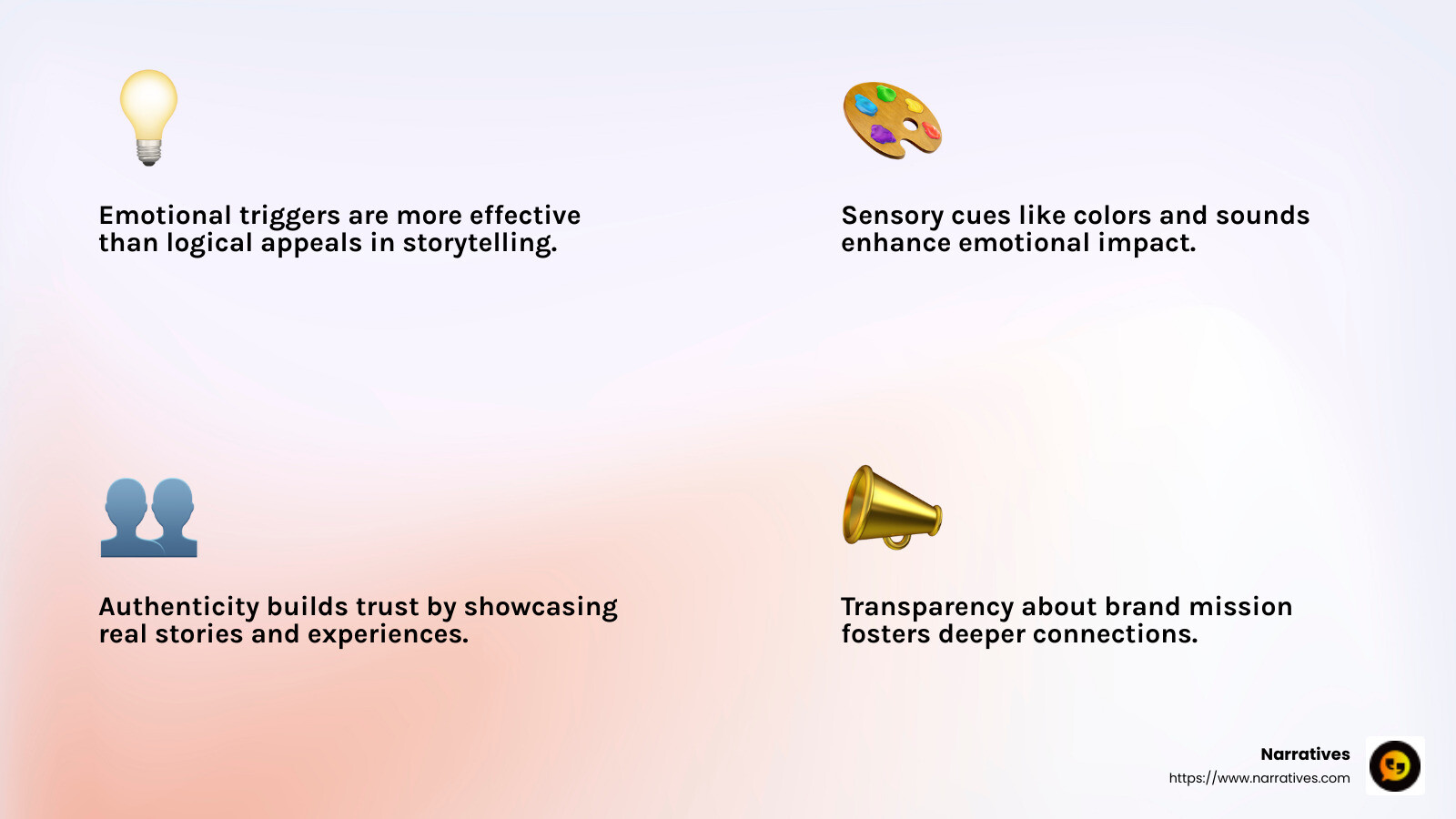
Authenticity is crucial. Your audience can sense when a story is genuine or just a marketing ploy. Authentic stories build trust and foster a real connection with consumers. For example, Purdue University's marketing strategy focuses on understanding their students' needs, creating content that resonates deeply. This approach not only engages but also builds lasting relationships.
- Be Genuine: Share real stories and experiences.
- Transparency: Be open about your brand’s mission and challenges.
Emotional Triggers: Stirring Deep Feelings
Understanding and utilizing emotional triggers is essential. Humans are wired to respond to emotions before logic, making emotional triggers a powerful tool in storytelling. Brands like Apple and Nike excel at this by crafting messages that evoke feelings of creativity and empowerment. These emotions linger, creating a lasting impression.
- Identify Triggers: Determine which emotions resonate most with your audience.
- Use Sensory Cues: Colors, sounds, and visuals can improve emotional impact.
Brand Values: Aligning with Your Audience
Your brand values should be at the core of your storytelling. They define what your brand stands for and help differentiate you from competitors. Aligning your stories with these values ensures consistency and reinforces your brand identity. Salesforce's "The Ecopreneurs" campaign is a great example, showcasing their commitment to sustainability and innovation.
- Define Core Values: Clearly articulate what your brand stands for.
- Consistency: Ensure every story aligns with these values.
By focusing on authenticity, emotional triggers, and brand values, brands can craft emotional storytelling campaigns that resonate deeply, foster trust, and inspire action. These elements transform a simple narrative into a powerful tool for connection and engagement.
Top 5 Emotional Storytelling Campaigns
In this section, we'll explore some standout emotional storytelling campaigns that have effectively engaged audiences and made a lasting impact. These campaigns highlight how brands can forge deep connections through authenticity, ethical impact, and personalized experiences.
Narratives' Journey to Connection
Narratives, a content agency, focuses on emotional engagement by working with non-profits to highlight underrepresented voices. Their storytelling approach emphasizes human connection and empathy, making each narrative feel personal and impactful. By showcasing real stories of community champions, Narratives creates a bridge between audiences and the causes they support.
Ethical Impact Stories
Sustainability and ethical branding are more than just buzzwords; they are essential components of modern storytelling. Campaigns like Salesforce's "The Ecopreneurs" not only promote environmental initiatives but also align with the brand’s values of innovation and sustainability. By focusing on climate-action entrepreneurs, Salesforce connects with audiences who prioritize ethical impact, reinforcing their commitment to positive change.
Building Community Bonds
Building strong community bonds is at the heart of many successful campaigns. Heineken's "The Closer" campaign, for instance, taps into the universal desire for work-life balance. By promoting a device that shuts down work applications when a beer is opened, Heineken encourages people to spend more time with loved ones. This campaign resonates globally, as it speaks to the shared human experience of seeking connection and balance.
Celebrating Real Beauty
Authenticity in storytelling is crucial for creating social impact. Dove's "Real Beauty" campaign has long championed this by featuring real people and challenging traditional beauty standards. Their "reverse selfie" ad highlights the impact of social media on self-image, encouraging audiences to accept authenticity. This approach not only resonates with viewers but also reinforces Dove’s commitment to genuine representation.
Personalized Storytelling Experiences
Personalization is key to audience engagement. H&M's immersive digital fashion experience on Roblox demonstrates how brands can connect with diverse audiences through custom content. By allowing users to explore their digital fashion identities, H&M engages both young and older customers in a playful, personalized way. This interactive approach fosters a deeper connection with the brand, as it speaks directly to individual interests and experiences.
These examples illustrate how emotional storytelling campaigns can effectively engage audiences by focusing on authenticity, ethical impact, community bonds, and personalization. Each campaign demonstrates the power of storytelling in building lasting connections and driving meaningful engagement.
How to Create Emotional Storytelling Campaigns
Creating emotional storytelling campaigns requires a deep understanding of your audience, consistent narratives, and engaging multimedia content. Let's break down these elements to help you craft stories that resonate and stick.
Audience Understanding
To connect emotionally, you first need to know who you're talking to. Understanding your audience means diving into their values, pain points, and aspirations.
- Conduct Surveys and Interviews: Collect insights directly from your audience to understand what matters to them.
- Create Personas: Develop detailed audience personas that reflect your audience's demographics, interests, and challenges.
- Analyze Behavior: Use data analytics to observe how your audience interacts with your content across different platforms.
Narrative Consistency
A consistent narrative is key to maintaining trust and engagement. Your brand's story should align with its values and mission, offering a clear and relatable message.
- Define Your Core Message: What is the primary message you want your audience to take away? Make sure it aligns with your brand values.
- Use a Story Arc: Employ a classic storytelling structure with a beginning, middle, and end. This helps in creating a memorable and engaging story.
- Stay True to Your Brand: Ensure that every piece of content reflects your brand’s identity and mission, reinforcing your message consistently.
Multimedia Content
Incorporating various forms of media can improve the emotional impact of your storytelling.
- Visuals: Use images and videos to create an immersive experience. High-quality visuals can evoke emotions and make your story more relatable.
- Audio Elements: Music and sound effects can amplify emotional resonance. Choose audio that complements your narrative and improves the mood.
- Interactive Content: Engage your audience with interactive elements like polls, quizzes, or virtual experiences. This not only captivates but also involves them in the storytelling process.
By focusing on audience understanding, narrative consistency, and multimedia content, you can craft emotional storytelling campaigns that not only capture attention but also foster lasting connections.
Next, we'll address some frequently asked questions about emotional storytelling campaigns to further deepen your understanding and application of these strategies.
Frequently Asked Questions about Emotional Storytelling Campaigns
What makes a storytelling campaign emotional?
An emotional storytelling campaign taps into the feelings and experiences that resonate deeply with its audience. It often starts with identifying emotional triggers—those moments or elements in a story that evoke strong feelings like joy, empathy, or nostalgia.
Relatable Characters and Scenarios: People connect with stories that reflect their own experiences. Using characters that your audience can see themselves in makes the story more impactful.
Conflict and Resolution: Every great story has a problem and a solution. This structure not only keeps the audience engaged but also highlights the brand as a part of the solution.
Authenticity: Genuine stories build trust. Audiences can sense when a story is authentic, making them more likely to form an emotional connection with the brand.
How can non-profits use storytelling effectively?
Non-profits have a unique opportunity to leverage storytelling by focusing on impact stories and community engagement. These elements can drive emotional connections and highlight the organization's mission.
Highlight Real-Life Impact: Share stories of how your organization has made a difference. This not only showcases your work but also inspires others to get involved.
Engage the Community: Create stories that involve the community you serve. This could mean featuring testimonials from those who have benefited from your work or showcasing community events.
Use Multimedia: Use videos, images, and audio to tell your stories. These tools can create a more immersive experience, making the emotional impact stronger.
Why is emotional storytelling important in marketing?
Emotional storytelling plays a crucial role in building brand loyalty and consumer trust. When a brand consistently tells stories that resonate on an emotional level, it creates lasting relationships with its audience.
Fosters Brand Loyalty: Emotional connections often translate to loyalty. When consumers feel emotionally connected to a brand, they are more likely to become repeat customers.
Builds Trust: Authentic stories build credibility. When consumers trust a brand, they are more likely to engage and advocate for it.
Improves Consumer Engagement: Emotional storytelling can significantly increase engagement rates. When a story resonates, people are more likely to share it, comment on it, and remember it.
By understanding these elements, brands and non-profits alike can harness the power of emotional storytelling to connect with their audiences in meaningful ways.
Next, let's explore how these principles apply in real-world scenarios with some top emotional storytelling campaigns.
Conclusion
Where content is abundant but attention is scarce, Narratives stands out by mastering the art of non-profit storytelling. Our approach is not just about sharing stories—it's about creating a profound social impact that resonates with audiences and inspires action.
Narratives has carved a niche by focusing on elevating underrepresented voices. We partner with non-profits and purpose-driven organizations to craft emotionally resonant video and multimedia content. This powerful storytelling not only highlights the incredible work these organizations do but also builds trust and increases visibility.
The Power of Stories
Stories have the unique ability to connect us on a human level. They break down barriers and foster understanding. For non-profits, storytelling isn't just a marketing tool—it's a way to showcase their mission and the real-world impact they have on communities.
Inspiring Action: By telling stories that highlight the challenges and triumphs of those they serve, non-profits can inspire people to take action. Whether it's through donations, volunteering, or advocacy, a compelling story can be a catalyst for change.
Building Trust: Authentic storytelling builds credibility. When audiences see genuine stories of impact, they are more likely to trust and support the organization.
Creating a Community: Stories create a sense of belonging. When people see themselves in the stories told by non-profits, they feel connected to the cause and the community.
Our Commitment to Social Impact
At Narratives, we believe in the power of storytelling to drive social change. Our commitment is to help non-profits tell their stories in a way that not only informs but also inspires. By focusing on community-driven storytelling and leveraging multimedia content, we aim to make a lasting impact on both the organizations we work with and the communities they serve.
In conclusion, emotional storytelling is more than just a marketing strategy—it's a powerful tool for creating connections, fostering understanding, and driving social change. At Narratives, we are proud to be at the forefront of this movement, helping non-profits share their impact stories with the world.


.avif)