Storytelling as a Bridge: Engaging Communities Effectively
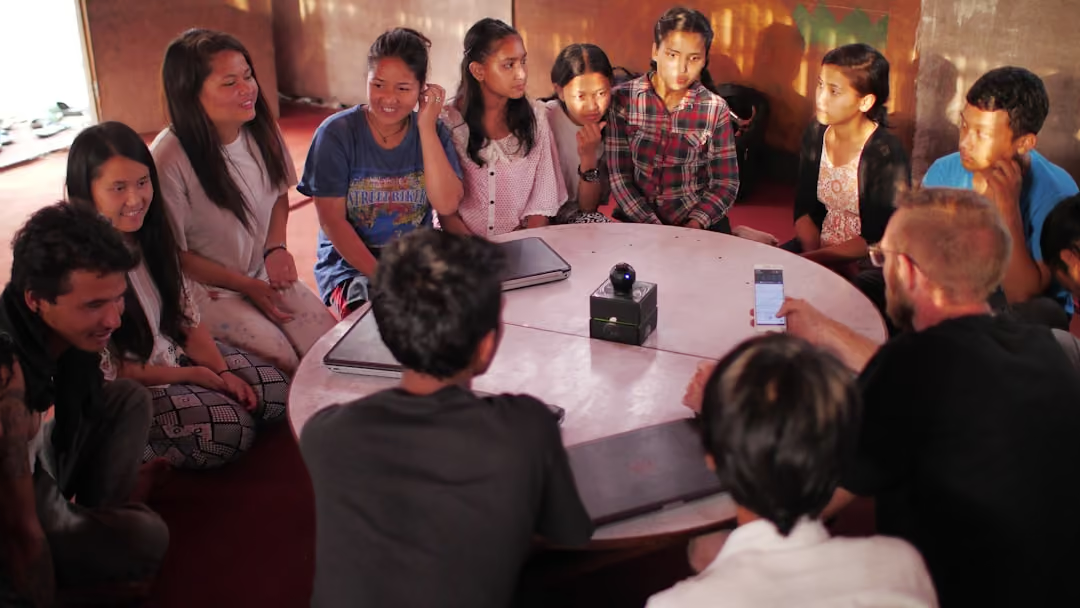
Engaging community through storytelling is about more than just telling tales—it's about creating connections. It brings people closer, fosters understanding, and empowers communities to learn from one another.
- Community Storytelling: It's a way for communities to share their own unique stories, voices, and experiences.
- Participatory Storytelling: Engages everyone, encouraging participation and fostering inclusive narratives.
- Why it Matters: It nurtures empathy, amplifies unheard voices, and can lead to real-world change.
Storytelling has always been central to human experience. It shapes perceptions, beliefs, and actions. When community members share their truths, they open doors to empathy, cultural preservation, and policy improvement. Techniques like community storytelling and participatory storytelling empower groups to tell their stories collaboratively. This creates a dynamic dialogue between them and other stakeholders.
As Rowena Alegria states, storytelling is not just about the act of narration. It's an engagement tool that can reform policies and cultivate social justice. Imagine a town hall where personal stories influence real decisions, giving a voice to those who might otherwise remain unheard. This is the power of storytelling for communities.
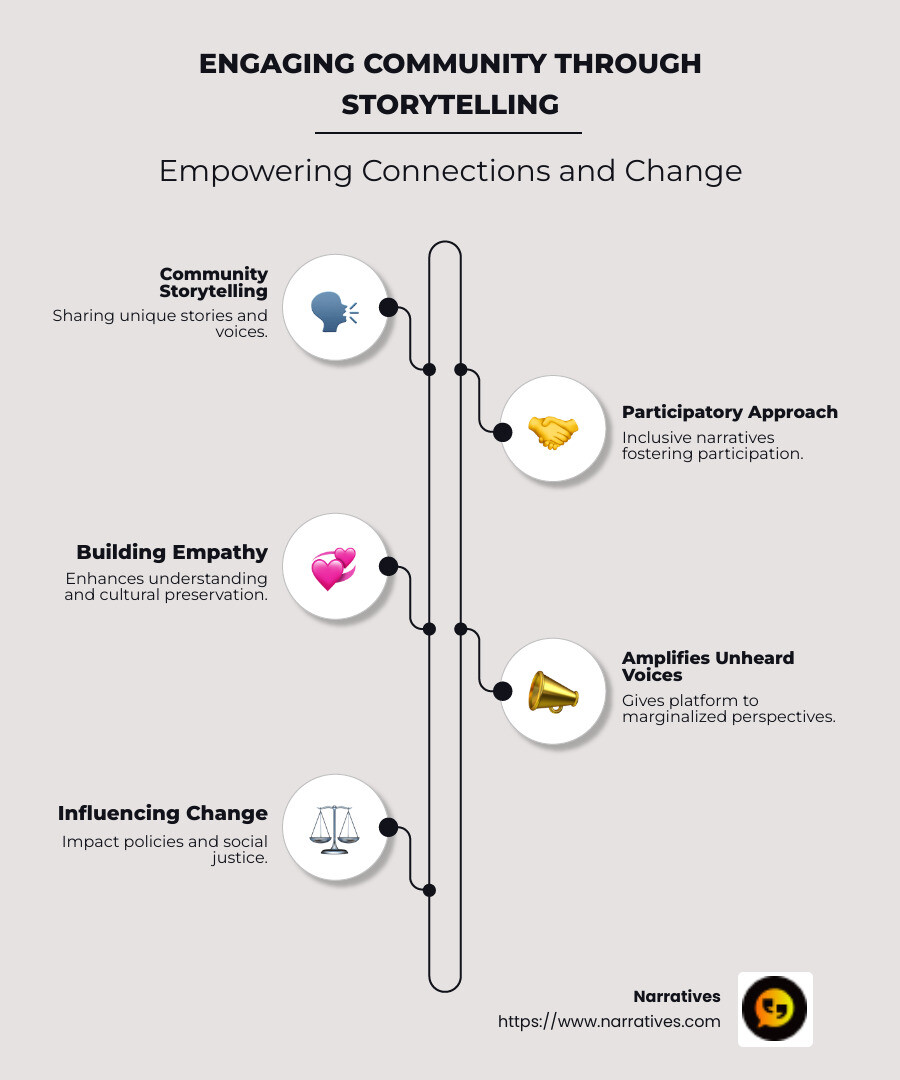
Engaging community through storytelling vocabulary:
Understanding Community Storytelling
Community storytelling is a powerful way to connect people. It's about sharing stories that come from the heart of a community. These stories reflect the community's unique experiences, challenges, and triumphs.
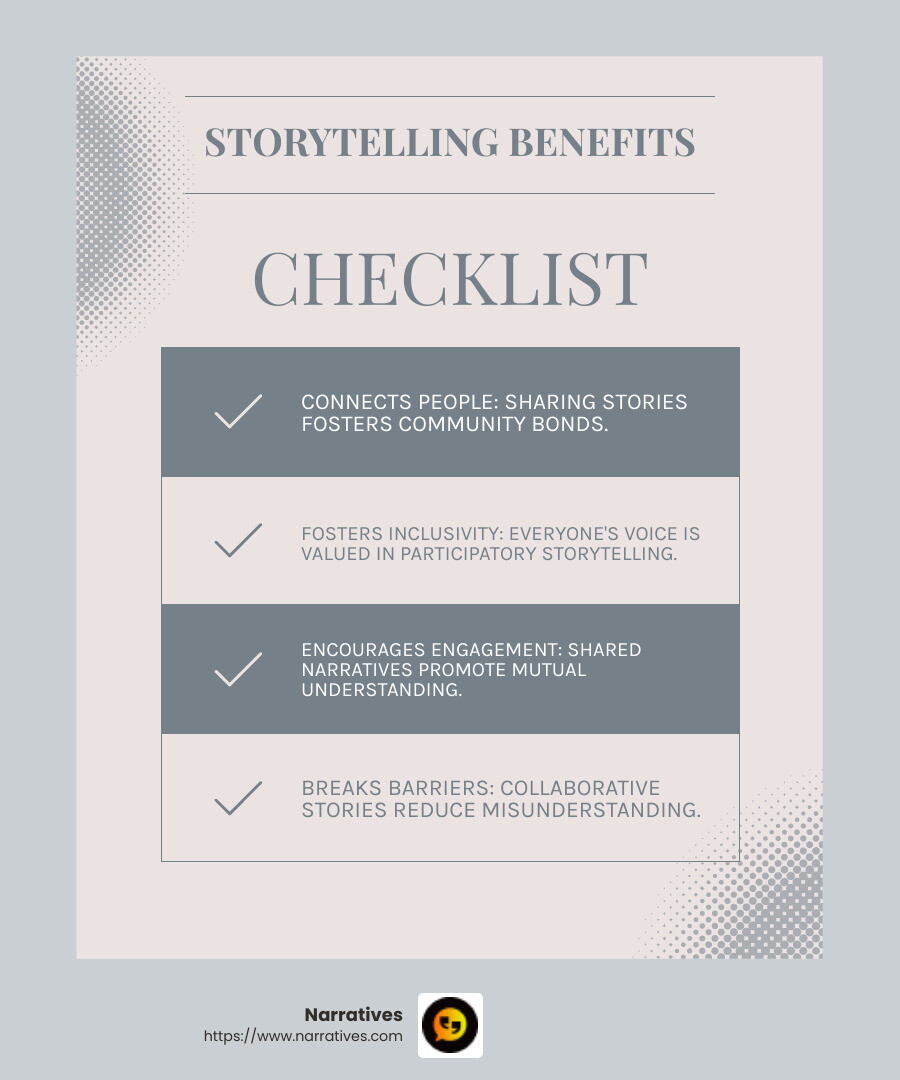
Engaging Community: Storytelling acts as a bridge, connecting individuals within a community. It allows people to share their experiences and learn from each other. This engagement fosters a sense of belonging and mutual understanding.
Participatory Storytelling: This approach invites everyone to contribute. It’s not just about one person telling a story to an audience. Instead, it’s a collaborative effort where different voices come together to create a shared narrative. This inclusivity ensures that the stories are rich and multifaceted.
Participatory storytelling is inclusive. It values every voice, ensuring that narratives are not just told about community members but by them. This method helps break down barriers of misunderstanding and misrepresentation. It values each individual's input and acknowledges their lived experiences as part of the collective narrative.
Why Community Storytelling Matters
Community storytelling is more than just entertainment. It is a tool for empowerment and change. By sharing stories, communities can:
Nurture Empathy: Hearing different perspectives builds empathy. It helps community members understand each other better and fosters a more supportive environment.
Amplify Unheard Voices: It gives a platform to those who might not otherwise be heard. This can lead to greater inclusion and representation in community decisions.
Promote Real-World Change: Stories can inspire action. When personal stories highlight issues, they can influence policies and lead to improvements in community life.
As Rowena Alegria highlights, storytelling is an engagement tool that can reform policies and cultivate social justice. Through storytelling, communities can open doors to empathy and cultural preservation. They can even influence decisions in places like town halls, where personal stories can lead to real change.
Community storytelling and participatory storytelling are about more than just sharing tales. They are about creating a dialogue that empowers communities and leads to meaningful connections and changes.
The Power of Co-Creation in Storytelling
Co-creation is a game-changer in storytelling. It's about creating stories together with the community, not just for them. This process brings diverse voices to the forefront, making stories more authentic and relatable.
Why Co-Creation Matters
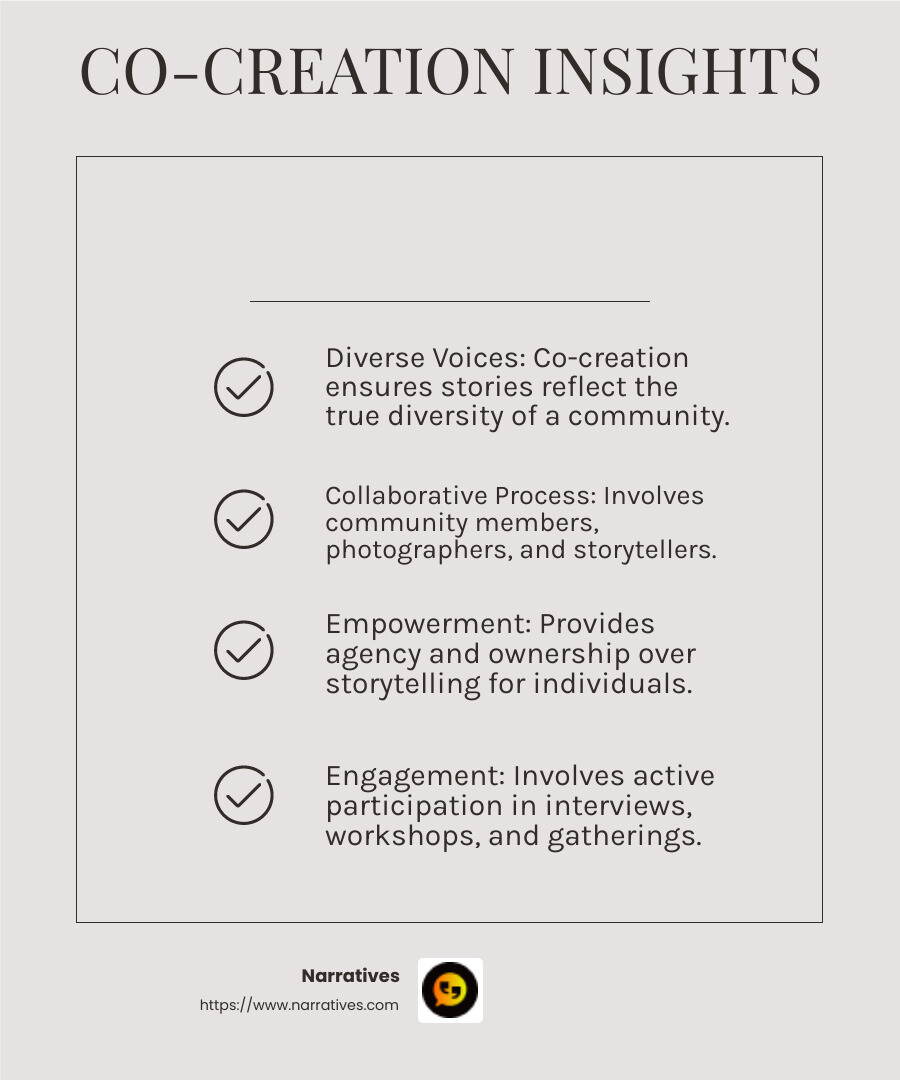
Diverse Voices: Co-creation brings together different perspectives. It ensures that stories are not one-sided but reflect the true diversity of a community. When everyone has a say, the narrative becomes richer and more inclusive.
Collaborative Process: This approach involves working alongside community members, photographers, filmmakers, and other storytellers. Everyone contributes their unique insights, which results in a narrative enriched by multiple viewpoints.
Empowerment: Co-creation empowers individuals. It gives them agency in how their stories are told. This sense of ownership can foster pride and a deeper connection to the story.
How Co-Creation Works
Engage the Community: Start by inviting community members to share their stories. This can be through interviews, workshops, or community gatherings.
Collaborate: Work with the community to shape these stories. This involves not just listening but actively involving them in the storytelling process.
Share and Reflect: Once the story is crafted, share it with the community. Encourage feedback and reflection, which can lead to further storytelling and engagement.
Example of Co-Creation
Fairpicture and its clients exemplify co-creation by working with community members to craft narratives. This partnership ensures that the final stories are not only authentic but also representative of the lives and experiences of those depicted. They don't just amplify voices; they create stories together, leveling the playing field for all involved.
Co-creation in storytelling isn't just about telling better stories. It's about building stronger connections and understanding within communities. By involving everyone in the narrative process, we create stories that truly resonate and inspire real-world change. This collaborative approach transforms storytelling into a powerful tool for engagement and empowerment.
Engaging Community through Storytelling
Engaging communities through storytelling is about more than just sharing tales. It's about creating ethical storytelling that connects people and fosters community engagement. This approach not only builds shared narratives but also strengthens bonds within communities.
What is Ethical Storytelling?
Ethical storytelling is about being responsible and respectful. It means telling stories with integrity and ensuring that all voices are heard and respected. When stories are crafted ethically, they reflect the true experiences and values of the community.
Respect and Representation: Ethical storytelling ensures that stories are truthful and represent the community accurately. This means avoiding stereotypes and giving everyone a chance to share their perspective.
Transparency: Being open about the storytelling process helps build trust. When communities know how their stories will be used, they are more likely to engage and participate.
Community Engagement through Storytelling
Engaging communities through storytelling involves active participation. It's not just about telling stories to people but creating stories with them. This approach fosters a sense of belonging and strengthens community ties.
Shared Narratives: When communities come together to share their stories, they create a collective narrative. This shared narrative can highlight common values and experiences, fostering unity and understanding.
Active Participation: Encouraging community members to be part of the storytelling process makes them feel valued and heard. This active participation can lead to more meaningful and impactful stories.
How to Create Shared Narratives
Listen and Learn: Start by listening to the community. Understand their experiences, challenges, and aspirations. This forms the foundation for creating stories that resonate.
Collaborate and Co-Create: Work with the community to develop the narrative. This collaboration ensures that the story is not just about the community but is created by them.
Reflect and Share: Once the story is crafted, share it back with the community. This reflection helps reinforce the shared narrative and can inspire further storytelling and engagement.
Case Study: Pars Equality Center
The Pars Equality Center is a great example of engaging community through storytelling. They empower Persian-speaking immigrants by sharing their stories of struggle and triumph. This not only raises awareness but also builds a supportive community network.
By embracing ethical storytelling and engaging communities, we can create narratives that not only inform but also inspire action and change. This approach ensures that stories are more than just words—they become bridges that connect and empower communities.
Techniques for Effective Storytelling
Crafting stories that engage and resonate requires specific techniques. Let's explore some effective methods that can lift your storytelling.
Visual Storytelling
Images Speak Louder Than Words
Visual storytelling uses images, videos, and other visual elements to tell a story. This approach is powerful because visuals can convey emotions and messages quickly and effectively.
Use of Photography and Video: Incorporating photos and videos can make stories more engaging. For example, charity: water uses compelling visuals to highlight the urgency of water issues, making the problem more relatable and pressing to viewers.
Digital Stories: In educational settings, students have used digital stories to express personal experiences through a combination of still photography, video, music, and narration. This method allows for a richer, more immersive storytelling experience.
Emotional Resonance
Connecting on a Deeper Level
Stories that evoke emotions are more memorable and impactful. Emotional resonance draws the audience in, making them feel connected to the story.
Personal Narratives: Sharing personal stories or experiences can create a strong emotional connection. Students in a First-Year Seminar shared digital stories about their lives, which were powerful testaments to their identities and experiences.
Empathy and Understanding: Stories that highlight personal challenges and triumphs can foster empathy. When community members share their stories, it can lead to a deeper understanding and appreciation of diverse perspectives.
Narrative Techniques
Crafting Compelling Stories
Good storytelling involves more than just recounting events. It requires structure and creativity to keep the audience engaged.
Strong Beginning and End: A good story has a captivating start and a satisfying conclusion. As Jennifer Aaker explains, stories should have a strong beginning, a point of tension, and a strong end to keep the audience engaged.
Tension and Conflict: Introducing a point of tension or conflict can make stories more compelling. This draws the audience in, making them eager to see how the story unfolds.
Co-Creation: When stories are co-created with the community, they are more authentic and representative. This collaborative process ensures that diverse voices are included, enriching the narrative.
By incorporating these techniques, storytellers can create engaging community narratives that resonate emotionally and visually. These stories not only capture attention but also inspire action and foster connections.
Frequently Asked Questions about Engaging Community through Storytelling
How does storytelling build community?
Storytelling builds community by creating shared experiences and understanding. When people hear stories that resonate with their own lives, they feel a sense of connection and belonging. As noted in the concept of community storytelling, narratives rooted in the experiences of community members allow for a more authentic and multifaceted portrayal of realities. This approach breaks down barriers of misunderstanding and misrepresentation, fostering empathy and deeper connections among community members.
Moreover, storytelling in community settings often involves participatory elements, where individuals contribute their own stories. This inclusivity ensures that everyone's voice is heard and valued, strengthening community bonds.
What are the benefits of participatory storytelling?
Participatory storytelling offers numerous benefits:
Inclusivity and Representation: By involving community members in the storytelling process, it ensures that diverse perspectives are represented. This approach values individual input and acknowledges lived experiences as part of the collective narrative.
Empowerment: When people have a role in telling their own stories, it gives them agency and ownership. This empowerment can lead to a sense of pride and identity within the community.
Breaking Down Barriers: Participatory storytelling helps dismantle stereotypes and misunderstandings by showcasing authentic stories from within the community. This fosters a greater understanding and appreciation for different cultures and experiences.
Engagement and Connection: Stories that are co-created with the community are more engaging and relatable. They encourage active participation and foster a sense of connection among community members.
How can non-profits use storytelling to inspire action?
Non-profits can use storytelling to inspire action by highlighting the impact of their work and the stories of those they serve. Here are some ways they can do this:
Showcasing Impact: By sharing stories of individuals or communities positively affected by their programs, non-profits can illustrate the tangible benefits of their work. This not only highlights the issues at hand but also demonstrates the effective use of resources and the positive changes achieved.
Creating Emotional Connections: Emotional stories can inspire empathy and compassion, motivating people to support the cause. As seen in various projects, personal narratives and visual storytelling can evoke strong emotions, driving people to take action.
Building Trust and Transparency: Sharing authentic stories helps build trust with donors and supporters. It shows transparency in how funds are used and the real-world impact of donations.
Engaging Diverse Audiences: By using a co-creative approach, non-profits can engage with diverse audiences and ensure that their stories reflect the community's varied experiences. This inclusivity can attract a broader base of support.
Through these techniques, non-profits can craft powerful narratives that not only raise awareness but also drive meaningful action and support for their initiatives.
Conclusion
Ethical storytelling practices are more important than ever. They not only lift underrepresented voices but also foster genuine connections and inspire meaningful change. At Narratives, we believe in the power of storytelling to transform communities and drive social impact.
By focusing on community storytelling, we can ensure that narratives are inclusive and representative of diverse perspectives. This approach not only enriches the stories we tell but also builds trust and engagement within communities. As we've seen, when people are involved in crafting their own stories, they feel empowered and more connected to one another.
Co-creation plays a vital role in this process, allowing storytellers and community members to collaborate and create narratives that are both authentic and impactful. This partnership ensures that stories are not just about communities but are told by and with them, fostering a sense of ownership and pride.
For non-profits and purpose-driven organizations, storytelling is a powerful tool to showcase their impact and inspire action. By sharing stories that highlight the positive changes they've brought about, these organizations can build trust with their audiences and drive support for their initiatives.
At Narratives, we're committed to being the go-to digital storytelling partner for non-profits. Our strategy centers around creating high-quality, emotionally resonant content that not only tells a story but also encourages action and builds long-lasting relationships. If you're ready to lift your storytelling and engage your community more effectively, learn more about our services.
In summary, ethical storytelling is about more than just telling a story. It's about creating connections, fostering understanding, and driving positive change. By embracing these practices, we can build stronger, more inclusive communities and make a lasting impact.


.avif)