Unlocking the Millennial Mind: How to Engage the Next Generation of Donors

Showing the Future of Philanthropy: Engaging millennial donors
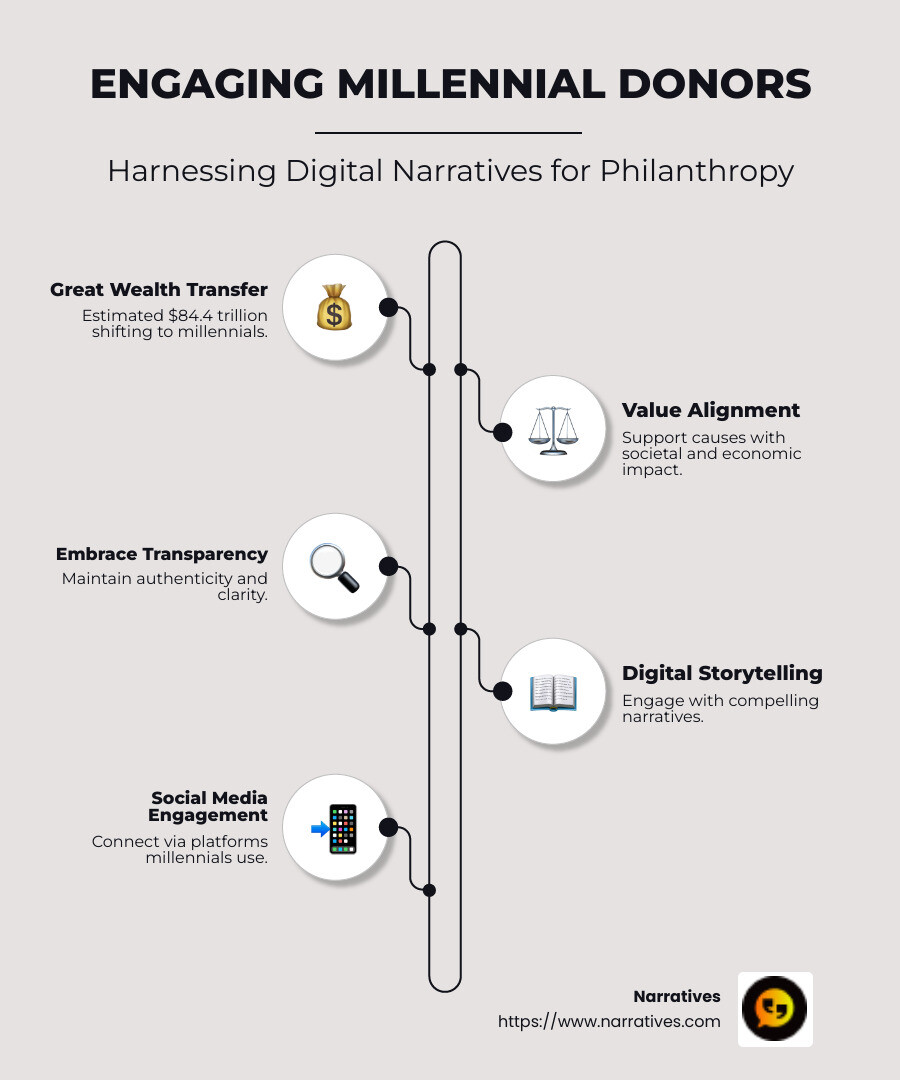
Engaging millennial donors has become essential as an estimated $84.4 trillion is set to transition towards this digital-savvy generation through the Great Wealth Transfer. These generational shifts in philanthropy are redefining how nonprofits connect with their supporters. To effectively engage millennials, consider focusing on:
- Aligning with values: Causes that reflect societal and economic issues.
- Embracing transparency: Maintain authenticity and clarity.
- Leveraging technology: Use digital storytelling and social media.
Digital storytelling plays a crucial role in engaging millennial donors. Unlike previous generations, millennials and Gen Z prioritize a cause's impact and are keen to see their contributions foster meaningful change. They connect with stories that resonate on a personal level and reflect their beliefs in social justice, environmental issues, and community engagement. By leveraging compelling narratives and embracing a transparent and authentic communication style, nonprofits can establish deeper connections with these donors.
The organizations that succeed in these efforts will not just capture millennial attention but also secure a sustainable future of their causes by tapping into the potential of a digitally connected generation.
Understanding Millennial Donors
To engage millennial donors, it's crucial to understand what drives them. This generation is reshaping philanthropy with unique motivations and expectations.
Giving Motivations
Millennials are motivated by a desire to make a difference. They want to see their contributions lead to tangible social impact. According to the Millennial Impact Project, millennials "engage with causes to help other people, not institutions." They value personal connection and are more likely to donate to organizations that demonstrate their impact clearly.
Social Impact
Millennials care deeply about social issues. They are passionate about causes like climate change, education reform, and social justice. Nonprofits that align with these values and demonstrate a clear commitment to these issues are more likely to attract millennial support. Millennials want to know how their donations are changing lives and making a difference in the world.
Transparency
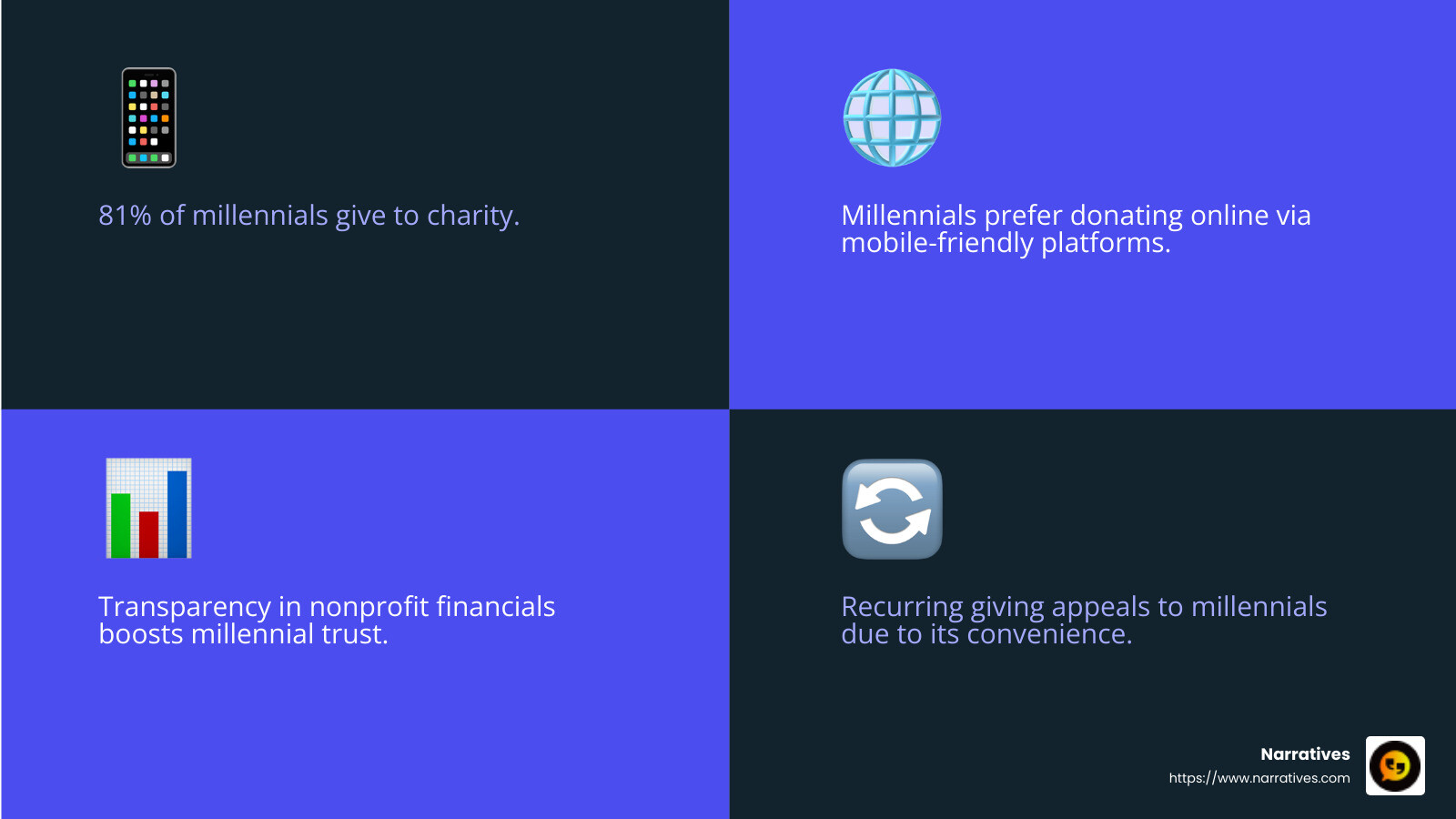
Transparency is non-negotiable for millennials. They expect open access to information and clear communication about where their money goes. Public financial statements and annual reports are essential tools to build trust. Nonprofits should be transparent about their operations and outcomes, ensuring that millennials feel confident their contributions are being used effectively.
Key Takeaways:
- Personal Connection: Focus on stories that highlight individual impact.
- Clear Communication: Use social media and digital platforms to share updates and successes.
- Open Access: Provide easy access to financial information and organizational achievements.
Understanding these aspects of millennial donors can help nonprofits tailor their strategies to better engage this influential generation. This sets the stage for leveraging technology to improve donor engagement and retention.
Engaging Millennial Donors
To successfully engage millennial donors, nonprofits must accept digital accessibility, implement smart strategies, and encourage recurring giving.
Digital Accessibility
Millennials are digital natives. They expect seamless online interactions. A nonprofit's website is often the first point of contact, and it needs to be mobile-friendly and easy to steer. According to research, millennials are more likely to search for causes online and make decisions based on a nonprofit's digital presence.
Ensure your website is optimized for mobile users and that the donation process is straightforward. This includes having a clear, concise mission statement front and center. An intuitive user experience can be the difference between a one-time visitor and a lifelong supporter.
Nonprofit Strategies
To capture the attention of millennials, nonprofits should focus on storytelling and transparency. Millennials want to see the real-world impact of their contributions. Use social media platforms like Instagram and TikTok to share compelling stories. Highlight the people your organization helps and the change you're making.
Incorporate visuals and videos to make your stories more engaging. For example, a short video showcasing a success story can resonate deeply with potential donors. Transparency is also crucial. Share how donations are used, and be open about your financials. This builds trust and encourages ongoing support.
Recurring Giving
Encouraging recurring giving is an effective strategy for building a stable donor base. Millennials appreciate convenience, and setting up automatic monthly donations can appeal to their busy lifestyles. Recurring giving not only provides consistent support for your organization but also strengthens the donor's relationship with your cause.
Consider offering a membership program where donors receive regular updates and exclusive content. This can make them feel like an integral part of your mission, increasing their commitment and likelihood to continue supporting your work.
By focusing on digital accessibility, implementing effective nonprofit strategies, and encouraging recurring giving, organizations can better engage millennial donors and harness the potential of this influential generation.
Strategies for Nonprofits
When it comes to engaging millennial donors, nonprofits need to leverage social media, crowdfunding, and community engagement. These strategies can create meaningful connections and inspire action.
Social Media
Social media is a powerful tool for reaching millennials. Platforms like Instagram, TikTok, and Facebook are where millennials spend their time. To capture their attention, nonprofits should create engaging content that tells a story. Use images, videos, and real-life testimonials to show the impact of your work.
For example, a nonprofit can post a short video on Instagram highlighting a success story from their recent project. This approach not only informs but also inspires followers to share the content, increasing its reach.
Crowdfunding
Crowdfunding is an effective way to engage millennials who want to make a difference. Platforms like GoFundMe and Kickstarter allow them to contribute to specific projects or causes they care about. Nonprofits can use crowdfunding to fundraise for special initiatives, providing a tangible goal for donors to rally around.
To maximize success, be transparent about the fundraising goal and how the money will be used. Share updates and celebrate milestones with your supporters. This ongoing communication keeps donors engaged and invested in the outcome.
Community Engagement
Millennials value community and connection. They are more likely to support nonprofits that foster a sense of belonging. Encourage community engagement by organizing events, both online and offline, where millennials can participate and make a difference.
Consider hosting virtual meet-ups or webinars where supporters can interact with your team and learn more about your work. Offering volunteer opportunities also appeals to millennials, who often prefer to donate their time over money.
By integrating social media, crowdfunding, and community engagement into your strategy, nonprofits can effectively connect with and inspire millennial donors. These approaches not only improve visibility but also foster a deeper connection with your mission, ensuring sustained support from this influential generation.
Leveraging Technology
When engaging millennial donors, leveraging technology is crucial. Millennials are digital natives, and they expect seamless experiences when supporting causes they care about. Let's explore how mobile giving, online platforms, and user experience can improve engagement.
Mobile Giving
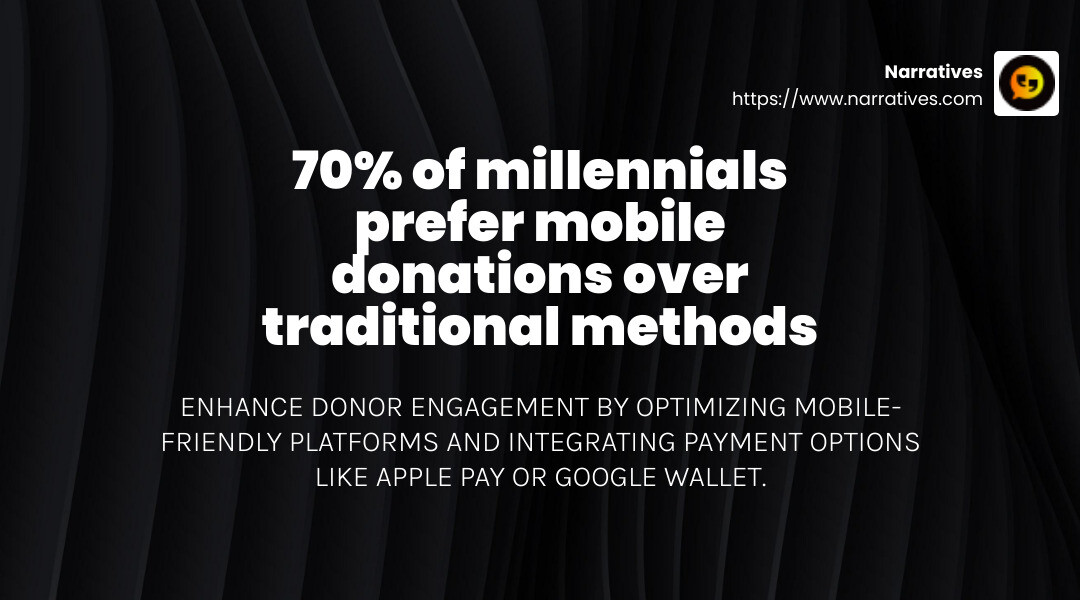
Millennials are always on their phones. Mobile giving provides a convenient way for them to donate anytime, anywhere. Nonprofits should ensure their donation platforms are mobile-friendly. This means having a responsive design and easy navigation.
Consider integrating mobile payment options like Apple Pay or Google Wallet. These options streamline the donation process, making it quick and hassle-free for donors.
Online Platforms
Online platforms are essential for reaching millennials. Websites should be visually appealing and easy to steer. Millennials are less likely to donate if they struggle to find information or encounter a complicated process.
Transparency is key. Clearly display how donations are used and the impact they've made. Use storytelling to connect emotionally with potential donors. Share real-life stories and testimonials to illustrate the difference their support can make.
Consider using platforms like The Giving Block, which supports cryptocurrency donations. This option can attract tech-savvy millennials who are interested in innovative ways to support causes.
User Experience
A positive user experience (UX) can make or break a donation. Millennials expect smooth, intuitive interactions. Here are a few tips to improve UX:
Simplify forms: Keep donation forms short and easy to complete. Only ask for necessary information.
Optimize load times: Ensure your site loads quickly. Slow websites can frustrate users and deter donations.
Personalize interactions: Use data to tailor communications. Address donors by name and acknowledge their past contributions.
Provide feedback: After a donation, offer a personalized thank-you message. Share how their contribution will be used and invite them to stay updated through newsletters or social media.
By focusing on mobile giving, optimizing online platforms, and enhancing user experience, nonprofits can better engage millennial donors. These strategies not only increase donations but also build lasting relationships with this tech-savvy generation.
Frequently Asked Questions about Engaging Millennial Donors
How can payments help you capture their attention?
Payments are more than just transactions; they are an opportunity to engage. Millennials value convenience and speed. Offering multiple payment options like mobile payments, cryptocurrency, and even peer-to-peer platforms can make donating easier. According to research, Millennials are avid investors in stocks and cryptocurrencies. Providing these options can attract donors who prefer non-traditional methods.
To capture their attention, ensure the payment process is simple and secure. Millennials grew up with technology and are cautious about online security. Use trusted platforms to protect their information, and clearly communicate your data policies.
What are the key motivations of millennials?
Millennials are driven by impact and authenticity. They want to see the real-world effects of their contributions. According to the Millennial Impact Project, they engage with causes to help people, not institutions. This means they are more likely to support organizations that are transparent about their impact.
Social influence also plays a role. Millennials are influenced by their peers and often share their philanthropic activities on social media. They appreciate being part of a community and value recognition for their efforts.
How can nonprofits tailor their approach to fit millennial values?
To resonate with Millennials, nonprofits need to align with their values. Here are some strategies:
Transparency: Be open about how donations are used. Share stories and testimonials that highlight the impact of their contributions.
Involvement: Offer opportunities for Millennials to get involved beyond donations. Volunteer activities and skill-based projects can engage them more deeply.
Recognition: Show appreciation for their support. A simple thank-you post on social media or a personalized email can go a long way.
Innovation: Accept new technologies and trends. Whether it's accepting cryptocurrency or using social media for campaigns, staying current can attract tech-savvy donors.
By understanding what drives Millennials and adapting strategies to meet their expectations, nonprofits can build strong, lasting relationships with this generation. The key is to be genuine, transparent, and innovative.
Conclusion
In the changing landscape of philanthropy, engaging millennial donors is not just a trend—it's a necessity. At Narratives, we believe that storytelling is the key to open uping this potential. By crafting emotionally resonant stories, we help non-profits build trust and inspire action among Millennials.
Non-profit partnerships are at the heart of our mission. We collaborate closely with organizations to lift underrepresented voices and showcase their impact stories. This approach fosters deeper connections and increases visibility, aligning perfectly with Millennials’ desire for authenticity and social impact.
Millennials want to see the tangible effects of their contributions. By sharing success stories and using multimedia content, we can demonstrate the real-world impact of every donation. This transparency not only satisfies their curiosity but also builds trust.
Digital storytelling is a powerful tool for engaging this tech-savvy generation. Whether through video, social media, or mobile platforms, we help non-profits reach Millennials where they are most active. Our strategy focuses on creating content that resonates emotionally and encourages community involvement.
As we look to the future, it's clear that engaging millennial donors requires a blend of innovation, transparency, and genuine connection. By partnering with Narratives, non-profits can leverage these strategies to not only attract Millennials but also turn them into lifelong supporters.
Explore how we can help you share your impact stories and connect with the next generation of donors by visiting our website. Let's work together to create a lasting impact.


.avif)