The Ethics of Storytelling: Principles and Practices

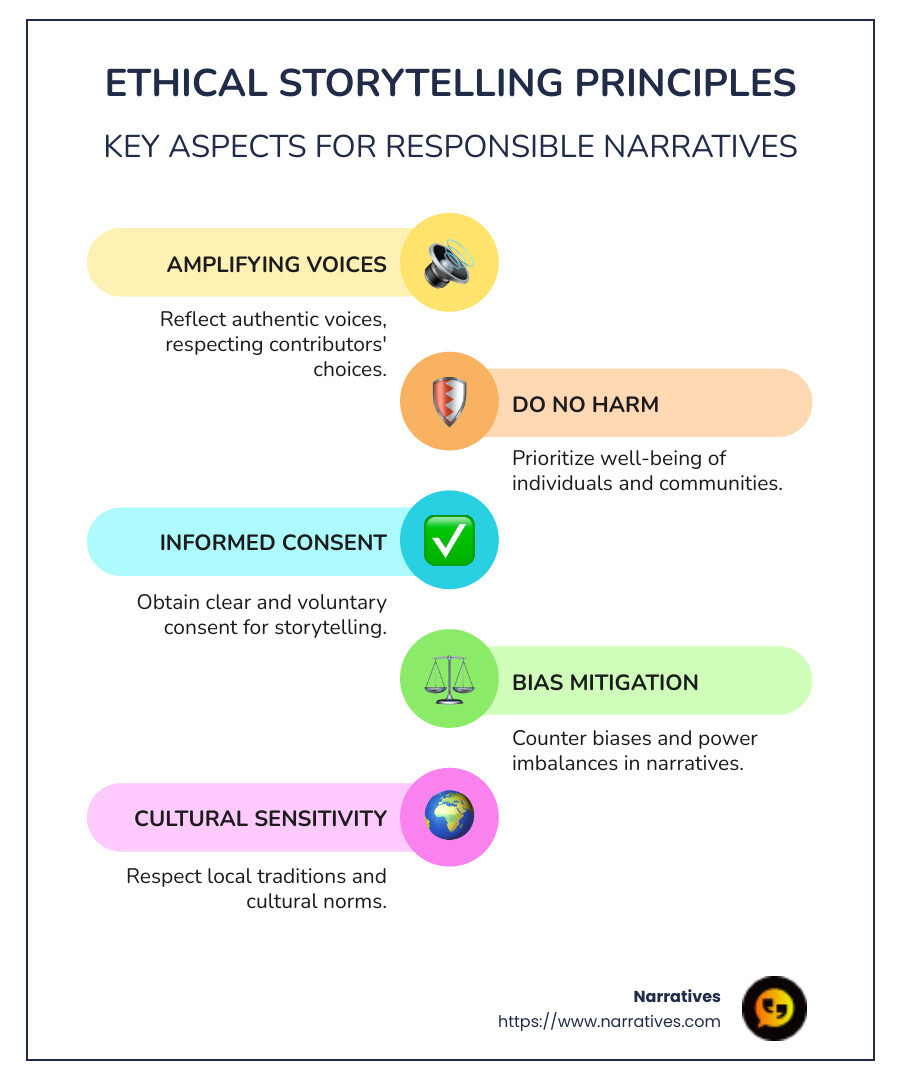
Ethical storytelling principles are vital in today's world, where stories hold the power to shape perceptions and drive change. At its core, ethical storytelling ensures that narratives are told with respect and integrity, valuing the humanity and dignity of everyone involved. Here’s what these principles encapsulate:
- Amplifying Voices and Experiences: Stories should reflect the contributors’ true voices, honoring their choices in what and how their stories are told.
- “Do No Harm” Ethic: Prioritize the well-being of individuals and communities in the storytelling process.
- Inclusive and Dynamic Representation: Recognize individuals and communities as complex and evolving.
- Informed Consent: Always obtain fully informed, clear, and voluntary consent from contributors.
- Bias Mitigation: Address and counteract existing biases, stereotypes, and power imbalances.
- Cultural Sensitivity: Respect and incorporate local traditions, values, and norms.
- Environmental Consideration: Evaluate the impact of stories on people and the planet.
- Data Responsibility: Handle information following strict data protection laws.
- Authentic Representation: Ensure stories are accurate and authentically portray realities and prospects for change.
- Empowerment and Inspiration: Encourage positive changes through stories that inspire action.
For non-profit marketing leads, social impact organizations, and story-driven brands, these principles aren’t just guidelines—they’re a compass for creating content that genuinely resonates and promotes social justice.
Learn more about Ethical storytelling principles:
Understanding Ethical Storytelling Principles
In the field of storytelling, especially when it comes to sensitive topics or communities, adhering to ethical storytelling principles is paramount. These principles guide storytellers to create content that is not only engaging but also respectful and truthful.
Honesty and Accuracy
At the heart of ethical storytelling is honesty. Stories should reflect the truth, without embellishment or distortion. This means presenting facts as they are and ensuring that every narrative is grounded in reality. Accuracy is crucial, as it builds trust with the audience. For instance, Reuters emphasizes the importance of accuracy over speed, ensuring that their stories are both factual and balanced.
Empathy and Transparency
Empathy allows storytellers to connect deeply with their subjects, understanding and portraying their experiences with sensitivity and care. This connection helps in crafting stories that resonate and evoke genuine emotions. Meanwhile, transparency involves being clear about the storytelling process. This includes informing contributors about how their stories will be used and ensuring they have control over their narratives. VOW’s principles highlight the importance of ongoing informed consent and transparency to ensure narrators feel respected and valued.
Social Responsibility
Stories have the power to influence perceptions and drive change. Therefore, storytellers have a social responsibility to ensure their narratives do not harm individuals or communities. This involves considering the broader impact of the stories shared. The Girls Not Brides guidelines focus on mitigating power dynamics to allow contributors to express their autonomy and voice, promoting social justice.
By adhering to these principles, storytellers can craft narratives that are not only compelling but also ethical, fostering trust and inspiring positive change.
Key Principles of Ethical Storytelling
Building Trust and Relationships
Building trust is the cornerstone of ethical storytelling. It begins with mutual respect and collaboration between storytellers and narrators. This means engaging with communities not just as subjects, but as partners. Collaboration ensures that stories are co-created, allowing narrators to shape how their experiences are told. This approach prevents the "parachute journalism" effect where storytellers swoop in, extract stories, and leave without further engagement. Instead, ethical storytelling fosters long-term relationships, ensuring narrators are connected to further opportunities and networks.
Informed Consent and Transparency
Informed consent is a must. Narrators should have ownership and control over their stories. This means they are fully informed about how their narratives will be used and can opt out at any time. Transparency involves clear communication about the purpose and scope of the storytelling project. Offering anonymity and discussing safety concerns are essential steps to protect narrators. This approach, as highlighted by VOW’s principles, ensures narrators feel respected and maintain agency over their own stories.
Authenticity and Complexity
Authenticity means honoring the true voice and experience of the narrator. Stories should capture the complexity of human experiences, showcasing not just struggles but also joy, strength, and resilience. Avoid framing narrators as mere victims or heroes; instead, allow them to lead the narrative. This approach challenges biases and resists oversimplification, offering a richer, more nuanced portrayal of their lives. By preparing thoroughly and listening deeply, storytellers can ask thoughtful questions that uncover the full spectrum of the narrator's experience.
Trauma-Informed Approach
A trauma-informed approach involves sensitivity and support. It requires understanding the potential impact of storytelling on individuals who have experienced trauma. This means being mindful of language and avoiding retraumatization. Offering support throughout the storytelling process and providing resources if needed is crucial. Using trigger warnings where necessary shows care for both narrators and audiences, ensuring stories are shared in a way that is respectful and considerate of emotional well-being.
Power Dynamics and Bias Mitigation
Storytelling is deeply affected by power dynamics. Recognizing and mitigating these dynamics is essential for equity. This involves being aware of how characteristics like race, gender, and age can influence interactions. Ethical storytelling strives to balance these dynamics, giving narrators the space to express their autonomy and voice. By challenging biases and emphasizing individual experiences, storytellers can create narratives that lift marginalized voices and foster understanding. As Girls Not Brides guidelines suggest, addressing power imbalances allows for more authentic and equitable storytelling.
Ethical Storytelling in Practice
Nonprofit Storytelling
Nonprofits use storytelling to create an emotional connection with their audience. This connection is crucial for driving impact and encouraging support for their cause. By sharing real-life stories of those they have helped, nonprofits can illustrate the tangible difference they make. This approach not only informs but also inspires people to donate, volunteer, or partner with the organization.
Ethical storytelling principles are vital here. Nonprofits must ensure honesty, accuracy, and empathy in their narratives. For example, when a nonprofit shares a story about a community they serve, they should highlight not just the challenges but also the strengths and aspirations of that community. This balanced storytelling helps to humanize the subjects and avoids reinforcing stereotypes.
Community-Driven Storytelling
Community-driven storytelling is about collaboration and empowerment. It involves working with the community to co-create stories that reflect their experiences and perspectives. This approach ensures that the community has a say in how their stories are told and shared. It shifts the power dynamics, giving the community control over their narratives.
A great example of this is the work done by organizations like Chance for Childhood, which engage with communities to tell stories that respect their dignity and highlight their resilience. By doing so, they empower communities to share their own stories, which can lead to greater awareness and understanding among wider audiences.
Multimedia and Visual Storytelling
Video, multimedia, and other visual storytelling tools are powerful ways to engage audiences. These formats can bring stories to life in a vivid and compelling manner. For nonprofits, using visual stories can help convey complex issues in a more accessible way, making it easier for audiences to understand and connect with the cause.
Visual storytelling should adhere to ethical principles by ensuring that all content is created with informed consent and respects the privacy and dignity of those featured. For instance, a nonprofit might create a video showcasing the impact of their work, but they should do so in a way that honors the voices and experiences of the individuals involved.

By integrating these storytelling practices, nonprofits and communities can share authentic and impactful narratives that resonate with audiences and inspire positive change.
Frequently Asked Questions about Ethical Storytelling
What is ethical storytelling?
Ethical storytelling is the practice of sharing narratives with a commitment to honesty, accuracy, and empathy. It involves being mindful of the impact stories have on individuals and communities. This approach ensures that stories are told with respect for the dignity and rights of those involved.
In ethical storytelling, it's crucial to avoid reinforcing biases or stereotypes. Instead, the focus should be on portraying individuals and communities in a truthful and multi-dimensional way. This means highlighting both challenges and strengths to provide a balanced view.
How can nonprofits implement ethical storytelling?
Nonprofits can implement ethical storytelling by following several key practices:
Obtain Informed Consent: Always seek the permission of individuals before sharing their stories. Explain how their story will be used and allow them to have control over its portrayal.
Respect and Empower: Treat everyone involved with respect and dignity. Collaborate with them to ensure their voices are heard and their experiences are accurately represented.
Highlight Complexity: Avoid oversimplifying stories. Show the full picture, including both struggles and successes, to provide a more authentic narrative.
Be Transparent: Clearly communicate the purpose of sharing a story and how it aligns with the organization's mission. This builds trust with both the audience and the individuals featured.
By adhering to these practices, nonprofits can create powerful stories that resonate with their audience while respecting the individuals and communities involved.
Why is transparency important in storytelling?
Transparency is vital in storytelling because it builds trust and credibility. When organizations are open about their intentions and processes, it reassures the audience that the stories are genuine and not manipulative.
Being transparent also involves acknowledging any biases and working to mitigate them. This means being clear about the context of a story and how it was gathered. For example, Chance for Childhood's OverExposed campaign emphasizes transparency in using children's images and stories, ensuring they are portrayed with dignity and respect.
Transparency helps maintain the integrity of storytelling, fostering a deeper connection with the audience and inspiring them to take meaningful action.
Conclusion
At Narratives, we believe in the transformative power of storytelling to drive social impact. As a trusted storytelling partner for non-profits, we help organizations share their stories in ways that build trust, inspire action, and amplify voices that are often underrepresented.
Our approach centers on ethical storytelling principles that prioritize honesty, empathy, and respect. We work closely with non-profits to ensure that their narratives are not only compelling but also uphold the dignity and rights of those involved. By focusing on collaboration and transparency, we create stories that resonate deeply with audiences and foster meaningful connections.
Narratives is committed to elevating stories that matter. Through high-quality video and multimedia content, we highlight the incredible work of non-profits and the positive change they bring to communities. Our goal is to support these organizations in enhancing their visibility and impact, enabling them to reach more supporters and drive lasting change.
If you're a non-profit looking to share your impact stories with the world, let us be your storytelling partner. Together, we can craft narratives that inspire and empower.


.avif)