Once Upon a Time: Mastering the Art of Engaging Storytelling

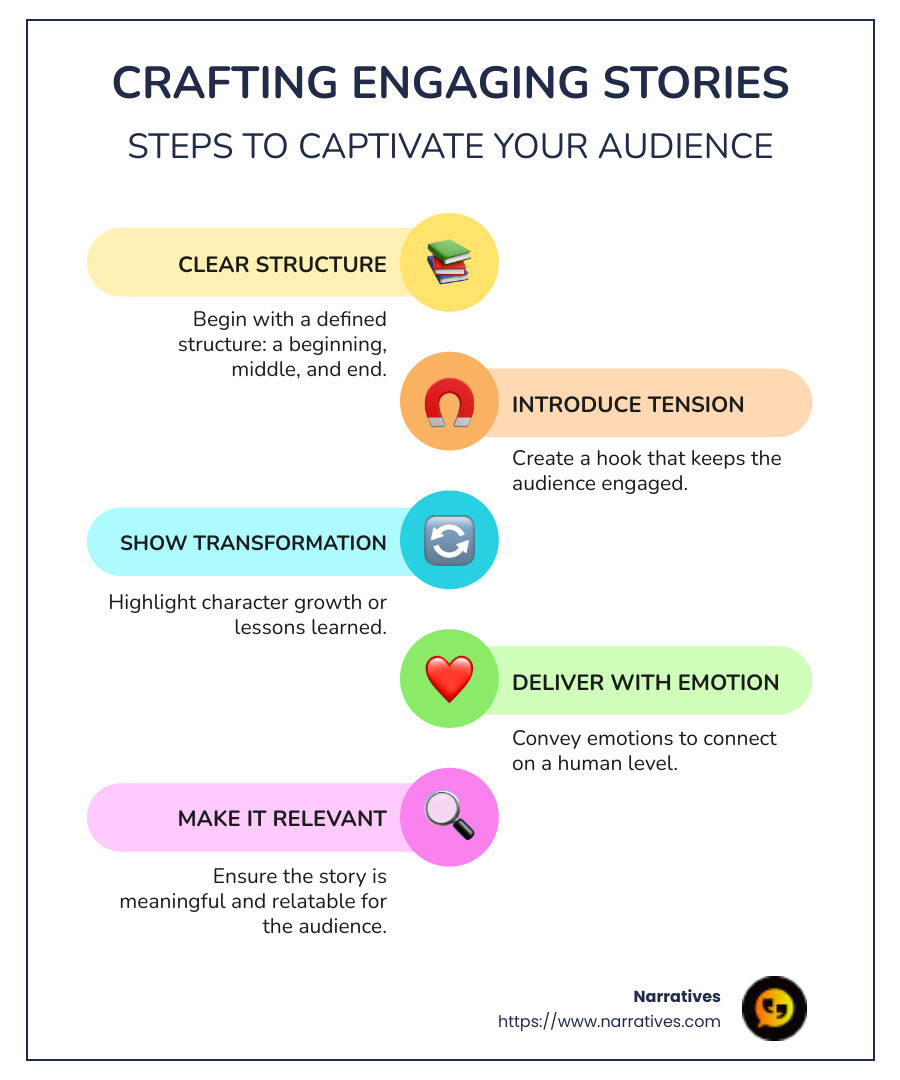
How to tell engaging stories isn't just about mastering the art of words; it's about creating the perfect blend of structure and emotion that resonates with your audience. Here’s the quick rundown:
- Start with a clear structure: Every captivating story has a beginning, middle, and end.
- Introduce tension: Give your story a hook that keeps people engaged.
- Show change: Show how the characters evolve or learn throughout the tale.
- Deliver with emotion: Convey feelings to connect on a human level.
- Make it relevant: The audience should find your story meaningful and relatable.
- Keep it concise: Engage without overwhelming your listeners.
Storytelling isn't simply recounting events; it's about creating a shared experience that arouses curiosity and builds community. According to Sarah Austin Jenness from The Moth, stories make us laugh, give hope, and remind us that we are less alone.
Effective storytelling weaves together structure and delivery. A well-crafted story gets to the heart of your message while keeping the audience captivated. Whether you’re delivering a wedding toast, an impactful narrative for a non-profit, or presenting in a business meeting, the power of storytelling can be transformative. Understanding the nuances of a strong narrative structure and delivering it with authenticity can help bridge the gap between your mission and your audience.
How to tell engaging stories basics:
The Science of Storytelling
Have you ever wondered why some stories stick with you, while others fade away? It's not just magic—it's science. When you tell a story, you activate certain chemicals in your brain that make the experience memorable and engaging. Let's explore the science behind storytelling and see how it works.
Cortisol: The Memory Maker
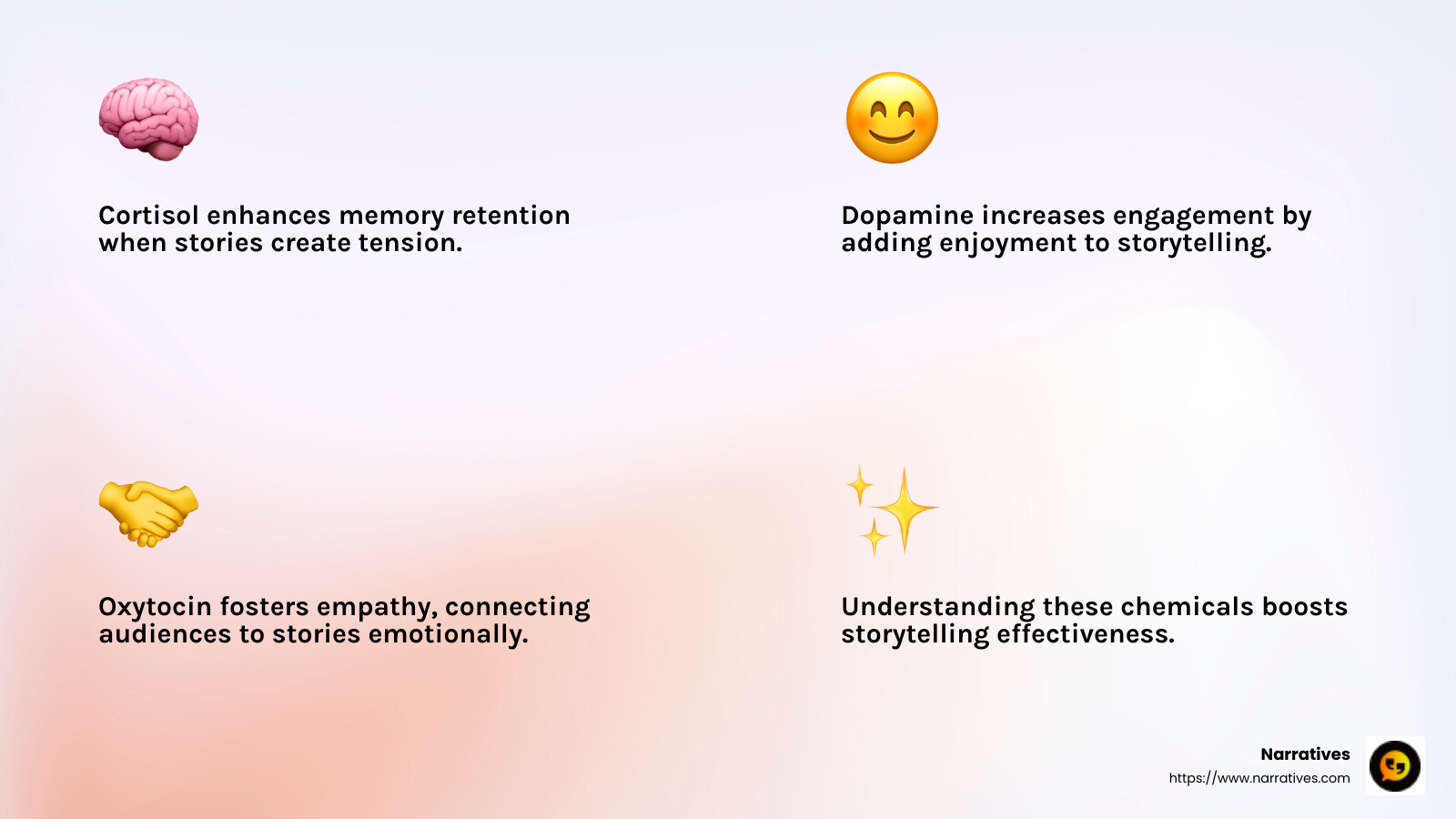
Cortisol is often called the "stress hormone," but in storytelling, it plays a different role. When you create tension or suspense in your story, cortisol is released. This helps your audience focus and remember the details. It’s like a mental highlighter, ensuring that the key points of your story are not easily forgotten.
Dopamine: The Engagement Improver
Dopamine is the "feel-good" chemical. It's what keeps us engaged and wanting more. When your story has unexpected twists or a satisfying resolution, dopamine levels rise, making the experience enjoyable. This chemical reaction encourages your audience to stay connected and invested in the narrative.
Oxytocin: The Empathy Builder
Oxytocin is often associated with bonding and empathy. When you tell a story that resonates emotionally, oxytocin is released. This makes your audience feel connected to you and the characters in your story. It's what transforms a simple tale into a shared experience that fosters understanding and compassion.
Why Does This Matter?
Understanding these chemicals helps you craft stories that not only entertain but also leave a lasting impression. By weaving in elements that trigger cortisol, dopamine, and oxytocin, you create a narrative that is both engaging and memorable. This scientific approach to storytelling ensures that your audience is not just listening—they're feeling, remembering, and connecting.
Next, we'll explore how to choose the right story for your audience and how to structure it for maximum impact.
How to Tell Engaging Stories
Choosing the Right Story
Every great story begins with the right choice. To tell engaging stories, start by thinking about your audience and your purpose. Are you trying to entertain, inform, or inspire? Your story should align with these goals to create an emotional impact.
Personal experiences often resonate the most. They bring authenticity and relatability. Think back to moments that changed you. Why did they stick with you? As Meg Bowles suggests, these pivotal moments often hold the key to a compelling narrative.
Emotional impact is crucial. Whether it's a funny anecdote or a heartfelt memory, your story should evoke feelings. This connection keeps your audience engaged and invested.
Structuring Your Story
Once you've chosen your story, it's time to structure it. A well-structured story has a beginning, middle, and end, each serving a distinct purpose.
Beginning: Start with action or a hook. This draws your audience in and sets the stage for what's to come. Provide context if needed. Who were you at the time? What was at stake?
Middle: This is where the tension builds. Think of it as the heart of your story. Share key events and emotions. What challenges did you face? How did you feel? As Sarah Austin Jenness points out, tension and change are vital. They keep your audience's cortisol levels engaged, ensuring they remember your story.
End: Offer a resolution or a lesson. This is where change happens. How did the experience transform you? What did you learn? A satisfying ending releases dopamine, leaving your audience feeling good about the journey they've taken with you.
Tension is the thread that weaves through your story. It's what keeps your audience on the edge of their seats. Even small stakes can be compelling if they're important to you. Remember the story of the lost retainer? It wasn't life or death, but it mattered deeply to the person involved.
By choosing the right story and structuring it effectively, you create a narrative that not only holds attention but also leaves a lasting impact. Next, we'll dig into techniques that make storytelling even more captivating.
Techniques for Captivating Storytelling
Developing Your Story
Crafting a story that captivates starts with the right techniques. Let's explore some tools that can lift your storytelling.
Metaphors and Analogies are powerful. They help your audience understand complex ideas by relating them to something familiar. Think of them as bridges that connect the known with the unknown. For example, describing a challenging project as "climbing a mountain" instantly conveys effort and struggle.
Tangible Imagery brings your story to life. Use vivid descriptions to paint a picture in your audience's mind. Instead of saying, "It was a nice day," try "The sun warmed my skin, and the sky was a brilliant blue."
Poetry isn't just for poems. Using rhythm and repetition can make your story more memorable. Simple phrases, when repeated, can emphasize key points and create an emotional impact.
The context of your story sets the scene. It answers the "where" and "when," grounding your audience in the setting. Make sure they know the stakes. What do you stand to lose or gain? This creates tension and keeps your audience invested.
Finally, establish a clear theme. This is the underlying message or lesson of your story. It's what ties everything together and gives your story purpose.
Practicing and Delivering
Once your story is developed, it's time to focus on practice and delivery. Even the best story can fall flat without the right presentation.
Practice is key. Rehearse your story until you know it well. This builds confidence and helps you find the right pace and tone. Practice in front of a mirror or record yourself to identify areas for improvement.
Aim for a natural delivery. You don't need to memorize every word. Instead, focus on the key points and let the story flow. This makes your storytelling feel genuine and relatable.
Connection with your audience is crucial. Make eye contact, use gestures, and adjust your tone based on their reactions. This interaction creates a bond and makes your story more engaging.
As you tell your story, remember to stay relaxed. Your comfort will put your audience at ease and improve their experience. Don't worry about the occasional "like" or "um." These can make your story feel conversational and real.
Incorporating these techniques into your storytelling can transform a simple narrative into a captivating experience. Now that we've explored how to develop and deliver your story, let's dive into some frequently asked questions about storytelling.
Frequently Asked Questions about Storytelling
How to tell a good story in conversation?
Telling a good story in conversation is about connection and engagement. Start by choosing a story that resonates with your listener. It should be relevant to the context or topic at hand.
Keep it concise. People have short attention spans, especially in casual settings. Aim to deliver your story in a few minutes.
Engage your listener by asking questions or encouraging reactions. This makes the conversation interactive.
Use emotion. Share how you felt during the story. This helps your listener connect on a personal level.
End with a point. Whether it's a lesson, a joke, or a reflection, make sure your story has a clear takeaway.
How to tell a story to an audience?
Telling a story to an audience requires a bit more structure and polish.
Know your audience. Tailor your story to their interests and level of understanding. This makes your story more relatable and engaging.
Start strong. Capture attention with a compelling opening. It could be a surprising fact, a question, or a vivid description.
Build tension. Keep your audience on the edge of their seats by gradually revealing details and building suspense.
Use body language. Your gestures, facial expressions, and movements can improve your story and keep your audience engaged.
Conclude with impact. Leave your audience with a strong ending. It could be an emotional moment, a powerful message, or a call to action.
Creative ways to tell a story?
Creativity can lift your storytelling and make it memorable.
Use props. Physical items related to your story can make it more tangible and engaging.
Incorporate multimedia. Videos, images, or music can add depth and emotion to your story.
Interactive storytelling. Involve your audience by asking them to participate or make decisions that influence the story's direction.
Experiment with formats. Try telling your story through a series of letters, diary entries, or social media posts.
Blend genres. Combine different storytelling styles, like adding elements of mystery to a romantic story, to create a unique narrative.
Mastering these techniques can help you tell engaging stories that captivate your audience, whether in a casual conversation or a formal presentation. As you explore different methods, you'll find what works best for you and your audience.
Conclusion
Storytelling is more than just a skill—it's a powerful tool for change. At Narratives, we believe in the transformative power of stories to drive social impact and foster community-driven initiatives.
Narratives is dedicated to elevating underrepresented voices, helping non-profits and purpose-driven organizations share their impact in ways that resonate emotionally and inspire action. By crafting high-quality, emotionally engaging multimedia content, we aim to build trust and increase visibility for important causes.
Community-driven storytelling is at the heart of what we do. We partner with organizations to highlight the strengths and struggles of the communities they serve, creating a platform for voices that often go unheard. This approach not only raises awareness but also empowers communities by sharing their authentic stories with the world.
Our commitment to storytelling goes beyond just telling stories—it's about creating connections and fostering understanding. By focusing on social impact, we aim to inspire positive change and encourage others to join us in making the world a better place.
If you're a non-profit or purpose-driven organization looking to share your story, learn more about how Narratives can help. Together, we can craft stories that captivate audiences and drive meaningful change.


.avif)