The Art of Multimedia Content Creation: How to Get Started

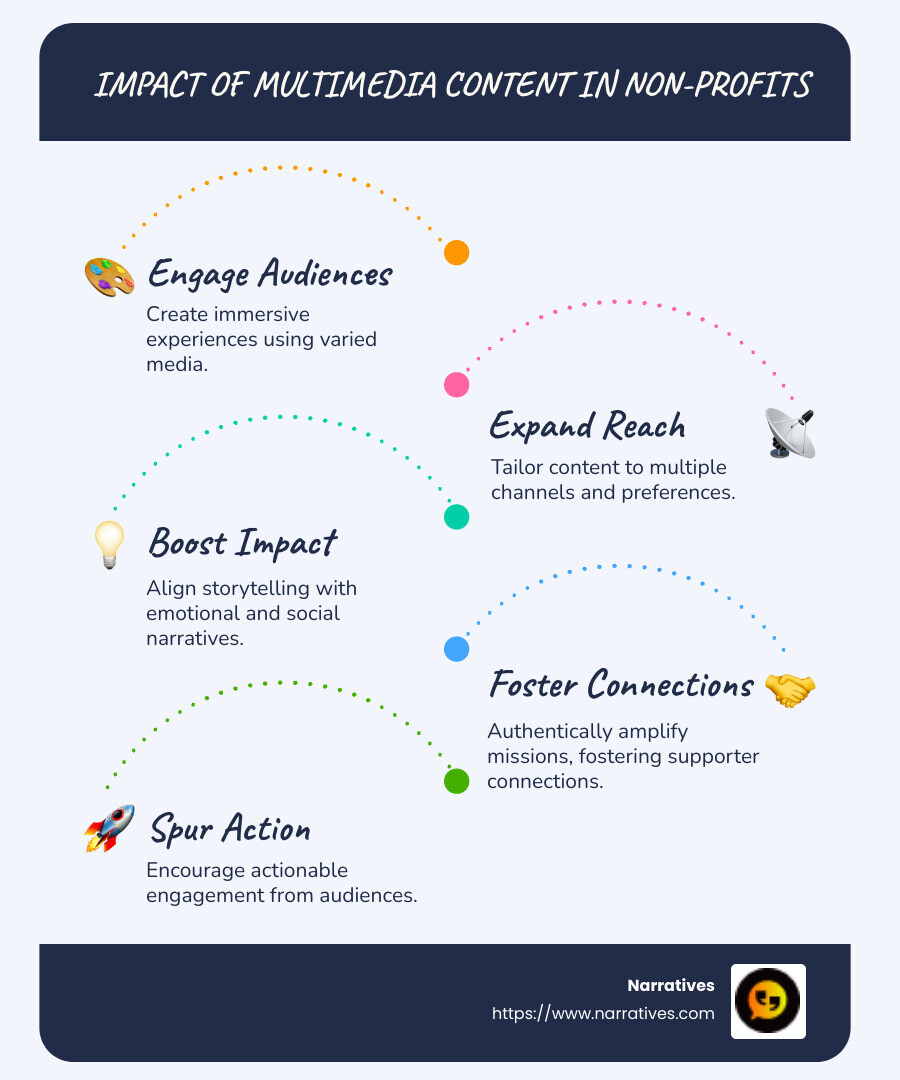
Multimedia content creation is a transformative tool for non-profits, turning their impactful missions into compelling stories that resonate with audiences. By blending text, images, audio, and video, organizations can craft narratives that cut through the noise, capturing the attention and hearts of their viewers. This approach not only improves storytelling but also broadens reach and engagement across digital platforms.
- Engage Audiences: Use varied media to create immersive experiences.
- Expand Reach: Tailor content to multiple channels and preferences.
- Boost Impact: Align storytelling with emotional and social narratives.
Digital storytelling enables non-profits to authentically amplify their mission, fostering connections and spurring action from supporters.
Understanding Multimedia Content
In multimedia content creation, understanding the diverse types of content is crucial. Each type plays a unique role in capturing attention and conveying messages effectively. Let's explore the seven main types of multimedia content and how they can improve storytelling:
Text
Text is the foundation of all content. It's used to convey information clearly and directly. Whether it's a blog post, a social media update, or a news article, text provides context and detail. Clear and concise writing is key to engaging the audience.
Images
Images are powerful. They can convey complex information quickly and effectively. High-quality photos and infographics grab attention and can explain concepts at a glance. For instance, infographics can make data more digestible, helping viewers understand trends or statistics without wading through dense text.
Audio
Audio content, like podcasts and music, allows for multitasking. It engages audiences who prefer listening over reading. Podcasts, for example, are a great way to dive deeper into topics and reach people on the go.
Video
Video combines visual and audio elements to create immersive experiences. It's highly engaging and can be used for tutorials, product demos, or storytelling. According to TechSmith, videos on landing pages can boost conversions by 86%, showcasing their effectiveness in engaging users.
Animation
Animations bring static concepts to life. They are perfect for explaining complex ideas through visuals. Educational animations can simplify learning, making them ideal for tutorials and explainer videos.
Interactive Content
Interactive content, like quizzes and polls, involves audience participation. This type of content keeps users engaged by encouraging interaction. Interactive infographics or quizzes can provide a more personalized and engaging experience.
Virtual Reality (VR)
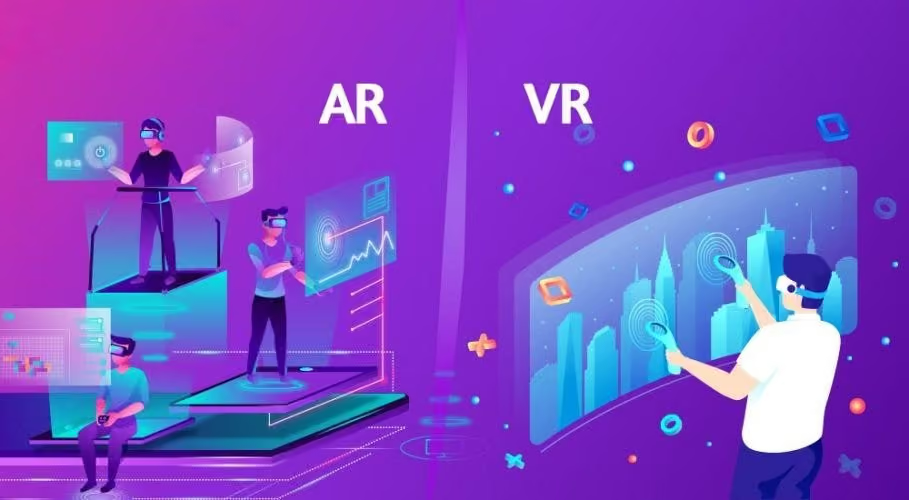
VR offers immersive experiences that transport users to different environments. It's used in gaming, real estate, and education to provide realistic simulations. For example, VR tours can offer potential homebuyers a realistic view of properties without leaving their homes.

Each type of multimedia content has its strengths and can be harnessed to create compelling stories that resonate with audiences. By understanding and leveraging these different media types, you can craft engaging and impactful narratives that drive action and inspire change.
Benefits of Multimedia Content Creation
Creating multimedia content offers numerous advantages that can significantly improve your communication efforts. Let's dig into some key benefits:
Improved Engagement
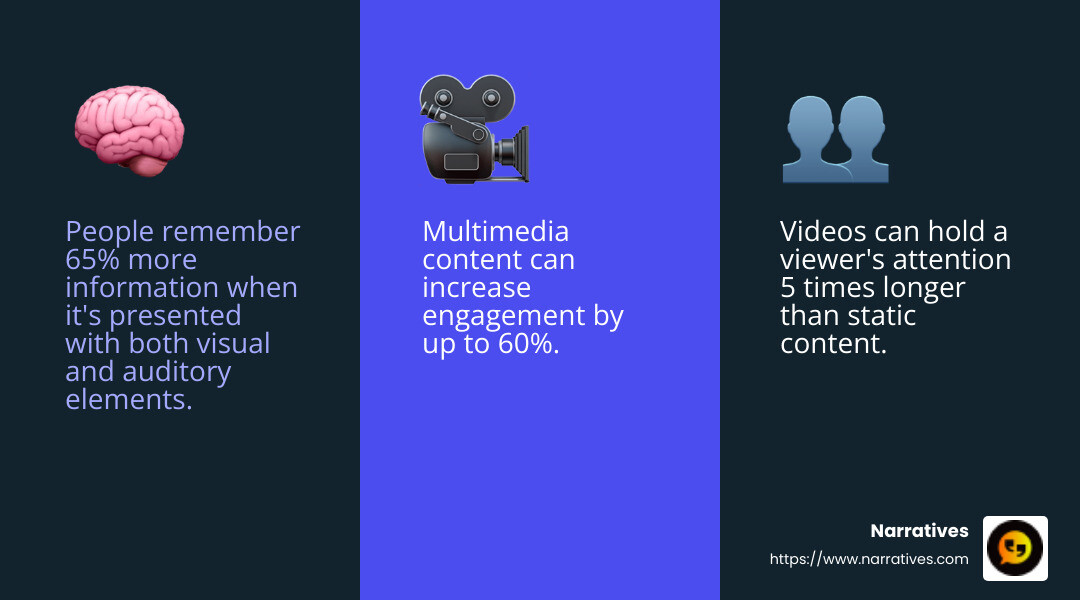
Multimedia content captures attention more effectively than text alone. By combining visuals, audio, and interactive elements, it engages multiple senses. This leads to a more memorable and impactful experience for your audience. For instance, a compelling video can hold a viewer's attention much longer than a static image or text.
Improved Retention
People remember information better when it's presented through multiple formats. Research shows that combining visuals, audio, and text can improve information retention. This means your audience is more likely to remember your message, leading to a deeper understanding of your content.
Increased Reach
Multimedia content appeals to a broader audience. It accommodates diverse learning styles and preferences, making it accessible to more people. This inclusivity allows you to communicate your message effectively to a larger group, expanding your reach and impact.
Better Communication
Some concepts are complex and difficult to explain through text alone. Multimedia content, like animations and interactive elements, simplifies these concepts, making them more digestible for your audience. This clarity in communication can help you convey your message more effectively.
Higher Conversion Rates
Engaging multimedia content can lead to higher conversion rates. Visuals, compelling videos, and interactive elements capture users' attention and increase their interest in your products or services. This engagement can ultimately drive higher conversions and sales.
By leveraging the power of multimedia content, you can improve your storytelling, engage your audience more effectively, and achieve your communication goals with greater success.
How to Create High-Quality Multimedia Content
Creating high-quality multimedia content is an art and a science. It starts with a clear plan and understanding of your audience. Here’s a step-by-step guide to help you get started:
Define Objectives
Before you start creating, ask yourself: What do I want to achieve with this content? Whether it's increasing brand awareness, educating your audience, or driving sales, having clear objectives will guide your content creation process.
Understand Your Audience
To create content that resonates, you need to know who you're speaking to. Consider their needs, preferences, and how they consume content. For example, if your audience prefers short videos over long articles, focus on creating engaging video content.
Consistent Branding
Your multimedia content should reflect your brand's identity. This means using consistent colors, fonts, and messaging across all platforms. Consistency helps build trust and makes your brand recognizable.
Optimize for Devices
Most people access content on mobile devices, so optimization is key. Ensure your videos, images, and interactive elements load quickly and display correctly on all screen sizes. This improves user experience and keeps your audience engaged.
Encourage Interaction
Interactive elements can make your content more engaging. Think about adding quizzes, polls, or clickable infographics. This not only captures attention but also encourages your audience to spend more time with your content.
By following these steps, you can create multimedia content that not only looks great but also achieves your goals.
Next, we’ll explore some top tools that can help you bring your multimedia content to life.
Top Tools for Multimedia Content Creation
Creating multimedia content can be a breeze if you have the right tools at your disposal. Let's explore some of the top tools that can help you craft engaging and high-quality content.
Adobe Creative Cloud
Adobe Creative Cloud is a powerhouse suite that offers everything you need for creating stunning visuals. It's perfect for those who want to dive deep into graphic design, video editing, and even web development.
- Features: Adobe Creative Cloud provides access to a collection of professional-grade software like Photoshop for images, Premiere Pro for videos, and After Effects for animations.
- Benefits: The cloud-based system allows you to work from anywhere, anytime. Plus, it seamlessly integrates with other Adobe products, ensuring a smooth workflow.
- Pro Tip: Start by familiarizing yourself with the interface using Adobe's tutorials. Practice regularly to hone your skills. Patience is key!
Canva
Canva is the go-to tool for those who want to create beautiful designs without a steep learning curve. It's user-friendly and perfect for creating social media graphics, presentations, and more.
- Features: Canva offers a wide range of templates and easy-to-use design tools. You don't need any design experience to get started.
- Benefits: It's ideal for quick and easy design tasks. Canva's drag-and-drop interface makes it accessible to everyone.
- Pro Tip: Explore Canva's library of templates to jumpstart your design process. Customize them to fit your brand's look and feel.
InVideo
InVideo is a fantastic tool for creating engaging video content. Whether you're making social media videos, ads, or explainer videos, InVideo has you covered.
- Features: InVideo offers a plethora of templates and an intuitive editing interface. You can add text, music, and even voiceovers to your videos.
- Benefits: It's designed to make video creation simple and efficient, even for beginners. InVideo helps you produce professional-quality videos quickly.
- Pro Tip: Use InVideo's templates as a starting point and customize them with your brand's colors and fonts. Don't forget to explore their music library to add the perfect soundtrack.
These tools can transform your multimedia content creation journey, making it easier and more efficient. Whether you're a seasoned creator or just starting out, leveraging these tools will help you produce captivating content that resonates with your audience.
Next, we'll tackle some frequently asked questions about multimedia content creation to clear up any lingering doubts.
Frequently Asked Questions about Multimedia Content Creation
What are the types of multimedia content?
Multimedia content combines various forms of media to engage and inform audiences. Here are the seven types:
- Text: The simplest form, used to convey information directly. Think blog posts and captions.
- Images: Infographics and photos that quickly communicate complex information.
- Audio: Podcasts and jingles allow multitasking while consuming content.
- Video: Combines visuals and sound to create immersive experiences, like product demos.
- Animation: Brings concepts to life, perfect for explaining complex ideas.
- Interactive Content: Engages audiences with quizzes and polls.
- Virtual Reality: Offers immersive experiences in gaming, real estate, and education.
Each type serves a unique purpose in capturing attention and conveying messages effectively.
How can multimedia content improve engagement?
Adding visuals, audio, and interactive elements to your content can significantly boost engagement. Here's why:
- Visuals: Images and videos are processed faster by the brain, making them more memorable.
- Audio: Engages the audience even when they're on the go, creating a personal connection.
- Interactive Elements: Encourages participation, making content more engaging and memorable.
By using these elements, you ensure your content captures attention and holds it longer, leading to deeper understanding and increased interaction.
What are best practices for multimedia content creation?
Creating effective multimedia content involves several key practices:
- Define Objectives: Clearly outline what you want to achieve with your content. Are you aiming to educate, entertain, or persuade?
- Understand Audience: Know their needs, preferences, and habits. Tailor your content to resonate with them.
- Consistent Branding: Ensure all content aligns with your brand identity. Use consistent colors, logos, and messaging.
By following these practices, you can create content that not only captivates your audience but also drives desired outcomes.
Next, let's wrap up our exploration of multimedia content creation by revisiting the role of Narratives in digital storytelling and its impact on non-profits.
Conclusion
In the field of digital storytelling, Narratives stands as a guide for non-profits seeking to amplify their voices and impact. Our mission is to transform how these organizations communicate their stories, making them more engaging and impactful through multimedia content creation.
Narratives is dedicated to elevating underrepresented voices by crafting high-quality, emotionally resonant content. This approach not only highlights the incredible work of non-profits but also inspires action and fosters trust within communities. By sharing stories that matter, we help these organizations increase their visibility and reach wider audiences.
The power of multimedia content lies in its ability to engage multiple senses, making messages more memorable and impactful. Whether it's through video, audio, or interactive content, the goal is to create a connection that resonates on a deeper level. This is particularly crucial for non-profits, where the stories of social impact need to be told in a way that moves people to support and participate.
By partnering with Narratives, non-profits can leverage our expertise in digital storytelling to craft compelling narratives that showcase their missions and achievements. We understand the unique challenges these organizations face and are committed to providing solutions that drive social change.
As we continue to explore new trends and technologies in multimedia content, we remain focused on our core mission: to support non-profits in sharing their impact stories effectively. Together, we can make a difference, one story at a time.
For more information on how Narratives can assist your organization in creating impactful community videos, visit our service page.
Let's keep telling stories that matter and inspire change.

.avif)