Strategize and Shine: Building an Effective Multimedia Content Plan

Multimedia content strategy is key for non-profits to tell stories that capture hearts and drive change. Here’s a quick breakdown for those looking to get started:
- Define clear goals: Establish what success looks like. More awareness? Increased donations?
- Know your audience: Tailor content that speaks to their values and needs.
- Craft a consistent message: Keep it authentic and aligned with your mission.
- Choose the right media mix: Blend text, video, and graphics to create a cohesive story.
Where storytelling is a powerful tool, non-profits must leverage multimedia content strategies to shine. With so much information out there, standing out can be tough. But with a smart approach, you can amplify your mission and make a real impact.
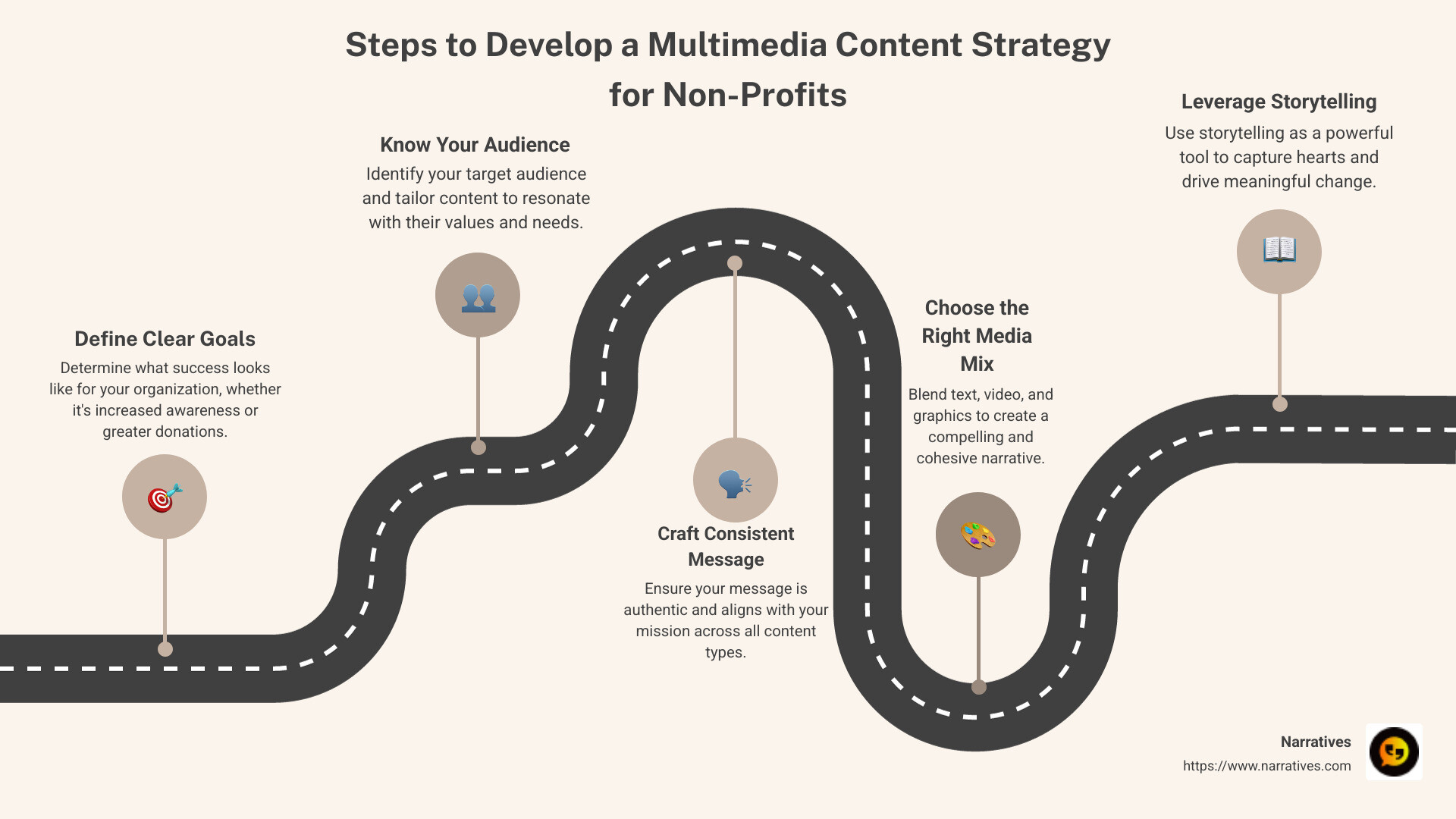
Multimedia content strategy definitions:
Understanding Multimedia Content Strategy
A multimedia content strategy isn't just about throwing together text, videos, and graphics. It's about weaving them into a seamless narrative that captivates your audience. Let's break it down.
Blend Media Types for Maximum Impact
Think of your content as a mix. Each media type—text, video, and graphics—acts as a thread. When woven together thoughtfully, they create a vibrant and engaging story. For instance, a strong script can serve as the backbone of a video, guiding visuals and ensuring they complement rather than repeat information.
Storyboarding is key here. It helps you visualize how each piece will fit together, ensuring every element serves a purpose in your narrative. This approach not only improves clarity but also keeps your audience engaged from start to finish.
Craft a Cohesive Story
Consistency is crucial. Your content should maintain a unified style and tone across all media. This cohesion reinforces your brand identity and makes your message instantly recognizable. By keeping your tone consistent, you create a more authentic connection with your audience.
Take a page from successful brands that use multimedia to tell a cohesive story. They often start with a strong script, then use visuals and audio to bring that script to life. This synergy creates a more immersive experience for the audience.
Engage Your Audience
Engagement is the secret sauce. Interactive elements like quizzes, polls, or clickable infographics invite your audience to participate, deepening their connection to your content. This active involvement not only captures attention but also improves retention.
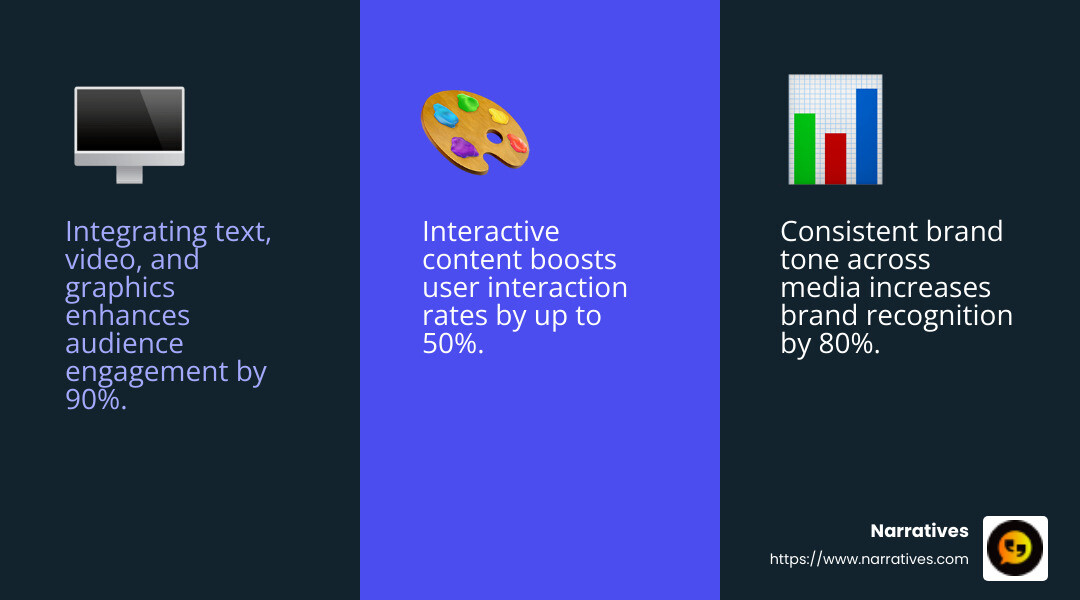
Tailoring your content to the platform is also vital. While short, snappy videos might thrive on social media, longer, detailed content could be more suitable for blogs or websites. Understanding these nuances ensures your content resonates with your audience.
By blending media types, crafting a cohesive story, and engaging your audience, you lift your multimedia content strategy. The goal is to create a narrative that not only informs but also inspires and connects on a human level.
Establishing Goals and Objectives
Before diving into creating content, it's crucial to define what success looks like for your multimedia content strategy. Without clear goals, you're essentially sailing without a map.
Define Success
Start by asking yourself: What do I want to achieve? Success can take many forms, and it varies from one organization to another. Do you want to increase brand awareness, drive more traffic to your website, or boost engagement on social media? Each goal will shape your content strategy differently.
To get specific, consider these questions:
- Are you aiming to grow your email subscriber list?
- Is increasing your social media followers a priority?
- Do you want to improve customer retention rates?
Answering these questions helps you craft a strategy that's custom to your needs, ensuring every piece of content serves a purpose.
Measure Success
Once you've set your goals, the next step is to measure your progress. This is where Key Performance Indicators (KPIs) come into play. KPIs are like the gauges on a dashboard—they show you how well you're doing.
Here are some KPIs you might track:
- Website traffic and page views
- Social media engagement: likes, shares, comments
- Conversion rates and leads generated
By keeping a close eye on these metrics, you can determine which parts of your strategy are working and which need tweaking. The goal is not just to create content but to create content that works.
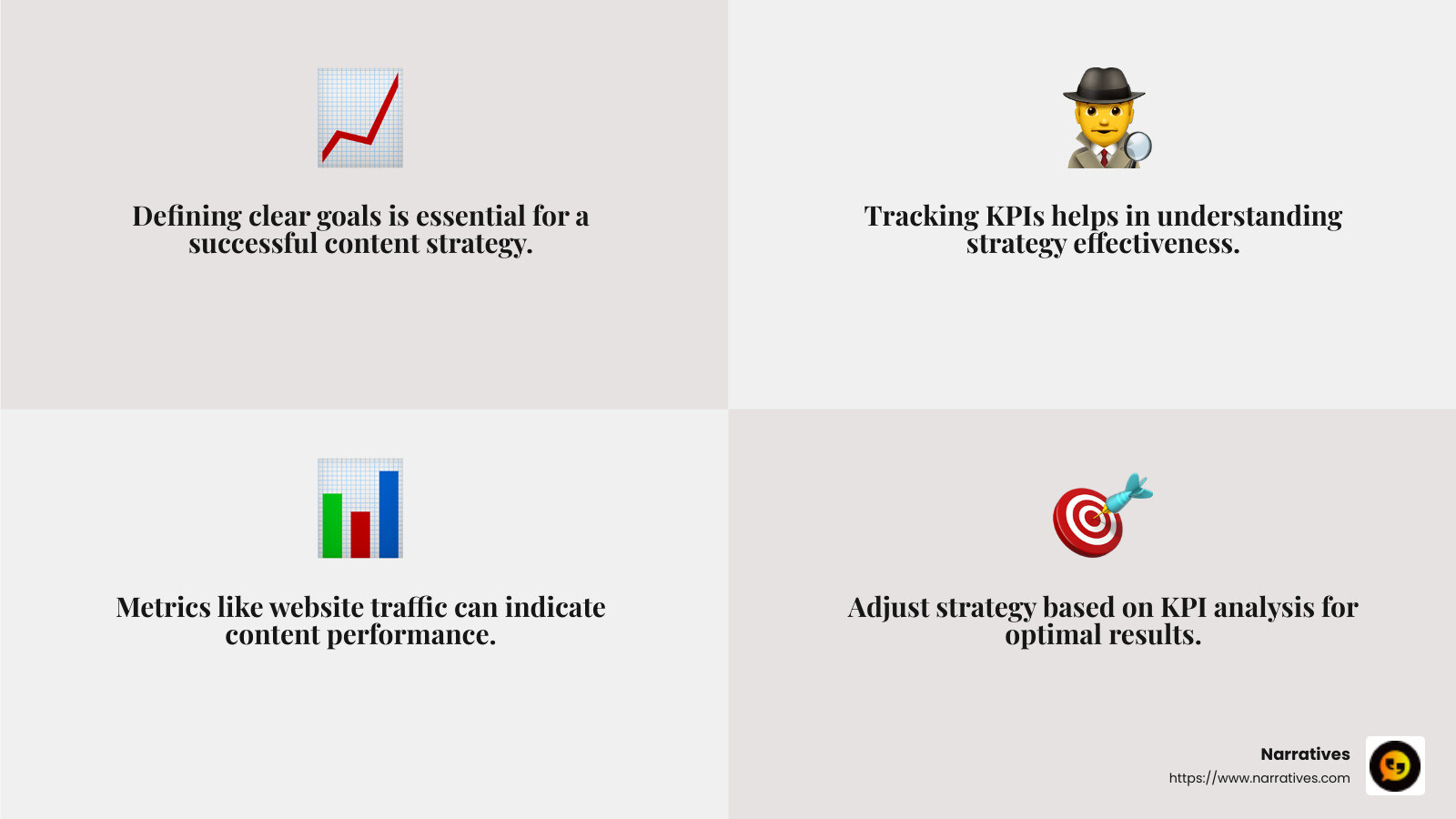
Content Marketing Goals
Your content marketing goals should align with your overall business objectives. If your aim is to boost brand awareness, focus on creating shareable content that resonates with your audience. If you're looking to drive sales, consider content that guides potential customers through the buying process.
Here’s a simple way to align your goals:
- Brand Awareness: Use metrics like website traffic and social media engagement.
- Customer Acquisition: Focus on conversion rates and lead generation.
- Customer Loyalty: Track newsletter subscriptions and repeat customers.
By clearly defining and measuring your goals, you ensure that your multimedia content strategy not only informs and entertains but also drives tangible results. This alignment is key to maximizing the impact of your content efforts.
Next, we'll explore how to identify and locate your target audience to ensure your content reaches those who need it most.
Identifying and Locating Your Audience
Knowing your audience is like having a compass for your multimedia content strategy. Without it, your content could miss the mark, no matter how well-crafted it is. Let's break down how to identify and locate your target audience effectively.
Target Audience
First, ask yourself: Who are you trying to reach? Understanding your target audience is crucial. It helps tailor your content to meet their needs and interests.
Here’s how to get started:
- Demographics: Look at age, gender, income, and education. These factors can influence how your audience interacts with content.
- Interests and Behaviors: What are their hobbies? What problems do they need solving? This information can guide your content topics.
Creating audience personas can be a helpful exercise. Imagine a typical member of your audience and build a profile. Include details like:
- Name and age
- Job and income level
- Interests and pain points
Social Media Platforms
Once you know who your audience is, find out where they hang out online. Different social media platforms attract different demographics.
- Facebook: Popular among adults aged 30-64. Great for sharing articles, videos, and community-driven stories.
- Instagram: Attracts younger audiences, particularly those aged 18-29. Perfect for visual content like images and short videos.
- LinkedIn: Best for professionals and B2B content. Ideal for sharing industry insights and professional achievements.
For example, if you’re targeting women aged 50 or older, Facebook might be your best bet. According to the Pew Research Center, 73% of people aged 50-64 use Facebook.
Audience Demographics
Understanding the demographics of your audience can improve your strategy. It’s not just about knowing who they are but also understanding their preferences and behaviors.
Consider this:
- Age and Gender: Tailor your content style and platform choice accordingly.
- Location: Use location-based content or ads to target specific regions.
- Cultural Background: Be sensitive to cultural nuances and create inclusive content.
By combining demographic insights with platform preferences, you can ensure your content reaches the right people at the right time. This approach not only maximizes engagement but also strengthens your connection with your audience.
Now that you know how to find your audience, let's dive into crafting a brand tone and message that resonates with them.
Crafting Your Brand's Tone and Message
Creating a brand voice that resonates with your audience is like setting the stage for a meaningful conversation. It's not just about what you say, but how you say it. Let's explore how to craft a compelling brand tone and message.
Brand Voice
Your brand voice is the personality of your content. It’s how your brand speaks to your audience across all platforms. Think of it as the character your brand plays in the story you’re telling.
Why is it important?
- Consistency: A consistent voice helps build trust. When your audience knows what to expect, they’re more likely to engage.
- Recognition: A unique voice makes your brand recognizable. It sets you apart from others.
To develop your brand voice, consider these questions:
- What values does your brand stand for?
- How do you want your audience to feel when they interact with your content?
- What adjectives describe your brand? (e.g., friendly, professional, quirky)
Tone Consistency
Once you’ve established your brand voice, maintaining tone consistency is key. This means your content should sound similar, whether it’s a blog post, a video, or a social media update.
Tips for consistency:
- Create Guidelines: Develop a style guide that outlines your brand voice and tone. Include examples and scenarios.
- Train Your Team: Make sure everyone involved in content creation understands and follows the guidelines.
- Review Regularly: Periodically review your content to ensure it aligns with your brand voice.
Audience Connection
Connecting with your audience is about more than just sharing information. It’s about creating a relationship.
How to build a connection:
- Empathize: Show understanding of your audience’s needs and concerns. This builds trust and loyalty.
- Engage: Encourage interaction. Ask questions, respond to comments, and be part of the conversation.
- Be Authentic: Authenticity resonates. Share real stories and experiences that reflect your brand’s values.
Consider this quote from a recent study: “Good content isn’t about good storytelling. It’s about telling a true story well.” This means being genuine in your messaging and showing that you care about your audience.
By focusing on your brand voice, maintaining tone consistency, and building a connection with your audience, you can create a multimedia content strategy that truly resonates. Now, let's explore how to draw inspiration from market trends to keep your content fresh and engaging.
Exploring Market Trends for Inspiration
Staying ahead of the curve in the changing world of content creation can be challenging, but it's also exciting. By keeping an eye on market trends, you can draw inspiration and infuse your multimedia content strategy with innovative ideas that captivate your audience.
Market Trends
1. Immersive Experiences:
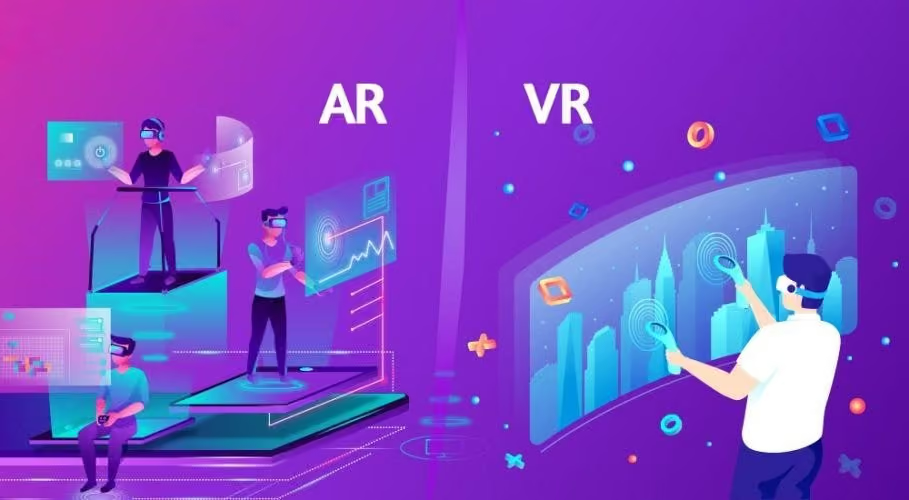
Immersive experiences like virtual reality (VR) and augmented reality (AR) are not just buzzwords; they are changing how we consume content. With the global AR and VR market expected to reach $209.2 billion, these technologies offer new ways to engage audiences deeply.
Consider creating virtual tours or interactive ads that allow users to interact with your content in a more engaging manner. This trend is especially relevant for non-profits looking to tell compelling stories and connect on a human level.
2. AI-Generated Content:
Artificial intelligence is reshaping content creation. AI can help automate and personalize content, making it more efficient and custom to individual preferences. According to PwC, AI could contribute significantly to the global economy by 2030, highlighting its potential in content marketing.
Leverage AI to analyze data and generate content that resonates with your audience. But remember, authenticity is key. Ensure transparency in AI-generated content to maintain trust.
Content Inspiration
Finding inspiration is crucial for keeping your content fresh and engaging. Here are some ways to spark creativity:
Look at Different Industries: Sometimes, the best ideas come from unexpected places. Explore how other industries use multimedia content and adapt those ideas to fit your brand.
Engage with Your Audience: Listen to what your audience is saying. Their feedback can provide valuable insights and inspire new content ideas.
Collaborate with Creators: Partnering with other content creators or influencers can bring fresh perspectives and expand your reach.
Innovative Ideas
Innovation is about thinking outside the box and pushing boundaries. Here are some innovative ideas to consider:
Interactive Content: Use quizzes, polls, or clickable infographics to engage users actively. This not only captures attention but also encourages interaction.
Storytelling Through Data: Use data visualization to tell compelling stories. Infographics and interactive charts can make complex information more digestible and engaging.
Personalized Content Experiences: Tailor content to individual preferences using AI and machine learning. Personalized experiences can increase engagement and conversion rates.
By exploring market trends and drawing inspiration from various sources, you can infuse your multimedia content strategy with creativity and innovation. Up next, let's dig into how non-profits can leverage these strategies for social impact and community-driven storytelling.
Multimedia Content Strategy for Non-Profits
In the field of non-profits, a well-crafted multimedia content strategy is more than just a tool for engagement—it's a catalyst for change. By focusing on social impact, community-driven storytelling, and amplifying underrepresented voices, non-profits can create content that resonates deeply and inspires action.
Social Impact
Non-profits have a unique opportunity to make a significant social impact through their content. By highlighting the issues they address and the communities they serve, non-profits can raise awareness and drive meaningful change. A compelling example is the Pars Equality Center, which uses content to empower Persian-speaking immigrants by showcasing their challenges and successes.
To maximize social impact, non-profits should focus on creating content that not only informs but also motivates. This can be achieved by sharing success stories, highlighting the tangible results of their work, and providing clear calls to action that encourage audience participation.
Community-Driven Storytelling
Community-driven storytelling is at the heart of effective non-profit content. By involving the community in the storytelling process, non-profits can create authentic and relatable narratives. This approach not only builds trust but also fosters a sense of belonging and empowerment.
Consider using multimedia elements like video interviews, photo essays, and interactive timelines to bring community stories to life. For instance, Narratives collaborates with non-profits to highlight underrepresented storytellers, showcasing their struggles and triumphs in a way that connects emotionally with the audience.
Amplifying Underrepresented Voices
One of the most powerful aspects of a multimedia content strategy for non-profits is the ability to amplify underrepresented voices. By giving a platform to those who are often unheard, non-profits can challenge stereotypes, promote diversity, and drive social change.
Non-profits can use various media formats—such as podcasts, documentaries, and interactive content—to ensure these voices are heard. This not only enriches the narrative but also broadens the audience's perspective, fostering greater empathy and understanding.
In conclusion, a strategic approach to multimedia content allows non-profits to harness the power of storytelling for social good. By focusing on social impact, community-driven stories, and amplifying underrepresented voices, non-profits can create content that not only informs but also inspires and connects on a profound level. Up next, let's tackle some frequently asked questions about building a winning multimedia content strategy.
Frequently Asked Questions about Multimedia Content Strategy
How to Develop a Winning Multimedia Content Strategy?
Developing a winning multimedia content strategy starts with clear goals and objectives. Ask yourself: What do you want to achieve? Is it boosting engagement, increasing conversion rates, or enhancing user interaction? Defining these goals will guide your content creation process.
Media types play a crucial role. Consider using a mix of custom imagery, video, audio, and interactive content. Each media type has its strengths. Videos can explain complex ideas quickly, while custom imagery grabs attention. Audio, like podcasts, offers a personal touch, and interactive content invites user participation.
Storyboarding can help visualize how these elements fit together. It ensures each media type complements the others, creating a cohesive narrative that resonates with your audience.
Importance of Multimedia Content Strategy
A well-crafted multimedia content strategy is vital for several reasons. First, it improves user interaction. People prefer engaging with diverse content formats, making them more likely to interact with your brand.
Second, it boosts conversion rates. Engaging visuals and compelling videos can capture attention and drive action. According to studies, multimedia content can lead to higher conversion rates compared to text-only content.
Finally, multimedia content is memorable. By stimulating multiple senses, it helps your audience retain information better, ensuring your message sticks.
Types of Multimedia Content
When considering types of multimedia content, think about your audience's preferences and your goals. Here are some popular options:
Custom Imagery: Eye-catching images can convey your brand's message quickly and effectively. Use high-quality images to build trust and improve your content's visual appeal.
Video: Videos are powerful tools for storytelling. They can simplify complex topics, showcase products, or share testimonials. Short and engaging videos work best on social media.
Audio: Podcasts and audio clips offer a unique way to connect. They provide a personal touch and are perfect for audiences on the go.
Interactive Content: Polls, quizzes, and interactive infographics invite user participation. They not only engage but also provide valuable insights into your audience's preferences.
By mixing these types, you create a dynamic and engaging content strategy that captures attention and drives results.
Conclusion
As we wrap up our exploration of multimedia content strategy, it's clear that Narratives is uniquely positioned to lead in the field of digital storytelling. Our commitment to elevating underrepresented voices and partnering with purpose-driven organizations sets us apart. By focusing on high-quality, emotionally resonant video and multimedia content, we help non-profits share their impact stories in ways that inspire action and build trust.
Digital storytelling isn't just about sharing information; it's about creating connections. When we tell stories that resonate, we build a bridge between non-profits and their audiences, fostering a sense of community and shared purpose. This approach not only improves brand awareness but also amplifies the social impact of the organizations we partner with.
At Narratives, we understand the power of storytelling to transform ideas into movements. By integrating diverse media types—like videos, custom imagery, and interactive content—into a cohesive narrative, we ensure that each story is not only heard but remembered.
Ready to see how our storytelling expertise can lift your mission? Learn more about how Narratives can be your digital storytelling partner. Together, let's create stories that shine and make a lasting impact.

.avif)