From Silence to Success: Non-Profit Communication Strategies

Non-profit communication strategy is essential in amplifying a nonprofit’s mission and fostering engagement with its supporters. This strategy seamlessly integrates storytelling, strategic planning, and communications to cultivate stronger connections with stakeholders.
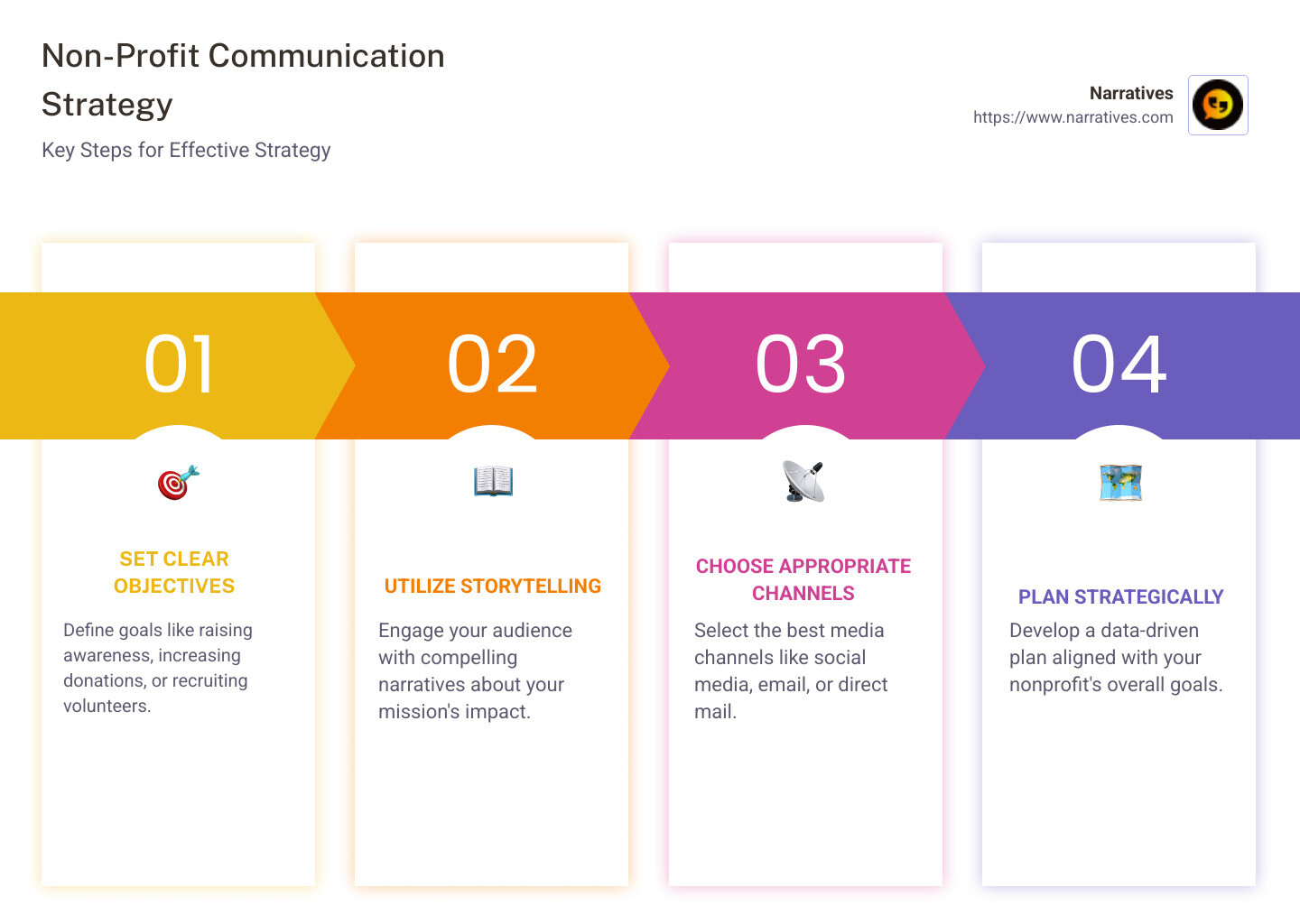
To effectively craft a non-profit communication strategy, consider these fundamental steps:
- Set clear objectives: Define what you want to achieve with your communications, such as raising awareness, increasing donations, or recruiting volunteers.
- Use storytelling: Engage your audience by sharing compelling narratives about your mission's impact. This makes your message memorable and emotionally resonant.
- Choose appropriate channels: Select the best media channels for your audience, like social media, email, or direct mail, to maximize your reach and engagement.
- Plan strategically: Develop a data-driven plan to guide your communications efforts, ensuring alignment with your nonprofit’s overall goals.
The aim is to translate your organization's essential work into compelling content effortlessly. By implementing these steps, you’ll create more impactful and ethical communications that drive awareness, donations, and community growth.
Understanding Non-Profit Communication Strategy
Creating a successful non-profit communication strategy starts with setting clear objectives. What do you want to achieve? Whether it's raising awareness, increasing donations, or recruiting volunteers, defining these goals is crucial.
Define Objectives
Begin by pinpointing what success looks like for your organization. Are you looking to boost volunteer numbers? Perhaps you want to increase the visibility of your cause. Whatever the aim, clear objectives act as your roadmap.
- Raise Awareness: Spread the word about your mission.
- Increase Donations: Encourage financial support.
- Recruit Volunteers: Attract individuals to join your cause.
Determine Goals
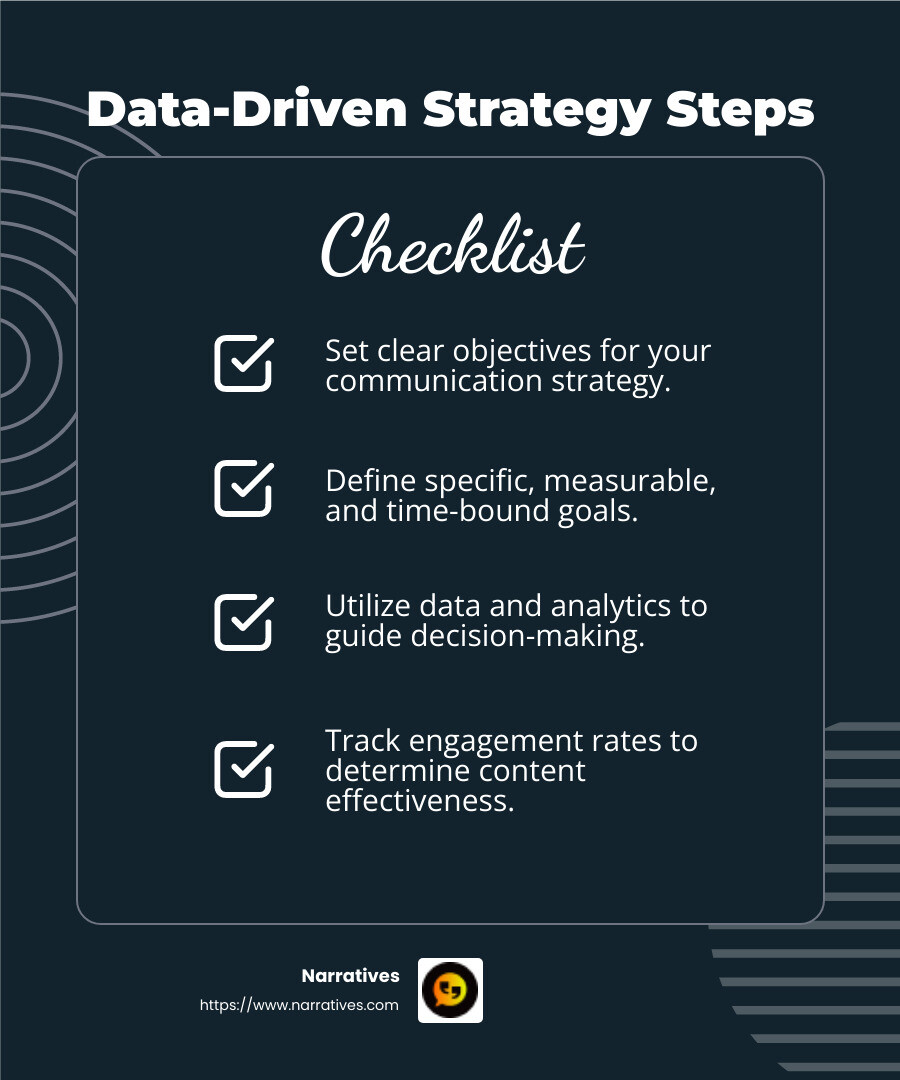
Once objectives are set, break them down into specific, measurable goals. This helps track progress and adjust strategies as needed. For example, if your objective is to raise awareness, a goal might be to increase your social media following by 25% in six months.
- Specific: Clearly define what you want to achieve.
- Measurable: Use metrics to track progress.
- Time-bound: Set a deadline to maintain focus.
Data-Backed Plan
A successful strategy relies on data. Use metrics and analytics to guide your decisions. This approach helps identify what's working and where to improve. For instance, tracking engagement rates can reveal which types of content resonate most with your audience.
- Analyze Metrics: Look at engagement, donations, and other relevant data.
- Adjust Tactics: Use insights to refine your approach.
- Measure Impact: Continuously evaluate the effectiveness of your strategy.
By defining objectives, determining goals, and developing a data-backed plan, your non-profit can craft a communication strategy that not only amplifies your message but also drives tangible results.
Next, we'll explore the key components that make up a successful non-profit communication strategy, including storytelling, marketing, and engagement.
Key Components of a Non-Profit Communication Strategy
Crafting a compelling non-profit communication strategy involves several key components. Let's explore storytelling, marketing, fundraising, and engagement.
Storytelling
Stories capture hearts and minds. For non-profits, storytelling is more than just relaying facts; it's about creating a connection.
Consider the three R’s of nonprofit storytelling: Resonance, Relevance, and Respect.
- Resonance: Share stories that tug at emotions. For example, an animal shelter might highlight the joy a family experiences when adopting a pet.
- Relevance: Make it about the donor. Use donor-centric language that shows their impact.
- Respect: Be honest and respectful. Avoid scare tactics and focus on genuine stories.
Use storytelling to make your mission memorable. Studies show 55% of consumers remember stories over facts.
Marketing
Marketing in the non-profit world is about motivating action. Whether it's donations, volunteer sign-ups, or event attendance, your marketing efforts should clearly articulate your value proposition.
- Value Proposition: Explain how you solve your audience's needs and what makes you unique. For instance, Wonder Ink offers accessible, online children's ministry curriculum.
Marketing can take many forms: social media, email campaigns, and even direct mail. Choose the channels that best reach your audience.
Fundraising
Fundraising is essential for non-profits. It requires custom communication for different audiences:
- Current Donors: Keep them engaged with regular updates and thank-yous.
- Potential Donors: Build trust with testimonials and success stories.
- Corporations: Highlight the benefits of corporate giving, like matching gift programs.
A strategic approach to fundraising communication can significantly boost your resources.
Engagement
Engagement is about building relationships. It’s not just about talking; it’s about listening and responding.
- Social Media: Use platforms to interact with your audience. Share stories, ask questions, and encourage feedback.
- Events: Host events that allow supporters to connect with your mission.
- Feedback Loops: Encourage supporters to share their thoughts and experiences. This can offer valuable insights into how your organization is perceived.
By focusing on these key components—storytelling, marketing, fundraising, and engagement—you can create a robust communication strategy that amplifies your message and drives action.
Next, we’ll look at how to develop your non-profit communication strategy, including auditing current efforts and setting goals.
Developing Your Non-Profit Communication Strategy
Creating a non-profit communication strategy begins with understanding where you currently stand. Here's how to get started:
Audit Your Current Efforts
Before setting new goals, take a close look at your existing communication efforts. Conduct a thorough audit of all your channels—social media, email, newsletters, and more.
- Evaluate Consistency: Are your messages consistent across platforms?
- Identify Successes and Failures: What has worked well, and what hasn’t? Use data to guide your analysis.
- Resource Allocation: Determine if your current resources are being used effectively.
This audit will give you a clear picture of your starting point and highlight areas for improvement.
Set Clear Goals
Once you've audited your current efforts, it's time to set goals. These should be SMART: Specific, Measurable, Achievable, Resourced, and Time-Bound.
Some common goals for non-profits include:
- Increasing brand awareness
- Growing your email list by 20%
- Securing three new community partnerships
Setting clear goals provides direction and helps measure the success of your communication strategy.
Identify Your Audiences
Knowing your audience is crucial. Different groups require different messaging.
- Segment Your Audience: Consider donors, volunteers, beneficiaries, and community leaders.
- Create Personas: Develop detailed profiles for each segment. Include demographics, interests, and communication preferences.
Understanding your audience will allow you to tailor your messaging for maximum impact.
Develop Your Messaging Platform
With your audience in mind, it's time to craft your core messages. Your messaging platform should include:
- Key Messages: What are the main points you want to communicate?
- Sub-Messages: Support your key messages with additional details.
- Tone and Style: Ensure your messaging is consistent with your brand identity.
A strong messaging platform ensures that all communications align with your mission and resonate with your audience.
With these steps—auditing, goal-setting, audience identification, and messaging development—you can build a robust communication strategy that drives engagement and supports your mission.
Next, we’ll explore how to put your non-profit communication strategy into action, focusing on branding, target audiences, and communication channels.
Non-Profit Communication Strategy in Action
Putting your non-profit communication strategy into action is where the magic happens. This involves focusing on three key areas: branding, target audiences, and communication channels.
Branding
Your brand is more than just a logo or a tagline—it's the essence of your organization. It's how people perceive you and what makes you unique. A strong brand helps build trust and recognition, which can lead to more support and engagement.
- Consistency is Key: Ensure that your brand is consistent across all platforms. From your website to your social media profiles, everything should reflect your mission and values.
- Tell Your Story: Use storytelling to highlight your impact. Share real stories from those you've helped, like how the Pars Equality Center empowers Persian-speaking immigrants. These stories can make your brand relatable and memorable.
Target Audiences
Understanding who you are communicating with is crucial. Different groups will have different needs and preferences.
- Segment Your Audience: Break down your audience into groups such as current donors, potential donors, volunteers, and beneficiaries. Each group may require a different approach.
- Tailor Your Message: Customize your messages based on the audience segment. For instance, current donors might appreciate updates on how their contributions are making a difference, while potential donors might need more information about your mission and impact.
Communication Channels
Choosing the right channels to reach your audience is essential. Each channel has its strengths and can serve different purposes.
- Email Campaigns: Great for detailed updates and direct calls to action. They can be personalized and are a powerful tool for donor outreach.
- Social Media: Platforms like Facebook and Instagram are ideal for engaging content and reaching a broad audience. Use them to share impactful images and stories.
- Content Marketing: Blogs and articles can establish your organization as a thought leader in your field. Informative content can attract new supporters and keep existing ones engaged.
By focusing on branding, understanding your target audiences, and choosing the right communication channels, you can effectively put your non-profit communication strategy into action. This approach will help you build stronger relationships, increase your impact, and achieve your mission.
Next, we'll address common questions about creating and executing a successful donor communications plan.
Frequently Asked Questions about Non-Profit Communication Strategy
How do you create a donor communications plan?
Creating a donor communications plan is all about building relationships. Start by identifying key stakeholders who will be involved in crafting and executing your plan. This could include board members, staff, and volunteers.
1. Define Your Goals: What do you want to achieve with your donor communications? Whether it's increasing donations or improving donor retention, having clear goals is essential.
2. Segment Your Audience: Understand who your donors are. Segment them based on their donation history, interests, and engagement levels. This will help you tailor your messages effectively.
3. Choose Your Channels: Decide which communication channels work best for engaging with your donors. Email campaigns, social media, and content marketing are popular choices.
4. Create a Timeline: Outline when you'll send out specific communications. A well-planned timeline ensures that your messages are timely and relevant.
5. Gather Feedback: Use donor surveys or informal conversations to gather feedback. Understanding donor preferences and concerns can help improve future communications.
What are some communication strategies in a nonprofit communication plan?
Nonprofits have a variety of strategies at their disposal to engage supporters and communicate their mission effectively.
Email Campaigns: These are a direct and personal way to reach donors. Use them for updates, thank-you messages, and fundraising appeals.
Social Media: Platforms like Facebook and Instagram allow for real-time engagement and storytelling. Share impactful visuals and success stories to keep your audience engaged.
Content Marketing: Create blogs, videos, and articles that highlight your organization's work. This not only informs but also builds trust and credibility.
Hosting Events: Whether virtual or in-person, events like donor appreciation days or informational sessions can deepen relationships and encourage giving.
What is the difference between a communications plan and a communications strategy?
While they might sound similar, a communications plan and a communications strategy serve different purposes.
Communications Plan: This is the "what" and "when" of your communication efforts. It outlines specific actions, timelines, and channels you'll use to reach your goals.
Communications Strategy: This is the "why" and "how." It's the overarching approach that guides your communication efforts. It includes your goals, the tactics you'll use, and how you'll measure success.
Think of the strategy as the blueprint for your communications efforts, while the plan is the step-by-step guide to executing that strategy.
In the next section, we'll explore how to measure and improve your communication efforts to ensure success.
Conclusion
Digital storytelling is more than just a buzzword; it's a powerful tool for nonprofits to connect with their audiences. At Narratives, we believe in the power of stories to transform silence into success. By elevating underrepresented voices through high-quality multimedia content, we help nonprofits share their impact stories in a way that inspires action and builds trust.
Our approach focuses on community-driven storytelling. This means we work closely with nonprofits to highlight the real stories of the communities they serve. By doing so, we ensure that the narratives are not only authentic but also resonate deeply with audiences. This connection is crucial for increasing visibility and encouraging support.
Non-profit communication strategy doesn't have to be complex. It's about understanding your audience, crafting messages that resonate, and choosing the right platforms to share those messages. With the right strategy, nonprofits can amplify their impact and reach more people than ever before.
If you're ready to take your nonprofit's storytelling to the next level, consider partnering with us. Together, we can create compelling stories that drive change and make a difference in the world.
Learn more about how Narratives can support your nonprofit's communication efforts.


.avif)