Nonprofit Social Media Success: Strategies to Elevate Your Cause

Non profit social media strategy is essential for organizations looking to lift their mission and engage with their audience in today's digital age. Here's why it matters and what you need to know:
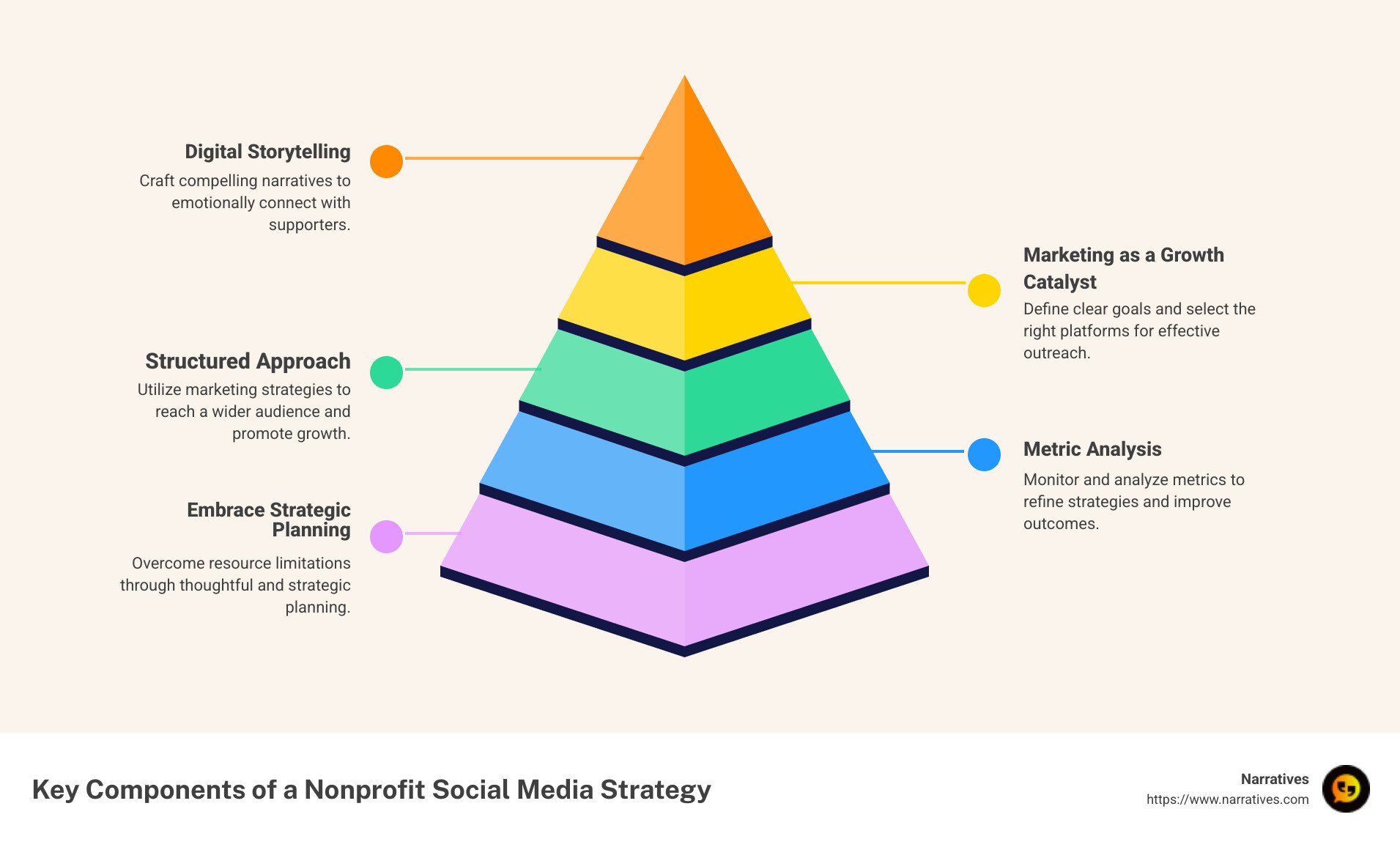
Digital Storytelling is Key: Social media platforms provide nonprofits with the opportunity to share their stories widely. Through compelling narratives, organizations can connect emotionally with supporters and drive engagement.
Marketing as a Growth Catalyst: A well-planned marketing strategy allows nonprofits to reach more people, spread their message effectively, and foster sustainable growth.
Structured Approach Required: A defined strategy with clear goals, platform selection, and metric analysis is vital for success.
Marketing serves as the backbone of nonprofit growth. It’s not just about getting the word out but about creating a genuine connection with supporters. Social media platforms like Facebook, Instagram, and TikTok become the stage for digital storytelling, which allows nonprofits to showcase their impact through engaging content.
By tackling limited resources through strategic planning and embracing the art of storytelling, nonprofits can transform their digital presence into a powerful tool for change.
Non profit social media strategy word roundup:
- best nonprofit social media campaigns
- instagram strategy for nonprofits
- social media tips for nonprofits
Benefits of a Nonprofit Social Media Strategy
Building a nonprofit social media strategy is more than just posting updates. It's about creating meaningful connections, maximizing limited resources, and engaging supporters effectively.
Relationship Building
Social media is a powerful tool for building relationships. It allows nonprofits to engage with their audience on a personal level, creating a community around their cause. When supporters feel connected, they are more likely to engage, donate, and advocate for your mission.
For example, the World Wildlife Fund uses social media to share captivating stories and images of wildlife, reinforcing the connection between their mission and their supporters' passions. This approach not only engages followers but also strengthens their commitment to the cause.
Minimal Resources, Maximum Impact
Nonprofits often operate with limited resources. Social media provides a cost-effective way to reach a broad audience without a hefty budget. With strategic planning, nonprofits can leverage platforms like Facebook and Instagram to spread their message far and wide.
Consider this: 82% of Americans use social media, making it an essential part of any marketing strategy. By focusing efforts on one or two key platforms, nonprofits can maximize their impact without stretching their resources thin.
Supporter Engagement
Engaging supporters is crucial for any nonprofit. Social media allows organizations to interact directly with their audience, fostering a sense of community and belonging. Responding to comments, asking questions, and sharing behind-the-scenes content can turn passive followers into active participants.

The Tree House Humane Society, for instance, engages its audience by asking light-hearted questions and sparking conversations about pet care. This not only keeps their followers engaged but also aligns with their mission of animal welfare.
By utilizing social media effectively, nonprofits can build strong relationships, make the most of limited resources, and engage their supporters in meaningful ways. This sets the stage for crafting a comprehensive social media strategy that lifts your cause.
Crafting Your Nonprofit Social Media Strategy
Creating a successful nonprofit social media strategy involves a few key steps. Let's break down the process to ensure your nonprofit can effectively lift its cause.
Define Your Goals
First things first: define your goals. What do you want to achieve with social media? Common goals include:
- Raising brand awareness: Let people know who you are and what you stand for.
- Spreading important information: Share updates and news about your cause.
- Increasing website traffic: Drive supporters to your website for more information or to donate.
- Building meaningful relationships: Engage with your audience to create a loyal community.
- Driving donations: Encourage followers to contribute to your cause.
Having clear goals will guide your strategy and help you measure success.
Choose the Right Platforms
Not all social media platforms are created equal. Choose platforms that align with your goals and audience:
- Facebook: Ideal for sharing event information and creating fundraising pages.
- Instagram: Perfect for visual storytelling and showcasing your impact.
- TikTok: Engage with younger audiences through creative video content.
- X: Use for quick updates and hashtag campaigns.
- LinkedIn: Share educational content and connect with industry professionals.
Focus on one or two platforms to start, based on where your audience spends their time.
Create a Content Calendar
A content calendar is your roadmap for social media success. It should include:
- Posting schedule: Plan when and what to post.
- Creative assets: Prepare photos, videos, and graphics in advance.
- Social media management tools: Use tools to schedule posts and track performance.
A well-organized calendar ensures consistent and strategic posting.
Develop a Social Media Policy
A social media policy acts as a code of conduct for your organization. It should cover:
- Staff guidelines: Outline how staff should represent the organization online.
- Crisis communication: Have a plan for handling emergencies.
- Security protocols: Ensure safe use of social media accounts.
This policy helps maintain a professional online presence and prevent potential issues.
Analyze Metrics
Finally, analyze your social media metrics to refine your strategy. Use A/B testing to understand what resonates with your audience:
- Creative preferences: Test different images or messages to see what works best.
- Call to action: Experiment with different ways to encourage engagement.
- Platform engagement: Track likes, shares, and comments to gauge success.
Regular analysis allows you to optimize your strategy and improve results over time.
By defining goals, choosing the right platforms, creating a content calendar, developing a social media policy, and analyzing metrics, your nonprofit can craft a robust social media strategy that lifts your cause.
Nonprofit Social Media Content Ideas
Creating engaging content is essential for a successful nonprofit social media strategy. Here are some ideas to inspire your content creation:
Posts
Posts are ideal for storytelling and sharing detailed information. Use them to highlight success stories, share updates, or announce events. Engagement Tip: Use compelling quotes, eye-catching statistics, or heartwarming anecdotes to encourage likes, shares, and comments.
Videos
Ads
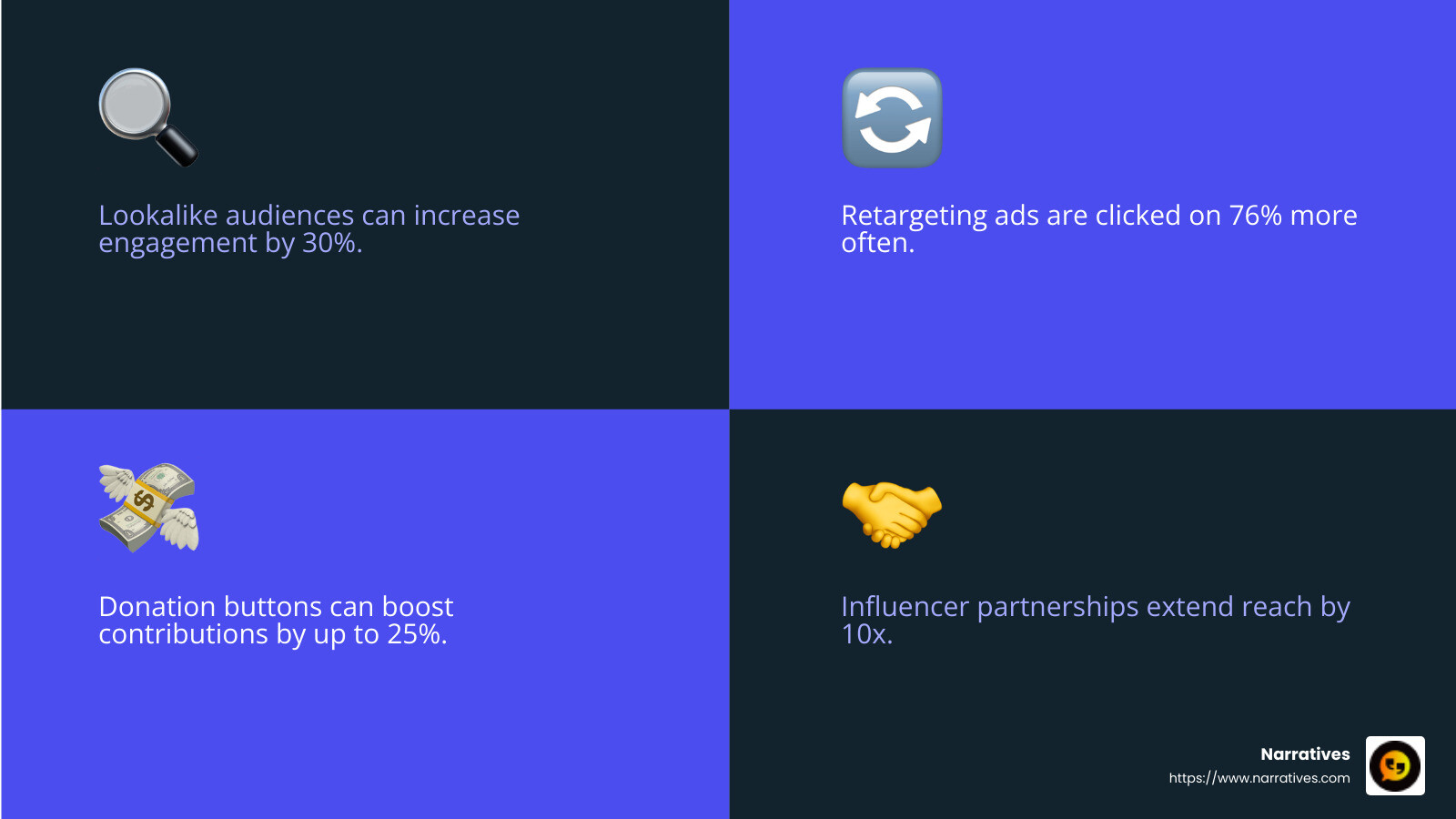
Social media ads can expand your reach and attract new supporters. Use lookalike audiences to target people similar to your current supporters. Retargeting ads can remind past visitors to return to your website or complete a donation.
Images
A picture is worth a thousand words. Use images to tell your nonprofit's story. Feature photos of the people you help, your volunteers in action, or the results of your projects. Adding a testimonial in the caption can make the post even more relatable and powerful.
Stories
Stories are a dynamic way to engage your audience on platforms like Instagram and Facebook. They are perfect for sharing quick updates or behind-the-scenes content. Use stories to highlight daily activities, share volunteer spotlights, or conduct quick polls to engage your audience.
Hashtags
Hashtags can amplify your message and encourage participation. Create a unique hashtag for your campaigns or events. For example, if hosting an animal rescue event, use a hashtag like #AdoptDontShop to spread awareness and encourage attendees to share their experiences.
By combining these content ideas, your nonprofit can create a vibrant and engaging social media presence that resonates with your audience and lifts your cause.
Tips for Maximizing Social Media Impact
To lift your nonprofit's social media presence, you need more than just compelling content. Here are some strategies to maximize your impact:
Lookalike Audiences
Imagine finding new supporters who share the same interests and characteristics as your current ones. That's the power of lookalike audiences. By using data from your existing followers, you can create ads targeted at people who are likely to be interested in your cause. This approach helps you expand your reach efficiently and effectively.
Retargeting
Sometimes, users need a little nudge to take action. Retargeting allows you to remind those who have interacted with your content but haven't yet donated or signed up for your newsletter. By showing them custom ads, you can gently encourage them to return and engage further with your nonprofit.
Donation Buttons
Make it as easy as possible for your audience to support your cause. Donation buttons embedded directly on your social media profiles or posts simplify the giving process. Platforms like Facebook and Instagram offer these features, allowing supporters to contribute without leaving the platform. This convenience can significantly increase donation rates.
Influencer Partnerships
Partnering with influencers can extend your reach to new audiences. Influencers who share your values can promote your cause to their followers, adding credibility and trust to your message. For instance, when an influencer shares a heartfelt story about your nonprofit, it can inspire their audience to learn more and get involved.
By utilizing these strategies, your nonprofit can harness the full potential of social media to attract and engage supporters, driving meaningful action for your cause.
Frequently Asked Questions about Nonprofit Social Media Strategy
How often should nonprofits post on social media?
Finding the right posting frequency can be tricky, but it's crucial for maintaining engagement without overwhelming your audience. According to research, many nonprofits find success by posting 2-3 times a week on platforms like Facebook and Instagram. However, on platforms like Twitter (now X), where content moves faster, posting 1-2 times a day may be more effective.
Experiment with different frequencies and use social media analytics to track engagement. Look for patterns in likes, shares, and comments to determine what works best for your audience.
What are the best platforms for nonprofit engagement?
Choosing the right platform depends on your goals and target audience. Here's a quick guide:
Facebook: Ideal for sharing event information and creating fundraising pages. Great for reaching a broad audience.
Instagram: Perfect for visual storytelling. Use photos, videos, and stories to showcase your mission's impact.
TikTok: Best for targeting younger audiences. Use creative videos and Donation Stickers to engage and fundraise.
X (formerly Twitter): Good for quick updates and hashtag campaigns. Engage with media and supporters in real-time.
LinkedIn: Use it for professional networking and sharing educational content. Build credibility and connect with industry leaders.
How can nonprofits measure social media success?
Measuring success goes beyond counting likes and follows. Focus on metrics that align with your goals:
Engagement Rate: Track likes, shares, and comments to see how your audience interacts with your content.
Conversion Rate: Measure how many viewers take desired actions, like donating or signing up for newsletters.
Click-Through Rate (CTR): See how many people click on links in your posts, leading to your website or donation pages.
Retention Over Time: Monitor whether your followers stay engaged and continue to support your cause over time.
Use A/B testing to experiment with different content types and posting times. This will help you understand what resonates with your audience and refine your strategy for better results.
By addressing these common questions, you can better steer the complexities of a nonprofit social media strategy and drive impactful engagement for your cause.
Conclusion
Storytelling isn't just a tool—it's a necessity. At Narratives, we believe in the power of digital storytelling to transform how nonprofits communicate their missions and connect with their communities. By focusing on community-driven storytelling, nonprofits can lift underrepresented voices and create content that resonates deeply with their audience.
Social impact is at the heart of every nonprofit's mission. With a well-crafted social media strategy, nonprofits can amplify their impact, reach new supporters, and inspire action. By leveraging platforms like Facebook, Instagram, and TikTok, organizations can share powerful stories that highlight their work and the communities they serve. This approach not only builds trust but also increases visibility, helping to secure the support needed to drive change.
At Narratives, we're committed to being your partner in this journey. Our expertise in creating high-quality, emotionally resonant multimedia content ensures that your nonprofit's story is not only told but felt. By collaborating with us, you can harness the full potential of digital storytelling to lift your cause and make a lasting impact.
Ready to take your nonprofit's social media strategy to the next level? Find how Narratives can help you tell your story and inspire action today.


.avif)