Engagement Excellence: Strategies for Nonprofits

Nonprofit engagement strategies are crucial in maintaining strong connections with donors and ensuring long-term retention. Whether you're a marketing lead at a non-profit or part of a philanthropic organization, these strategies can make your mission more impactful and sustainable. Here's a quick overview to help you get started:
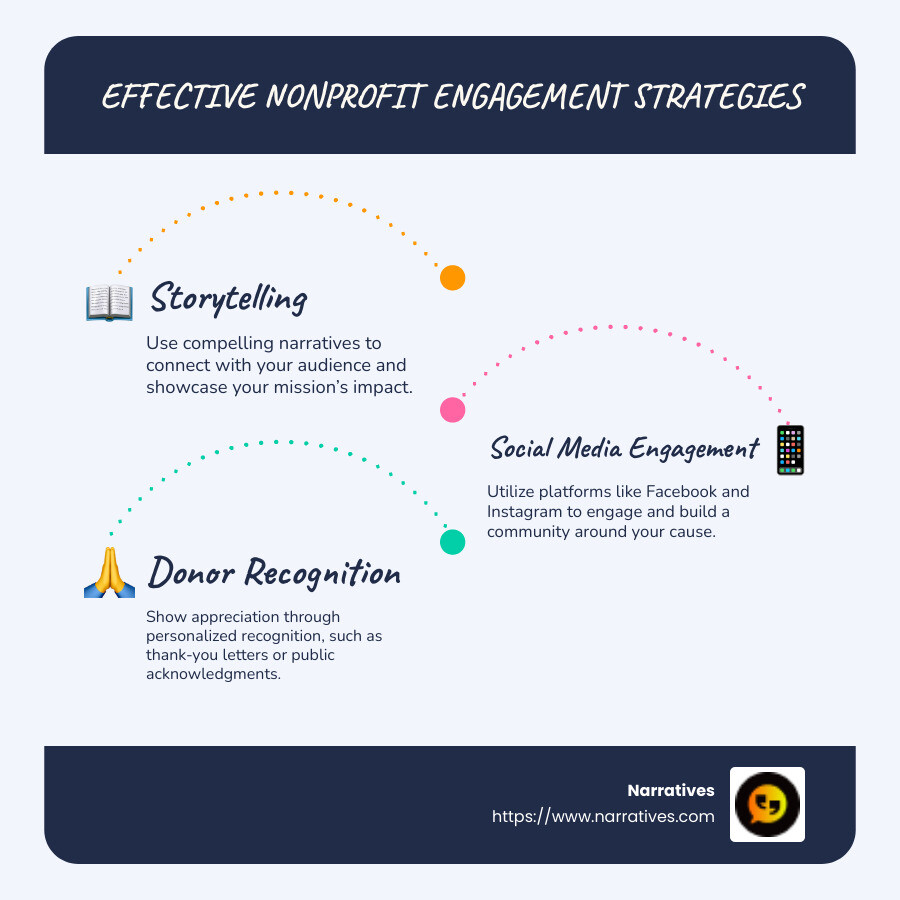
- Focus on storytelling: Share compelling stories that resonate with your audience and illustrate your mission’s impact.
- Engage through social media: Use platforms like Facebook and Instagram to maintain regular contact and foster a community around your cause.
- Recognize your donors: Show appreciation through personalized recognition, such as thank-you letters or public acknowledgments.
Fostering engagement goes beyond just securing donations. It involves building a community where donors feel valued and see the real-world impact of their contributions. Effective engagement strategies transform one-time givers into lifelong supporters, anchoring your nonprofit's sustainability and growth.
Nonprofit engagement strategies vocabulary:
Understanding Nonprofit Engagement Strategies
When it comes to nonprofit engagement strategies, there's a lot more than meets the eye. It's not just about asking for donations. It's about creating a meaningful connection with your community and keeping communication lines wide open.
Donor Engagement
Donor engagement is all about forming a lasting bond with your supporters. This doesn’t just mean sending out newsletters or holiday cards. It's about making donors feel like they're part of your mission. They need to know how their contributions make a difference.
Consider using donor management software to track engagement and personalize communications. This can help in identifying potential major donors and volunteers. By doing so, you can tailor your approach based on their interests and past interactions.
Community Involvement
Community involvement is the heart of nonprofit work. It means actively engaging with the people who benefit from and support your mission. Hosting events, like town halls or community fairs, can be a great way to foster this involvement. These events allow for direct interaction and feedback, making community members feel heard and valued.
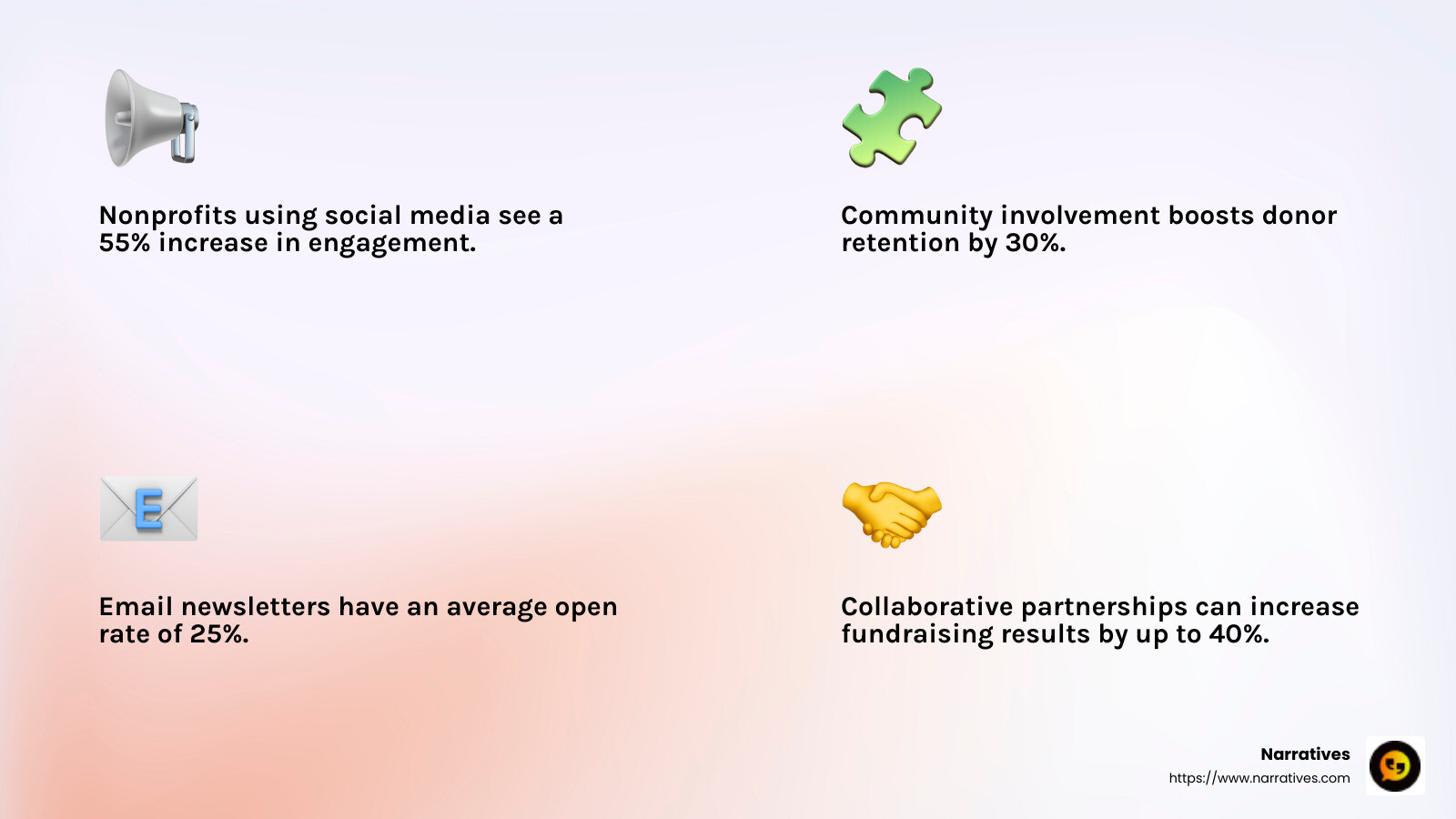
Collaborative partnerships also play a key role. Joining forces with local businesses or other nonprofits for events like fundraisers can amplify your reach and impact.
Communication Channels
Effective communication is vital. Utilizing a mix of traditional and digital channels ensures you reach a broad audience. Social media is a powerful tool for real-time engagement and updates. Regular posts about your mission, successes, and needs keep your audience informed and involved.
Email newsletters can provide deeper insights and stories about your work. Meanwhile, in-person meetings and phone calls add a personal touch that many supporters appreciate.
By focusing on these areas, nonprofits can create a robust engagement strategy that not only attracts new donors but also strengthens ties with existing supporters. This ensures a community that is not only engaged but also deeply invested in the success of your mission.
Key Components of Effective Engagement
Crafting effective nonprofit engagement strategies involves several key components that together create a robust framework for connecting with donors and the community. Let's explore three crucial elements: personalization, donor recognition, and social media engagement.
Personalization
Imagine receiving a letter that starts with "Dear Supporter," versus one that begins with your name and mentions your last donation. Which one feels more engaging? Personalization is about making each donor feel unique and valued. By using donor data, nonprofits can tailor communications to resonate with individual supporters. This could mean segmenting your donor base by interests or donation history and crafting messages that speak directly to them.
For example, a nonprofit focusing on environmental conservation might send updates about specific projects a donor has previously supported. This approach not only acknowledges their past contributions but also keeps them emotionally invested in your cause.
Donor Recognition
Donor recognition goes beyond a simple thank-you note. It's about celebrating contributions in a way that makes donors feel appreciated and integral to your mission. This can be achieved through various methods:
- Public Acknowledgments: Shouting out donors on social media or in newsletters.
- Donor Walls: Featuring names prominently in physical or digital spaces.
- Exclusive Events: Inviting donors to special events as a token of appreciation.
Social Media Engagement
Having an active online presence is essential. Social media engagement offers a platform for real-time interaction and storytelling. It allows nonprofits to share impact stories, updates, and calls to action with a wide audience.
Consider this: A nonprofit shares a video on social media showcasing a recent community project. Followers can see the impact of their contributions, comment, and share the content, expanding its reach. This kind of engagement not only raises awareness but also fosters a sense of community among supporters.
To make the most of social media, it's important to:
- Post Regularly: Keep your audience updated with consistent content.
- Engage with Followers: Respond to comments and messages to build relationships.
- Share Diverse Content: Mix educational posts with behind-the-scenes glimpses and success stories.
By implementing these components effectively, nonprofits can improve their engagement strategies, leading to stronger donor relationships and a more supportive community base. This sets the stage for exploring specific strategies that can further lift nonprofit engagement.
10 Best Nonprofit Engagement Strategies
Engaging donors and the broader community is essential for nonprofits to thrive. Below, we've outlined ten strategies to improve your organization's engagement efforts.
Invite Donors to Events
Donor appreciation and fundraising events are powerful tools for engagement. By inviting donors to events like gala dinners or community gatherings, you create opportunities for them to connect with your mission on a personal level. These events not only serve as a thank-you but also as a platform for showcasing your work and the impact of their contributions.
Encourage Volunteer Participation
Encouraging hands-on activities and mission involvement is a great way to deepen engagement. Volunteers who actively participate in your nonprofit's work often become its most passionate advocates. By offering a variety of volunteer opportunities, you can cater to different interests and skills, fostering a sense of ownership and commitment.
Share Impact Stories
Transparency and storytelling are key to building lasting relationships with donors. Sharing stories about how donations have made a difference can inspire continued support. Whether through newsletters, social media, or your website, these narratives provide a tangible connection to your mission's impact.
Use Social Media
Digital advocacy and maintaining an online presence are crucial in today's connected world. Social media platforms are excellent for sharing updates, engaging with supporters, and advocating for your cause. Regular posts, interactive content, and responding to followers can significantly boost engagement and expand your reach.
Implement Donor Recognition Programs
Recognizing donors through donor walls or public acknowledgment can strengthen their connection to your organization. Whether it's a shout-out on social media or a plaque in your office, these gestures show appreciation and reinforce the importance of their support.
Conduct Surveys for Feedback
Understanding donor opinions and seeking engagement improvement through surveys can provide valuable insights. By asking donors for feedback, you demonstrate that their views matter and are used to shape future strategies. This can lead to more effective engagement and retention.
Develop Membership Programs
Offering exclusive benefits for recurring donations through membership programs can encourage sustained support. These programs might include newsletters, special event invitations, or other perks that make donors feel like valued members of your community.
Host Immersive Experiences
Gala events and volunteering opportunities offer donors immersive experiences that deepen their connection to your mission. These events allow supporters to see the work being done and the impact of their contributions, fostering a deeper emotional investment.
Leverage Data for Personalization
Donor segmentation and custom communication are crucial for effective engagement. By analyzing donor data, you can tailor your outreach to match individual preferences and past interactions, making your communication more relevant and engaging.
Build Trust Through Transparency
Financial transparency and consistent updates are essential for building trust with your supporters. By openly sharing how funds are used and the progress of your initiatives, you demonstrate accountability and reinforce your commitment to the cause.
By implementing these strategies, nonprofits can foster stronger relationships with donors and the community, leading to sustained support and greater impact.
Frequently Asked Questions about Nonprofit Engagement Strategies
What is donor engagement?
Donor engagement is the process of keeping donors involved and interested in a nonprofit's mission. It goes beyond just asking for money. It's about creating meaningful interactions that build a lasting relationship. Donor engagement can include activities like event participation, volunteering, and advocacy on social media. These interactions make donors feel valued and connected to the cause, which can lead to long-term support.
How can nonprofits improve donor retention?
Improving donor retention is crucial for sustainability. Here are some strategies:
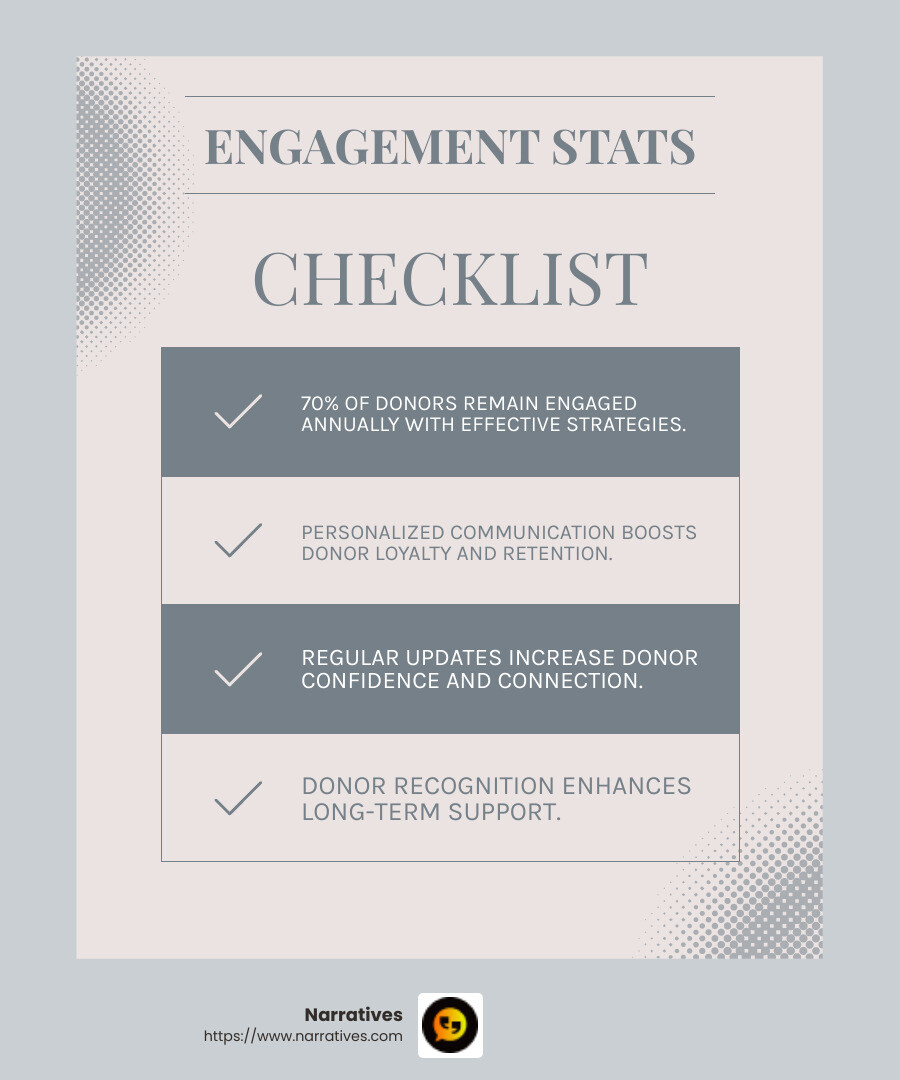
Regular Communication: Keep donors informed about how their contributions are making a difference. Share updates through newsletters, emails, or social media.
Personalization: Tailor your communication to match the donor's interests and past interactions. Personalized messages show that you value them as individuals, not just as sources of funding.
Recognition and Appreciation: Show gratitude through donor recognition programs, like donor walls or public acknowledgments. Acknowledging their support reinforces their importance to your mission.
Impact Stories: Share stories that highlight the impact of their donations. When donors see the tangible results of their contributions, they feel more connected and are more likely to continue supporting.
Feedback Mechanisms: Conduct surveys to gather donor opinions and improve engagement strategies. This shows donors that their voices matter and can lead to more effective retention efforts.
What role does storytelling play in engagement?
Storytelling is a powerful tool for engagement. It allows nonprofits to:
Connect Emotionally: Stories resonate on an emotional level, making the mission more relatable and compelling. When donors feel emotionally connected, they're more likely to support the cause.
Demonstrate Impact: Through storytelling, nonprofits can vividly illustrate the outcomes of their work. This transparency builds trust and shows donors the real-world effects of their contributions.
Inspire Action: Well-crafted stories can motivate donors to take action, whether it's volunteering, donating, or advocating for the cause. Stories have the power to move people and drive them to support your mission.
Incorporating storytelling into your engagement strategy can transform how donors perceive and interact with your organization, leading to stronger, more meaningful relationships.
Conclusion
In nonprofits, storytelling is more than just a tool—it's a bridge that connects the mission with the community. At Narratives, we understand the transformative power of digital storytelling. Our mission is to lift underrepresented voices and help nonprofits share their impact stories in a way that inspires action and builds trust.
Community-driven storytelling is at the heart of effective nonprofit engagement strategies. When we share stories from the communities we serve, we create a sense of ownership and belonging. People are more likely to support a cause when they see themselves reflected in its stories. This connection fosters a deeper relationship between the nonprofit and its supporters.
Digital storytelling allows us to reach wider audiences and make a greater impact. By using high-quality, emotionally resonant videos and multimedia content, we can showcase the real-world effects of a nonprofit's work. This transparency not only builds trust but also increases visibility, making it easier for nonprofits to attract new supporters and retain existing ones.
At Narratives, we're committed to helping nonprofits harness the power of storytelling to drive their missions forward. Whether it's through sharing impact stories, engaging donors, or building community ties, our goal is to support nonprofits in creating meaningful, lasting connections.
Explore how we can help your organization tell its story and inspire action by visiting our media services page. Together, we can make a difference through the power of storytelling.


.avif)