SEO Strategies for Nonprofits: Elevate Your Cause Online

SEO strategy for non-profits is crucial for enhancing their digital presence and online visibility.
Nonprofits must overcome various challenges to ensure their messages reach the right audience. While many nonprofits know the importance of their work, they often struggle to translate it into compelling online content that stands out. Having a strong digital presence isn't just a benefit; it's essential for reaching potential donors and supporters. This is where a robust SEO strategy comes into play.
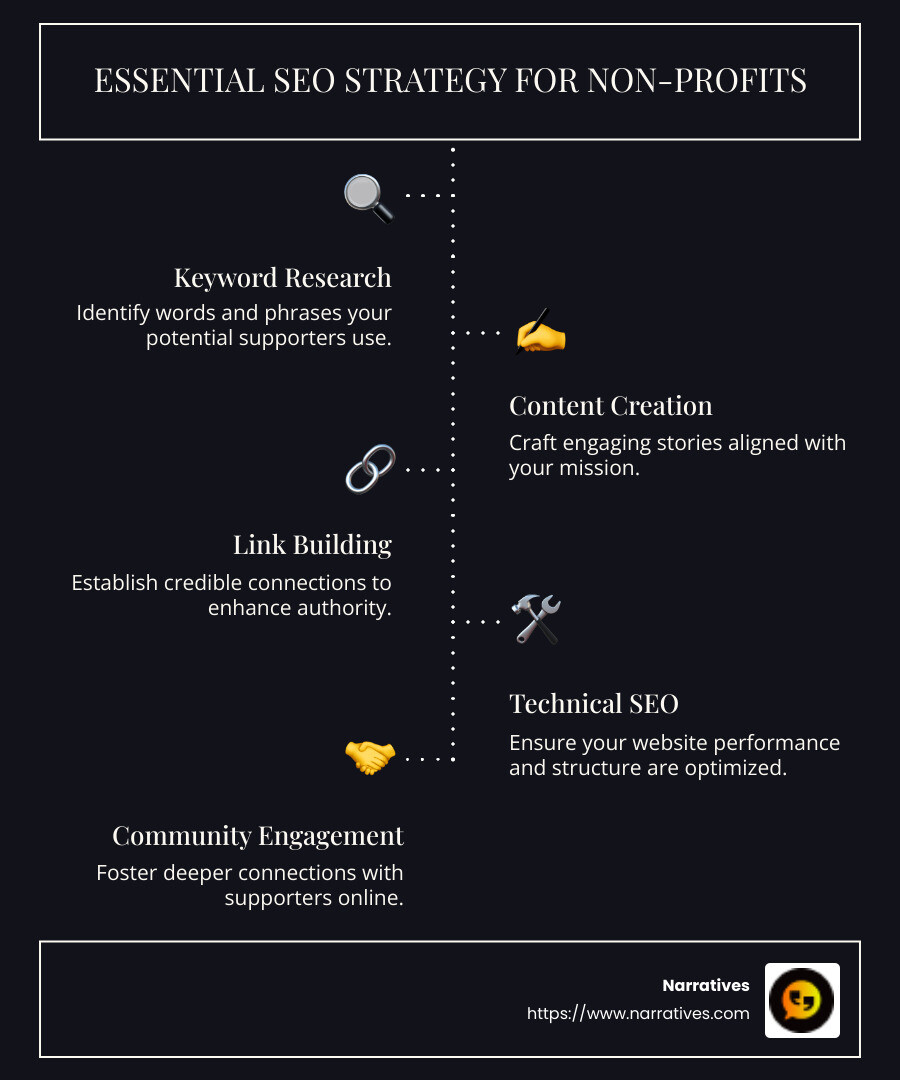
Here's a quick look at some key components of an effective SEO strategy for non-profits:
- Keyword Research: Identify words and phrases your potential supporters use.
- Content Creation: Craft engaging stories aligned with your mission.
- Link Building: Establish credible connections to improve authority.
- Technical SEO: Ensure your website performance and structure are optimized.
SEO can boost online visibility, simplify content creation, and ultimately, lift a nonprofit's cause. Reflecting on trends, like the significant rise in online giving during COVID-19, shows how vital it is for nonprofits to adapt and engage effectively online.
When nonprofits optimize their SEO strategies, they create opportunities to connect more deeply with their audiences, fostering greater support and impact.
Understanding SEO for Nonprofits
Search Engine Optimization (SEO) is a powerful tool that can help nonprofits increase their visibility online. At its core, SEO involves making strategic changes to your website so that search engines like Google can easily find and rank your content. This is essential for nonprofits looking to reach more people and make a bigger impact.
Why is SEO Important for Nonprofits?
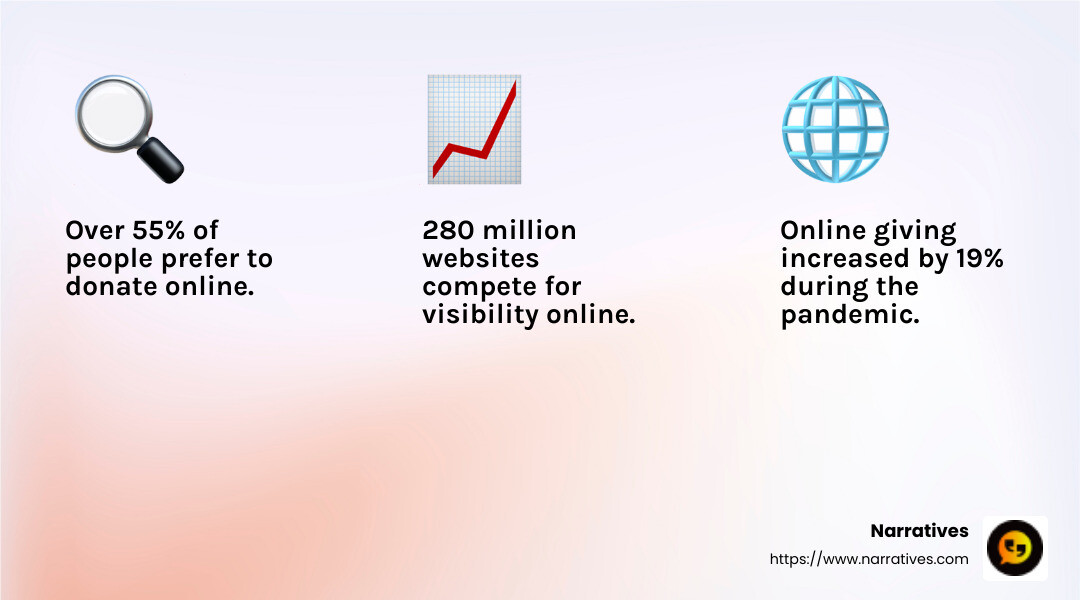
Nonprofits often rely on donations and volunteer support to achieve their missions. With more than 280 million websites on the internet, standing out can be a challenge. Good SEO practices ensure that when someone searches for related causes or needs, your nonprofit's website appears prominently in search results.
During the COVID-19 pandemic, online giving saw a dramatic increase—up 19% year-over-year. This trend highlights the importance of being visible online, as more people are willing to donate through digital platforms. Furthermore, about 55% of people across all generations prefer to give online, emphasizing the need for nonprofits to optimize their digital presence.
How Search Engines Work
Search engines use complex algorithms to decide which websites appear first in search results. These algorithms consider hundreds of factors, but some of the most important include:
- Relevance: How well does the content on your site match the search query?
- Authority: Does your site have high-quality backlinks and a credible reputation?
- User Experience: Is your site fast, easy to steer, and mobile-friendly?
By understanding these factors, nonprofits can tailor their websites to meet search engine criteria, improving their chances of being finded by potential supporters.
SEO Basics for Nonprofits
Keyword Optimization: Use specific keywords that your audience is searching for. Tools like Google's Keyword Planner can help identify terms with low competition and high search volume.
Content Quality: Create engaging and informative content that resonates with your audience. High-quality content can improve your site's authority and attract more visitors.
Link Building: Establish relationships with other reputable sites. Backlinks from trustworthy sources can boost your site's credibility and improve its ranking.
Technical SEO: Ensure your website is technically sound. This includes optimizing page load times, ensuring mobile compatibility, and using clean URLs.
When online interactions are increasingly important, a well-executed SEO strategy for non-profits can be the difference between obscurity and visibility. By understanding and implementing SEO principles, nonprofits can amplify their voice, attract new supporters, and drive greater impact.
Next, we'll dive deeper into the specifics of conducting effective keyword research for your nonprofit's unique needs.
SEO Strategy for Non-Profits
Creating a successful SEO strategy for non-profits involves several key components: keyword research, content creation, link building, and technical SEO. Let's explore each of these to help your nonprofit reach more people and make a bigger impact.
Keyword Research for Nonprofits
Keyword research is the foundation of any effective SEO strategy. For nonprofits, this means identifying the words and phrases that potential supporters use when searching for causes like yours. Here are some tips to guide your keyword research:
Long-Tail Keywords: These are longer, more specific keyword phrases that visitors are likely to use when they're closer to making a decision. For example, instead of targeting "donate," try "donate to local animal shelter in New York."
High-Intent Keywords: These keywords indicate a strong intent to take action. Words like "support," "volunteer," or "donate" can signal readiness to engage with your nonprofit.
Location-Specific Keywords: If your nonprofit serves a specific area, include location-based keywords. This helps attract local supporters who are more likely to get involved. For instance, "community garden projects in Los Angeles" can connect you with nearby individuals.
Content Creation and Storytelling
Once you have your keywords, it's time to create content that resonates with your audience. Nonprofits have a unique advantage here, as storytelling can be particularly impactful. Here's how to craft compelling content:
Impactful Storytelling: Share real stories about the people and communities you help. Use narratives that highlight struggles and successes to evoke empathy and connection.
Multimedia Content: Incorporate images, videos, and infographics to make your content more engaging. Visuals can capture attention and convey your message more effectively.
Emotional Resonance: Appeal to the emotions of your audience. Content that tugs at heartstrings can inspire action and foster a deeper connection with your cause.
Link Building
Building a network of quality backlinks is crucial for establishing authority and trust with search engines. Here are some ways to acquire valuable links:
Internal Links: Use internal links to guide visitors through your site. This improves user experience and helps search engines understand your site's structure.
External Links: Reach out to other reputable sites and ask for backlinks. Collaborating with partners or providing testimonials can be effective ways to earn these links.
Technical SEO
Ensuring your website is technically sound is vital for both user experience and search engine rankings. Focus on these technical aspects:
Page Load Speed: A fast-loading site keeps visitors engaged and reduces bounce rates. Optimize images and use efficient coding practices to improve speed.
Mobile Compatibility: With more people using smartphones, a mobile-friendly site is essential. Ensure your site is responsive and easy to steer on all devices.
Clean URLs: Use descriptive, keyword-rich URLs to help search engines and users understand your content. Avoid long strings of numbers and characters.
A well-rounded SEO strategy for non-profits involves careful planning and execution across these areas. By focusing on keyword research, content creation, link building, and technical SEO, your nonprofit can improve its online presence and connect with more supporters.
Next, we'll take a closer look at how to leverage impactful community videos to further engage your audience and boost your SEO efforts.
Leveraging Impactful Community Videos
Video content is a powerful tool for nonprofits. It combines storytelling with visuals to create an emotional connection. But how can you use videos to boost your nonprofit's online presence? Let's explore video SEO, community engagement, and video storytelling.
Video SEO
Optimizing your videos for search engines is crucial. Here are some tips to get started:
Descriptive Titles and Descriptions: Use clear titles and detailed descriptions that include relevant keywords. This helps search engines understand your content and improves visibility.
Tags and Keywords: Add tags and keywords that reflect the video's content. This can increase your chances of appearing in related searches.
Transcripts and Captions: Including transcripts and captions not only makes your content accessible but also provides more text for search engines to index.
Community Engagement
Videos are an excellent way to engage your community. Here’s how you can use them effectively:
Highlight Local Stories: Feature stories from your community. This can strengthen local connections and encourage more people to get involved.
Interactive Content: Encourage viewers to comment, share, and participate in discussions. This interaction can boost your video's reach and engagement.
Live Streaming: Host live events or Q&A sessions. This real-time interaction can create a sense of community and immediacy.
Video Storytelling
Telling a compelling story through video can make a lasting impact. Consider these storytelling techniques:
Show Real Impact: Use videos to showcase the real-world impact of your nonprofit’s work. This can inspire viewers and motivate them to support your cause.
Emotional Appeal: Craft stories that evoke emotions. Videos that tug at the heartstrings can foster a deeper connection with your audience.
Authenticity: Be genuine in your storytelling. Authentic stories resonate more with viewers and build trust.
By leveraging impactful community videos, your nonprofit can improve its SEO strategy and engage more effectively with your audience. Videos not only boost search engine visibility but also deepen community connections and amplify your message.
Next, we'll explore how to measure and analyze the success of your SEO efforts to ensure continuous improvement.
Measuring and Analyzing SEO Success
Understanding how your SEO strategy for non-profits is performing is crucial. It helps you see what’s working and what needs tweaking. Let's look at the tools and metrics that can guide you.
Analytics Tools
To measure your SEO efforts, you need the right tools. Here are some essential ones:
Google Analytics: This free tool offers insights into how visitors find and use your website. It tracks metrics like page views, bounce rates, and session durations. Setting up Google Analytics is straightforward, and it provides a wealth of data to help you improve your site’s performance.
Google Search Console: This tool helps you understand how your site appears in Google Search. It alerts you to issues and shows which queries bring users to your site. Regular checks can ensure your site stays healthy and visible.
Performance Metrics
Key metrics help you gauge the effectiveness of your SEO strategy:
Organic Traffic: The number of visitors who find your site through search engines. An increase in organic traffic suggests your SEO efforts are paying off.
Bounce Rate: This is the percentage of visitors who leave your site after viewing only one page. A high bounce rate can indicate that your content isn't engaging or relevant.
Conversion Rate: The percentage of visitors who complete a desired action, like signing up for a newsletter or making a donation. Higher conversion rates mean your site effectively engages visitors.
Keyword Rankings: Keep track of how your target keywords are ranking. Tools like Google Search Console can show you which keywords are driving traffic.
Continuous Improvement
SEO is not a one-time task but an ongoing process. Here’s how to keep improving:
Regular Audits: Conduct SEO audits to identify areas for improvement. This can involve checking for broken links, optimizing page load speeds, and ensuring mobile-friendliness.
Content Updates: Refresh your content regularly to keep it relevant. Update outdated information and add new insights to keep your audience engaged.
Monitor Trends: Stay updated with SEO trends and algorithm changes. This helps you adapt your strategy to maintain visibility.
By using these tools and metrics, you can ensure your SEO strategy for non-profits is effective. Continuous monitoring and improvement will help your nonprofit maintain a strong online presence and achieve your goals.
Next, we'll address some frequently asked questions about SEO for nonprofits to help you refine your approach.
Frequently Asked Questions about SEO Strategy for Non-Profits
How can nonprofits benefit from SEO?
SEO can be a game-changer for nonprofits. It helps your organization get found online by people who care about your cause. During the COVID-19 pandemic, online giving increased by 19%, showing the power of a strong digital presence. By optimizing your website, you can reach more potential donors and volunteers.
Benefits of SEO for nonprofits:
- Increased Visibility: More people can find your organization when they search for related causes or issues.
- Higher Engagement: Attract visitors who are genuinely interested in your mission.
- Cost-Effective: Unlike paid ads, SEO is an organic way to drive traffic without ongoing costs.
- Improved Trust: A well-optimized site can improve your credibility and authority.
What are the best SEO practices for nonprofits?
SEO strategy for non-profits involves several key practices:
Keyword Research: Use tools like Google Keyword Planner to find relevant keywords. Focus on long-tail, high-intent, and location-specific keywords to attract the right audience.
Content Creation: Develop high-quality, relevant content that tells your story. Use headers, alt text, and meta descriptions to include keywords naturally.
Link Building: Build both internal and external links. Internal links improve site navigation, while external links from trusted sites boost credibility.
Technical SEO: Ensure your website loads quickly and is mobile-friendly. Use tools like Google Search Console to identify and fix technical issues.
Local SEO: Optimize for local searches by claiming your Google My Business listing and encouraging local reviews.
How does video content improve SEO for nonprofits?
Video content can significantly improve your SEO strategy for non-profits. Videos are engaging and can tell your story in a powerful way, encouraging more shares and interactions.
Video Benefits:
- Increased Engagement: Videos capture attention better than text alone, keeping visitors on your site longer.
- Higher Rankings: Search engines favor diverse content types. A well-optimized video can improve your search rankings.
- Community Connection: Videos allow you to showcase real stories and impact, building a stronger connection with your audience.
- Social Sharing: Videos are highly shareable, increasing your reach and visibility.
By leveraging these SEO practices and incorporating video, your nonprofit can lift its online presence and make a greater impact.
Conclusion
In today's digital landscape, Narratives is your go-to partner for nonprofit digital storytelling. We understand the power of stories in building connections and driving change. Our focus is on empowering underrepresented voices and helping nonprofits share their impact through emotionally resonant multimedia content.
Digital storytelling isn't just about telling a story—it's about making your audience feel a part of it. By using high-quality videos and compelling narratives, we can help lift your cause, inspire action, and build trust with your audience. As we’ve seen, online giving increased by 19% during the pandemic, underscoring the importance of a strong digital presence.
SEO strategy for non-profits plays a crucial role in this process. By optimizing your content and leveraging impactful community videos, you can improve your brand awareness and reach a wider audience. SEO is not just about keywords; it's about creating meaningful content that resonates with your community.
If you're ready to lift your nonprofit's digital presence and tell your story in a way that inspires action, consider partnering with us at Narratives. Let's work together to make a difference.
Learn more about how Narratives can support your digital storytelling efforts.
By focusing on SEO and storytelling, your nonprofit can not only increase its visibility but also foster a deeper connection with those who care about your mission.


.avif)