From Screen to Society: Effective Social Justice Video Strategies

The Power of Social Justice Video Strategies
Social justice video strategies are changing how organizations communicate their mission. With the rise of digital media, these strategies can help increase awareness and drive action. While traditional methods still matter, video storytelling stands out as a powerful tool to engage hearts and minds.
Here's why:
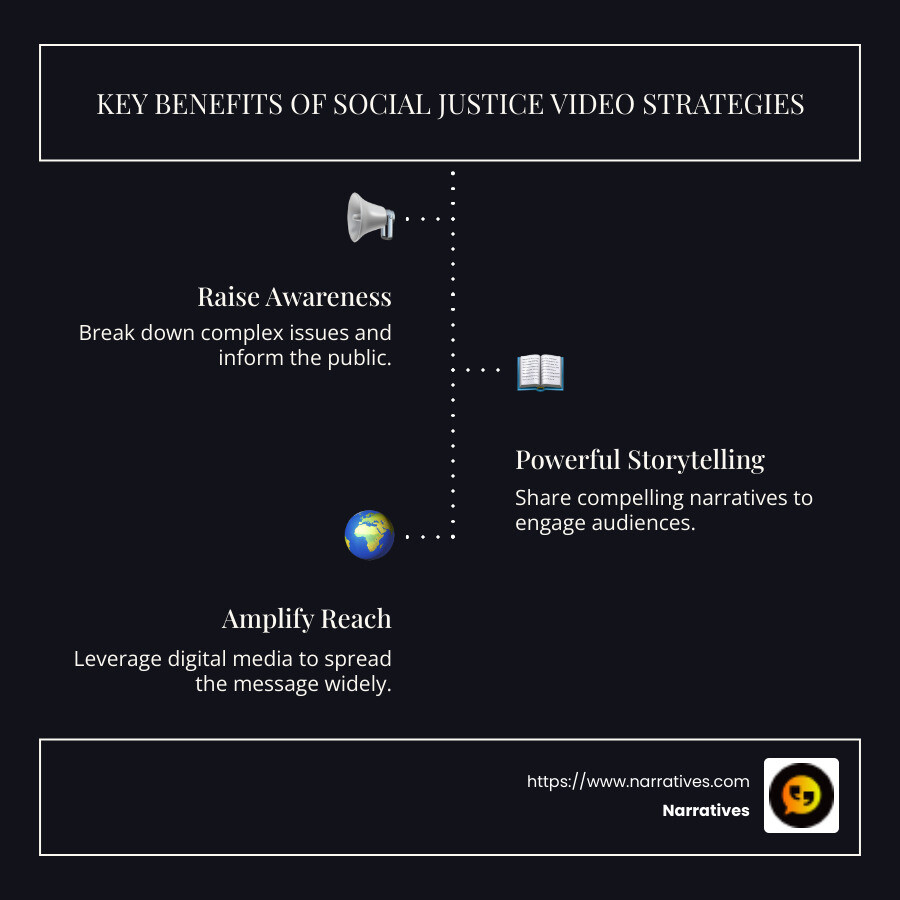
- Awareness: Videos can break down complex issues for broad audiences, sparking change and building informed communities.
- Storytelling: A compelling narrative makes the difference between knowing and caring. It's all about sharing real stories that resonate.
- Digital Media: With user-friendly platforms, getting a message out has never been easier. Videos can reach thousands, sometimes even millions, with just a few clicks.
For those who want a quick overview: Successful strategies involve creating engaging content that resonates emotionally, using storytelling to build empathy, and leveraging digital media to amplify the message.
Understanding Social Justice Video Strategies
Social justice video strategies are essential for reaching and engaging younger audiences, especially Gen Z. This generation, born into a world of smartphones and social media, consumes content differently than previous ones. Platforms like TikTok have become key players in this landscape, offering unique opportunities to spread awareness and drive meaningful conversations.
TikTok: A Hub for Gen Z Awareness
TikTok is not just a platform for dance challenges and viral trends. It's a powerful tool for social justice advocacy, particularly among Gen Z. According to a study by Reach3 Insights, three-quarters of Gen Z users credit TikTok for educating them about social justice issues and politics.
This platform's short, engaging video format is perfect for breaking down complex topics into digestible bits. It encourages users to share personal stories and experiences, making it easier for others to relate and empathize. The impact is significant: 94% of Gen Zers say TikTok has spurred meaningful action for movements like Black Lives Matter.
Crafting the Right Message
When creating videos for social justice, the message must be clear, relatable, and inspiring. Gen Z values authenticity and transparency. They are more likely to engage with content that feels genuine and aligns with their values.
A successful video strategy involves:
- Authentic Storytelling: Share real-life experiences and challenges. Let voices from the community lead the narrative.
- Clear Calls to Action: Encourage viewers to take specific actions, like signing petitions or attending events.
- Creative Formats: Use humor, music, and visual storytelling to make the content engaging and memorable.
The Role of Empathy in Messaging
Empathy is at the heart of effective social justice videos. By humanizing issues, these videos can bridge gaps and foster understanding. For instance, TikTok campaigns that focus on personal stories of injustice or triumph can spark conversations and motivate viewers to learn more.
A powerful example is the use of interviews and personal narratives, like those featured in the Social Justice Video Series. These stories highlight the lived experiences of individuals facing various social injustices, from homelessness to gender identity. Such content not only informs but also connects with viewers on an emotional level, encouraging them to take action.
Conclusion
Social justice video strategies are more than just a trend; they're a vital tool for change. By leveraging platforms like TikTok and crafting messages that resonate with Gen Z, advocates can amplify their impact and drive real-world action.
In the next section, we'll explore the key elements that make these videos successful, focusing on empathy, engagement, and the art of storytelling.
Key Elements of Successful Social Justice Videos
Creating effective social justice videos requires a mix of empathy, engagement, and storytelling. These elements help in crafting content that not only informs but also inspires action. Let's explore each component to understand how they contribute to successful social justice video strategies.
Empathy: The Heart of Connection
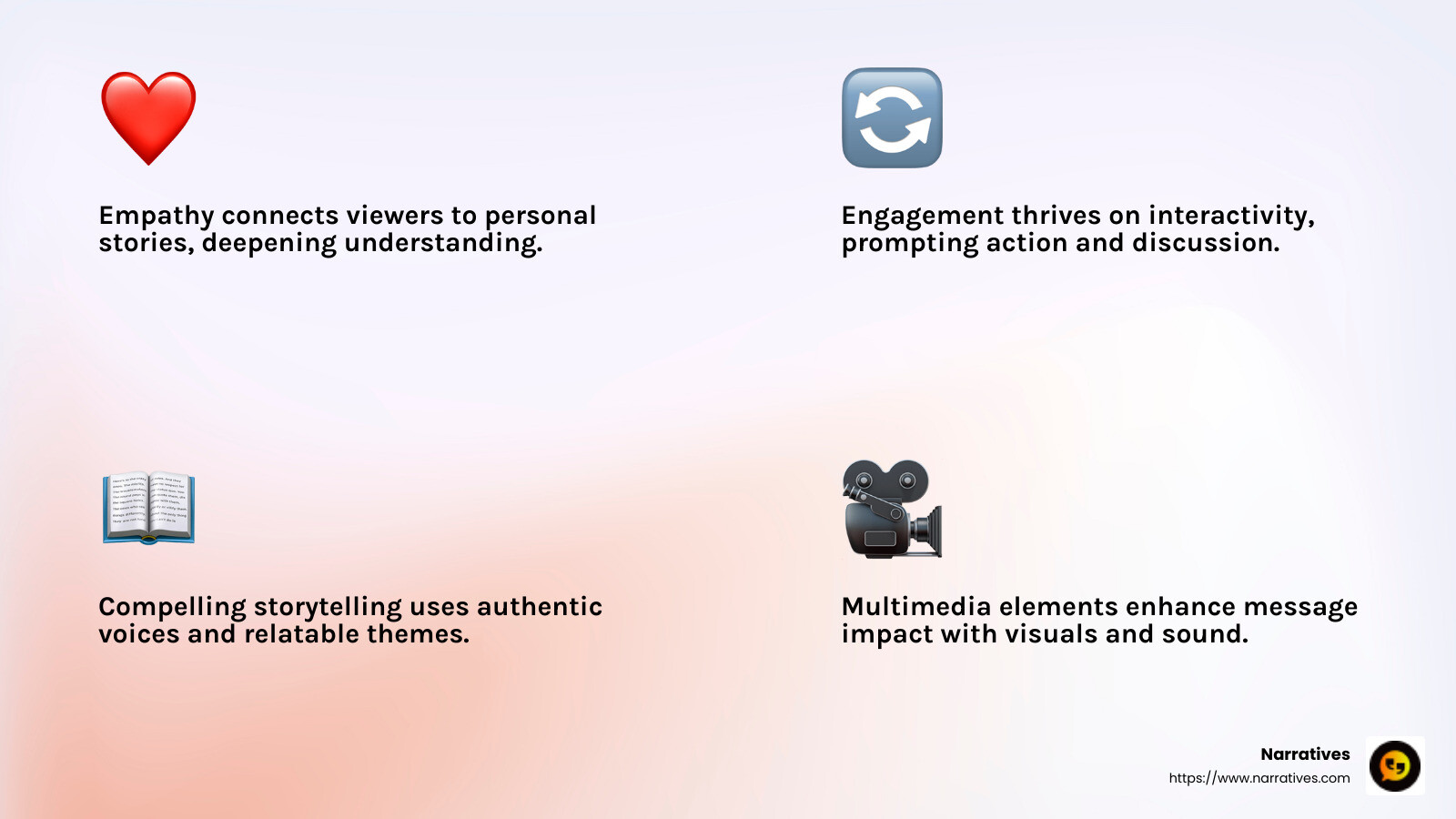
Empathy is crucial in social justice videos. It allows viewers to relate to the stories being told, fostering a deeper understanding of the issues at hand. Videos that highlight personal stories can humanize complex topics, making them more accessible to a wider audience. For instance, when individuals share their experiences with homelessness or gender identity, viewers are more likely to connect emotionally and feel motivated to support the cause.
Engagement: Keeping the Audience Involved
To maintain engagement, videos should be interactive and encourage viewers to participate. This can be achieved through:
- Call to Action: Prompt viewers to take specific steps, such as signing a petition or sharing the video with their network.
- Interactive Elements: Use polls or questions to invite viewer opinions and discussions.
Engagement is about creating a two-way conversation. When audiences feel involved, they are more likely to support the movement and spread the message further.
Storytelling: Crafting a Compelling Narrative
A strong narrative is key to capturing attention and driving the message home. Successful social justice videos often feature:
- Authentic Voices: Allow those directly affected by the issues to tell their stories. This authenticity resonates more with audiences.
- Clear Structure: Start with a powerful hook, build up with compelling content, and end with a memorable conclusion or call to action.
- Relatable Themes: Focus on universal themes like justice, equality, and human rights to appeal to a broader audience.
Multimedia: Enhancing the Message
Incorporating multimedia elements can significantly boost the effectiveness of social justice videos. This includes:
- Visuals: Use imagery and graphics to illustrate points and add visual interest.
- Music and Sound: Improve emotional impact with appropriate music or sound effects.
- Text Overlays: Provide key information or statistics to reinforce the message.
By blending empathy, engagement, and storytelling with multimedia, social justice videos can become powerful tools for change. They not only educate but also inspire viewers to take meaningful action.
In the next section, we'll explore how educators can use these strategies in the classroom to foster understanding and empathy among students.
Social Justice Video Strategies for Educators
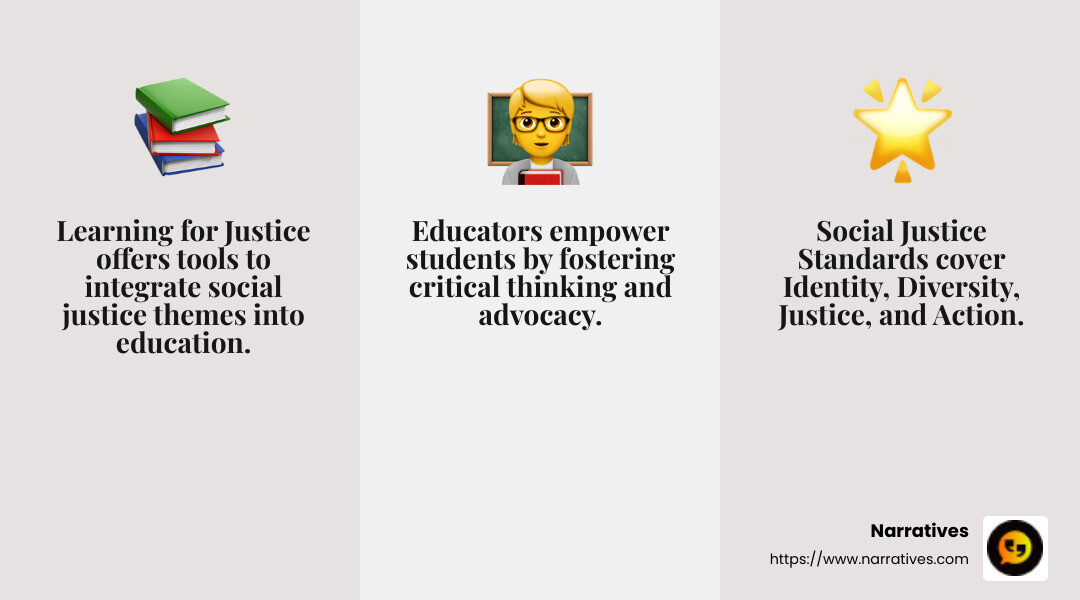
Educators have a unique opportunity to harness social justice video strategies to promote understanding and empathy in the classroom. By integrating resources from Learning for Justice, teachers can align their lessons with the Social Justice Standards and create a more inclusive learning environment.
Learning for Justice: A Wealth of Resources
Learning for Justice offers a plethora of tools designed to help educators incorporate social justice themes into their teaching. These resources are custom to align with the Social Justice Standards, making it easier for teachers to introduce complex topics in an age-appropriate manner.
Learning Plan Builder: This interactive tool allows educators to craft customized lesson plans that combine social justice themes with literacy strategies. By using texts from the Student Text Library, teachers can provide students with diverse perspectives and foster critical thinking.
Student Text Library: Featuring a wide array of multimedia resources, this library includes literature, interviews, and infographics that reflect a variety of cultural experiences. These texts serve as "windows and mirrors" for students, helping them to see both others' experiences and their own reflected in the curriculum.
Implementing Social Justice Standards in the Classroom
The Social Justice Standards are divided into four domains: Identity, Diversity, Justice, and Action. Educators can use these standards to guide their lesson planning and classroom discussions.
Identity and Diversity: Engage students with essential questions like "How does my race influence who I am?" and "How are my experiences similar to and different from those of people from other racial backgrounds?" These questions encourage students to explore their own identities and appreciate the diversity around them.
Justice and Action: Use questions such as "What kinds of bias and privilege do individuals and groups experience because of their race?" and "What can we do to address racial prejudice and advocate for racial justice?" to stimulate critical thinking and inspire students to take action.
Classroom Applications: Real-World Examples
Educators can draw inspiration from articles like “Teaching MLK with the Social Justice Standards” and “Teach Identity and Diversity, Even in Science Class”. These articles provide practical insights into applying social justice principles across different subjects, demonstrating that these themes are not confined to humanities classes alone.
By leveraging these resources and strategies, educators can create a classroom environment that not only educates but also empowers students to become advocates for social justice.
In the following section, we'll examine some of the top social justice video campaigns and how they have successfully promoted activism and awareness on a global scale.
Top Social Justice Video Campaigns
In recent years, several brands and organizations have leveraged social justice video strategies to spotlight critical issues and inspire change. One standout example is Ben & Jerry's, a company that has consistently used its platform for activism and advocacy.
Ben & Jerry's: "Make Some Motherchunkin’ Change!"
Ben & Jerry's launched its first ad campaign in nearly a decade to underscore its commitment to activism. Their video campaign, "Make Some Motherchunkin’ Change!" addresses pressing issues like climate change, racial justice, and gay pride. The campaign encourages viewers to become activists in their own communities, whether by fighting against food deserts or advocating for change while donning a bulletproof vest.
“We want people to know that their passions and creativity can create positive change in their communities,” said Jay Curley, global head of integrated marketing at Ben & Jerry's.
The campaign's creative approach includes a 90-second video titled "Progress Comes In Many Flavors," which highlights various forms of activism, from making speeches to building community libraries for banned books. The campaign not only raises awareness but also invites consumers to join Ben & Jerry's efforts, collecting valuable first-party data in the process.
Climate Change and Racial Justice
Ben & Jerry's campaign is a prime example of how brands can tackle multiple social issues simultaneously. By addressing climate change, racial justice, and other societal challenges, they demonstrate the interconnectedness of these issues and the need for collective action.
The brand's commitment to these causes is not new. In 2020, amidst widespread protests against racial violence, Ben & Jerry's released a statement and action plan to advocate for racial justice. This consistency in purpose-driven marketing has positioned them as leaders in using social media to amplify social justice efforts.
Impact and Engagement
The success of Ben & Jerry's campaign lies in its ability to engage audiences through relatable and creative storytelling. By showing that activism can take many forms, the campaign empowers individuals to find their unique way to contribute to social change.
Their approach aligns with the broader trend of using social justice video strategies to foster empathy and inspire action. As more brands and organizations adopt similar strategies, the potential for impactful change grows, demonstrating the power of digital media in shaping a more just society.
In the next section, we'll explore how social media platforms amplify these efforts, enabling movements to reach a global audience and drive collective action.
How Social Media Amplifies Social Justice Efforts
Social media has become a powerful tool for amplifying social justice efforts. It connects people across the globe, breaking down geographical and economic barriers to unite individuals in collective action.
Collective Action and Awareness
Social media platforms like Twitter, Instagram, and Facebook are not just for sharing vacation photos or memes. They are vital in raising awareness about social issues. When people see posts about climate change, racial injustice, or other pressing topics, they are more likely to take action. This could be as simple as sharing a post or as involved as attending a protest or donating to a cause.
“Meaningful political change and the expansion of social justice depend upon collective action,” as highlighted in the article, "Media, Movements, and the Quest for Social Justice." Social media fosters this collective action by enabling users to rally around causes and support one another.
The Role of Social Networks
Social networks are available in multiple languages, allowing users to connect across borders. This global reach is crucial for social justice movements. For instance, the #BlackLivesMatter movement gained international traction through social media, highlighting the power of these platforms to transcend local issues and create global conversations.
Social media also allows for the dissemination of personal stories and experiences. These narratives can humanize issues, making them more relatable and compelling. When people see real stories of injustice, they are more likely to empathize and engage.
Impact of Social Media on Social Justice
The impact of social media on social justice is significant. Campaigns that might have once reached only a small audience can now go viral, reaching millions of people in a short time. This rapid spread of information can lead to immediate action and change.
Moreover, social media allows for real-time updates and engagement. Activists and organizations can share progress, celebrate victories, and call for support when needed. This constant communication helps keep movements alive and relevant.
In the next section, we'll explore frequently asked questions about social justice video strategies, providing insights into how educators can use these strategies in the classroom and how social media platforms support these efforts.
Frequently Asked Questions about Social Justice Video Strategies
What are social justice video strategies?
Social justice video strategies are methods used to create and share videos that promote social change. These strategies focus on raising awareness, inspiring action, and educating viewers about social justice issues like racial inequality, gender discrimination, and environmental concerns.
Key elements include:
Storytelling: Crafting compelling narratives that connect emotionally with the audience. For instance, Goodwill Industries International uses videos to showcase how their work changes lives, focusing on personal stories rather than just facts.
Empathy and Engagement: Videos should make viewers care about the issue and motivate them to take action. This could be as simple as sharing the video or as involved as joining a movement.
Multimedia Elements: Combining visuals, music, and text to create a powerful and memorable message.
How can teachers use social justice video strategies in the classroom?
Teachers can use these strategies to foster understanding and empathy among students. Here are some ways to incorporate them:
Introduce Relevant Topics: Use videos to introduce social justice topics like gender identity or immigration, providing students with diverse perspectives and real-life examples.
Encourage Critical Thinking: Prompt students to discuss and analyze the content. What myths are dispelled? What actions can they take?
Support Learning Goals: Align videos with educational standards, such as those from Learning for Justice, to ensure they meet learning objectives while promoting inclusivity and equity.
How do social media platforms support social justice video strategies?
Social media platforms are essential for spreading social justice videos. Here's how they help:
Wide Reach: Platforms like TikTok and Instagram allow videos to reach a global audience quickly. A video about climate change can go viral, reaching millions overnight.
Engagement Tools: Features like comments, shares, and hashtags enable users to participate in conversations, share their own stories, and connect with others who care about the same issues.
Real-Time Updates: Activists can provide real-time updates on campaigns and movements, keeping the audience engaged and informed.
By leveraging social media, social justice video strategies can amplify messages, increase awareness, and inspire collective action. This makes them a powerful tool for educators, activists, and organizations alike.
Conclusion
Narratives is at the forefront of changing how non-profits and purpose-driven organizations share their stories. By focusing on digital storytelling, we help lift underrepresented voices and bring attention to crucial social issues. This isn't just about creating content; it's about making a real community impact.
Our approach centers on crafting emotionally resonant video and multimedia content that doesn't just inform but inspires action. We believe that when people connect emotionally with a story, they are more likely to support a cause, share the message, and drive change. This is the essence of effective social justice video strategies.
By partnering with non-profits, we help them share their impact stories in a way that builds trust and increases visibility. Our goal is to create content that not only highlights the challenges faced by communities but also showcases the resilience and strength within them. This storytelling approach fosters a deeper understanding and empathy, crucial elements in driving social change.
As we continue to build our domain authority in storytelling, we remain committed to supporting non-profits in their missions. Through our work, we aim to not only raise awareness but also encourage collective action, ultimately contributing to a more just and equitable society.
Together with our partners, we are crafting a narrative that celebrates diversity, champions equality, and inspires a brighter future for all.


.avif)