From Words to Action: Storytelling as a Catalyst for Social Change

Storytelling and social change can transform how we view the world and address pressing social issues. When done effectively, storytelling can lift narratives that promote empathy and drive social impact. This is crucial for Non-profit marketing and comms leads, social impact organizations, and philanthropic foundations who want their messages to resonate deeply and inspire action.
Here's why storytelling is so powerful:
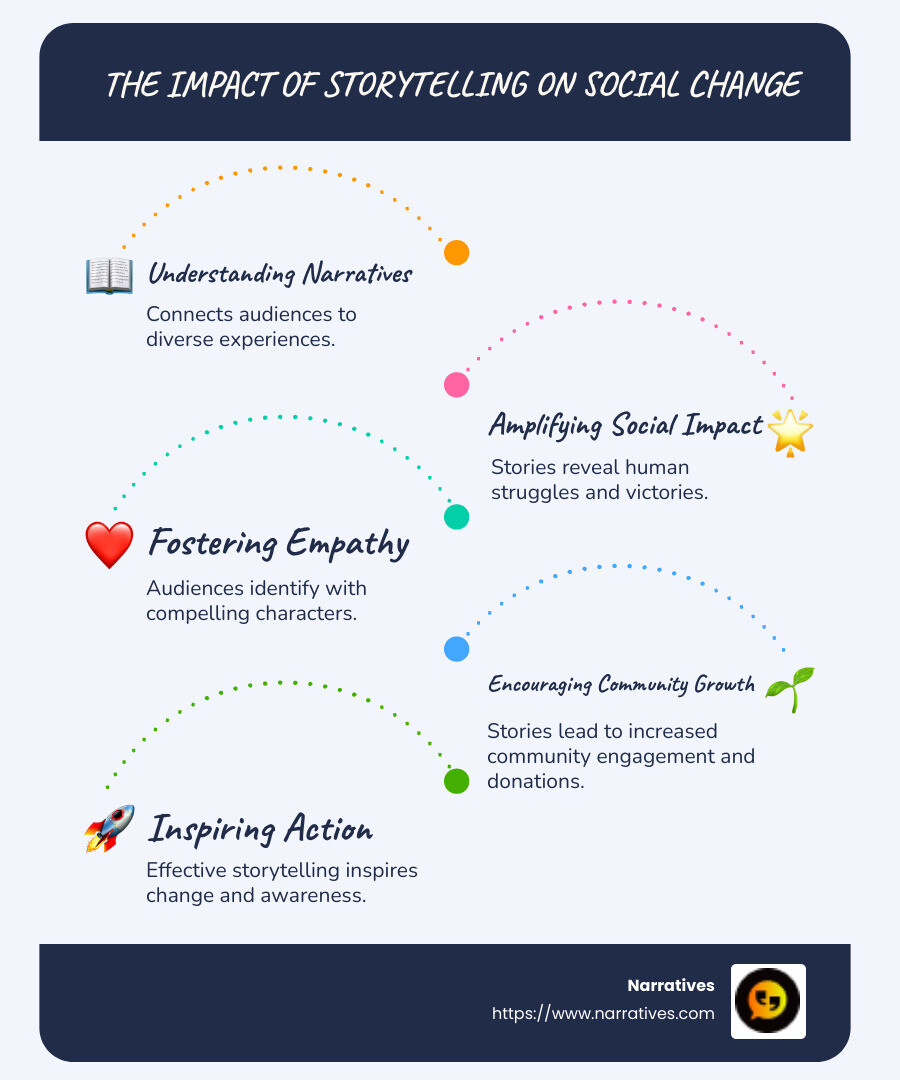
- Narratives shape our understanding by connecting us to diverse experiences.
- Social impact is amplified when stories reveal human struggles and victories.
- Empathy is fostered as audiences identify with compelling characters and scenarios.
Stories offer more than entertainment—they provide a bridge to understanding and action. They illuminate issues and help people see the world through a new lens. This connection can lead to community growth, donations, and increased awareness about social causes.
Today, the challenge for organizations lies not in the importance of their mission but in translating those missions into stories that are both authentic and impactful. It's about crafting content that truly resonates, encourages empathy, and inspires change.
Simple Storytelling and social change glossary:
The Power of Storytelling in Social Change
Storytelling is a potent tool for driving social change because it taps into our innate ability to connect with others through shared experiences. At its core, storytelling allows us to view the world from different perspectives, challenging our assumptions and broadening our understanding of complex social issues.
Shaping Perspectives and Social Norms
Stories have the unique power to shift perspectives by presenting diverse experiences and viewpoints. A well-crafted narrative can transport audiences into the lives of others, fostering a deeper understanding of societal challenges and promoting empathy.
For instance, the long-running Soul Buddyz series in South Africa used multimedia storytelling to reflect the lives of children aged 8 to 12. This initiative not only entertained but also educated its audience, leading to the creation of Buddyz Clubs that focus on children's education and well-being. By immersing viewers in these narratives, Soul Buddyz helped redefine social norms around children's rights and health.
Engaging Audiences for Impact
Effective storytelling engages audiences emotionally, making the message more memorable and impactful. When people see themselves in a story's protagonist, they are more likely to internalize the message and be motivated to act.
Consider the case of charity: water, founded by Scott Harrison. By sharing personal stories and images of those affected by the lack of clean water, Harrison was able to engage audiences worldwide. His storytelling approach turned a simple birthday wish into a global movement, raising millions to fund water projects. This engagement is a testament to the power of stories to not only inform but also inspire action.
Changing Social Norms
Through storytelling, we can challenge existing social norms and promote new ones that align with social justice and equity. In the book Speaking Out: Storytelling for Social Change, L Zingaro emphasizes how storytelling can be a significant social action tool. By sharing stories that highlight injustices and triumphs, storytellers can influence public discourse and drive societal change.
Storytelling and social change are intrinsically linked, as stories have the capacity to reshape social norms and inspire collective action. They serve as a catalyst for change by offering fresh perspectives, engaging audiences emotionally, and challenging societal norms. This makes storytelling an invaluable tool for any organization striving to make a meaningful impact.
In the next section, we'll explore how stories shape social attitudes through brain processing, empathy building, and behavior change.
How Stories Shape Social Attitudes
Storytelling and social change are deeply connected, primarily through the way stories shape social attitudes. This connection is rooted in how our brains process narratives, foster empathy, and influence behavior.
The Brain's Response to Stories
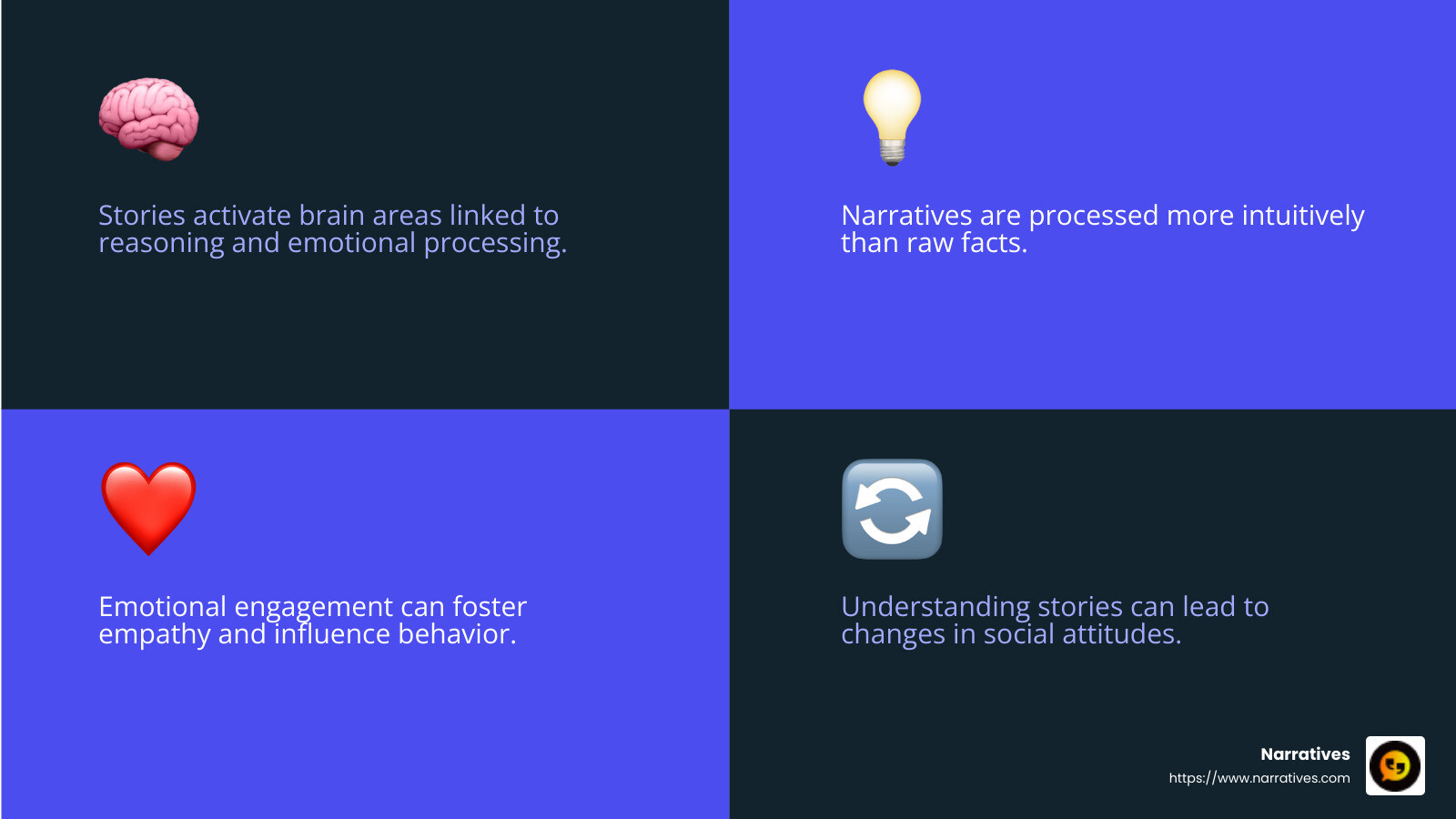
Stories activate different brain regions compared to other forms of information. Research from the University of Pennsylvania shows that narratives engage brain areas associated with reasoning and emotional processing, even when our cognitive resources are limited. This means stories can be understood and internalized more intuitively than straightforward facts.
Building Empathy Through Narrative
Empathy is at the heart of storytelling's impact. When we hear or read a story, our brains simulate the experiences of the characters, allowing us to feel their emotions and understand their perspectives. This process is known as "narrative transportation."
For instance, the Soul Buddyz series in South Africa used storytelling to immerse children in narratives that promote empathy and understanding of social issues. By engaging with these stories, young audiences learned to empathize with characters facing challenges similar to their own, fostering a more compassionate community.
Encouraging Behavior Change
Stories don't just inform; they inspire action. When individuals identify with a story's protagonist, they are more likely to adopt behaviors aligned with the narrative's message. This effect is evident in health campaigns that use personal stories to promote behavior change, such as anti-smoking initiatives that feature real-life experiences.
In a study involving brain stimulation, participants were shown messages framed as stories and as straightforward facts. Those exposed to stories retained their ability to reason and generate arguments, while those presented with facts found it more challenging. This illustrates how stories can effectively encourage critical thinking and behavior change.
Storytelling and social change work hand in hand by reshaping social attitudes through engaging narratives that build empathy and promote new behaviors. This makes storytelling a powerful tool for driving positive societal change.
In the next section, we will dig into techniques for effective storytelling, focusing on character development, emotional engagement, and multimedia content.
Techniques for Effective Storytelling
Storytelling is more than just a narrative; it's a craft that, when done right, can drive social change. Let's explore some key techniques that make storytelling effective.
Character Development
Characters are the heart of any story. They are the lenses through which audiences view the world, offering perspectives that can challenge or reinforce social norms.
To create compelling characters, storytellers should focus on:
- Authenticity: Characters should feel real, with emotions and motivations that resonate with the audience.
- Complexity: Just like real people, characters should have layers. This complexity allows audiences to connect and empathize with them.
- Growth: Characters should evolve. Their journey can mirror societal changes, making the story more relatable and impactful.
A well-developed character can transform a narrative into a powerful tool for change. When audiences see themselves in a character, they're more likely to reflect on their own beliefs and actions.
Emotional Engagement
Emotion is the glue that binds us to a story. It creates a connection that can lead to empathy and action.
To engage emotions effectively, consider:
- Relatable Conflicts: Situations that the audience can identify with or understand.
- Vivid Imagery: Descriptive language that paints a picture in the mind of the audience.
- Emotional Arcs: Stories should take the audience on an emotional journey, with ups and downs that mirror real-life experiences.
When emotions are engaged, stories can transcend mere entertainment and become catalysts for social change. They can inspire audiences to act, whether it's by changing personal behaviors or advocating for broader societal shifts.
Multimedia Content
Storytelling isn't limited to words. Multimedia content can improve a story's reach and impact.
- Visuals: Images and videos can convey complex ideas quickly and powerfully. They make stories accessible to a wider audience, including those who may not engage with text-heavy content.
- Audio: Podcasts and audio stories can provide an intimate storytelling experience, allowing listeners to engage with stories while on the go.
- Interactive Elements: Digital platforms allow for interactive storytelling, where audiences can engage with the story in real-time, making it a more immersive experience.
Multimedia content not only broadens the reach of a story but also makes it more engaging and memorable. By leveraging different media, storytellers can connect with diverse audiences and drive meaningful social change.
These techniques—character development, emotional engagement, and multimedia content—are essential for crafting stories that resonate and inspire action. In the following section, we'll explore how storytelling can be integrated into education to promote community building and learning.
Storytelling and Social Change in Education
Storytelling is a powerful educational tool that can transform classrooms and communities. By weaving narratives into pedagogy, educators can foster empathy, community building, and a deeper understanding of complex issues.
Pedagogy
Incorporating storytelling into pedagogy can make learning more engaging and effective. Stories are not just a way to convey information; they are a method to inspire curiosity and critical thinking.
- Engagement: Stories capture students' attention and make learning more enjoyable. A well-told story can make even the driest subject matter come alive.
- Understanding: Through narratives, students can explore diverse perspectives and develop a better understanding of different cultures and experiences.
- Retention: Information presented in story form is often more memorable. Students are more likely to remember and apply what they've learned when it is embedded in a narrative.
Community Building
Stories have the power to unite communities by highlighting shared experiences and values. They can serve as a bridge between individuals, fostering a sense of belonging and solidarity.
- Shared Narratives: By sharing stories, communities can create a collective identity. This can be particularly powerful in diverse settings where individuals from different backgrounds come together.
- Empathy and Inclusion: Listening to and sharing stories helps individuals understand and appreciate different viewpoints, promoting empathy and inclusion.
- Action and Advocacy: Community stories can galvanize collective action. When people see their experiences reflected in a narrative, they are more likely to engage in social change efforts.
Educational Tools
Educators can use various tools to integrate storytelling into their teaching methods, making lessons more interactive and impactful.
- Digital Storytelling: Tools like videos, podcasts, and interactive platforms can bring stories to life in the classroom. They allow students to create and share their own narratives, enhancing their learning experience.
- Story Circles: These are gatherings where students share personal stories in a safe and supportive environment. Story circles encourage active listening and empathy.
- Role-Playing: By stepping into the shoes of a character, students can explore complex social issues in a hands-on way. This experiential learning can lead to deeper understanding and personal growth.
Incorporating storytelling into education is not just about teaching facts. It's about shaping students into empathetic, informed, and active members of society. We'll dig into common questions about how storytelling can promote social change and explore real-world examples of its impact.
Frequently Asked Questions about Storytelling and Social Change
How can storytelling promote social change?
Storytelling has a unique ability to promote social change by building empathy and connecting people to social issues on a personal level. When we hear a story, especially one centered around a relatable protagonist, we are more likely to empathize with their experiences. This connection can inspire action and shift perspectives on important social issues.
- Empathy: Stories allow us to walk in someone else's shoes, fostering a deep emotional connection. This empathy can lead to a greater understanding of complex social issues and motivate individuals to advocate for change.
- Protagonist: A well-crafted protagonist serves as a mirror, reflecting our own struggles and triumphs. When audiences see themselves in a character, they are more likely to be moved by the story and take action.
What are examples of storytelling for social change?
There are numerous examples where storytelling has successfully driven social change by highlighting community values, spreading health messages, and addressing climate action.
- Community Values: Initiatives like the Neighborhood Story Project showcase how narratives can strengthen community bonds by emphasizing shared values and experiences. These stories can unite people and encourage collective problem-solving.
- Health Messages: Campaigns using storytelling to convey health messages have proven effective. For instance, stories about individuals affected by secondhand smoke have been used to promote smoke-free environments.
- Climate Action: Documentaries and storytelling campaigns focusing on climate change bring the issue to life, making it more relatable. By illustrating the impact of climate change on real people and communities, these narratives can motivate action and policy change.
How does storytelling differ from other communication methods?
Storytelling stands out from other communication methods due to its unique impact on our brain's neural pathways and its ability to evoke emotional resonance.
- Neural Pathways: Research shows that stories are processed in the brain differently than straightforward facts. They engage different neural pathways, allowing us to absorb information more naturally and with greater impact.
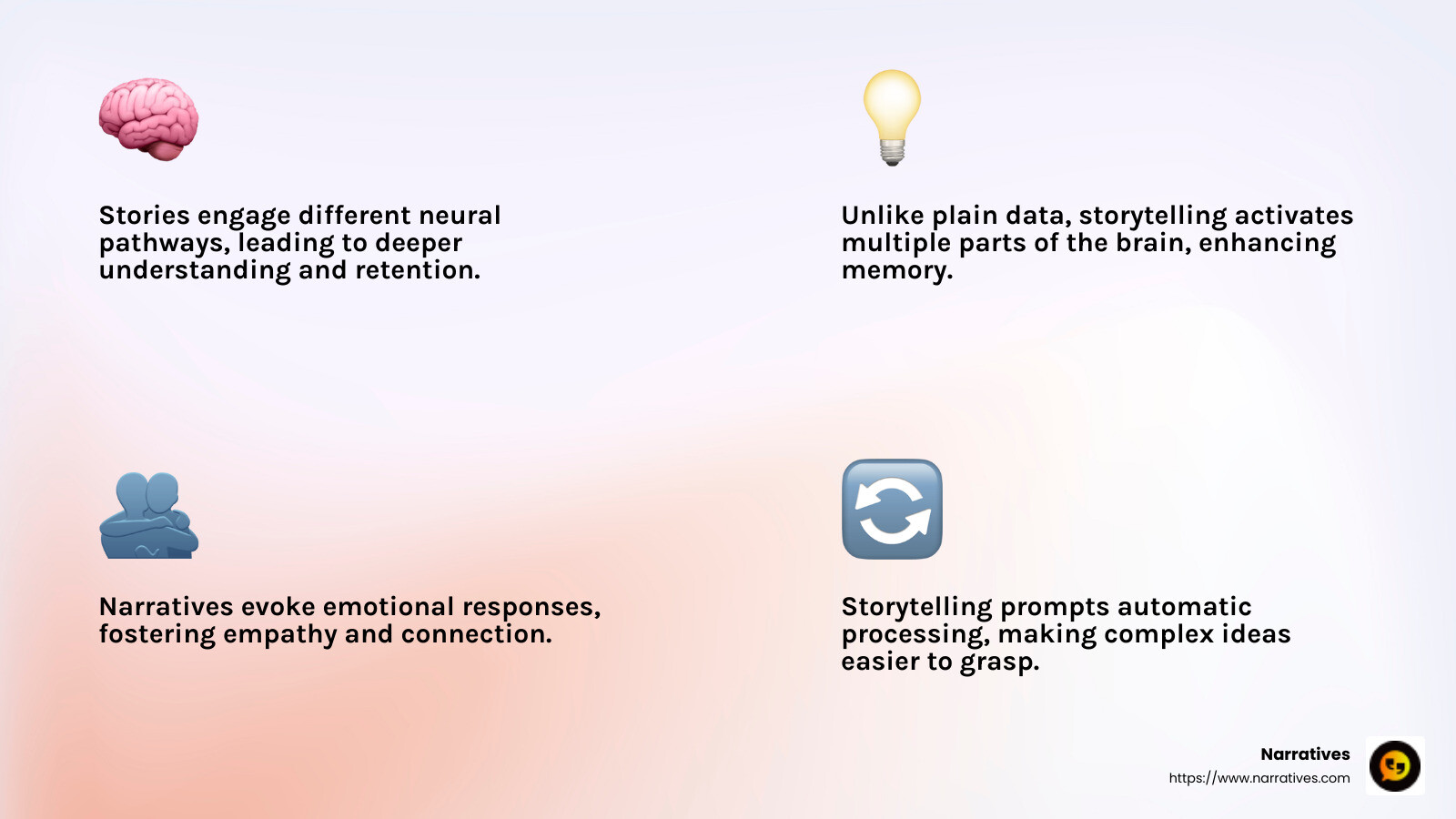
- Automatic Processing: Unlike other forms of communication, stories can bypass our critical defenses, leading to more automatic processing of the message. This makes them particularly powerful in changing attitudes and behaviors.
- Emotional Resonance: Stories evoke emotions in a way that facts alone often cannot. This emotional resonance makes the message memorable and can drive individuals to act on the issues presented.
By leveraging the power of storytelling, we can create narratives that not only inform but also inspire meaningful change. In the next section, we'll explore how storytelling can be integrated into educational settings to further drive social change.
Conclusion
Narratives are at the heart of driving social change. They have the power to build empathy, shift perspectives, and inspire action. At Narratives, we focus on creating community-driven storytelling by partnering with non-profits to lift underrepresented voices. Our approach involves crafting high-quality, emotionally resonant stories that highlight the impact of social initiatives.
Non-Profit Partnerships
Working with non-profits, we help bring their stories to life. These partnerships are crucial because they amplify the work being done on the ground and connect it with wider audiences. By sharing these stories, non-profits can build trust, increase visibility, and inspire their supporters to take action. For instance, the PARS Equality Center uses storytelling to empower Persian-speaking immigrants, showcasing how community initiatives can lead to meaningful change.
Community-Driven Storytelling
Our strategy centers around empowering communities to tell their own stories. This approach not only ensures authenticity but also fosters a sense of ownership and pride among community members. Projects like the Neighborhood Story Project demonstrate how storytelling can strengthen community bonds by highlighting shared values and experiences. Such narratives encourage collective problem-solving and community resilience.
In summary, storytelling is a powerful tool for social change. It transforms words into action by connecting people to causes and inspiring them to get involved. At Narratives, we are committed to being the go-to digital storytelling partner for non-profits, helping them share their impact stories in a way that resonates and drives change.
To learn more about how we can help your organization harness the power of storytelling, click here.


.avif)