Once Upon a Strategy: Mastering Storytelling in Content

Storytelling content strategy is a magic wand in today’s content marketing arena. Many brands rely on it to create genuine connections with their audience. If you’re searching for insights into storytelling content strategy, here’s a quick rundown:
- Stories are memorable: People remember stories 22 times more than facts alone.
- Builds emotional connections: Storytelling fosters authentic, emotional bonds with audiences.
- Improves brand awareness: Engaging narratives spread the word about your brand more effectively.
- Flexible and versatile: From blog posts to social media, storytelling adapts to any platform.
Content storytelling involves more than just telling tales. It's about weaving brand narratives that resonate deeply with your audience's values and emotions, sparking engagement and fostering loyalty. While hard facts and dry statistics can often alienate, a well-told story makes your mission relatable, memorable, and meaningful to the people you aim to reach.
For non-profits and social impact organizations, storytelling isn't just a strategy—it's a bridge to empathy and understanding, essential for driving donations, awareness, and community growth.
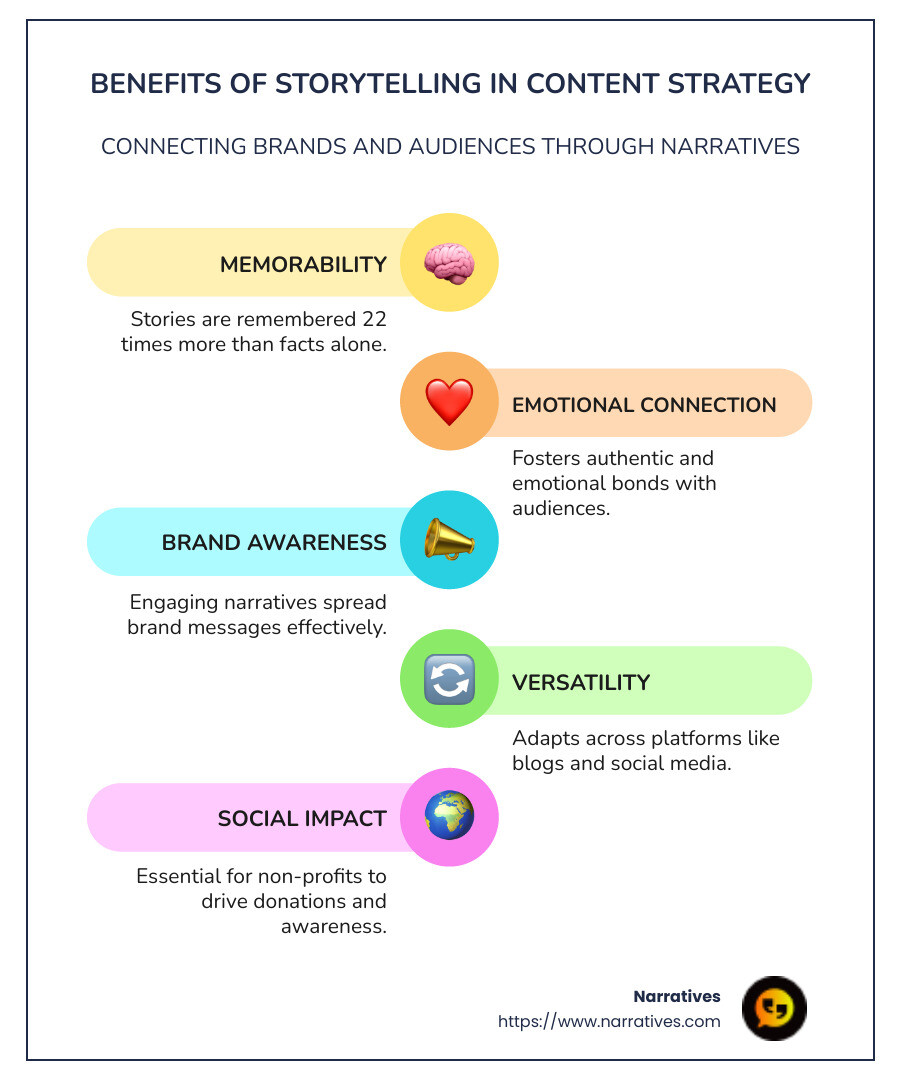
Quick look at storytelling content strategy:
The Power of Storytelling in Content Strategy
In the field of content strategy, storytelling stands as a powerful tool, changing how brands connect with their audiences. Let's explore why storytelling holds such sway.
Emotional Connection
Stories have the unique ability to forge emotional bonds. They resonate with our innate human desire for connection and understanding. Unlike mere facts or statistics, stories engage the heart. They evoke feelings, whether it's joy, empathy, or even anger. This emotional engagement is crucial because it turns passive readers into active participants in your brand's journey.

Building Brand Awareness
Storytelling is not just about crafting a narrative; it's a strategic way to improve brand awareness. By weaving your brand's mission and values into compelling stories, you make your brand memorable. Think of Coca-Cola's storytelling approach, where they use journalistic storytelling to showcase the people and stories behind their brand. This method has helped expand their reach across 35 countries, turning a simple beverage company into a global narrative powerhouse.
Narrative Journalism
Narrative journalism serves as a bridge between traditional storytelling and modern content marketing. It combines the essence of journalism—truth, depth, and engagement—with the art of storytelling. This approach allows brands to present their message in a way that's both informative and captivating. For instance, consider how Hyundai's Super Bowl ad focused on emotional storytelling rather than the product itself, creating a lasting impact on viewers.
Incorporating storytelling content strategy into your content marketing plan is more than just a trend; it's a necessity. It’s about creating a narrative that your audience can see themselves in, building a community around shared values and experiences. This strategy doesn't just tell your brand's story—it makes your audience a part of it.
Storytelling Content Strategy: Key Components
Creating an effective storytelling content strategy involves several key components that work together to craft a compelling narrative. Let's explore these components: brand story, narrative structure, and emotional resonance.
Brand Story
At the heart of any storytelling strategy is the brand story. This is the narrative that defines your brand’s identity, mission, and values. It’s not just about what you do, but why you do it. A powerful brand story can inspire and engage your audience by connecting with them on a personal level. For instance, Toms Shoes' story about providing shoes to children in need resonates deeply with consumers, highlighting their commitment to social good.
Narrative Structure
A well-crafted story relies on a solid narrative structure. This includes elements like characters, conflict, and resolution. Just like in a novel or movie, these elements help to engage the audience and keep them invested in the story. When applied to content marketing, this structure can transform a simple message into a captivating journey.
Consider using a narrative arc that introduces your brand as the protagonist, presents a challenge or conflict, and then shows how your brand overcomes it. This not only makes your content more engaging but also helps to clearly communicate your brand's values and purpose.
Emotional Resonance
Emotional resonance is what makes stories memorable. It’s the ability of a story to evoke emotions and create a lasting impact. Research shows that people remember stories 22 times more than facts alone. This is because stories tap into our emotions, making them more relatable and impactful.
For example, Hyundai's Super Bowl ad didn't just showcase their cars; it focused on reuniting families, creating an emotional connection with viewers. This kind of storytelling goes beyond products and services, fostering a deeper connection with the audience.
In summary, a successful storytelling content strategy combines these key components to create content that is not only engaging but also deeply connected to the brand's core values. By focusing on a compelling brand story, a strong narrative structure, and emotional resonance, you can craft stories that not only capture attention but also build lasting relationships with your audience.
How to Implement a Storytelling Content Strategy
Implementing a storytelling content strategy can transform how your brand connects with its audience. Let's break down the essential steps to get started: focusing on brand values, crafting authentic stories, and ensuring audience engagement.
Align with Brand Values
Your brand values are the foundation of your storytelling. They define who you are and what you stand for. When your stories reflect these values, they become more authentic and relatable. For example, consider how Warby Parker shares its commitment to social good by donating a pair of glasses for every pair sold. This not only highlights their values but also builds trust with their audience.
To align your stories with your brand values:
- Identify Core Values: Clearly define your brand's values and mission.
- Consistent Messaging: Ensure every story reinforces these values.
- Employee Stories: Share stories from within your organization that exemplify your values in action.
Craft Authentic Stories
Authenticity is key in storytelling. People connect with genuine stories that resonate on a personal level. Authentic stories are not about self-promotion; they're about sharing real experiences and emotions.
To craft authentic stories:
- Focus on Real Experiences: Highlight personal stories from customers or employees.
- Simplify the Narrative: Keep stories straightforward and focused on a single message.
- Avoid Hyperbole: Be honest and avoid exaggeration to maintain credibility.
A great example is Coca-Cola's approach to brand journalism, where they share stories about the people behind their products, creating a more personal connection with their audience.
Engage Your Audience
Engaging your audience means creating stories that invite them to be a part of the conversation. This can be achieved through interactive content, user-generated stories, or by addressing issues that matter to them.
To engage your audience:
- Interactive Content: Use polls, quizzes, or interactive videos to involve your audience.
- User-Generated Stories: Encourage customers to share their experiences with your brand.
- Address Relevant Issues: Create content that tackles topics your audience cares about.
Hyundai's Super Bowl ad is a prime example of engaging storytelling. By focusing on reuniting military families, they created an emotional experience that resonated deeply with viewers.
By aligning with your brand values, crafting authentic stories, and engaging your audience, you can implement a storytelling content strategy that not only captures attention but also builds lasting relationships. This approach ensures that your content is not just seen but felt, creating a meaningful connection with your audience.
Examples of Effective Storytelling in Content Marketing
Let's explore some storytelling content strategy examples from well-known brands that have successfully connected with their audiences through compelling narratives.
Apple: Breaking Convention with a Story
Apple’s famous "1984" ad is a classic example of storytelling that leaves a lasting impression. The ad features a woman in bright red shorts smashing a screen controlled by a Big Brother figure, symbolizing Apple's challenge to the status quo. This narrative, inspired by George Orwell's novel "1984," positioned Apple as a force in the tech industry. The ad not only showcased the Macintosh but also invited consumers to be part of a new era of personal computing.
Nike: The Power of Human Achievement
Nike's "Breaking2" project is another stellar example. In collaboration with National Geographic, Nike documented three athletes attempting to run a marathon in under two hours. This story of human perseverance and innovation captivated audiences worldwide. Although the goal wasn't achieved during the documentary, the journey itself resonated deeply with viewers. Nike's storytelling highlighted their commitment to pushing boundaries and inspired runners globally.
Coca-Cola: Connecting Through Personal Stories
Coca-Cola has mastered the art of brand journalism by sharing the stories of people behind their products. This approach humanizes the brand and builds a personal connection with consumers. By focusing on the narratives of their employees and the communities they serve, Coca-Cola creates content that goes beyond traditional advertising. This strategy not only improves brand loyalty but also strengthens consumer relationships.
Lego: Inspiring Creativity and Imagination
Lego's storytelling extends beyond toys. Through initiatives like their children’s magazine and "The Lego Movie," Lego encourages creativity and imagination. The magazine features stories and user-generated content, allowing children to see their creations in print. "The Lego Movie" further immerses audiences in a world built entirely from Lego bricks, reinforcing the brand’s message of creativity and play. These storytelling efforts engage both children and adults, making Lego a beloved brand across generations.
Hyundai: Emotional Connections on a Global Stage
Hyundai's 2017 Super Bowl ad demonstrated the power of emotional storytelling. The ad focused on reuniting military families with their loved ones virtually during the game. This heartfelt narrative transcended the product, creating an emotional experience that resonated with viewers. By prioritizing human connections over brand promotion, Hyundai crafted a memorable story that highlighted their values of care and family.
These examples illustrate the impact of a well-executed storytelling content strategy. By creating narratives that resonate emotionally, these brands have successfully engaged their audiences and strengthened their market presence.
Frequently Asked Questions about Storytelling Content Strategy
What is storytelling content?
Storytelling content is all about weaving a narrative that connects with your audience on an emotional level. It's not just about presenting facts or features; it's about telling a story that resonates. This narrative approach transforms dry information into engaging content that sticks with people.
Consider the example of Nike's "Breaking2" project. Instead of just promoting their shoes, Nike told the story of athletes striving to break the two-hour marathon barrier. This narrative captured the imagination of viewers and made the brand's message unforgettable.
How does storytelling improve brand awareness?
Storytelling is a powerful tool for building brand awareness because it creates an emotional connection with the audience. When people feel something, they remember it. Apple's "1984" ad is a prime example. The ad didn't just introduce a product; it told a story of rebellion against conformity, which resonated deeply with viewers and left a lasting impression.
By crafting narratives that align with their audience's values and emotions, brands can foster brand loyalty and improve consumer engagement. This emotional bond encourages people to share the story with others, amplifying the brand's reach and impact.
Why is storytelling crucial in content marketing?
Storytelling in content marketing is crucial because it makes content memorable and impactful. Stories activate multiple areas of the brain, creating a richer, more immersive experience for the audience. This is why stories are remembered 22 times more than facts alone.
Coca-Cola's approach to storytelling illustrates this well. By sharing personal stories of their employees and communities, Coca-Cola builds a human connection that goes beyond traditional advertising. This emotional impact not only improves brand loyalty but also makes the content more memorable.
When consumers are bombarded with information, storytelling cuts through the noise. It helps brands stand out and create content that resonates on a deeper level, ultimately driving consumer engagement and building lasting relationships.
Conclusion
At Narratives, we believe in the transformative power of storytelling content strategy to drive positive change and amplify the voices of those often unheard. Our focus is on crafting compelling narratives for non-profits and purpose-driven organizations, helping them share their impact in a way that inspires action and fosters trust.
Non-profit partnerships are at the heart of what we do. By collaborating with these organizations, we create high-quality, emotionally resonant content that highlights their missions and achievements. This approach not only increases visibility but also encourages community support and engagement.
The social impact of storytelling is profound. By humanizing the stories of those in need, we foster empathy and understanding, motivating audiences to take action. Our content showcases the struggles and triumphs of communities, providing a platform for underrepresented voices to be heard.
Through our work, we aim to make storytelling a powerful tool for social change. By partnering with us, non-profits can leverage our expertise to lift their messages and maximize their impact. Together, we can create a more empathetic and connected world.
For more information on how we can help your organization tell its story, visit our Narratives service page. Let's work together to make a difference.


.avif)