From Story to Action: How to Drive Change with Narrative

Storytelling for action holds incredible power in shaping mindsets and driving change. From cave drawings dating back 30,000 years to cutting-edge storytelling techniques in business strategy today, narratives connect us at a fundamental level. The quest to leverage storytelling isn't about crafting fairy tales but about making real connections and fostering genuine communication.
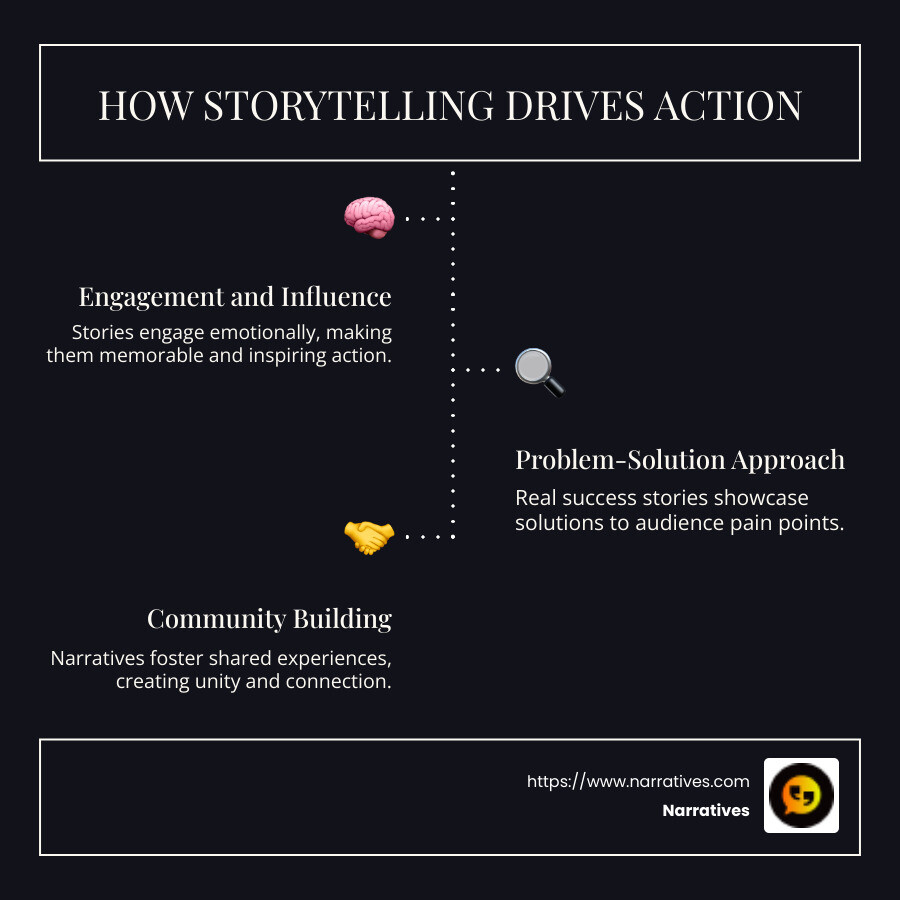
Here are three ways storytelling can drive action:
Engagement and Influence: Stories engage listeners emotionally, making them more likely to remember and act.
Problem-Solution Approach: Sharing success stories based on real pain points can illustrate value effectively.
Community Building: Stories link people, creating shared experiences and fostering unity.
Narrative impact is profoundly felt in organizations committed to social advocacy and change. By focusing on ethical storytelling, these organizations can amplify their messages, bridging the gap between mission and measurable impact.
Whether you're a non-profit leader, a brand advocate, or a media professional, storytelling can be your most powerful tool for change.
Storytelling for action word guide:
The Science of Storytelling
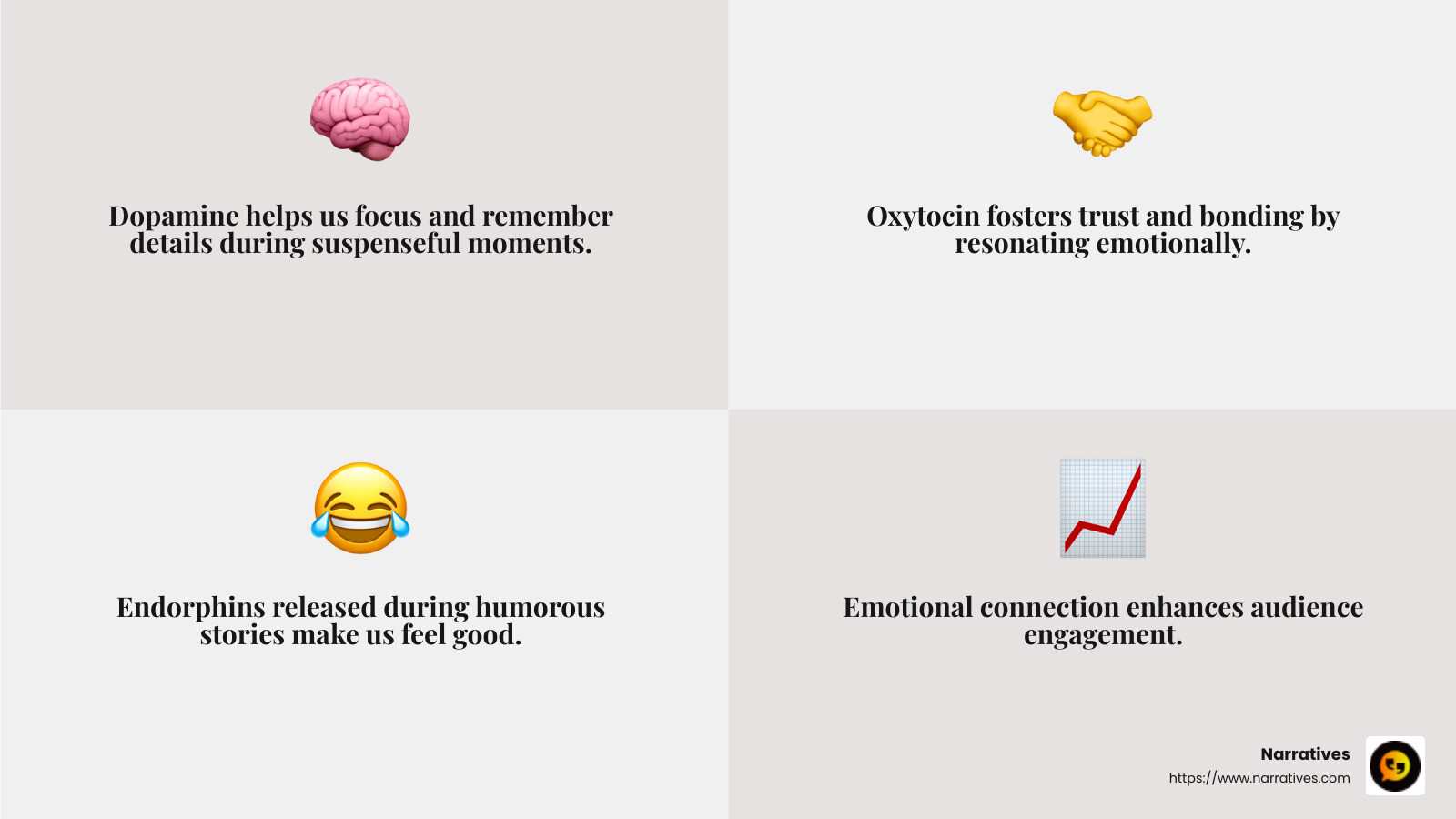
Storytelling captivates us in ways that data alone cannot. The secret? Brain chemicals like dopamine, oxytocin, and endorphins. These chemicals are released when we hear a compelling story, creating an emotional connection and enhancing audience engagement.
Dopamine: Released during suspenseful moments, it helps us focus and remember details. When a story keeps us on the edge of our seats, dopamine ensures we stay engaged and retain the information.
Oxytocin: Known as the "empathy chemical," it fosters trust and bonding. When a story resonates emotionally, oxytocin helps us connect with the characters and the storyteller, deepening our engagement.
Endorphins: These are released during humorous or uplifting stories, making us feel good and more open to the storyteller's message.
Emotional Connection
When we listen to a story, our brains don't just process words; they simulate the events described. This active engagement creates a shared emotional experience between the storyteller and the audience. As Lisa Cron notes in Wired for Story, stories let us "simulate intense experiences" without living through them, enabling us to learn and empathize.
Audience Engagement
A well-told story does more than entertain—it transforms listeners into participants. By activating multiple brain areas, storytelling ensures that the audience not only hears but also feels and imagines the narrative. This immersive experience makes the message stick, as Leo Widrich explains: a story turns the listener's experience into their own idea.
Storytelling for action isn't just about telling tales. It's about creating a shared journey, where the audience is not just a passive listener but an active participant, ready to be inspired and take action.
Storytelling for Action: Key Principles
To harness the power of storytelling for action, it's crucial to follow key principles that ensure your narrative is effective and impactful. These principles guide you in crafting stories that not only engage but also inspire change.
Audience-Specific
Know Your Audience: Tailor your story to the people you aim to influence. Whether it's a senator, a community leader, or a potential donor, understanding your audience's needs and perspectives is vital. This allows you to craft a message that resonates and motivates them to act.
Contextualize
Set the Scene: Provide the background necessary for your audience to grasp the full picture. Context helps listeners understand why the story matters and how it relates to their own experiences. As noted in the research, stories are our way of making sense of the world, and context is the key to open uping that understanding.
Humanize
Make It Relatable: People connect with stories that reflect real human experiences. Use relatable characters and situations to evoke empathy and understanding. As Dr. Elisabeth Potter's patient stories demonstrate, personal narratives can bridge gaps and foster a sense of community among listeners.
Action-Oriented
Inspire Change: Every story should have a clear call to action. What do you want your audience to do after hearing your story? Whether it's supporting a cause, changing a behavior, or joining a movement, make sure your narrative leads to a specific, actionable outcome.
Humility
Be Honest and Transparent: Authenticity is crucial in storytelling. As Karen reminds us, honesty fosters trust. Avoid spinning or exaggerating your story, as audiences can sense insincerity. Instead, present your narrative with humility and integrity, treating your audience as mature, discerning individuals.
By adhering to these principles, your stories can transcend mere entertainment and become powerful catalysts for action. They can motivate, influence, and create lasting change in both individuals and communities.
Crafting Compelling Narratives
Creating a compelling narrative is an art that involves several key elements. Let's break down these components to make your story not just engaging but also action-inspiring.
Context
Setting the Stage: Every good story begins with context. This is where you introduce the setting, characters, and the initial situation. Context provides the background that helps your audience understand why your story matters. It connects the dots between your narrative and the real-world issues your audience cares about. For instance, in the documentary Life in the Land, the context of community-guided initiatives in Montana sets a relatable stage that draws the audience in.
Conflict
The Heart of the Story: Conflict is what keeps your audience engaged. It’s the challenge or problem that needs solving. This element elicits emotions and creates a connection between the audience and the story. For example, the Sleep Number ad perfectly illustrates conflict with a relatable issue—different sleeping preferences—making viewers curious about the resolution.
Outcome
Resolution and Results: After presenting the conflict, your narrative should lead to an outcome. This is where you show how the problem was resolved. A good outcome provides clarity and satisfaction, guiding your audience toward the story's conclusion. In the T-Mobile ad, the resolution is simple yet effective: T-Mobile’s service solves the problem of a canceled party due to a downed internet connection.
Takeaway
The Lesson or Call to Action: Finally, every compelling narrative leaves the audience with a takeaway. This could be a lesson learned, an insight gained, or a specific call to action. It's the part of the story that sticks with your audience and inspires them to act. As Maria, a cancer advocate, emphasizes, storytelling should empower individuals to realize their agency in enacting change.
By weaving these elements—context, conflict, outcome, and takeaway—into your narrative, you ensure that your story not only captivates but also drives meaningful action.
Storytelling for Action in Non-Profit Advocacy
In non-profit advocacy, storytelling isn't just a tool; it's a bridge that connects hearts and minds. Let's explore how empathy, personal connections, and advocacy tools turn stories into powerful agents of change, particularly in the field of cancer advocacy.
Empathy: The Heartbeat of Advocacy
Empathy is the key to opening up understanding and compassion. When you tell a story with empathy, you invite your audience to walk in someone else's shoes. This emotional connection is crucial in advocacy, as it transforms passive listeners into active supporters.
Take the example of charity: water, which uses vivid photographs and videos to evoke empathy. Instead of bombarding the audience with statistics, they share compelling stories that make people think about life without clean water. This approach not only informs but also inspires action.
Advocacy Tools: Amplifying Your Story
Storytelling for action requires the right tools to amplify your message. Non-profits can use multimedia, workshops, and social media to reach a broader audience. Platforms like Stories for Action produce short films and podcasts that highlight community initiatives, making complex issues accessible and engaging.
Incorporating storytelling into every aspect of advocacy—from grants to presentations—ensures the message resonates. As Karen reminds us, honesty is essential: "Treat people like adults, and give them the update." Authentic stories build trust and encourage genuine connections.
Personal Connection: The Power of Your Story
Your personal story is your most potent advocacy tool. Sharing personal experiences, especially in cancer advocacy, can raise awareness and drive change. You don't need to be a policy expert to make an impact. Your journey as a cancer patient, survivor, or caregiver is valuable.
Maria, a passionate cancer advocate, emphasizes: "When we rely on others to enact change that we want to see, we possess no agency in seeing those changes implemented." Your story can shine a light on challenges and inspire others to join your cause.
Cancer Advocacy: Stories that Inspire Change
Cancer advocacy is a poignant example of how personal stories can inspire action. By sharing the problems faced during cancer treatment or the need for better healthcare policies, advocates can raise awareness and push for meaningful changes.
Questions like "What challenges have I faced?" or "Are there changes I’d like to advocate for?" help you identify powerful stories. Reflecting on these experiences allows you to craft narratives that resonate widely and advocate effectively for positive change.
In non-profit advocacy, storytelling is a catalyst for empathy, connection, and action. By using the power of your story, you can inspire others to join your mission and drive meaningful change in the community.
How to Use Storytelling for Business Impact
Storytelling isn't just for bedtime. In business, it's a powerful way to connect with customers and drive change. Let's explore how businesses can use storytelling to make an impact by focusing on problem-solution, the customer journey, and building an emotional connection.
Problem-Solution: Addressing Pain Points
At the heart of every great story is a problem that needs solving. In business, this means understanding your customer's pain points. Michael Ashley, a storytelling expert, emphasizes the importance of conflict: "You need pain, or conflict in a story to gather people’s attention and hook them in."
For example, a business might share a case study about how their product helped a customer overcome a significant challenge. By showing how you solve problems, you demonstrate your value in a tangible way.
Customer Journey: Mapping the Experience
The customer journey is a story in itself. It's about guiding your audience from awareness to decision-making. By crafting narratives around this journey, businesses can engage customers at every stage.
Consider Dr. Elisabeth Potter, a plastic surgeon specializing in breast reconstruction. Her website features patient stories that detail every step of their journey. These stories not only inform but also reassure potential patients that they're not alone. This approach builds trust and guides customers through their decision-making process.
Emotional Connection: Building Relationships
Emotions are powerful motivators. When you connect with your audience on an emotional level, you foster loyalty and inspire action. As Harvard Business Publishing notes, "storytelling has the power to engage, influence, teach, and inspire listeners."
For instance, a business might use video testimonials to highlight customer experiences. These stories, filled with genuine emotion, create a bond between the brand and its audience. The goal is to make the customer feel understood and valued.
Incorporating storytelling into your business strategy isn't just about selling a product. It's about creating a narrative that resonates with your audience, addressing their needs, and building lasting relationships. By focusing on problem-solving, mapping the customer journey, and making emotional connections, businesses can use storytelling to drive meaningful action.
Frequently Asked Questions about Storytelling for Action
How does storytelling drive action?
Storytelling is more than just sharing tales; it's a catalyst for change. When done right, it can inspire, motivate, and lead to real-world actions. Storytelling for action works by tapping into the brain's natural affinity for narratives. Stories trigger emotional responses and release brain chemicals like oxytocin, which fosters trust and connection. This emotional engagement makes listeners more likely to take action based on the story they've heard.
For example, when cancer survivors share their personal journeys, they not only raise awareness but also encourage others to support cancer research and policy changes. By connecting personal stories to broader causes, storytelling can turn passive listeners into active participants.
What are the essential elements of a compelling story?
Crafting a compelling story involves several key elements that ensure it resonates with the audience:
- Context: Set the scene and provide background to help the audience understand the story's setting and characters.
- Conflict: Introduce a challenge or problem. This is what grabs attention and keeps the audience engaged.
- Outcome: Show how the conflict is resolved. This part provides closure and satisfaction.
- Takeaway: Offer a clear message or lesson. This gives the audience something to reflect on or act upon.
Karen Eber, a storytelling expert, emphasizes the importance of focusing on the audience's needs rather than just the storyteller's perspective. By tailoring stories to be audience-centric, storytellers can ensure their narratives are meaningful and impactful.
How can non-profits leverage storytelling for advocacy?
Non-profits can harness the power of storytelling to advocate for their causes effectively. By sharing stories that highlight real-life experiences and challenges, non-profits can humanize complex issues and foster empathy.
For instance, Narratives, a content agency, collaborates with non-profits to create content that showcases the communities they serve. Through storytelling, they bring attention to the struggles and triumphs of these communities, encouraging public support and engagement.
Cancer advocacy is another area where storytelling plays a crucial role. By sharing personal stories, advocates can highlight the need for policy changes and better healthcare access. As Maria, a cancer advocate, notes, "Your perspective and participation matter." Storytelling empowers individuals to share their unique experiences and drive change.
By focusing on empathy, personal connection, and clear calls to action, non-profits can use storytelling to engage their audience and inspire meaningful change.
Conclusion
As we wrap up our exploration of Storytelling for Action, it's clear that narratives are more than just words; they are powerful tools for change. At Narratives, we believe in using the power of digital storytelling to lift underrepresented voices and drive meaningful action. Our focus is on partnering with non-profits and purpose-driven organizations to craft emotionally resonant content that not only tells a story but inspires change.
Digital storytelling is about more than just creating content. It's about building connections, fostering empathy, and encouraging audiences to take action. By using high-quality multimedia content, we help non-profits share their impact stories in a way that builds trust and increases visibility. This approach not only highlights the important work being done but also invites others to join in and support these causes.
Through our partnerships, we aim to shine a light on the communities served by non-profits and bring attention to their stories. By showcasing real-life experiences and challenges, we humanize complex issues and foster a deeper understanding among audiences. This is the essence of Storytelling for Action—turning narratives into catalysts for change.
For non-profits looking to leverage storytelling for advocacy, the key is to focus on empathy, personal connection, and clear calls to action. By doing so, they can engage their audience and inspire meaningful change.
If you're ready to explore how Narratives can help your organization tell its story and drive action, learn more about our services. Together, we can make a difference, one story at a time.


.avif)