Narratives for Change: Harnessing Storytelling in Community Development
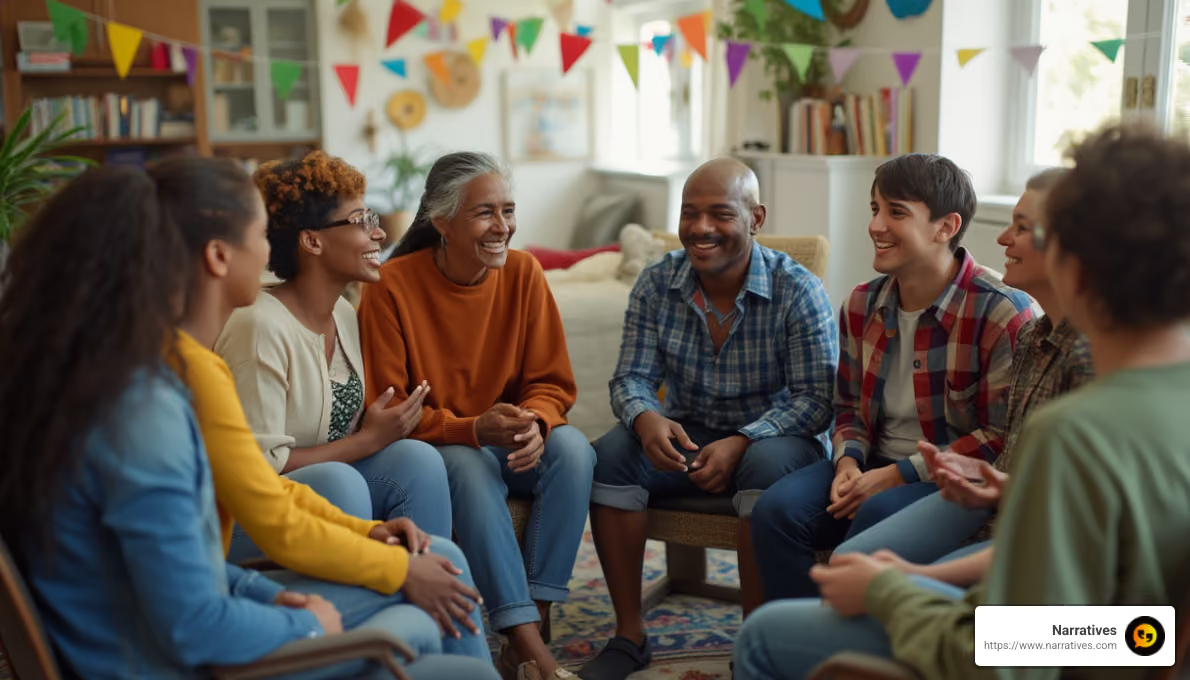
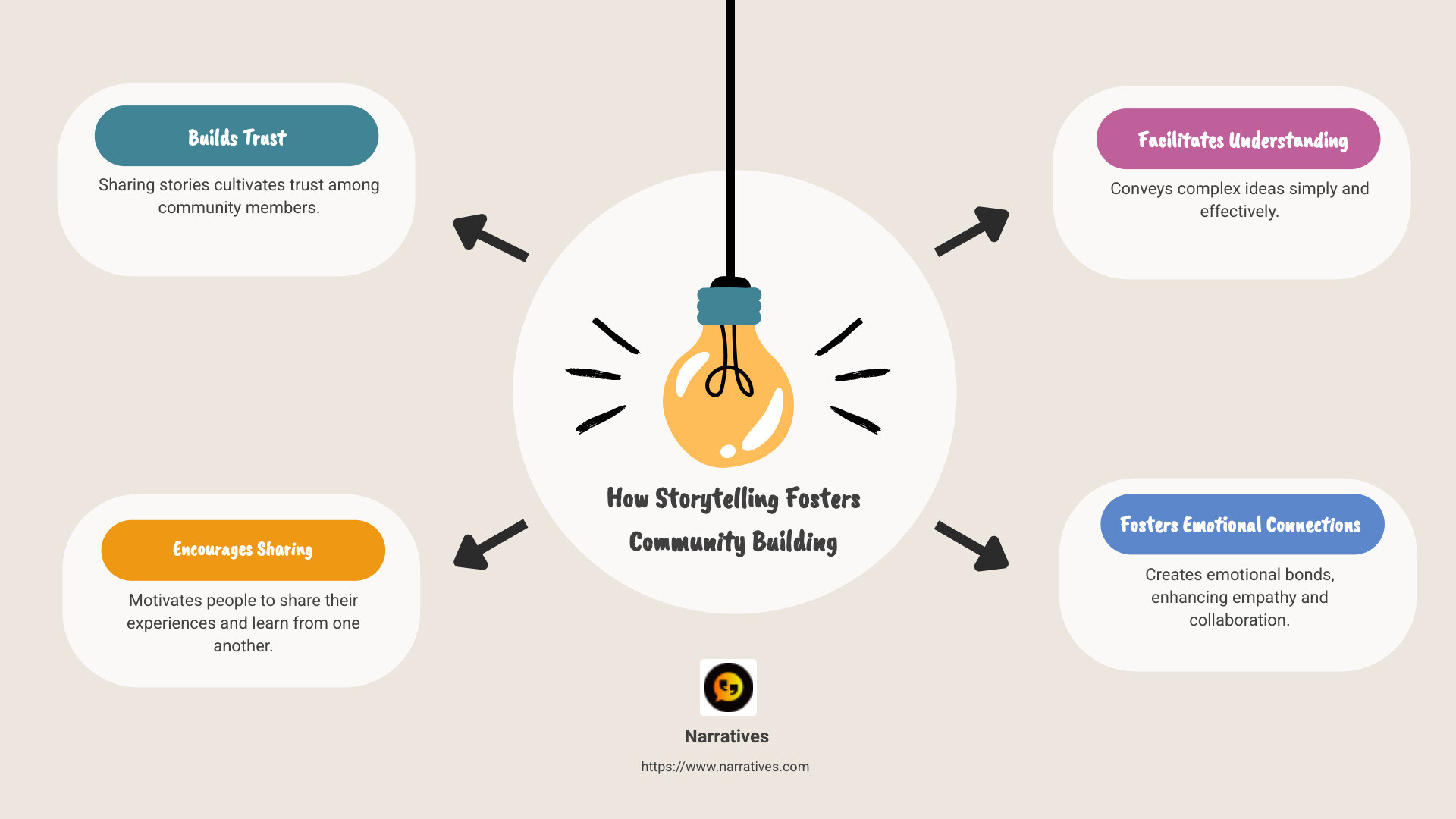
Storytelling in community development is a powerful tool that can bring people together. It strengthens relationships and helps communities grow. Here’s a quick look at how storytelling is so effective in building strong, vibrant communities:
- Builds Trust: Sharing stories cultivates trust among community members.
- Encourages Sharing: Stories motivate people to share their experiences and learn from one another.
- Facilitates Understanding: Storytelling provides a way to convey complex ideas simply and effectively.
- Fosters Emotional Connections: Narratives create emotional bonds between people, enhancing empathy and collaboration.
- Drives Social Change: Stories have the power to inspire and mobilize people towards collective action.
Storytelling doesn't just communicate ideas; it transforms them into a shared experience, laying the groundwork for meaningful social change. In the words of Jacob Needleman, "People are starving for something that was meant to pass between them but is not presently passing." Stories fill that gap, making human connections possible and communities stronger.
Handy Storytelling in community development terms:
The Power of Storytelling in Community Development
Storytelling is a universal language that transcends boundaries and brings communities together. It’s not just about telling tales; it’s a way to connect, preserve culture, and strengthen social ties.
Universal Sharing
Stories are a universal form of communication. They allow people from different backgrounds to share experiences and understand each other's perspectives. This universal sharing fosters inclusivity and breaks down barriers, creating a sense of belonging among community members.
In rural communities, storytelling can be a bridge between campuses and local residents. By sharing stories, people find common ground and work together to solve local problems. This was seen in a project where storytelling helped connect teachers, students, and community members to address issues collaboratively.
Cultural Maintenance
Storytelling is vital for preserving culture. It keeps traditions, values, and histories alive, passing them down through generations. This cultural maintenance ensures that the community's identity remains intact, even as it evolves.
For instance, stories about a community's history or shared recipes can shift perceptions from what the community lacks to what it has. This change in narrative empowers the community to leverage its strengths and assets for development.
Social Ties
At its core, storytelling strengthens social ties. It creates emotional bonds and fosters trust among community members. When people share their stories, they reveal their hopes, struggles, and dreams, which builds empathy and understanding.
A case study highlighted how storytelling sessions helped bridge racial and ethnic divides in a community. Neighbors who once ignored each other found common ground through shared stories, leading to new friendships and collaboration.

Storytelling is more than just a tool for communication. It's a catalyst for change, helping communities to grow and thrive by connecting individuals through shared narratives. As communities continue to evolve, the power of storytelling remains a fundamental force for building unity and promoting development.
How Storytelling Builds Community
Storytelling is a powerful tool for building community, creating a shared language, highlighting community assets, and fostering participatory storytelling.
Shared Language
Storytelling creates a shared language that unites community members. When people tell and listen to stories, they develop a common understanding and vocabulary. This shared language helps bridge cultural and social divides, enabling people to communicate more effectively.
For example, in a storytelling session, community members might find they all share a desire for safe spaces for children to play. This realization creates a common goal, encouraging collaboration and mutual understanding.
Community Assets
Storytelling can shine a light on community assets that are often overlooked. While many communities are defined by their deficiencies, stories can highlight strengths and potential. By focusing on what they have, communities can leverage these assets to bring about change.
Consider a community known for its lack of safety and clean facilities. Through storytelling, residents might share stories of soccer games that unite neighbors or recipes that bring people together. These narratives shift the focus from what is lacking to what is possible, igniting a sense of agency and hope.
Participatory Storytelling
Participatory storytelling invites everyone to share their voice, fostering inclusivity and empowerment. It encourages community members to take ownership of their narratives and envision a collective future.
In one community project, storytelling sessions were used to evaluate development efforts. Residents shared stories about new friendships, their children's interest in organizing, and excitement for future projects. This participatory approach ensured that all voices were heard and valued, leading to a more comprehensive understanding of the community's progress.
By engaging in participatory storytelling, communities can build trust and strengthen bonds. As individuals share their stories, they become active participants in shaping their community's future.
Storytelling is more than just a way to share experiences; it's a tool for building community, highlighting strengths, and fostering participation. Through shared narratives, communities can unite, grow, and thrive.
Storytelling in Community Development: A Tool for Change
Storytelling is not just about sharing experiences; it's a catalyst for change in community development. It plays a crucial role in community-led development, reflective storytelling, and driving social change.
Community-Led Development
In community-led development, storytelling empowers individuals to take charge of their futures. By sharing personal narratives, community members can articulate their visions and aspirations. This process transforms passive listeners into active participants, helping them see themselves as part of the solution.
For instance, in a Maryland neighborhood of West African and South American immigrants, storytelling was used to gather insights and foster collaboration. Residents shared dreams of a safer community with functional streetlights and accessible public transportation. These stories not only highlighted issues but also inspired action, leading to community-driven initiatives.
Reflective Storytelling
Reflective storytelling encourages individuals to look back on their experiences and learn from them. This practice fosters a deeper understanding of challenges and successes, enabling communities to grow and adapt.
Through reflective storytelling, individuals can identify patterns and root causes of issues. For example, a mother recounting her fear during a gun incident can spark discussions on safety and prevention measures. These narratives offer a nuanced understanding that data alone cannot provide.
Social Change
Storytelling fuels social change by creating emotional connections and fostering empathy. It humanizes statistics and brings abstract issues to life, making them relatable and urgent.
A powerful example is the use of stories in international development. While quantitative data often reduces communities to numbers, stories capture the human experience. They reveal the complexities behind issues like crime or poverty, offering a fuller picture that can drive meaningful change.
In one study, stories about the lack of clean water were more compelling than statistics alone. They evoked empathy and prompted action, illustrating the potential of storytelling to mobilize support and resources.
By embracing storytelling, communities can harness its power to drive development, reflect on their journeys, and enact social change. Through shared narratives, they can transform challenges into opportunities and build a stronger, more united future.
Capturing the Unseen: Stories vs. Data
When it comes to understanding communities, stories often reveal what numbers cannot. While quantitative data provides important insights, it can miss the full picture.
Quantitative Data: The Limitations
Quantitative data is valuable for measuring trends and outcomes. It tells us how many, how much, and how often. But it lacks depth. It can't capture the emotional and social nuances of a community.
For example, statistics may show an increase in crime rates in a Maryland neighborhood. But they don't explain why. They don't reveal that the rise in crime coincided with streetlights failing, or that most incidents involved outsiders. These details are crucial for understanding and addressing the issue.
Nuanced Understanding Through Stories
Stories fill the gaps left by data. They provide context and depth, offering a nuanced understanding of issues. They connect the dots between numbers and real-life experiences.
Consider a mother who shares her story of hearing gunshots and fearing for her children's safety. Her narrative conveys emotions and urgency that data can't. This story highlights the human impact of crime and the need for safety measures.
Individual Experiences Matter
Every community is made up of unique individuals. Individual experiences add layers to the collective story. They validate personal struggles and triumphs, offering a richer perspective.
In community development, listening to these stories is key. It helps identify what matters most to residents. It turns passive data into active dialogue.
For instance, in a project with West African and South American immigrants, storytelling revealed desires for safer streets and better transportation. These personal stories inspired collective action and solutions custom to the community's needs.
Storytelling in community development is about more than just sharing tales. It's about capturing the unseen, understanding the full picture, and valuing each person's voice. By combining stories with data, communities can achieve a deeper, more effective approach to development.
Frequently Asked Questions about Storytelling in Community Development
What is storytelling repertoire?
Storytelling repertoire refers to the collection of stories, narratives, and experiences that a community shares and passes down. It's a toolkit of tales that reflects the values, history, and aspirations of a community. This repertoire is vital because it helps maintain cultural identity and strengthens social bonds.
In the context of community development, a storytelling repertoire can include personal anecdotes, historical events, and shared dreams for the future. These stories serve as a bridge between past and present, helping communities remember where they came from and envision where they want to go.
How does storytelling promote community building?
Storytelling is a powerful tool for community building because it creates a shared language and understanding among people. When individuals share their stories, they reveal their hopes, fears, and dreams. This openness fosters trust and empathy, essential ingredients for a strong community.
For instance, when community members in Maryland shared stories about their vision for a safer neighborhood, it encouraged collective action. By hearing each other's experiences, they found common ground and motivation to work together toward a shared goal.
Moreover, storytelling allows everyone, regardless of background or expertise, to contribute to community discussions. It democratizes the conversation, giving a voice to those who might otherwise be unheard.
What are examples of community storytelling?
Community storytelling can take many forms, from informal gatherings to organized events. Here are a few examples:
Story Circles: Small groups gather to share personal stories related to a specific theme or community issue. This format encourages participation and ensures that all voices are heard.
Civic Storytelling Projects: Initiatives like Civic Storytelling in Rural Communities use storytelling to connect schools, local organizations, and residents. Participants learn storytelling and media skills to address local issues creatively and collaboratively.
Cultural Festivals: Events where community members share traditional stories, songs, and performances. These festivals celebrate cultural heritage and bring people together in a shared experience.
Digital Storytelling: Using digital platforms to share stories widely. This can include videos, podcasts, or social media campaigns that highlight community challenges and successes.
By incorporating storytelling into community development, we not only preserve cultural heritage but also inspire change and innovation. Stories are not just about the past—they are a blueprint for building a better future.
Conclusion
Narratives are powerful tools that can drive community development and social impact. At Narratives, we believe in using the power of storytelling to lift underrepresented voices and foster meaningful connections. By partnering with non-profits and purpose-driven organizations, we help share impactful stories that inspire action, build trust, and increase visibility.
Non-profit partnerships are at the core of our mission. Through collaboration, we create high-quality, emotionally resonant content that highlights the unique challenges and triumphs of communities. This approach not only amplifies the voices of those often overlooked but also strengthens the ties between organizations and the communities they serve.
The social impact of storytelling is profound. When communities share their stories, they not only preserve their cultural heritage but also spark change and innovation. Stories have the power to connect people on an emotional level, encouraging empathy and understanding. They transform data into relatable experiences, making complex issues more accessible and inspiring collective action.
By weaving together narratives of hope, resilience, and change, we aim to create a ripple effect that extends far beyond individual communities. Our goal is to empower communities to tell their own stories, fostering a cycle of learning and growth that leads to sustainable development.
To learn more about how Narratives can help your organization harness the power of storytelling for community development, click here to explore our services. Together, we can create stories that inspire change and make a lasting impact.


.avif)