Video Content Unleashed: Strategies for Success

Video content best practices can transform your storytelling into a digital experience that amplifies your non-profit's impact. To get started right away, here are some key points to remember:
- Keep it authentic: Stories should feel real and relatable.
- Engage your audience: Use emotion to drive connection.
- Be clear with your message: Your story should align with your mission.
- Leverage social media: Optimal distribution is crucial for reach.
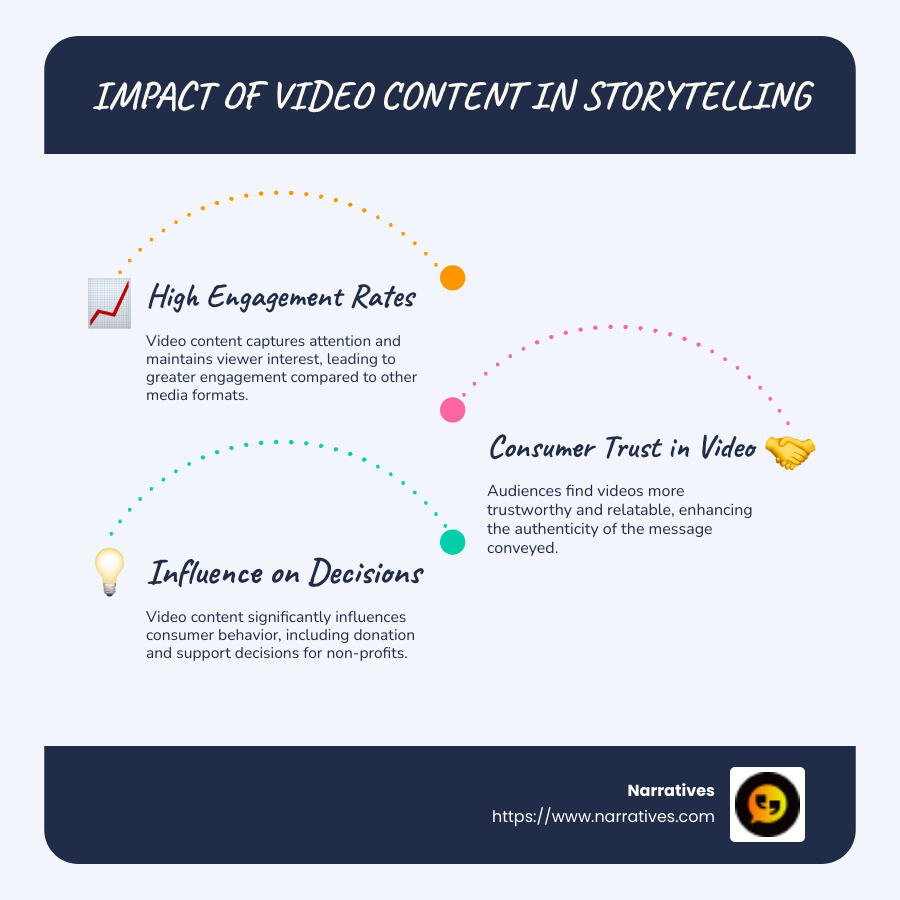
In today's digital world, video content isn't just a nice-to-have; it's a must-have for non-profits aiming to lift their stories and create real impact. According to recent insights, video now dominates internet traffic, and nearly 79% of consumers find it the easiest way to connect with a brand online. This is especially important when your work is centered around meaningful change and advocacy, like that of social impact organizations and philanthropic foundations.
Your face, your voice—everything comes alive in a video. And remember, more than half of consumers have made a purchase decision influenced by a video on social media. For non-profits, this translates to donations, community support, and increased awareness.
So, why wait? Transform your mission into a compelling video narrative that resonates and inspires action, setting your organization apart in the digital landscape.
Video content best practices vocab to learn:
Understanding Video Content Best Practices
Importance of Storytelling
Storytelling is at the heart of effective video content. It’s more than just sharing information—it's about creating a narrative that moves people. A well-structured story can evoke emotions and draw viewers into your world, making them more likely to connect with your cause.
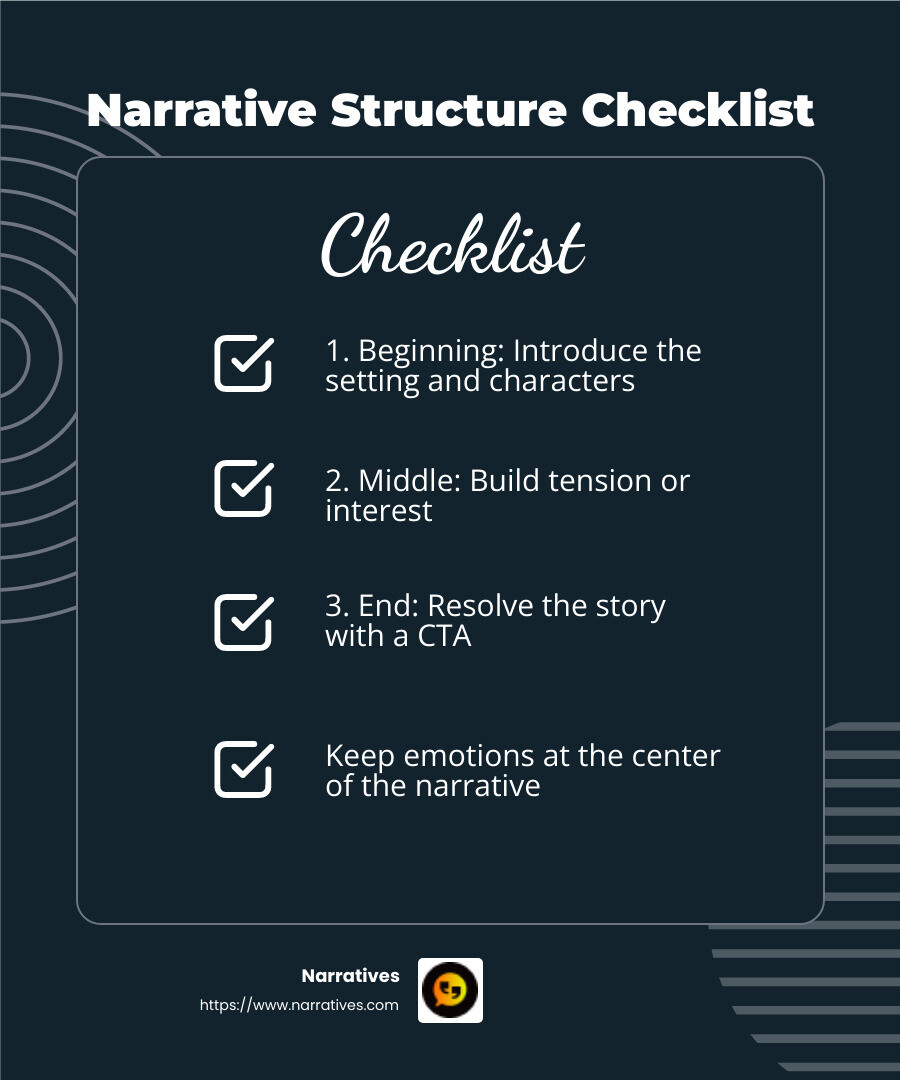
Narrative structure is crucial. A compelling story typically follows a simple yet powerful framework: a beginning that sets the stage, a middle that builds tension or interest, and an end that resolves the story, often with a call-to-action. This structure helps maintain viewer interest and ensures your message is clear and memorable.
Emotional connection is another vital element. Emotionally charged stories can leave a lasting impression, motivating viewers to support your cause. Whether it's joy, sadness, or hope, emotional resonance can transform passive viewers into active participants.
Engaging Your Audience
To truly engage your audience, your video content should be interactive and inviting. Interactive elements like clickable links or embedded quizzes can make viewers feel more involved. These features not only capture attention but also encourage viewers to spend more time with your content.
A strong call-to-action (CTA) is essential. Whether you want viewers to donate, volunteer, or share your video, make it clear and compelling. A well-placed CTA can significantly increase engagement and drive your audience to take the desired action.
Video content is a powerful tool for non-profits to tell their stories and make an impact. By focusing on storytelling techniques and audience engagement, you can create videos that not only inform but also inspire and mobilize support for your cause.
Creating Impactful Non-Profit Video Partnerships
Building Trust Through Video
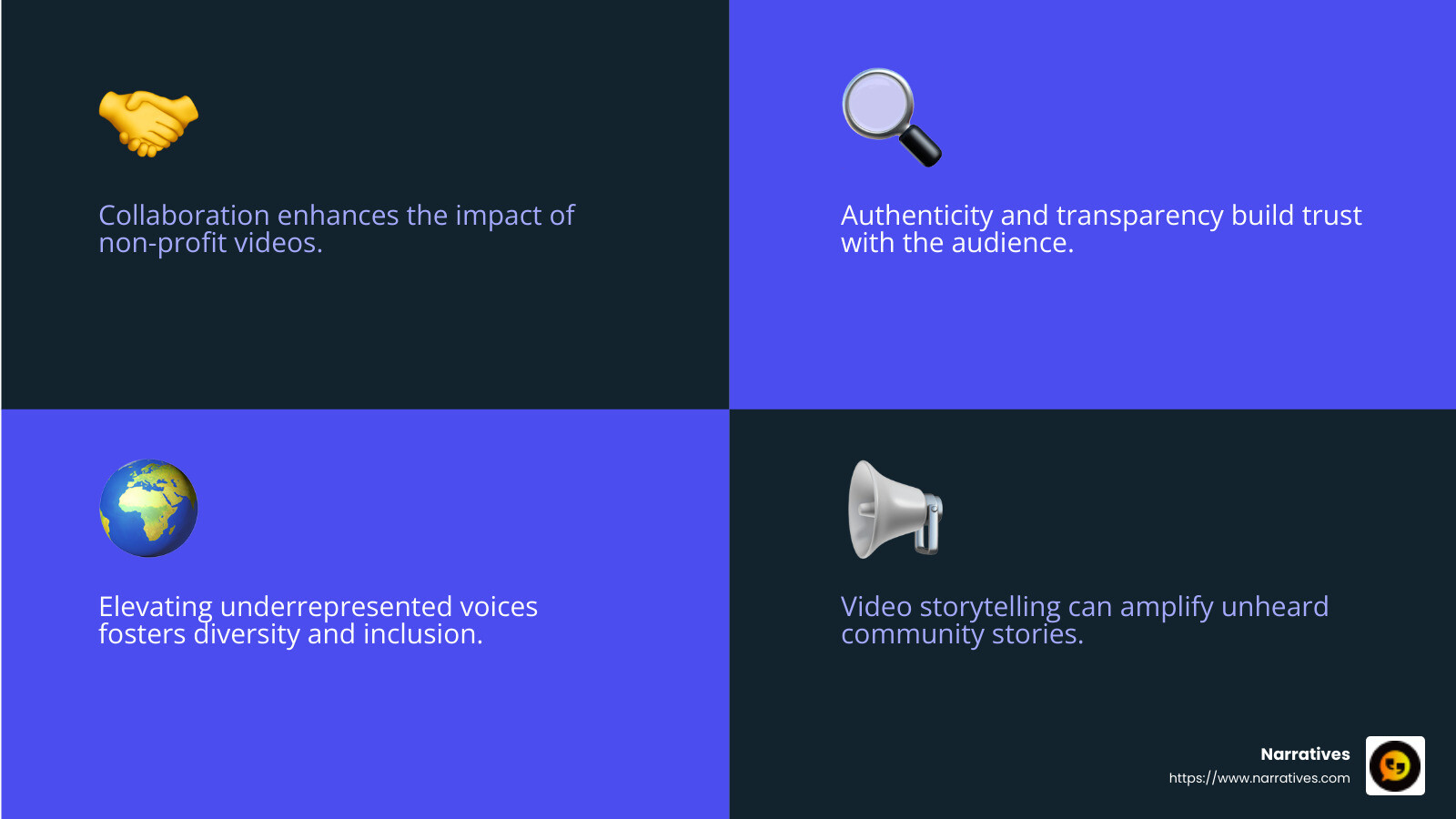
Building trust is essential for any non-profit looking to create meaningful connections with its audience. Video content offers a unique opportunity to showcase authenticity and transparency, two key ingredients in trust-building. When viewers see real people sharing genuine stories, they are more likely to believe in the mission and values of the organization.
Authenticity in video content means showing the real faces and voices behind your non-profit. It’s about being open and honest about your goals, challenges, and successes. This transparency helps to humanize your organization, making it relatable and trustworthy. A video that features staff members, volunteers, and beneficiaries sharing their experiences can effectively build this trust.
Elevating Underrepresented Voices
Non-profits have a crucial role in elevating underrepresented voices. Video content can amplify these voices, bringing attention to stories that might otherwise go unheard. Diversity and inclusion should be at the forefront of your video strategy, ensuring that all community members are represented and heard.
Collaboration with community members and other organizations can improve the impact of your videos. By working together towards shared goals, you can create content that resonates more deeply with a diverse audience. This collaboration not only enriches the storytelling but also strengthens the community impact of your videos.
When crafting videos, consider featuring stories from individuals in the community who have been positively affected by your work. Highlighting these personal narratives can foster a sense of community and shared purpose. This approach not only underscores the importance of diversity and inclusion but also showcases the tangible impact of your initiatives.
In summary, impactful non-profit video partnerships are built on trust, collaboration, and a commitment to elevating diverse voices. By focusing on these elements, non-profits can create powerful videos that resonate with audiences and drive meaningful change.
Technical Aspects of Video Production
Choosing the Right Tools
Creating compelling video content starts with selecting the right tools. Cameras are the cornerstone of video production. For most non-profits, a high-quality smartphone camera can be sufficient, especially with the rise of mobile video consumption, which doubles every year. However, for more polished content, consider investing in DSLR or mirrorless cameras. These options offer superior image quality and flexibility.
Once you have your footage, editing software becomes essential. Tools like Adobe Premiere Pro or Final Cut Pro provide robust features for detailed editing. For those on a budget, options like DaVinci Resolve offer powerful capabilities for free. The choice of platform can depend on your team's skill level and the complexity of your projects.
Lighting is another critical element. Good lighting can improve video quality significantly, making your content more engaging. Simple lighting kits are affordable and can dramatically improve the look of your videos, ensuring that your subjects are well-lit and visually appealing.
Optimizing Video Quality
To maximize the impact of your videos, focus on resolution and sound design. High-resolution videos (1080p or higher) are now the standard, as they provide a clear and sharp image that viewers expect. A clear picture helps convey professionalism and credibility.
Sound is just as important as visuals. Poor audio quality can detract from even the most beautifully shot video. Invest in a good microphone to capture clear audio. Consider using lapel mics for interviews or directional microphones for capturing ambient sounds. These choices can make a significant difference in how your message is received.
Incorporating these technical aspects will ensure your videos are not only visually appealing but also effective in delivering your message. As video continues to dominate internet traffic, getting these fundamentals right will help your content stand out.
Next, we’ll explore Distribution Strategies for Maximum Reach, focusing on how to get your video content in front of the right audience.
Distribution Strategies for Maximum Reach
Leveraging Social Media Platforms
Social media is a powerhouse for video distribution. Platforms like Facebook, Instagram, LinkedIn, and Twitter offer unique opportunities to reach diverse audiences. Platform-specific strategies are key to success. For instance, LinkedIn is keen on short-form video content under two minutes, aligning with the TikTok-led wave of video consumption .
When targeting audiences, consider each platform's strengths. Instagram and TikTok are great for younger demographics, while Facebook and LinkedIn cater to broader age ranges. Use audience targeting tools to refine who sees your videos, ensuring your message reaches those most likely to engage with your content.
SEO for Video Content
Search Engine Optimization (SEO) isn't just for web pages—it's crucial for video content too. Start with keywords in your video titles and descriptions. This helps search engines understand what your video is about, increasing its chances of showing up in search results.
Metadata is another important element. Use tags and categories to further define your video's content. This helps platforms like YouTube recommend your video to the right viewers.
Don't forget about video sitemaps. These are special files that help search engines like Google find and index your video content. Including a video sitemap can significantly improve your video's visibility online.
Email Marketing
Email remains a powerful tool for content distribution. Include video thumbnails in your emails to entice recipients to click and watch. According to research, videos in emails can increase click-through rates, providing a direct path to your content.
By combining these strategies, you can ensure your video content gets the attention it deserves, reaching the right people through the right channels. We'll dig into Frequently Asked Questions about Video Content Best Practices, addressing common inquiries to further refine your video strategy.
Frequently Asked Questions about Video Content Best Practices
How can non-profits benefit from video content?
Non-profits can use video content to tell compelling stories that highlight their mission and impact. Video allows organizations to showcase real-life testimonials, successes, and the communities they serve. According to research, 79% of consumers find video the easiest way to get to know a brand online. For non-profits, this means a greater opportunity to build trust and emotional connections with potential donors and volunteers.
Video content also improves engagement. By sharing authentic stories, non-profits can inspire action, whether it's donating, volunteering, or spreading the word. Video's ability to convey emotion and authenticity can significantly boost a non-profit's reach and influence.
What are the key elements of a successful video strategy?
A successful video strategy starts with clear objectives. Know what you want to achieve: raising awareness, driving donations, or increasing volunteer sign-ups. Once goals are set, focus on these key elements:
Storytelling: Create a narrative that resonates with your audience. Use a structure that builds an emotional connection, encouraging viewers to care about your cause.
Audience Engagement: Incorporate interactive elements like polls or Q&As. Use a strong call-to-action to guide viewers on what to do next.
Authenticity: Show the real people behind your organization. Authentic videos often perform better than highly polished ones, as they convey sincerity.
Technical Quality: Ensure good lighting, clear sound, and high resolution. These factors contribute to a professional appearance, enhancing credibility.
Distribution Plan: Use social media, email marketing, and SEO to maximize reach. Tailor your content to each platform for optimal engagement.
How do you measure the success of video content?
Success in video content can be measured through several metrics:
View Count: The number of people who watched your video.
Engagement: Look at likes, shares, comments, and click-through rates. High engagement indicates that your content resonates with viewers.
Conversion Rate: Track how many viewers took the desired action, such as signing up for a newsletter or making a donation.
Watch Time: This shows how long viewers are watching your video, providing insight into how engaging your content is.
Feedback: Gather qualitative data through surveys or direct feedback to understand viewer perceptions and areas for improvement.
By analyzing these metrics, non-profits can refine their strategies to create more impactful video content. We'll explore how to create impactful non-profit video partnerships, focusing on collaboration and shared goals for community impact.
Conclusion
As we wrap up this exploration of video content best practices, it's clear that digital storytelling offers powerful opportunities for non-profits. At Narratives, we believe in the transformative power of video to lift underrepresented voices and drive meaningful change.
Narratives and Digital Storytelling
Digital storytelling is more than just a trend; it's a vital tool for non-profits aiming to amplify their impact. Through engaging and authentic video content, organizations can share their unique stories with the world. Video allows us to connect with audiences on a deeper level, building trust and fostering emotional connections. As the research shows, nearly three-quarters of consumers connect video content with their purchasing decisions, highlighting its influence.
Non-Profit Partnerships
At Narratives, we specialize in creating impactful partnerships with non-profits. We work collaboratively to craft compelling stories that resonate with audiences and inspire action. By focusing on shared goals and community impact, we help non-profits leverage video to showcase their mission and successes.
Through our partnerships, we aim to humanize the stories of those who are often unheard, ensuring that every voice is given the platform it deserves. By aligning with non-profits, we strive to build a more empathetic and connected world.
For more insights on how Narratives can help your organization harness the power of video, learn more here. Let's work together to tell stories that matter and make a lasting impact.

.avif)