Crafting Compelling Narratives: A Guide to Video Storytelling Training

Video storytelling training is vital for anyone looking to deliver powerful, mission-driven messages through engaging video content. For non-profit marketing leads and social impact organizations, mastering the art of video storytelling can help amplify their mission and connect with audiences emotionally. Here's a quick rundown for you:
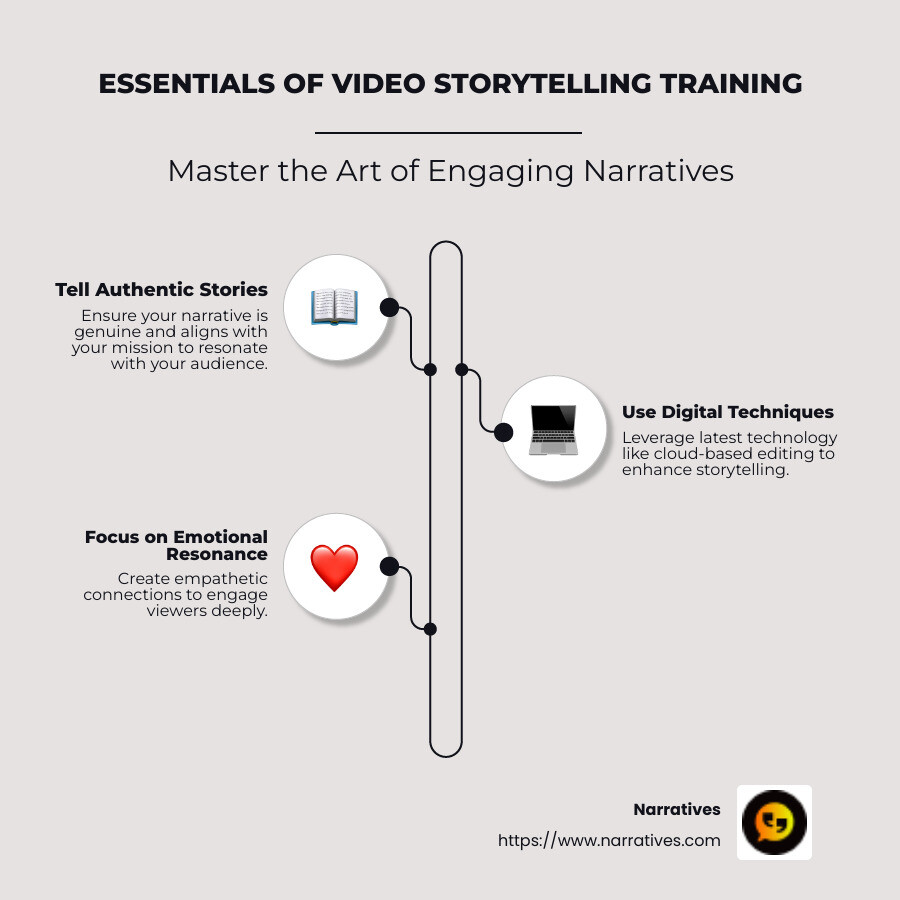
- Tell authentic stories: Ensure your narrative is genuine and aligns with your mission.
- Use digital techniques: Leverage the latest technology to improve storytelling, such as cloud-based editing.
- Focus on emotional resonance: Engage viewers by creating empathetic connections.
In today’s digital world, mastering video storytelling is not just an option—it's a necessity. It has become a transformative tool for advocacy, nonprofits, and brands focused on social justice and community growth.
Why does video storytelling work? It combines visual imagery, compelling narratives, and emotional engagement to create an immersive storytelling experience. The digital age demands authentic stories that resonate deeply and are shared broadly. As Katy Newton suggests, "How do we tell a story for the audience when the audience is present within it?" This new paradigm of storytelling invites the audience to become co-creators, making them a part of the storytelling process.
For organizations with limited resources, investing in video storytelling training can provide the skills and tools needed to translate your mission into a compelling digital narrative.
Learn more about Video storytelling training:
Understanding the Basics of Video Storytelling
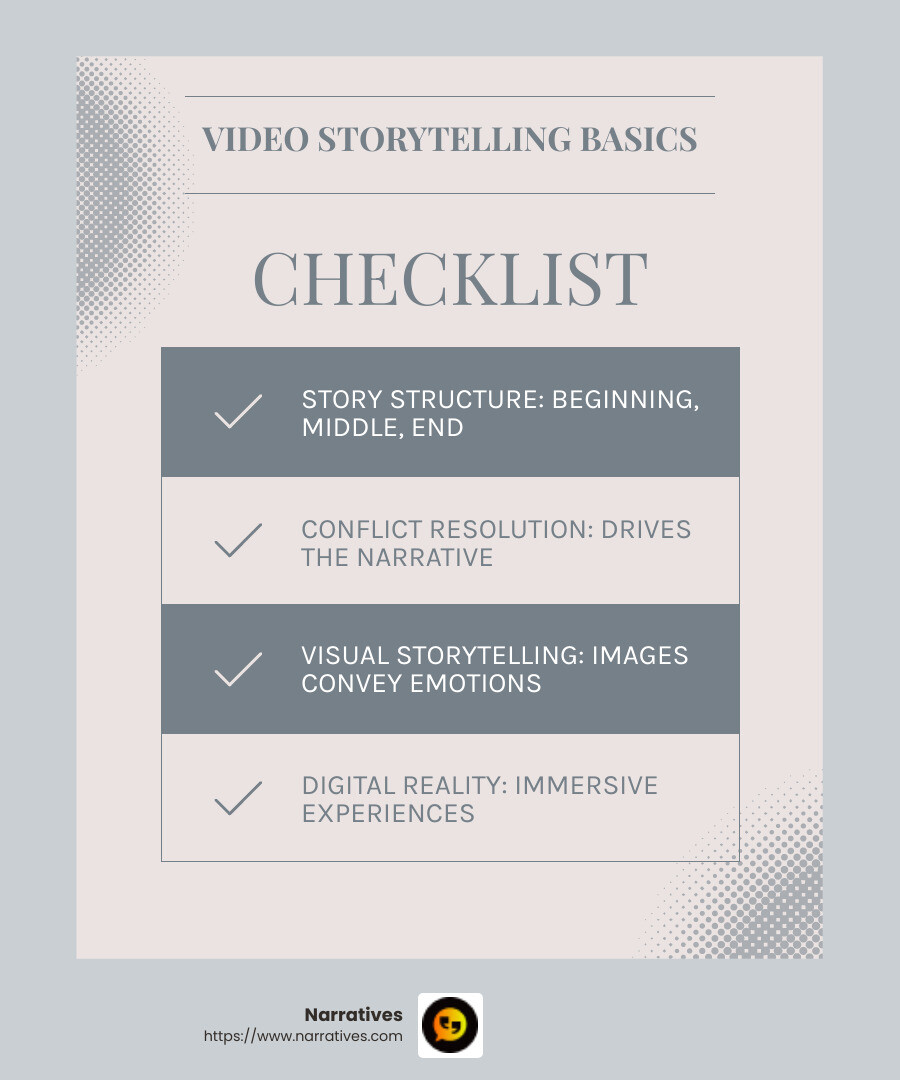
Video storytelling is a powerful tool because it blends the art of storytelling with the impact of visual media. To make your video stories stand out, you need to understand three key elements: story structure, conflict resolution, and visual storytelling.
Story Structure
Every great story follows a structure. This typically includes a beginning, middle, and end. The beginning sets the stage, introducing characters and setting. The middle presents a conflict or challenge. The end provides a resolution.
Think of a digital story as a journey. At the start, you hook your audience. In the middle, you engage them with challenges or conflicts. By the end, you offer closure, leaving them with a memorable message.
Conflict Resolution
Conflict is the heartbeat of any story. It creates tension and drives the narrative forward. In video storytelling, conflict doesn't have to be dramatic. It can be as simple as a personal struggle or a community challenge.
Resolution is where the magic happens. It’s where the story’s message becomes clear. Whether it's overcoming adversity or achieving a goal, the resolution should provide insight or inspiration.
Visual Storytelling
Images speak louder than words. Visual storytelling uses images, colors, and motion to convey emotions and ideas. This makes your story more engaging and memorable.
Consider using digital reality technologies to improve your visual storytelling. As digital reality matures, it offers new ways to immerse your audience in the story, making them feel like they are part of the narrative.
In conclusion, mastering these basics of video storytelling is crucial for anyone looking to create impactful digital narratives. By structuring your story well, resolving conflicts artfully, and using visuals effectively, you can craft compelling stories that resonate with your audience.
Video Storytelling Training for Beginners and Intermediates
Starting your journey in video storytelling can be both exciting and overwhelming. But don't worry, with the right easy-to-follow course and hands-on training, you'll be creating engaging stories in no time.
Easy to Follow Course
Our training programs are designed to be simple and straightforward. We focus on breaking down complex ideas into bite-sized lessons. This approach ensures that you can grasp the essentials without feeling lost or overwhelmed. You’ll learn how to structure your story, understand the basics of video production, and use storytelling techniques effectively.
Hands-On Training
Learning by doing is key in video storytelling. Our workshops emphasize hands-on training, allowing you to practice what you learn immediately. This method helps solidify your understanding and builds confidence in your storytelling abilities. You'll get the chance to work on real projects, receive feedback, and refine your skills in a supportive environment.
Video Production Techniques
Mastering video production techniques is crucial for creating polished stories. You'll learn about camera angles, lighting, sound, and editing. These elements are essential in bringing your story to life. We provide practical exercises that let you experiment with different techniques and find what works best for your narrative.
By focusing on these core aspects, our video storytelling training equips you with the tools to create compelling stories that captivate and inspire your audience. Whether you're a beginner or looking to refine your skills, our courses offer something for everyone.
Advanced Techniques in Video Storytelling
As you become more comfortable with the basics of video storytelling, it's time to explore advanced techniques that can lift your storytelling to new heights. Let's explore the exciting world of immersive storytelling, digital reality, and data-driven storytelling.
Immersive Storytelling
Immersive storytelling is like stepping into a story and experiencing it from the inside. It's about creating a world where your audience feels like they're part of the narrative. This technique often uses virtual reality (VR) or 360-degree videos to engage viewers on a deeper level. The key is to design experiences where the audience can interact with the story, making them active participants rather than passive observers.
Example: Imagine a virtual tour of a museum where viewers can choose which exhibits to explore, each revealing a new layer of the story. This approach not only captivates the audience but also allows them to connect emotionally with the content.
Digital Reality
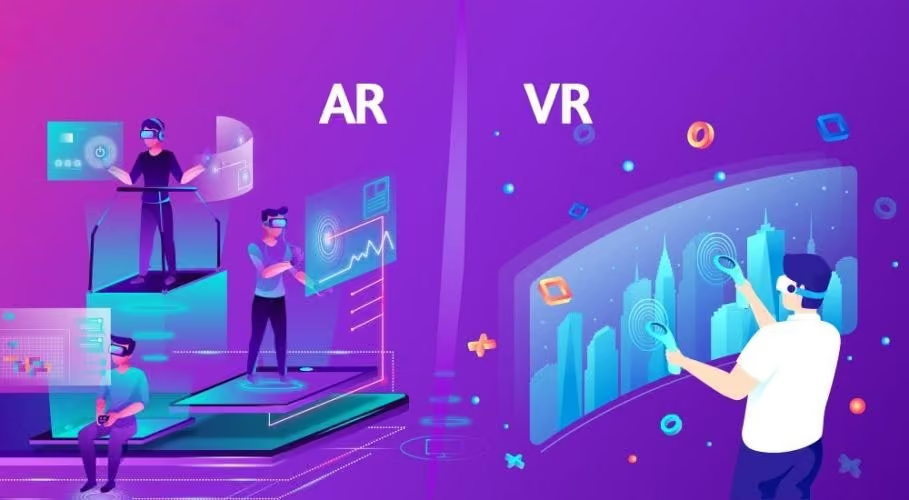
Digital reality blends augmented reality (AR), VR, and mixed reality to create compelling storytelling experiences. This technology allows for more creative freedom and can transform how stories are told. By merging the roles of the storyteller and the listener, digital reality opens up new possibilities for engagement.
Fact: According to research, the emotional responses elicited by digital reality experiences are more powerful than traditional media. This is because participants feel more connected to the story when they are part of it.
Data-Driven Storytelling
Data-driven storytelling is about using data to craft narratives that resonate with your audience. By analyzing data, you can understand what your audience cares about and tailor your stories to meet their interests. This approach can help in predicting viewer engagement and refining your storytelling techniques.
Case Study: A machine-learning tool was used to analyze tweets and predict the political leanings of people who engaged with them. By understanding these patterns, storytellers were able to reach a more politically diverse audience, broadening their impact.
By incorporating these advanced techniques into your video storytelling training, you can create richer, more engaging narratives that captivate and inspire. These methods not only improve the storytelling experience but also help you connect with your audience on a deeper level.
The Role of Video Storytelling in Non-Profit Organizations
Video storytelling is a powerful tool for non-profit organizations aiming to create social impact. By using the emotional power of stories, non-profits can connect with audiences in meaningful ways, highlighting the challenges and triumphs of the communities they serve.
Social Impact
Non-profits often work on complex social issues, and video storytelling can simplify these narratives, making them understandable and relatable. By crafting stories that focus on real people and real situations, organizations can raise awareness, inspire action, and drive change.
Example: Consider a video that follows a day in the life of a community health worker in a remote village. This story can highlight the vital services provided and the challenges faced, encouraging viewers to support the cause.
Community-Driven Storytelling
Community-driven storytelling puts the spotlight on the voices that matter most—the individuals and groups at the heart of the issue. By involving community members in the storytelling process, non-profits can ensure authenticity and foster a sense of ownership among participants.
Quote: Janet Ferguson, an author and educator, emphasizes that certain stories hold keys to understanding ourselves and the world. By revisiting these stories, non-profits can open up deeper insights and drive community engagement.
Underrepresented Voices
Video storytelling can amplify underrepresented voices, bringing attention to stories that might otherwise go unheard. This is crucial for non-profits aiming to advocate for marginalized groups and create inclusive narratives.
Fact: Narratives, a content agency, collaborates with non-profits to highlight the strife of underrepresented communities and what the public can do to support them. By sharing these stories, organizations can build empathy and understanding, fostering a more inclusive society.
By embracing video storytelling training, non-profits can effectively share their missions, engage with diverse audiences, and promote social change. The stories told can illuminate the human experience and inspire viewers to become advocates for the causes they care about.
Frequently Asked Questions about Video Storytelling Training
How to structure and write visual stories?
Crafting a compelling visual story begins with a solid structure. Think of it as a roadmap that guides your audience through the narrative. Start with a clear story setup: introduce the main characters, the setting, and the central conflict. This setup should hook your audience, making them eager to see what happens next.
Next, focus on conflict resolution. This is where the story's tension peaks and then resolves, providing a satisfying conclusion. A well-structured story not only entertains but also leaves a lasting impact.
Tip: Keep your script concise. Aim for a 300-word narration for a 2-4 minute video, as suggested by the experts at StoryCenter. This brevity ensures your message is clear and engaging.
How to shoot and create a story video?
Video production is where your story comes to life. Start by planning your shots. Use a variety of angles and close-ups to add visual interest. Visual storytelling is about showing, not telling.
Storytelling techniques like using natural lighting and capturing authentic reactions can improve the emotional depth of your video. Editing is crucial, too. Cloud-based editing tools have made it easier to polish your video, ensuring it's seamless and professional.
Pro Tip: Involve your audience in the story. As seen in the community-driven storytelling workshops, engaging viewers with relatable characters and scenarios can make your story more impactful.
What are some storytelling exercises to practice daily?
Daily practice is key to honing your storytelling skills. Here are a few exercises to try:
Daily Journaling: Write a short story or scene every day. Focus on different elements like dialogue, setting, or conflict.
Story Mapping: Create story maps to visualize the flow of your narrative. This helps in organizing your thoughts and identifying any gaps in the story.
Role-Playing: Practice different characters' perspectives. This can help you understand various viewpoints and add depth to your stories.
Feedback Sessions: Share your stories with a trusted group and seek constructive feedback. This will help you refine your storytelling techniques.
By incorporating these exercises into your routine, you can continuously improve your ability to craft engaging and effective video stories.
Conclusion
At Narratives, we believe in the transformative power of digital storytelling. As a dedicated digital storytelling partner, we are committed to helping non-profits and purpose-driven organizations lift their voices through compelling video narratives. Our focus is on sharing impact stories that not only inspire action but also build trust and visibility.
By partnering with non-profits, we aim to shine a light on underrepresented voices, telling stories that matter. This collaboration allows us to create high-quality, emotionally resonant content that highlights the meaningful work being done in communities around the world.
Video storytelling training is at the heart of our approach. We provide hands-on training to empower organizations to tell their own stories effectively. From beginners to advanced practitioners, our training programs cover everything from story structure and visual storytelling to immersive and data-driven techniques.
We understand that social impact is a crucial part of storytelling. By crafting narratives that resonate on a human level, we help organizations connect with their audiences in a genuine way. This not only increases engagement but also fosters a deeper understanding of the social issues at hand.
As we continue to expand our reach, we invite you to explore how Narratives can help your organization harness the power of video storytelling. Visit our media services page to learn more about how we can support your storytelling journey. Together, we can create stories that inspire change and make a lasting impact.

.avif)