What Nonprofit Storytelling Will Look Like in 2026 & Beyond
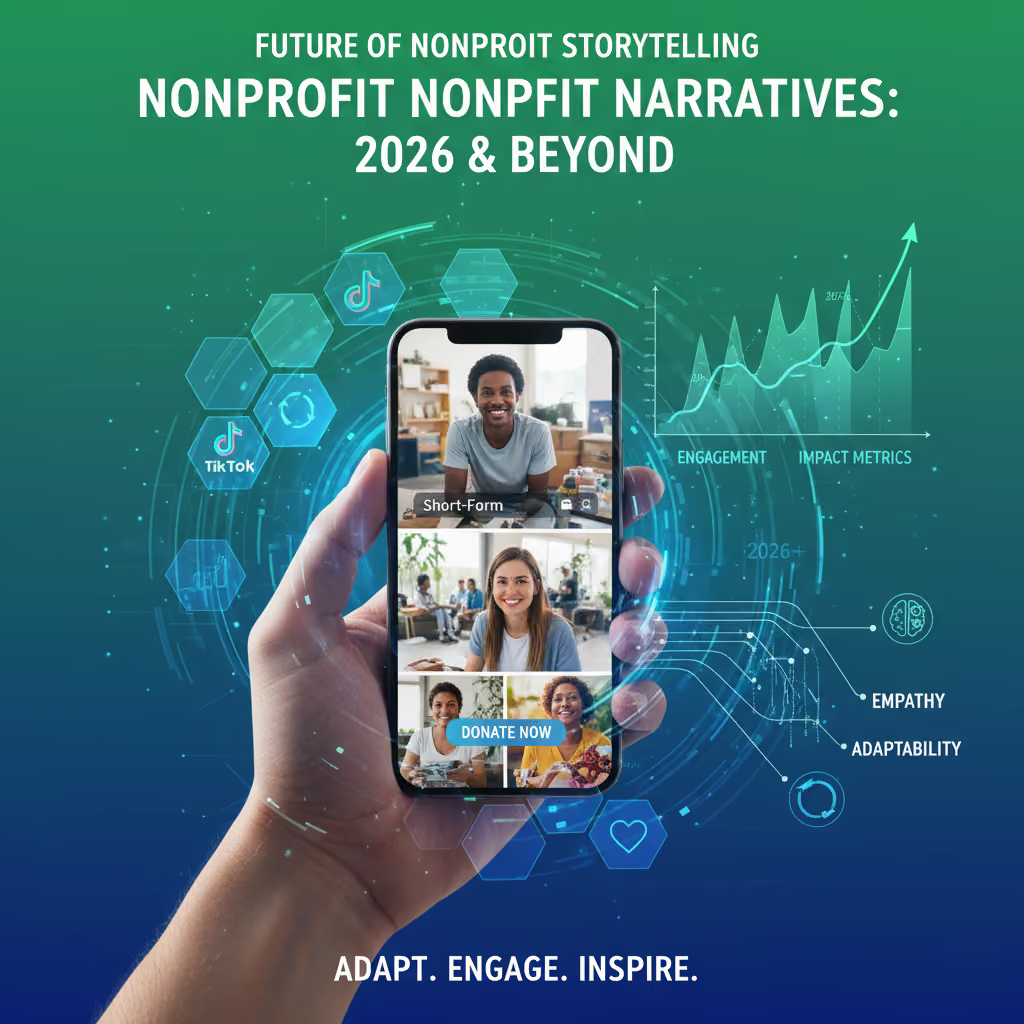
Audience scroll behavior has shifted more rapidly than most nonprofit boards anticipated. Mission pages sit unread. Five-minute videos stall at 23 seconds. Audiences move quickly, and attention has become transactional. The future of storytelling media is forming inside that tension, between urgency and empathy.
Static communications are fading. In their place, dynamic storytelling ecosystems are taking shape. For nonprofits, that shift isn’t cosmetic. It affects donor trust, visibility, and long-term advocacy.
The conversation around nonprofit media trends often centers on platforms. TikTok. Instagram. YouTube Shorts. But platforms are only part of the equation. The deeper shift involves format, discoverability, personalization, and how trust is built in fragments rather than full narratives.
Why Storytelling Still Rules in 2026
Information rarely moves people. Stories still do.
Even as formats compress and feeds accelerate, emotional connection remains the deciding factor in digital giving. Data suggests donors stay loyal when they understand the impact in human terms. That likely won’t change.
Trust Signals in a Distracted Environment
Attention is scattered, but skepticism is higher. Audiences now evaluate credibility within seconds. Faces matter. First-person accounts matter more. Transparent captions, unpolished footage, visible emotion. These cues signal authenticity.
Within the future of storytelling media, credibility becomes embedded in the format itself. A donor scrolling through short-form content isn’t reading annual reports. They are scanning for emotional coherence. Does this feel real? Does this feel grounded?
Nonprofit media trends increasingly reflect that tension between polish and sincerity. Content that is too polished can feel corporate, while content that is too raw can feel careless.
Retention and Advocacy
Retention is less about reminders and more about resonance. When storytelling predictions are discussed, analysts often focus on acquisition metrics. Retention deserves equal weight.
A well-structured narrative arc that follows a beneficiary over months creates continuity. Donors begin to recognize individuals. Recognition builds familiarity. Familiarity builds loyalty.
That continuity will likely define the future of storytelling media more than any algorithm tweak.
Short-Form Video Will Be Table Stakes
Short-form video is no longer experimental. It is infrastructure.
TikTok, Instagram Reels, and YouTube Shorts function as default discovery engines. Ignoring them limits the reach before a story even begins.
Scroll-Optimized Empathy
A 30-second story can work. A 30-second story can work not because depth disappears, but because depth unfolds differently.
Opening hooks must signal relevance quickly. Visual cues carry weight. Captions do more than transcribe; they guide emotional pacing. The most effective nonprofit media trends show stories beginning in the middle of tension rather than with context.
For organizations looking to adapt, structured short-form optimization becomes necessary. Narrative framing frameworks, vertical video formatting, hook development, and retention analysis are no longer optional add-ons. They form the backbone of discoverability.
At Narratives Inc., short-form storytelling frameworks are built around first-person voice and emotional clarity rather than trend mimicry. That distinction matters. Trends fade. Human experience does not.
If your organization hasn’t tested scroll-through storytelling yet, now is the moment to evaluate it. Not casually. Strategically.
AI Will Amplify Creativity, Not Replace It
There’s anxiety around automation. Some of it is justified.
AI tools are increasingly capable of generating captions, repurposing transcripts, and personalizing headlines for segmented audiences. Translation has become smoother. Editing faster.
But authenticity cannot be automated convincingly for long.
Within the future of storytelling media, AI appears positioned as an amplifier. It handles structure and scale. Humans retain emotional authorship.
Ethical Tension
Storytelling predictions that assume full automation overlook ethical boundaries. Beneficiary stories involve lived experience. Consent, context, and cultural nuance require human judgment.
AI may assist in identifying engagement patterns or optimizing distribution timing. Yet the voice should remain anchored in real people. Nonprofit media trends suggest audiences can detect artificial tone quickly, even if they can’t articulate why.
A balanced approach likely prevails. Use AI for efficiency. Protect narrative integrity through human oversight.
Social SEO and Discoverability Inside Platforms
Search behavior has migrated. TikTok and Instagram function like search engines. Users type questions directly into the platform search bars.
For nonprofits, this shift changes content architecture.
Caption Strategy and Keywords
The future of storytelling media includes keyword-informed captions, searchable hashtags, and descriptive overlays. Not keyword stuffing. Clear phrasing aligned with audience intent.
For example, a video about reentry programs might include phrases that audiences actually search for, rather than internal program terminology. That subtle adjustment improves discoverability.
Organizations that audit their content through a social SEO lens often uncover gaps. Titles lack clarity. Hashtags are generic. Hooks fail to match search intent.
A strategic content audit can reveal those blind spots. If your team hasn’t reviewed platform search performance recently, consider doing so. Discoverability rarely improves by accident.
Integration Across Platforms
Posting in isolation limits impact.
The future of storytelling media leans toward interconnected systems. A short-form video introduces a story. A blog deepens context. A long-form documentary expands nuance. Email sequences sustain engagement. Donation pages complete the loop.
Ecosystem Workflows
Imagine a workflow where:
- A 45-second clip sparks curiosity.
- A linked article provides background.
- A follow-up email shares updates.
- A live stream answers questions.
Integration reduces friction. It also reinforces narrative memory. Repetition across formats strengthens retention without feeling repetitive, if executed thoughtfully.
Nonprofit media trends increasingly reward consistency across touchpoints rather than sporadic virality.
Cross-platform strategy consulting can help align these pieces. Fragmented storytelling rarely converts.
Measuring Impact Beyond Likes
While likes are visible, real impact often isn’t.
Story completion rate. Click through to resource pages. Volunteer sign-ups after viewing a narrative. Donor conversion following repeated exposure. These indicators provide clearer insight.
Within the future of storytelling media, dashboards will likely evolve to track emotional engagement signals. Pause rate. Replay behavior. Comment sentiment.
Behavior change becomes the metric. Did someone act differently after watching?
Analytics packages that connect storytelling to measurable outcomes are becoming central to nonprofit media trends. Without that data, strategy becomes guesswork.
Community Participation as Co-Creation
Audiences increasingly expect involvement.
Inviting story submissions. Hosting collaborative live discussions. Encouraging response videos. These practices move storytelling from broadcast to exchange. Narratives Inc., a 501(c)(3) network in Beverly Hills, centers on participatory, first-person narratives, encouraging shared authorship and empathetic dialogue. Participation builds ownership, and ownership drives advocacy, positioning the organization for the evolving future of media.
Get Involved Today—Submit Your Story or Join a Collaborative Discussion.
The Subtle Power of Empathy-Centered Media
Negativity drives clicks. Empathy sustains engagement. In algorithm-driven environments, consistent tone, not shock, drives lasting community growth. Outrage-focused storytelling risks fatigue, while empathy-driven media invites reflection over reaction. This subtle distinction may shape nonprofit media trends in the coming years more than platform changes alone.
Preparing for What Comes Next
The future of storytelling media will not be defined by a single platform or tool. It will be defined by adaptability. By systems rather than posts. By credibility rather than virality.
Organizations that build storytelling ecosystems now position themselves for resilience later.
Consider mapping your narrative flow across formats. Audit discoverability. Review retention metrics and assess whether stories feel participatory or one-way. To refine your approach, explore a nonprofit storytelling roadmap that aligns short-form video, social SEO, analytics, and long-form narratives into a cohesive system. The shift is underway. Will your storytelling evolve with it, or wait for metrics to force the conversation?
Conclusion
Individual posts rarely define reputation—systems do. Storytelling media is moving toward interconnected platforms, ethical AI, participatory formats, and behavior-driven metrics. Nonprofit trends show strategically structured empathy can outperform outrage in sustaining trust. Prepare by downloading the nonprofit storytelling roadmap and focus on building intentional systems. The next chapter favors deliberate voices over the loudest.
FAQs
1. What is the future of storytelling media for nonprofits?
It is moving toward integrated, multi-platform ecosystems that combine short-form video, searchable content, and measurable impact metrics.
2. Are short-form videos necessary for nonprofit growth?
Increasingly, yes. They function as discovery tools and often introduce audiences to deeper narratives.
3. How does AI affect nonprofit storytelling?
AI can assist with editing, captions, and personalization, but human oversight remains essential for authenticity.
4. What are the key nonprofit media trends for 2026?
Short-form optimization, social SEO, integrated content systems, and analytics tied to behavior rather than vanity metrics.
5. How can nonprofits measure storytelling success?
Beyond likes, metrics such as completion rate, conversion, donor retention, and engagement sentiment offer clearer indicators of impact.

.avif)