Voices of Change: Amplifying Marginalized Perspectives

Amplify marginalized voices and you tap into a wellspring of diversity, inclusion, and social justice. Turning up the volume on these voices isn't just ethical—it's vital for creating fairer societies and more vibrant workplaces.
- Diversity: Accept varied perspectives to foster innovation and understanding.
- Inclusion: Build an environment where everyone feels valued and heard.
- Social Justice: Work actively to dismantle barriers and promote equality.
When systemic injustices and racial biases persist, it is crucial to get comfortable with discomfort and engage in tough conversations. As Victoria Nguyen wisely states, "Authentic allyship includes standing up against areas of discrimination and speaking up."
Introducing and spotlighting stories from marginalized communities not only supports them but improves our comprehension and compassion across societal lines. Organizations that commit to uplifting these voices often find that their audiences are more engaged and supportive, as they contribute to a more just and equitable world.
To get started on this path, begin with oneself, educate and empower those around you, and gradually expand the focus to broader communities.
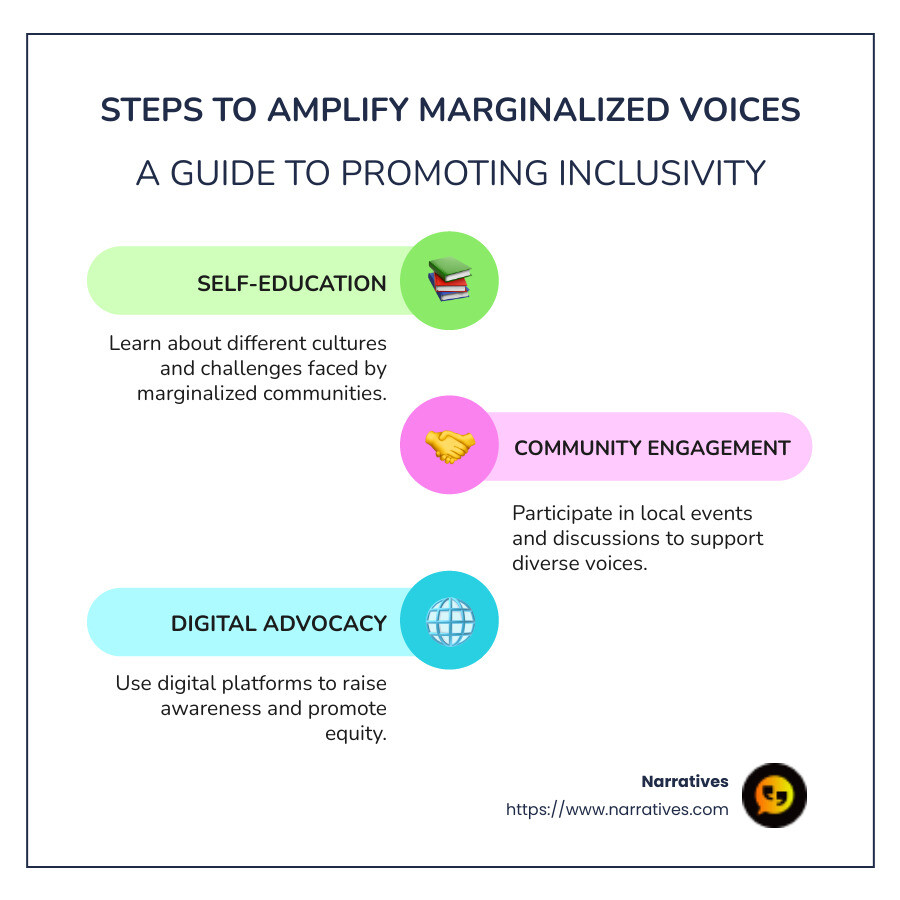
Simple amplify marginalized voices word guide:
Understanding Marginalized Voices
Understanding marginalized voices means recognizing the unique experiences and challenges faced by underrepresented groups. These individuals often belong to communities that are overlooked or undervalued in society, such as people of color, LGBTQ+ individuals, women, people with disabilities, and senior citizens.
Who Are the Marginalized?
Marginalized groups are those who frequently encounter barriers in expressing their viewpoints and participating fully in society. These barriers can be due to race, gender, age, sexual orientation, or physical ability. For example, while women earn about 79 cents for every dollar a man earns, Black women face even greater disparity, earning only 64 cents.
Societal Challenges
The challenges these groups face are deeply rooted in systemic inequalities. These inequalities can manifest as microaggressions, discrimination, and biases that are ingrained in social and institutional structures. Chimamanda Ngozi Adichie, in her TED Talk "The Danger of a Single Story," emphasizes how stereotypes can oversimplify and misrepresent entire communities. These "single stories" create a narrative that marginalizes voices and overlooks the richness of diverse experiences.
Importance of Workplace Diversity
Incorporating diverse perspectives in the workplace is not just beneficial, it's essential. A diverse team brings a wealth of ideas and solutions that can lead to innovation and growth. When marginalized voices are amplified, it can lead to:
- Increased Creativity: Different backgrounds contribute to unique viewpoints and innovative problem-solving.
- Better Decision-Making: Diverse teams consider a wider range of factors and potential outcomes.
- Improved Collaboration: An inclusive environment fosters mutual respect and collaboration, allowing all voices to be heard.

By understanding and addressing the challenges faced by marginalized groups, organizations can create more inclusive and equitable environments. Amplifying marginalized voices in the workplace isn't just a moral imperative—it's a strategic advantage that can lead to a more dynamic and successful organization.
Amplify Marginalized Voices: Strategies for Change
To amplify marginalized voices, we need strategies that include digital activism, strong allyship, and effective advocacy. Each of these plays a crucial role in creating a more inclusive and equitable society.
Digital Activism
Digital platforms have transformed how we engage with social issues. They offer tools for one-to-one, one-to-many, and many-to-many communication. Digital activism leverages these tools to raise awareness and drive change. For example, social media campaigns can highlight injustices faced by marginalized groups, reaching audiences worldwide.
- Real-Time Communication: Platforms like Twitter and Instagram allow for immediate sharing and engaging with current events.
- Anonymity and Safety: Some digital spaces provide anonymity, which can be crucial for individuals speaking out against oppressive systems.
Digital activism empowers marginalized voices by providing a platform to share their stories and advocate for change.
Allyship
Being an ally involves more than just support; it requires action. True allyship means using your privilege to uplift those without it. This includes:
- Engaging in Brave Dialogues: Having open, honest conversations about discrimination and inequality.
- Avoiding Performative Allyship: It's essential to back words with actions. As noted in a report from Bentley University's Gloria Larson Center for Women and Business, performative allyship lacks the substance needed to create real change.
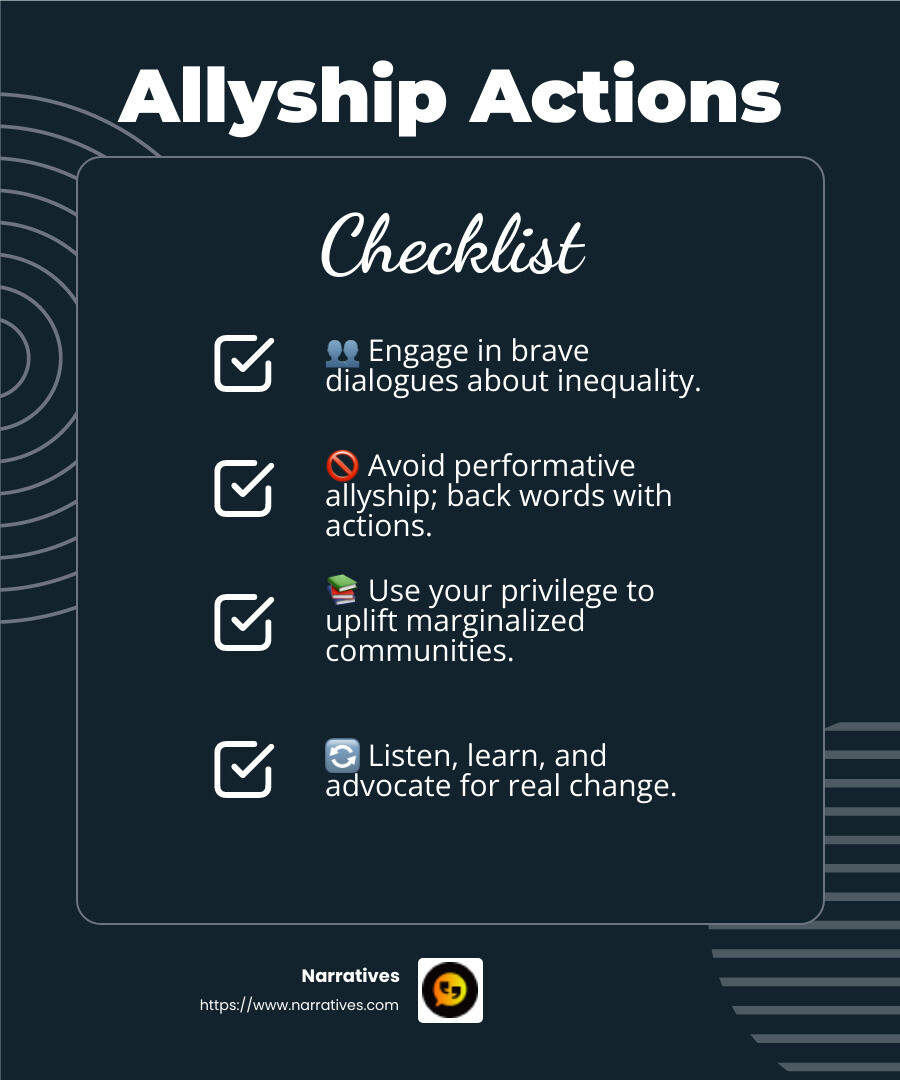
A strong ally uses their position to listen, learn, and advocate for marginalized communities.
Advocacy
Advocacy is about taking active steps to support and promote marginalized voices. This can be done through:
- Educating Others: Sharing knowledge about the challenges faced by marginalized groups.
- Supporting Equitable Causes: Donating to organizations or signing petitions that aim to dismantle systemic barriers.
Organizations play a vital role in advocacy by fostering environments where all voices are heard. Corporate responsibility includes creating safe spaces for dialogue and action. As demonstrated by companies that prioritize inclusivity, employees in such environments are more likely to feel valued and less likely to leave.
By combining digital activism, allyship, and advocacy, we can create a powerful force for change. These strategies not only help amplify marginalized voices but also pave the way for a more just and inclusive society.

The Role of Digital Storytelling
Digital storytelling is a powerful tool for amplifying marginalized voices. With the rise of social media, information and communication technologies (ICTs), and digital tools, storytelling has transformed how narratives are shared and heard.
Social Media: A Platform for Change
Social media platforms like Facebook, Twitter, and Instagram have become essential spaces for marginalized communities to share their stories. These platforms allow users to connect with a global audience, breaking geographical barriers and reaching people who might not otherwise hear these voices.
Real-Time Engagement: Social media enables instant communication. This immediacy can spotlight injustices and mobilize support quickly.
Community Building: Hashtags and online groups create spaces for discussion and solidarity. For example, movements like #BlackLivesMatter have used social media to unite voices and drive social change.
ICTs: Bridging Gaps
Information and communication technologies (ICTs) play a vital role in giving marginalized communities a voice. These technologies provide tools that are accessible and versatile.
Access to Information: ICTs allow individuals to access diverse perspectives and knowledge, which fuels informed advocacy and activism.
Empowerment through Education: Online platforms offer educational resources that empower individuals to tell their stories and advocate for their communities.
Digital Tools: Crafting Narratives
Digital tools like blogs, podcasts, and video platforms enable individuals to craft and share their narratives in compelling ways.
Visual Storytelling: Platforms like YouTube and TikTok allow users to create visual content that can convey powerful messages, making complex issues more relatable.
Podcasts and Blogs: These tools offer a space for in-depth storytelling, providing a platform for voices that might be overlooked by mainstream media.
Incorporating digital storytelling in advocacy efforts helps ensure that marginalized voices are heard and valued. By leveraging social media, ICTs, and digital tools, we can create a more inclusive narrative landscape.
Amplifying Marginalized Voices in the Workplace
Creating an inclusive environment in the workplace is crucial for amplifying marginalized voices. When everyone feels valued, it leads to better collaboration and innovation. Here's how workplaces can foster inclusivity:
Inclusive Environment
An inclusive environment means that everyone, regardless of their background, feels welcome and respected. It's about more than just diversity; it's about creating a culture where all voices are heard.
Safe Spaces: Encourage open dialogue and create safe spaces where employees can express their thoughts without fear of judgment.
Representation: Ensure that diverse groups are represented at all levels of the organization. This helps in making everyone feel seen and heard.
Active Allyship
Active allyship is essential for supporting marginalized voices. It's about using one's privilege to advocate for others.
Listen and Learn: Allies should listen to the experiences of marginalized colleagues and educate themselves on issues affecting these communities.
Speak Up: Use your voice to highlight injustices and support colleagues when they face discrimination or bias.
Support Initiatives: Get involved in or support initiatives that promote diversity and inclusion within the workplace.
Diverse Decision-Making
Diverse decision-making is key to ensuring that all perspectives are considered. This leads to better outcomes and a more equitable workplace.
Diverse Teams: Build teams with varied backgrounds and experiences. This diversity brings new ideas and solutions to the table.
Inclusive Practices: Implement decision-making processes that actively seek input from all team members, ensuring that diverse perspectives are taken into account.
Feedback Mechanisms: Create channels for feedback where employees can share their thoughts on workplace policies and practices. This helps in continuously improving the inclusivity of the workplace.
By fostering an inclusive environment, practicing active allyship, and promoting diverse decision-making, workplaces can effectively amplify marginalized voices. This not only benefits individuals but also improves the overall success and innovation of the organization.
Frequently Asked Questions about Amplifying Marginalized Voices
What does it mean to amplify marginalized voices?
Amplifying marginalized voices means providing underrepresented groups with the platform and support to share their experiences and perspectives. These voices often belong to individuals from communities such as LGBTQ+, people of color, women, people with disabilities, and senior citizens. Amplifying their voices is about ensuring they are heard and respected, leading to innovative solutions and a more inclusive society. It's about shifting the focus to those who have historically been ignored, enabling them to contribute meaningfully to discussions and decisions.
How can digital tools be used to support marginalized communities?
Digital tools are powerful in supporting marginalized communities. Here's how they can make a difference:
Social Media: Platforms like Twitter and Instagram allow marginalized groups to share their stories and connect with allies. These platforms can amplify their voices to a global audience.
Online Communities: Digital spaces where individuals with shared experiences can connect and support each other. These communities provide a sense of belonging and facilitate advocacy.
Educational Resources: Access to online courses, webinars, and podcasts helps educate both marginalized communities and their allies. This knowledge fosters understanding and empathy.
Anonymity and Privacy: Some digital platforms offer anonymity, allowing individuals to share their experiences without fear of backlash. This can encourage more open and honest discussions.
What are some examples of amplifying marginalized voices in the workplace?
Amplifying marginalized voices in the workplace involves creating an environment where everyone feels valued and heard. Here are some ways this can be achieved:
Employee Resource Groups (ERGs): These groups provide a platform for employees from similar backgrounds to share experiences and advocate for change within the organization.
Mentorship Programs: Pairing marginalized employees with mentors can help them steer their careers and amplify their voices within the company.
Inclusive Policies: Implementing policies that support diversity and inclusion, such as flexible work arrangements and anti-discrimination measures, ensures that all employees can thrive.
Diverse Leadership: Encouraging diversity in leadership positions ensures that decision-making reflects varied perspectives, leading to more inclusive outcomes.
By leveraging digital tools and fostering an inclusive workplace culture, organizations can effectively amplify marginalized voices, leading to a more equitable and innovative environment.
Conclusion
In the journey to amplify marginalized voices, the role of Narratives is pivotal. As a guide of community-driven storytelling, we partner with non-profits and purpose-driven organizations to share impactful stories that resonate emotionally and inspire action. Our mission is clear: to lift underrepresented voices through high-quality, multimedia content that builds trust and increases visibility.
Community-driven storytelling is at the heart of what we do. By capturing and sharing the authentic experiences of marginalized groups, we help to break down barriers and foster understanding. This approach not only highlights the challenges faced by these communities but also celebrates their resilience and contributions.
Non-profit partnerships are essential in this endeavor. By collaborating with organizations dedicated to social impact, we ensure that the stories we tell are grounded in real-world efforts to drive change. These partnerships enable us to create content that not only informs but also mobilizes support for crucial causes.
Through our work, we strive to create a world where every voice is heard and valued. By leveraging the power of digital storytelling, we aim to make a lasting impact on society, one story at a time.
To learn more about how we can help your organization share its impact stories, visit Narratives and find how we can collaborate to amplify voices that matter.


.avif)