Top Nonprofit Storytelling Examples That Captivate

Best nonprofit storytelling examples captivate audiences by weaving empathy, connection, and storytelling power into unforgettable narratives. If you're searching for standout examples that highlight the impact of nonprofit storytelling, consider these:
- Malala Fund: Embodies resilience and the pursuit of education for all.
- Saint John’s Program: Illustrates change and empowerment for women and children.
- EB Research Partnership: Showcases the drive for medical breakthroughs and hope for healing.
Storytelling is more than a tool for nonprofits; it's an emotional bridge that connects hearts to causes. By sharing real stories of struggle and triumph, nonprofits can inspire action, build trust, and amplify their message.
At its core, effective storytelling taps into our shared human experiences. This connection encourages donors and supporters to engage meaningfully, reinforcing the power of stories to make a difference.
As your organization steers this rich landscape, consider how your story can create empathy and inspire lasting change.
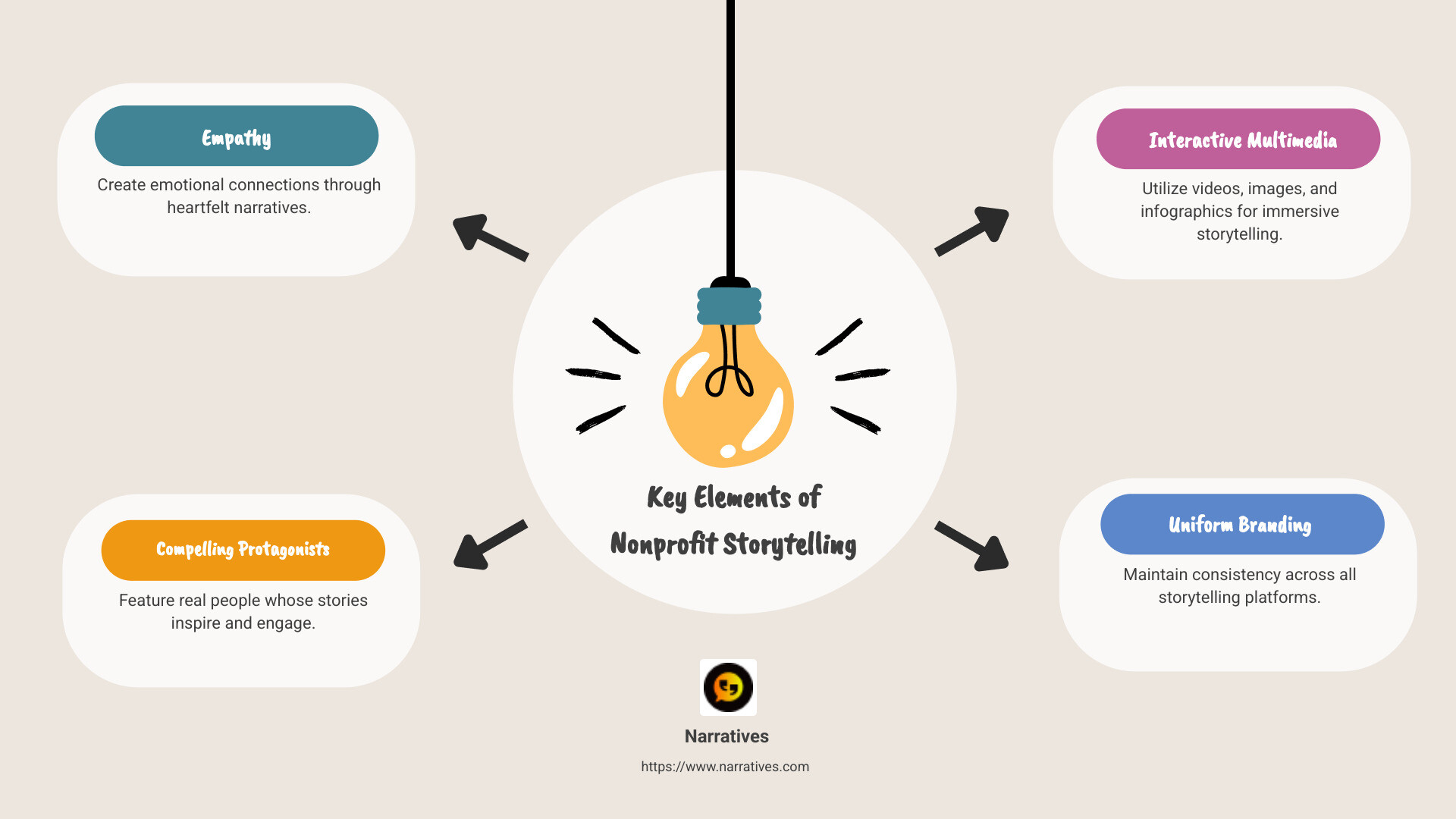
Common Best nonprofit storytelling examples vocab:
Best Nonprofit Storytelling Examples
1. Malala Fund
The Malala Fund uses powerful storytelling to advocate for girls' education worldwide. One of their standout stories is centered around Hiba Hamzi in Lebanon. Hiba's story begins with her passion for her daughter's education, a relatable desire for many parents.
- Beginning: Hiba shares her personal experiences and dreams for her daughter’s future.
- Middle: She discusses the challenges girls face in accessing education in Lebanon and the initiatives supported by the Malala Fund to overcome these obstacles.
- End: The video concludes with Hiba’s daughter reciting her ABCs, a simple yet profound symbol of hope and progress.
This story doesn’t need a fairy-tale ending to be impactful. It’s about the ongoing journey and the support systems in place that make success possible.
2. Saint John’s Program for Real Change
Saint John’s Program for Real Change tells compelling stories of change, like Tracy's journey in "Deep Water." Tracy’s story is one of overcoming adversity, which many can empathize with.
- Beginning: Tracy recounts her happy childhood and the loneliness she felt in college.
- Middle: She describes the abusive relationship and substance use that led her to Saint John’s, where she found the support to heal and rebuild her life.
- End: Tracy is shown thriving in a job she loves, symbolizing hope and independence.
This narrative not only highlights personal growth but also showcases the program’s impact, encouraging support for similar stories of change.
3. EB Research Partnership
The EB Research Partnership captures the heart-wrenching reality of living with a rare disease through Clara’s story. Her parents share the challenges and hopes for a cure, painting a vivid picture of a child longing for normalcy.
- Clara’s story is a poignant reminder of the urgent need for medical research and the hope that fuels families and supporters alike.
These best nonprofit storytelling examples demonstrate how real-life narratives can bridge emotional gaps, foster empathy, and inspire action. By focusing on relatable protagonists and real struggles, these stories resonate deeply with audiences, encouraging them to become part of the solution.
Elements of Effective Nonprofit Visual Storytelling
Visual storytelling can transform how nonprofits connect with their audiences. To make the most of this strategy, certain elements are essential.
Compelling Protagonists
At the heart of every great story are the people who live it. Nonprofits should feature real people who have been directly impacted by their work. This could be a volunteer, a beneficiary, or a community leader. For example, the Malala Fund’s story of Hiba Hamzi effectively uses a relatable protagonist—a mother passionate about her daughter’s education—to engage audiences. By focusing on real individuals, nonprofits can give a face to their cause, making the story more personal and impactful.
Interactive Multimedia
Gone are the days when a simple photo would suffice. Today’s audiences crave interactive multimedia experiences. This includes videos, infographics, and interactive timelines. These formats not only capture attention but also invite the audience to engage more deeply with the content. Children’s Healthcare of Atlanta uses their YouTube channel to share impactful video stories, bringing their mission to life. By using a mix of media, nonprofits can create dynamic stories that keep supporters intrigued and informed.
Uniform Branding
Consistency in branding is key. Every visual element should reflect the nonprofit’s brand identity, from colors and fonts to logos. This uniformity helps build a cohesive narrative that reinforces the organization’s mission. When audiences see a familiar brand style across different platforms, it strengthens the message and increases trust. Consider how Charity: Water maintains a consistent look and feel across all their visual content, enhancing brand recognition and message clarity.
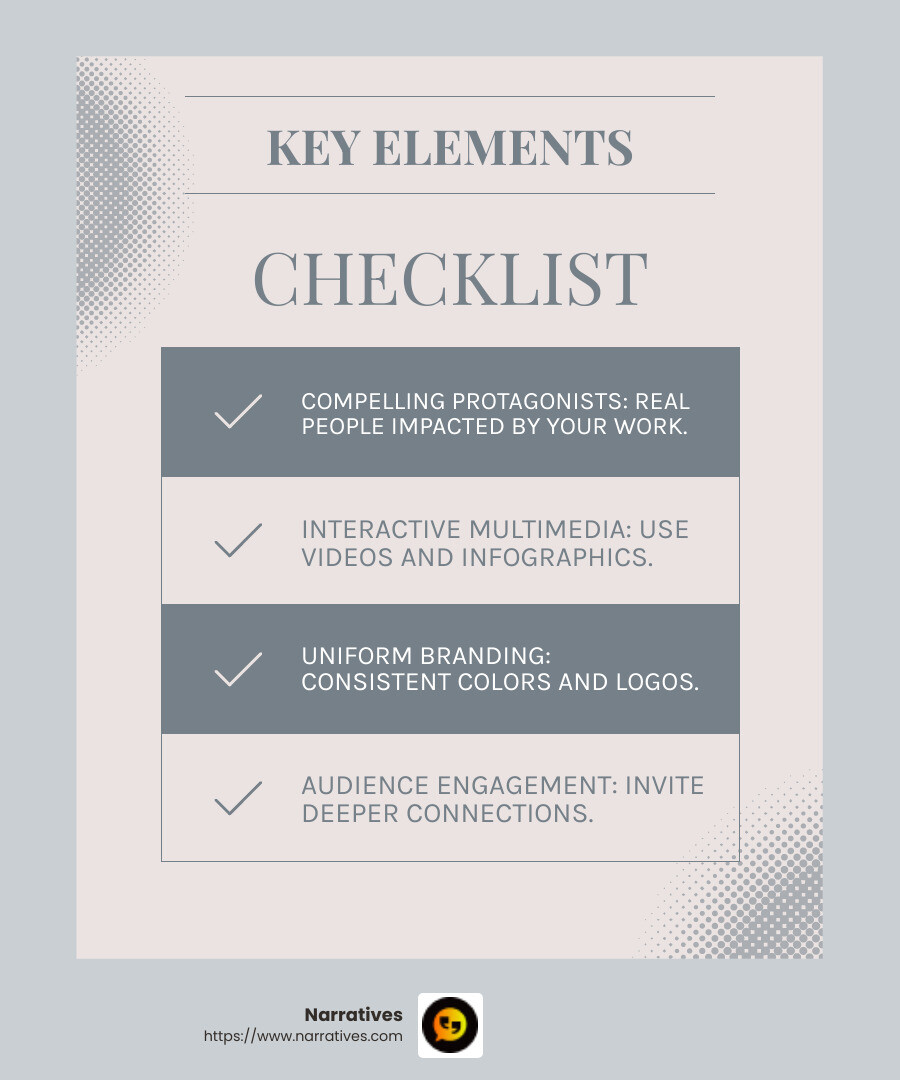
These elements—compelling protagonists, interactive multimedia, and uniform branding—are the backbone of effective nonprofit visual storytelling. They help create stories that not only inform but also inspire and mobilize audiences to take action.
How to Write a Nonprofit Story
Creating a compelling nonprofit story involves more than just words on a page. It requires a thoughtful approach that aligns with your organization's mission and goals. Here’s how to craft a story that resonates and inspires.
Clear Goals
Before you start writing, define what you want to achieve with your story.
Identify Your Objective: Are you aiming to raise funds, recruit volunteers, or increase awareness? For example, if your goal is fundraising, your story should emphasize how donations directly impact your cause.
Understand Your Audience: Tailor your story to fit your audience. If you’re speaking to potential donors, highlight the transformative power of their contributions. For volunteers, focus on the fulfillment and impact of their involvement.
Emotional Impact: Decide how you want your audience to feel. Do you want them to feel inspired, empathetic, or motivated to act? Use emotions as a guide to shape your narrative.
Organized Structure
An organized structure helps convey your message clearly and effectively.
Beginning, Middle, and End: Start with a strong opening that grabs attention. Introduce your main character or cause. The middle should dig into the challenges faced and the actions taken. Conclude with a resolution that highlights the impact and invites the audience to take action.
Data and Facts: Incorporate relevant data to support your story. Use statistics sparingly to reinforce your message without overwhelming your audience. For instance, Ecojustice uses their “Victory Reports” to show tangible results, enhancing credibility.
Location and Length: Consider where your story will appear—on a website, in a newsletter, or as part of a presentation. Adapt the length and depth of your story accordingly. A website might allow for more visuals, while a newsletter could require brevity.
Strong Visuals
Visuals can improve your story and make it more engaging.
Images and Videos: Use images and videos to illustrate your story. Pictures of the communities you serve or videos of your volunteers in action can provide a powerful visual narrative. Charity: Water excels in using visuals to showcase their work and impact.
Infographics: If your story includes complex data, consider using infographics. They make information more digestible and visually appealing, helping to convey your message effectively.
Consistency: Ensure all visuals align with your organization’s branding. Consistent use of colors, fonts, and logos helps reinforce your nonprofit’s identity and message.
By setting clear goals, organizing your structure, and incorporating strong visuals, you can create nonprofit stories that captivate and inspire action.
5 Nonprofit Visual Storytelling Examples
Visual storytelling can transform how nonprofits engage with their audience. Here are five best nonprofit storytelling examples that effectively use visuals to captivate and inspire.
Children's Healthcare of Atlanta
Children's Healthcare of Atlanta knows the power of a good story. They use video stories to share patient experiences, like that of 18-year-old Samerah, who faced acute liver failure. The video includes interviews with Samerah, her mother, nurse, and doctor, each adding a unique perspective to the narrative.
This approach creates a multifaceted story that resonates emotionally with viewers. The video also includes a link to their website for more information, encouraging further engagement and support.
Charity: Water
Charity: Water is renowned for its compelling use of visuals to illustrate its mission. They use an interactive map on their website to show the global reach of their water projects. Each dot on the map represents a project, and clicking on it reveals photos and details about the impact on the local community.
This interactive element not only informs but also involves the audience, making the scale of Charity: Water’s work tangible and relatable.
No Kid Hungry
No Kid Hungry uses infographics to highlight the importance of breakfast for children. Their infographics start with bold headlines and present compelling statistics that underscore their mission to end childhood hunger.
By visually representing data, No Kid Hungry makes complex information easy to understand and memorable, effectively communicating the urgency of their cause.
CARE USA
CARE USA’s 2022 Annual Report combines photos and infographics to tell the story of their achievements over the year. This visual storytelling approach allows readers to quickly grasp the organization’s progress through engaging graphs and maps.
For those short on time, these visuals provide a snapshot of CARE USA’s impact, making it easier for supporters to see the difference their contributions make.
St. Jude
St. Jude Children's Research Hospital uses a visual timeline on their website to showcase their rich history in fighting childhood cancer. Large, full-screen images draw visitors in and highlight key milestones in the organization’s journey.
The timeline not only builds credibility but also underscores St. Jude’s long-term commitment to its mission, inspiring trust and continued support from their audience.
These examples demonstrate the power of visual storytelling in the nonprofit sector. Whether through videos, interactive maps, infographics, or timelines, these organizations effectively use visuals to connect with their audience and drive their mission forward.
Frequently Asked Questions about Nonprofit Storytelling
What makes a good nonprofit story?
A good nonprofit story creates an emotional connection with the audience. It allows people to see and feel the impact of the organization's work. This emotional pull is often achieved by focusing on the mission of the nonprofit. The story should highlight real people and real changes, showing how the organization's efforts make a difference.
Using clear and relatable language is crucial. Avoid jargon and complicated terms. Instead, tell the story as if you are speaking to a friend. This approach helps maintain a natural and engaging tone, making it easier for the audience to connect with the story.
How can nonprofits use storytelling for fundraising?
Storytelling in fundraising is about appealing to emotions and inspiring action. When people feel emotionally invested, they are more likely to support the cause. Nonprofits can craft stories that highlight specific needs and show how donations can solve these issues.
For example, sharing a story about a family's journey through a health crisis can illustrate the importance of funding medical research. This not only informs potential donors but also motivates them to contribute.
It's important to include a clear call to action. Whether it's donating, volunteering, or sharing the story, make sure the audience knows how they can help.
What are ethical considerations in nonprofit storytelling?
Ethical storytelling involves respecting the privacy and dignity of those featured in the stories. Informed consent is essential. This means getting permission from individuals to share their stories and ensuring they understand how their information will be used. They should also have the option to withdraw their consent at any time.
Privacy protection is another key consideration. Only share details that are necessary for the story, and use pseudonyms or anonymize information when possible. This approach helps protect individuals' identities while still conveying the impact of the nonprofit's work.
By adhering to these ethical guidelines, nonprofits can build trust with their audience and the communities they serve, ensuring their stories are both powerful and respectful.
Conclusion
Narratives is at the forefront of reshaping how nonprofits tell their stories. We believe in the power of digital storytelling to lift voices that often go unheard. By focusing on high-quality, emotionally resonant multimedia content, we help nonprofits showcase their impact in ways that inspire action and build trust.
Our approach is deeply rooted in community-driven storytelling. We prioritize the stories of those who are directly affected by the issues our partner organizations address. This means not only telling the stories but also involving the community in the storytelling process. By doing so, we ensure that the narratives are authentic and resonate with both the community and the broader audience.
Digital storytelling is more than just a tool—it's a bridge that connects people, fosters empathy, and drives change. At Narratives, we are committed to helping nonprofits harness this power to amplify their missions and make a tangible impact.
Ready to lift your nonprofit's storytelling? Find how Narratives can help you create compelling media content that makes a difference.


.avif)