The Ethics of Video Production: A Guide to Doing It Right

Ethical video production is more than just a buzzword—it's a critical guide for video creators aiming to craft compelling, trustworthy content while respecting the rights and dignity of everyone involved. With increasing demand for visual media, balance narrative power with ethical responsibility.
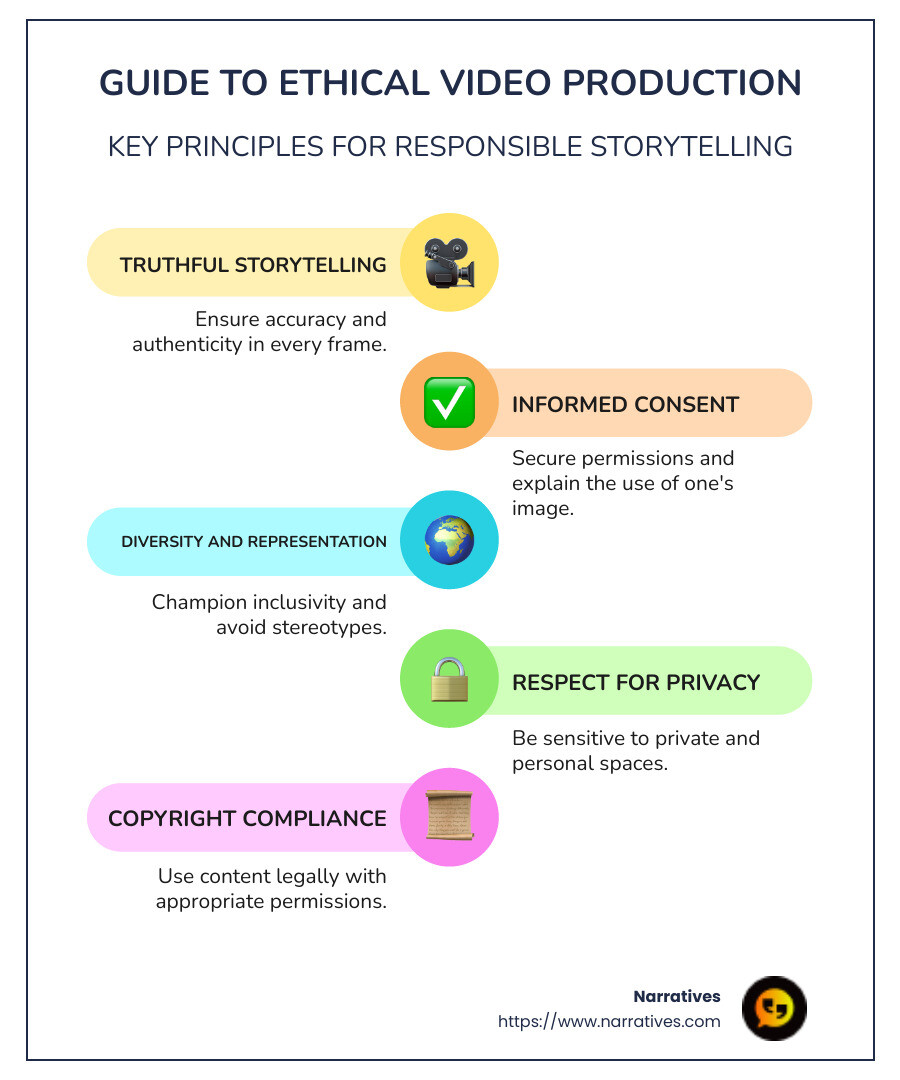
Here's a quick guide to ethical video production:
- Truthful Storytelling: Ensure accuracy and authenticity in every frame.
- Informed Consent: Secure permissions and clearly explain the use of one's image or story.
- Diversity and Representation: Champion inclusivity and avoid stereotypes.
- Respect for Privacy: Be sensitive to private and personal spaces.
- Mindful Sponsorships: Clearly disclose any commercial influences on the content.
- Copyright Compliance: Use content legally with appropriate permissions.
- Avoiding Exploitation: Handle sensitive topics with care and respect.
In today's visual-centric world, videos have incredible power to shape perceptions and inspire change. Yet, this power comes with the immense responsibility to handle stories with care and integrity. Ethical practices aren't just an afterthought; they are the bedrock of impactful storytelling that resonates with diverse audiences.
Whether you're a non-profit organization, a social impact brand, or a media outlet, understanding and applying these ethical principles is essential. This balance ensures your message not only reaches an audience but also fosters trust and builds long-term relationships.
Ethical video production glossary:
Ethical Video Production: Core Principles
Truthful Storytelling
In video production, storytelling is king. But with great power comes great responsibility. Truthful storytelling is about more than just presenting facts; it's about maintaining integrity and honesty in every narrative. Advanced editing tools can easily manipulate footage to create a desired narrative, but just because you can, doesn't mean you should. Authenticity builds trust, and your audience deserves nothing less. As one expert noted, "A video's power lies in its authenticity."
Representation and Diversity
Today's audiences are diverse and expect the content they consume to reflect that. Representation is not only about showing diverse faces but also about avoiding tired stereotypes and giving voice to different perspectives. Ethical video production requires us to celebrate diversity and offer a platform for a variety of voices. This approach not only enriches the narrative but also resonates more deeply with viewers, fostering a sense of inclusivity and community.
Consent is a cornerstone of ethical video production. Before filming, especially in private settings, it's crucial to obtain informed consent. This means clearly explaining how, where, and why someone's image or story will be used. Consent isn't just a formality; it's about respecting individuals' rights and dignity. For instance, capturing candid moments can be compelling, but it’s essential to tread carefully to avoid invading privacy.
Copyright and Intellectual Property
Navigating copyright laws is crucial in video production. Using someone else's content without permission can lead to legal issues and damage your reputation. Copyright compliance means either obtaining the necessary rights or ensuring your use falls under fair use provisions. This includes music, visuals, and any other media. Protecting others' intellectual property is as important as safeguarding your own.
By embedding these core principles into your workflow, you uphold the highest standards of ethical video production, ensuring your content is not only impactful but also responsible.
Upholding Truth and Authenticity
Truth and Integrity
In the world of video production, truth is the bedrock. Ethical video production demands that we prioritize truth and integrity in every frame we capture. When editing, it's tempting to tweak footage to fit a narrative. However, this can distort reality. Your audience trusts you. As highlighted in the research, "A video's power lies in its authenticity." Upholding truth means presenting stories as they are, not as we wish them to be. This builds credibility and fosters a loyal audience.
Narrative Context
Every video tells a story, and context is key. Without proper context, even true facts can mislead. Ethical video production ensures that the narrative context is clear and accurate. For example, if you're documenting a community event, provide background information that helps viewers understand the significance. This not only informs but also enriches the viewer's experience. It transforms a simple video into a meaningful story.
Avoiding Deception
With today's technology, altering reality is easy. But ethical practices call for restraint. Just because you can edit a scene to look more dramatic doesn't mean you should. The goal is to reflect reality, not create fiction. This approach maintains the integrity of your work and respects the intelligence of your audience.
Building Trust Through Authenticity
Authenticity isn't just a buzzword; it's a powerful tool in video production. When viewers sense authenticity, they connect more deeply with the content. This connection is built on trust, which is crucial for long-term success. By being honest and transparent in your storytelling, you create videos that not only inform but also inspire and engage.
Incorporating these principles ensures that your content stands out for all the right reasons. It becomes a testament to your commitment to truth and authenticity, setting a standard in the industry that others will aspire to follow.
Respecting Privacy and Consent
Privacy Matters
Privacy is a precious commodity. As video producers, it's our duty to respect the privacy of the individuals we feature. Capturing spontaneous moments might seem appealing, but tread carefully. Before pressing record, especially in private settings, ensure you have permission. This respect for privacy isn't just about avoiding legal issues; it's about valuing the dignity of your subjects.
Informed Consent: A Must-Have
Informed consent is more than a formality. It's a cornerstone of ethical video production. When you obtain consent, you're not just asking for permission; you're ensuring that your subjects understand how, where, and why their image will be used. This transparency builds trust and fosters a positive relationship between you and your subjects.
Consider this: if you're interviewing someone about a personal story, clearly explain the purpose of the video and how it will be shared. This approach not only respects their autonomy but also improves the authenticity of your project.
Handling Personal Stories with Care
Personal stories can be powerful. They add depth and emotion to your content. However, with this power comes responsibility. When sharing someone's personal journey, ask yourself: Am I giving them a voice, or am I exploiting their story?
Tread carefully. Ensure your storytelling respects the individual's experiences and perspectives. This means avoiding sensationalism and focusing on authenticity. By doing so, you create content that resonates deeply and respects the people behind the stories.
Transparency in Action
Transparency is a key element in respecting privacy and consent. Clearly communicate with your subjects about the production process. Let them know what to expect and how they can be involved. This openness not only builds trust but also encourages collaboration, enhancing the overall quality of your work.
In summary, respecting privacy and obtaining informed consent are not just legal requirements; they're ethical imperatives. By prioritizing these principles, you ensure that your videos are not only compelling but also respectful and trustworthy.
Fair Representation and Diversity
Diversity: A Must in Storytelling
In video production, diversity isn't just a buzzword—it's a necessity. Including a range of voices and perspectives enriches your content and makes it relatable to a broader audience. Ethical video production means showcasing stories from different backgrounds, ensuring that all voices are heard and represented.
Consider this example: A documentary about urban life shouldn't just feature one neighborhood or demographic. Instead, it should capture the essence of the entire city, highlighting the diverse communities that call it home. This approach not only paints a more accurate picture but also respects the complexity of real life.
Inclusivity: Beyond Tokenism
Inclusivity goes beyond merely ticking boxes. It's about creating an environment where everyone feels valued and heard. This means actively involving people from various backgrounds in the production process. By doing so, you ensure that your content is not only diverse but also authentic.
When planning a project, ask yourself: Are we including diverse perspectives in the writing room, on set, and in post-production? By fostering a culture of inclusivity, you bring depth and richness to your storytelling.
Cultural Sensitivity: A Key Consideration
Cultural sensitivity is crucial in video production. It requires understanding and respecting the traditions, values, and customs of the communities you portray. This sensitivity helps avoid harmful stereotypes and ensures fair representation.
For instance, if you're filming in a foreign country, take the time to learn about local customs and traditions. Engage with community leaders and seek their input. This approach not only helps you create respectful content but also builds trust with your audience.
A Real-World Example
Take the case of a production company that set out to document the lives of indigenous peoples. Instead of imposing their narrative, they collaborated closely with community members, allowing them to tell their own stories. This partnership resulted in a documentary that resonated deeply with audiences and was praised for its authenticity.
The Impact of Fair Representation
When your content reflects the diversity of the world, it becomes a powerful tool for change. It challenges stereotypes, fosters understanding, and promotes empathy. By prioritizing fair representation, you not only create compelling content but also contribute positively to society.
In conclusion, embracing diversity, inclusivity, and cultural sensitivity is not just good practice—it's essential for ethical video production. By doing so, you ensure that your stories are not only engaging but also respectful and impactful.
Navigating Copyright and Intellectual Property
Understanding copyright and intellectual property is crucial for anyone involved in video production. These concepts protect creators and ensure that original works are used fairly and legally. Let's break down the essentials.
Copyright Laws: Protecting Creative Works
Copyright laws grant creators exclusive rights to their original works. This means you can't use someone else's video, music, or artwork without permission. Violating these laws can lead to legal trouble and damage your reputation. Always ensure you have the necessary licenses or permissions before using copyrighted material.
Intellectual Property: More Than Just Copyright
Intellectual property (IP) includes copyrights, trademarks, and patents. As a video producer, your scripts, footage, and even your brand name can be protected under IP laws. This protection helps you maintain control over your creations and prevents others from using them without consent.
Fair Use: A Limited Exception
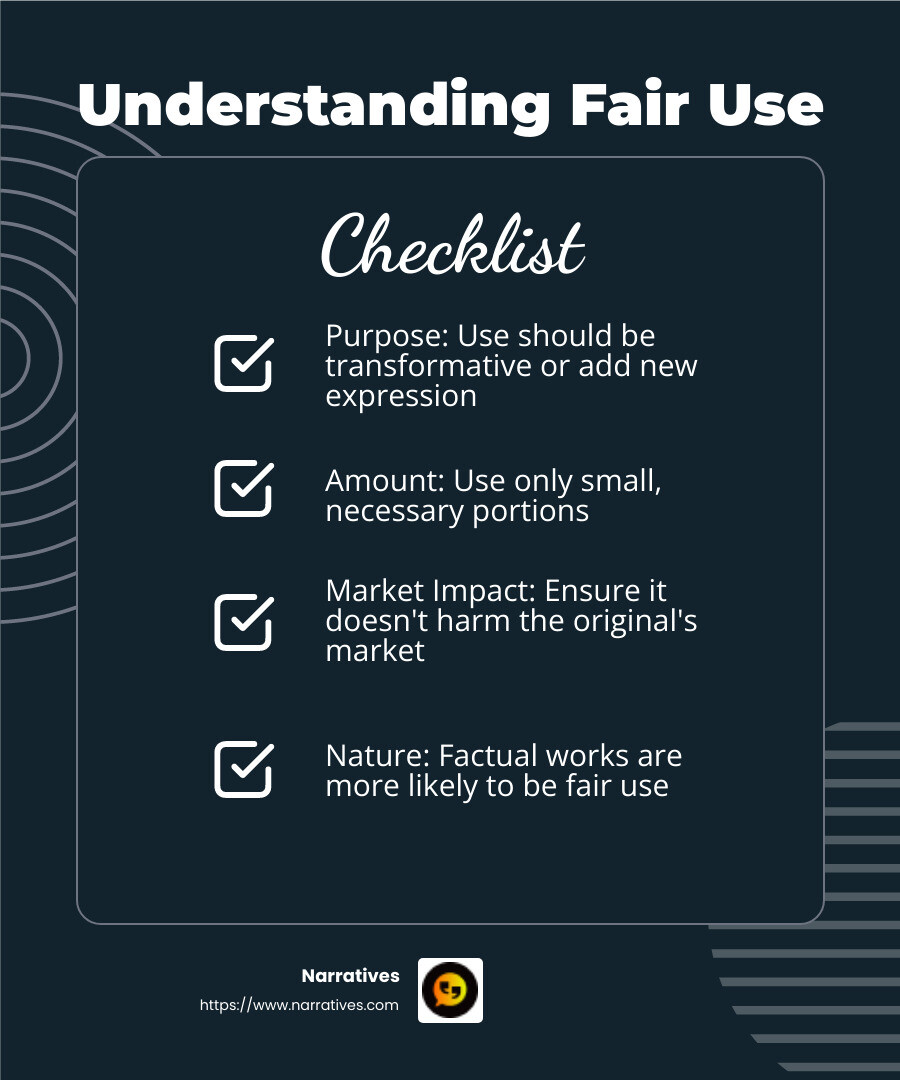
Fair use allows limited use of copyrighted material without permission for specific purposes like criticism, news reporting, or education. But it's not a free pass. You must consider factors such as the purpose of use, the amount used, and its impact on the market value of the original work.
Case Study: A Lesson in Fair Use
Imagine a filmmaker creating a documentary on a famous musician. They want to include short clips of the musician's performances. Under fair use, this might be allowed if the clips are used for commentary or critique. However, using long segments without adding new meaning or context could be seen as infringement.
Best Practices for Navigating Copyright and IP
Get Permissions: Always obtain licenses for music, footage, and images you want to use.
Use Creative Commons: Look for works under Creative Commons licenses, which often allow use with proper attribution.
Consult Legal Experts: When in doubt, seek advice from legal professionals to avoid costly mistakes.
Educate Your Team: Ensure everyone involved in production understands copyright and IP basics to prevent unintentional misuse.
By respecting copyright and intellectual property, you uphold the integrity of your work and the work of others. This commitment is a cornerstone of ethical video production, fostering a creative environment where original ideas can flourish.
Next, we'll explore the role of technology in video production and how to use it ethically and responsibly.
Embracing Technology Responsibly
Technology is revolutionizing video production. From AI in editing to the rise of deepfakes, these tools offer incredible possibilities. But with great power comes great responsibility. Ethical video production demands careful consideration of how we use these technologies.
AI in Editing: A Double-Edged Sword
AI is changing video editing by automating tasks like color correction and sound leveling. This frees up time for more creative work. However, it's crucial to remember that AI lacks the human touch. It can't understand the emotional nuances that make a story resonate.
Best Practice: Human Oversight
AI should be a tool, not a replacement. Always have a human editor review AI-generated edits to ensure they align with the intended message and emotional tone. This balance keeps the storytelling authentic.
The Deepfake Dilemma
Deepfakes use AI to create realistic videos of people saying or doing things they never did. While they have creative uses, like in movies or historical documentaries, they also pose ethical risks. Deepfakes can spread misinformation or create harmful content without consent.
Case Study: The Buzzfeed Video
A few years ago, a Buzzfeed video used deepfake technology to show a public figure saying things they never said. It was a wake-up call about the potential for misuse. Since then, technology has only become more advanced.
Guidelines for Ethical Use
Transparency: Always disclose when deepfake technology is used in your videos.
Consent: Obtain clear consent from individuals featured in deepfakes, especially if their likeness is used.
Avoid Misinformation: Never use deepfakes to deceive or manipulate audiences.
Human Oversight: The Key to Ethical Tech Use
Technology in video production is powerful, but it can't replace human judgment. Maintaining a human element ensures that videos remain truthful and respectful. This oversight is essential to uphold integrity and trust in your content.
Conclusion
As we accept technology, we must do so responsibly. By balancing AI capabilities with human oversight, and using deepfakes ethically, we ensure that technology improves rather than undermines our storytelling. Next, we'll address frequently asked questions about ethical video production practices.
Frequently Asked Questions about Ethical Video Production
What is ethical video production?
Ethical video production means creating videos that respect the rights and dignity of all involved. It involves being truthful, obtaining necessary permissions, and ensuring fair representation. Ethical practices build trust with your audience and maintain the integrity of your work.
How can video producers ensure ethical practices?
To ensure ethical practices, video producers should:
Obtain Informed Consent: Always get clear permission from anyone featured in your videos. Explain how their image or story will be used.
Respect Privacy: Avoid using hidden cameras or recording in private spaces without consent. Everyone deserves the right to privacy.
Be Truthful: Present facts accurately and avoid misleading edits. Your audience trusts you to provide honest content.
Promote Diversity and Inclusivity: Ensure your videos reflect a range of voices and perspectives. Avoid stereotypes and accept cultural sensitivity.
Follow Copyright Laws: Use copyrighted material responsibly. If unsure, consult legal experts to avoid infringement.
Regularly Review Practices: Conduct regular assessments to identify and address potential ethical issues in your production process.
By following these steps, producers can create content that is both impactful and respectful.
Why is consent important in video production?
Consent is crucial because it respects the autonomy and rights of individuals. It ensures that people are aware of how their likeness or story will be used and gives them control over their participation.
Case Study: Quan Huynh's Story with Defy Ventures
Quan Huynh, featured in a Narratives article, shared his journey from incarceration to entrepreneurship. His story was told with his full consent, respecting his privacy and ensuring his narrative was portrayed accurately. This approach not only honored his journey but also built trust with the audience.
In summary, consent is about respect and transparency. It protects individuals and improves the credibility of your video production efforts.
Conclusion
At Narratives, we believe that ethical video production is more than a set of guidelines—it's a commitment to integrity, respect, and community. Our mission is to create content that lifts underrepresented voices and inspires positive change.
Narratives are powerful. They shape perceptions and can drive social impact. By focusing on community-driven storytelling, we can highlight the efforts of non-profits and purpose-driven organizations working tirelessly to make a difference. This approach doesn't just inform; it engages and motivates people to act.
Consider the work of the PARS Equality Center, which supports Persian-speaking immigrants. Through video, we can tell their stories, spotlight their challenges, and showcase their triumphs. These narratives foster empathy and understanding, encouraging viewers to support initiatives that promote equality and integration.
Where content is consumed rapidly and often superficially, prioritize transparency and authenticity. By doing so, we build trust with our audience, ensuring that our stories resonate on a deeper level. This trust is foundational for creating lasting social impact.
At Narratives, we're dedicated to ethical storytelling. Our videos are crafted with care, ensuring they respect the dignity of every individual and community featured. We invite you to learn more about our commitment to ethical storytelling and how we can help your organization share its impact stories. Find more about our approach here.
Together, let's use the power of video to create a more empathetic and connected world.


.avif)