Think Global, Act Local: Crafting a Winning Content Localization Strategy

Localized content marketing is crucial in a world where businesses aim to connect genuinely with diverse audiences across the globe. At its core, this practice involves adapting content not just linguistically, but culturally, to echo the unique traits, preferences, and values of each target market. Let's break down why this is important:
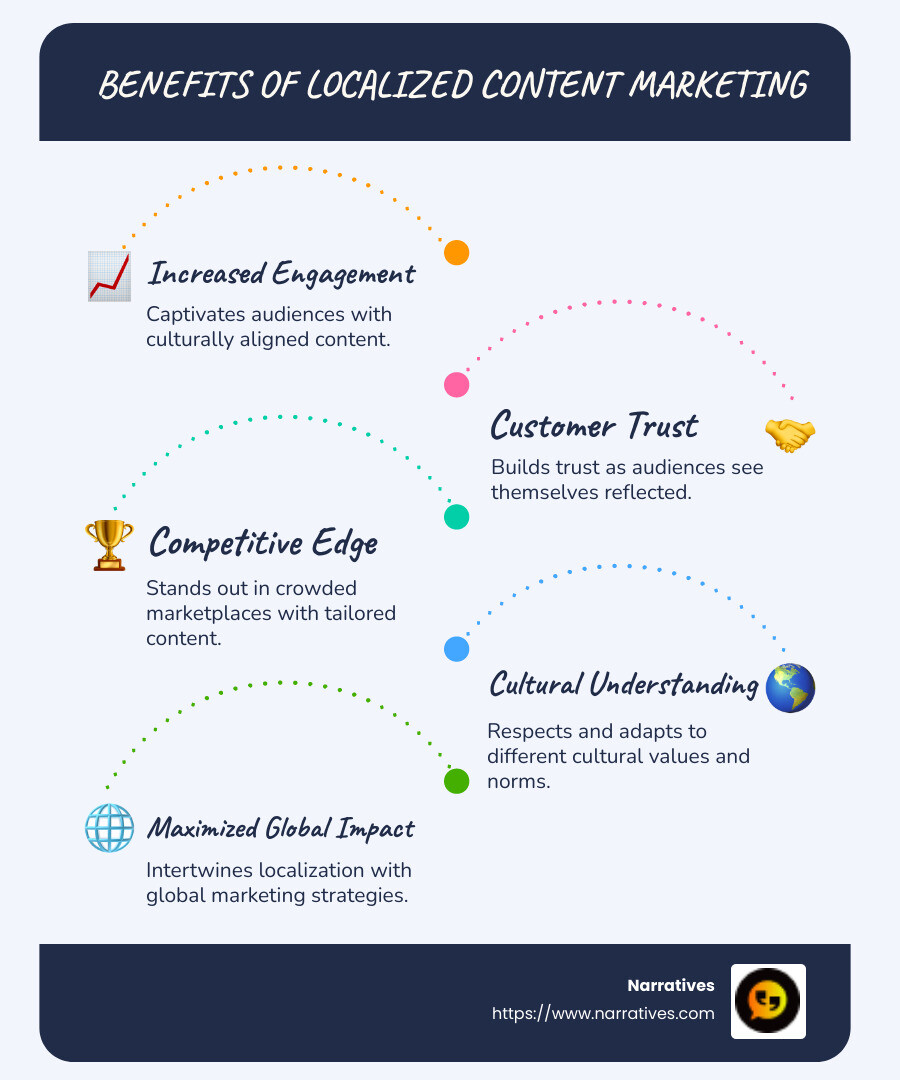
- Increased Engagement: Content that aligns with local culture and language can captivate audiences more effectively.
- Customer Trust: When audiences see themselves reflected in content, it builds trust and fosters loyalty.
- Competitive Edge: Providing content custom to local tastes sets you apart in crowded marketplaces.
The path to expanding a brand while maximizing its impact goes beyond translating words. It's about understanding content localization as a strategy that intertwines with global marketing goals. Consider Vogue's creative approach—they successfully leverage regional celebrities to blend universal appeal with local familiarity, showcasing the power of localized content.
To get ahead in global markets, brands must prioritize localization efforts. This not only ensures content relevance but also demonstrates respect and understanding of different cultures. A successful localization strategy considers both linguistic precision and the nuanced contexts of local audiences.
Localized content marketing terms you need:
- digital marketing for non-profits
- Outreach strategies for nonprofits
- Storytelling through digital media
Understanding Localized Content Marketing
Localized content marketing is more than just translating words from one language to another. It's about making sure your content feels like it was made for the people in each specific locale. This involves understanding and adapting to cultural nuances, overcoming language barriers, and making your content resonate with local audiences.
Cultural Adaptation
Cultural adaptation is key. It's about recognizing and honoring the unique customs, traditions, and social norms of each target market. For instance, KFC's marketing campaign in South Africa, featuring local illustrator Karabo Poppy, is a great example. By incorporating culturally relevant artwork and encouraging social media engagement, KFC made a genuine connection with its South African audience.

Language Barriers
Language is more than just words; it's a way of thinking. While translation is a part of localization, it's not the whole story. Effective localization involves capturing the spirit of the original content while making it relatable and understandable in the local context. This means considering things like idioms, humor, and even emojis. For example, a smiley face emoji might be welcoming in one culture but could convey mistrust in another.
Why It Matters
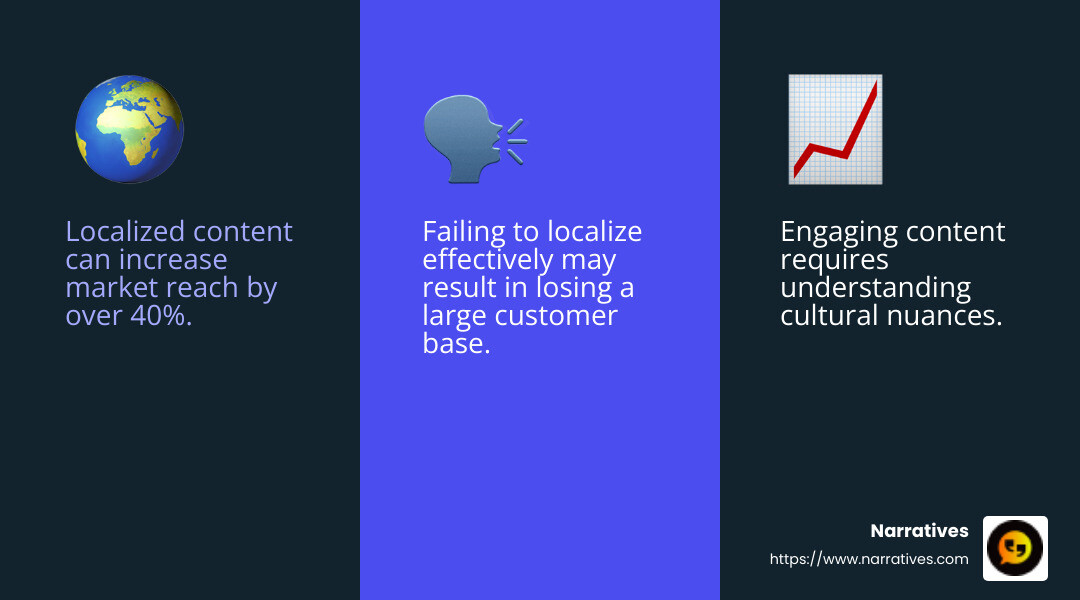
Failing to localize effectively can be costly. Research by CSA suggests that not localizing your buying experience could cost you 40% or more of your total addressable market. That's a huge chunk of potential customers!
Localized content marketing is about creating content that speaks directly to the people you want to reach, in a way that feels personal and authentic. By doing this, brands not only improve their global reach but also build trust and loyalty among local customers. This approach sets the foundation for successful global marketing strategies and ensures that your brand resonates wherever it goes.
In the next section, we'll explore the key elements of a content localization strategy, including how to handle cultural nuances and the tools that can help you along the way.
Key Elements of a Content Localization Strategy
To craft a successful localized content marketing strategy, focus on three main elements: cultural nuances, the distinction between translation and localization, and the use of localization software. Understanding and implementing these elements will help your brand connect with diverse audiences globally.
Cultural Nuances
Cultural nuances are the subtle differences that make each culture unique. These include customs, traditions, values, and even colors that hold specific meanings. For example, in China, red symbolizes good fortune, while in some African cultures, it can represent mourning. Ignoring these nuances can lead to misunderstandings or even offend your audience.
A great example of respecting cultural nuances is McDonald's in India. Instead of their classic beef burgers, they offer a range of vegetarian options to cater to local dietary preferences. This adaptation shows respect and understanding of cultural norms, which helps build trust and loyalty.
Translation vs. Localization
It's crucial to understand the difference between translation and localization. Translation is the process of converting text from one language to another. It's about words.
Localization, on the other hand, goes beyond mere words. It's about adapting the entire content experience to fit the cultural context of the target market. This means adjusting images, colors, and even the layout to make the content feel native to the audience.
For instance, a marketing campaign in Spain might need a different approach than one in Mexico, even though both countries speak Spanish. This is because cultural references, slang, and consumer behavior can vary significantly.
Localization Software
Using the right localization software can streamline the process and ensure consistency across all your content. These tools help manage translations, cultural adaptations, and even automate some parts of the process.
For example, cloud-based localization solutions like Smartling or Transifex offer features like translation memory and glossaries. These features ensure that your content remains consistent and accurate, saving time and resources.
Localization software also facilitates collaboration among teams, allowing marketers, translators, and developers to work together seamlessly.
By focusing on cultural nuances, understanding the difference between translation and localization, and leveraging the right software, you can create a powerful content localization strategy. This approach ensures your content not only reaches but resonates with your audience, no matter where they are.
In the next section, we'll explore the benefits of localized content marketing, including how it can increase engagement, build customer trust, and give you a competitive edge.
Benefits of Localized Content Marketing
Localized content marketing offers several compelling benefits that can transform how a brand connects with its audience. Let's explore how it can boost engagement, build trust, and provide a competitive edge.
Increased Engagement
Imagine visiting a website that speaks directly to your cultural experiences and preferences. You're more likely to stick around, right? That's the power of localized content. By tailoring your content to fit the cultural context of your audience, you can significantly boost engagement.
Take Netflix as an example. They offer content that resonates with viewers worldwide by providing culturally relevant shows and movies. This approach not only attracts viewers but also keeps them coming back for more. Localizing content ensures that audiences feel seen and understood, leading to longer site visits and more interaction.
Customer Trust
Building trust with your audience is essential for any brand. When you localize content, you're telling your audience, "We understand and respect your culture." This acknowledgment fosters trust and loyalty.
Consider H&M's strategy in Amsterdam. By offering services like clothing repairs and rentals, custom to local environmental concerns, they showed they listen to their customers. This approach put them at the forefront of sustainability discussions, enhancing their credibility and trustworthiness.
Competitive Edge
In a crowded market, standing out is crucial. Not all businesses invest in localization, which means those that do gain a significant advantage. By localizing your content, you tap into new markets and connect with audiences that your competitors might overlook.
KFC is a prime example. By adapting their menu and marketing campaigns to fit local tastes and cultural nuances, they've managed to strengthen their brand presence globally. Their strategy in South Africa, featuring local artwork on limited-edition buckets, showed their understanding of the local culture, giving them a competitive edge.
Localized content marketing is not just about translating words; it's about creating meaningful connections with your audience. By increasing engagement, building trust, and gaining a competitive edge, localization can drive your brand's success in new markets.
Next, we'll dive into the steps to implement a successful content localization strategy, including market research, style guides, and translation tools.
Steps to Implement a Successful Content Localization Strategy
Creating a successful content localization strategy involves a few key steps. Let's break it down into three main components: market research, style guides, and translation tools.
Market Research
Before diving into localization, it's crucial to understand the cultural, linguistic, and consumer preferences of your target market. This involves more than just translating words; it's about adapting your content to fit the local culture.
- Cultural Insights: Look into age groups, shopping habits, and local customs. This helps in crafting content that resonates with your audience.
- Competitor Analysis: Check what your competitors are doing in these markets. Identify gaps you can fill with your localized content.
- Search Engine Optimization (SEO): Customize your content to improve visibility on local search engines. This can drive organic traffic and attract potential customers.
Building Style Guides
A style guide ensures consistency in your localized content. It acts as a roadmap for language use, tone, style, and formatting.
- Language-Specific Guides: These are essential for maintaining consistency across different languages. Collaborate with local experts to refine these guides.
- Branding and Tone: Clearly define your brand's voice and how it should be adapted for different markets. This helps in maintaining brand integrity while being culturally relevant.
Using Translation Tools
Translation tools are vital for streamlining the localization process. However, it's important to balance technology with human expertise.
- Machine Translation: Tools like neural machine translation (NMT) can provide quick translations. However, they often miss cultural nuances.
- Human Translators: They bring cultural understanding and ensure high-quality localization. A balanced approach, using machine translation for initial drafts and human translators for refinement, often yields the best results.
By focusing on these steps—market research, style guides, and translation tools—you can create a localization strategy that speaks to the hearts of your audience. This approach not only improves engagement but also builds trust and gives you a competitive edge in the global market.
Next, we'll address some frequently asked questions about localized content marketing, shedding light on common misconceptions and highlighting its importance in global marketing.
Frequently Asked Questions about Localized Content Marketing
What is content localization?
Content localization is the process of adapting your content to resonate with a specific locale or market. It goes beyond mere translation. While translation involves converting text from one language to another, localization ensures that the content feels native to the target audience. This means adjusting cultural nuances, slang, and even visuals to match local preferences. According to CSA Research, failing to localize can cost businesses about 40% of their total addressable market, as many consumers prefer to engage with content in their native language.
How does localization differ from translation?
Localization and translation are related but distinct concepts. Translation focuses on converting text from one language to another, maintaining grammatical accuracy and meaning. It's often a word-for-word or phrase-for-phrase match.
Localization, on the other hand, includes translation but also considers cultural and contextual factors. It involves changing phrasing, imagery, and even formatting to align with local customs and expectations. For instance, an emoji that signifies happiness in one culture might convey mistrust in another. Localization ensures that these subtleties are addressed, making the content more engaging and relatable.
Why is content localization important for global marketing?
In today's global marketplace, content localization is vital for connecting with diverse audiences. Here's why:
Increased Engagement: Localized content is more likely to capture the attention of your audience, keeping them engaged. When people see content in their language and cultural context, they feel understood and valued.
Customer Trust: By speaking your audience's language and acknowledging their culture, you build trust. Research shows that 75% of consumers are more likely to purchase when the product information is in their native language.
Competitive Edge: Not all businesses invest in localization. Those that do gain a significant advantage, as they can attract and retain customers more effectively in different markets.
In short, content localization is not just a nice-to-have; it's a crucial strategy for any business looking to succeed globally. It maximizes your ability to capture market demand and ensures your brand resonates with local audiences.
Next, we'll conclude by exploring how Narratives leverages storytelling and partnerships to improve its global reach.
Conclusion
At Narratives, we believe in the power of storytelling to bridge gaps and connect communities. Our focus is on partnering with non-profits and purpose-driven organizations to lift underrepresented voices. Through high-quality, emotionally resonant content, we help these organizations share their impact stories in a way that inspires action and builds trust.
Localized content marketing is an essential part of this process. By tailoring content to resonate with specific locales, we ensure that each story speaks directly to its audience. This approach not only increases engagement but also strengthens the bond between non-profits and the communities they serve.
For non-profits, storytelling is more than just a communication tool—it's a way to highlight their mission and foster deeper connections. By localizing content, we help these organizations overcome language barriers and cultural differences, making their messages more accessible and impactful.
Our partnerships are built on mutual goals: to increase visibility, drive meaningful change, and create a lasting impact. Through Narratives, non-profits can reach new audiences and expand their influence, all while staying true to their mission.
As we continue to explore the vast potential of localized content marketing, our commitment to impactful storytelling remains unwavering. By acting local and thinking global, we can help non-profits create stories that not only inform but also inspire.
Learn more about how Narratives can help your organization tell its story here.


.avif)