Unlocking SEO Success: The Ultimate Guide to Long-Tail Keyword Strategy

Showing the Essentials: Long-Tail Keyword Strategy
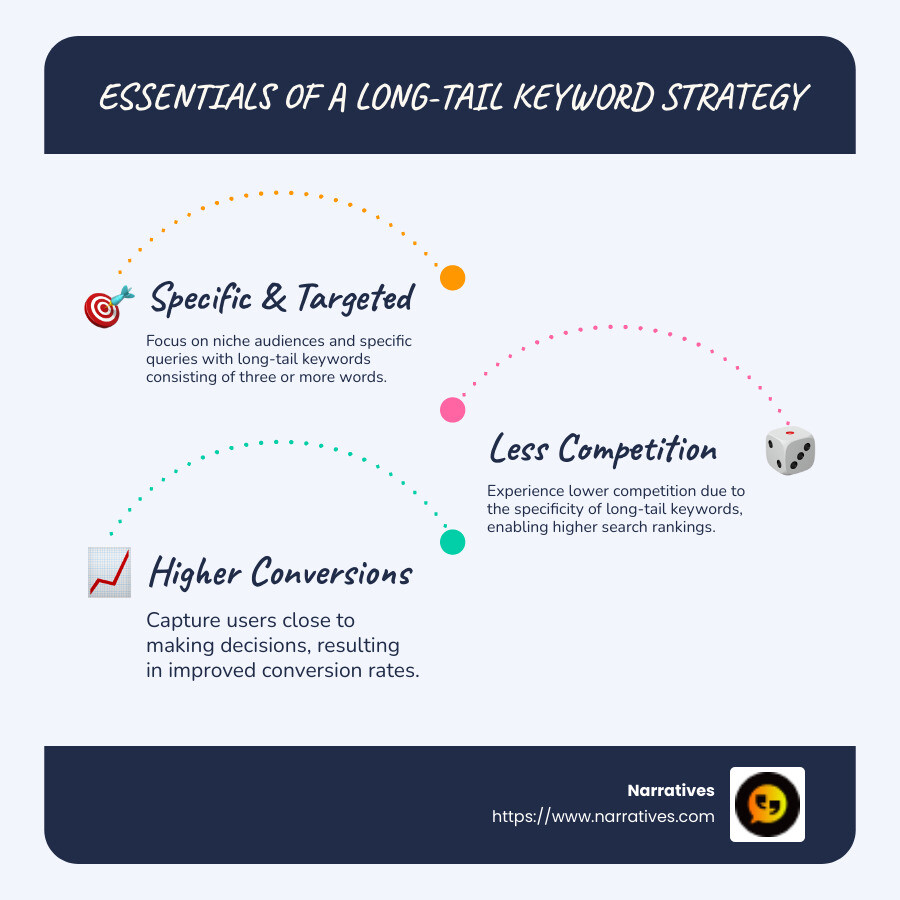
Long-tail keyword strategy is a crucial component in search marketing. If you're aiming to enhance your online visibility, here's a concise overview of its importance:
Specific and Targeted: Long-tail keywords are more detailed, usually comprising three or more words. They address niche audiences and specific inquiries.
Less Competition: Due to their specificity, these keywords often encounter less competition, facilitating higher rankings in search results.
Higher Conversion Rates: Users searching with long-tail keywords are typically closer to making a decision, resulting in improved conversion rates.
In the current digital environment, distinguishing yourself can be challenging. As online spaces become more crowded, relying solely on broad keywords is insufficient. A targeted long-tail keyword strategy enables you to connect with your exact audience—such as nonprofits seeking to enhance their impact through storytelling.
Recognizing the significance of this strategy is vital for anyone involved in search marketing. It empowers brands to align their messaging with user intent, reaching the right audience by using the terms they are searching for. This makes long-tail keywords invaluable for nonprofits and organizations aiming to share their stories and foster meaningful engagement.
Explore more about Long-tail keyword strategy:
Understanding Long-Tail Keywords
Long-tail keywords are the secret sauce for reaching niche audiences with precision. Imagine you’re not just casting a wide net, but instead, fishing with a specific lure for the exact fish you want.
Specificity
Long-tail keywords are longer and more precise phrases that people type into search engines. They usually consist of three or more words. Instead of just "coffee," think "homemade coffee filters" or "can you warm up iced coffee."
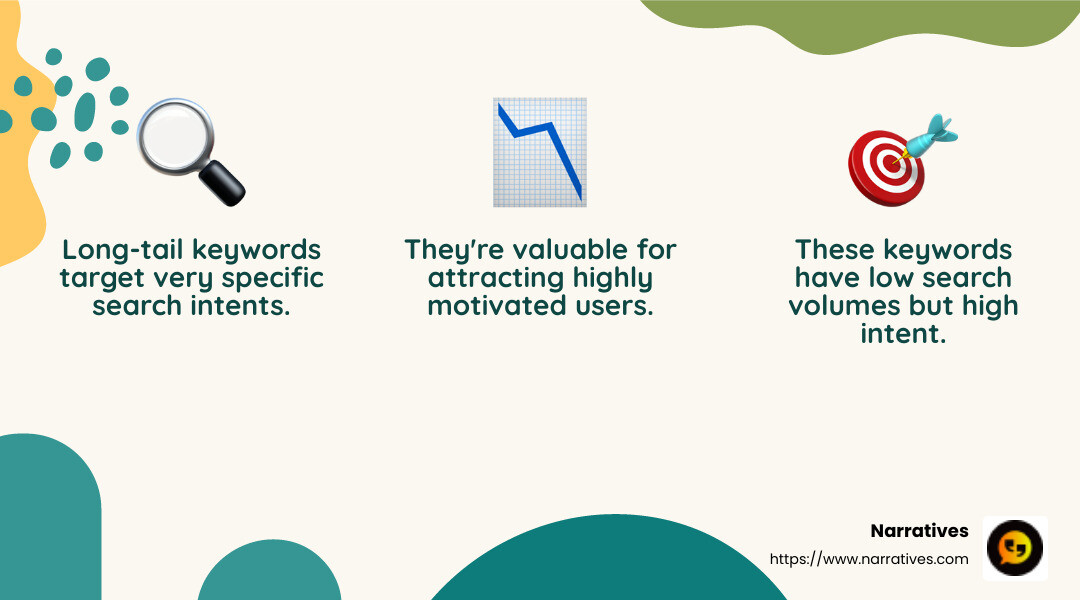
These keywords reflect very specific search intents. When users type them, they usually know what they want. This specificity helps you align your content with what your audience is actively looking for.
Low Search Volume
It's true—long-tail keywords generally have lower search volumes. But don't let that fool you into thinking they're not valuable. While fewer people search for these terms, those who do are often highly motivated.
Think of it like this: You’re not trying to attract everyone, just the right ones. This means less competition and a better chance of getting noticed by your target audience.
Conversion Potential
Here's where long-tail keywords shine. People using these specific terms are often further along in their buying journey. They're not just browsing; they're ready to take action.
For example, a search for "SEO software for small business" indicates a user is likely close to making a purchase decision. If your content matches this query, you’re more likely to convert that visitor into a customer.
Focusing on long-tail keyword strategy helps you attract visitors who are ready to engage, making your marketing efforts not just more effective, but also more efficient.
By embracing long-tail keywords, you’re setting up a pathway to higher conversions and more meaningful interactions with your audience. This is especially crucial for organizations aiming to make a significant impact through storytelling and targeted outreach.
Next, we'll dig into the benefits of adopting a long-tail keyword strategy and how it can lift your digital marketing efforts.
Benefits of a Long-Tail Keyword Strategy
Embracing a long-tail keyword strategy can be a game-changer for your digital marketing efforts. Let's explore why this approach can lead to less competition, targeted traffic, and higher conversions.
Less Competition
One of the most significant advantages of using long-tail keywords is the reduced competition. These keywords are specific and niche-oriented, meaning fewer websites are vying for the top spot on search engine results pages (SERPs). For example, instead of competing for the broad term "furniture," you might target "eco-friendly recycled material furniture." This specificity makes it easier to rank higher and gain visibility.
This reduced competition is particularly beneficial for new or smaller websites that lack the authority of larger competitors. By focusing on long-tail keywords, you can carve out a space in the crowded digital landscape and establish your presence.
Targeted Traffic
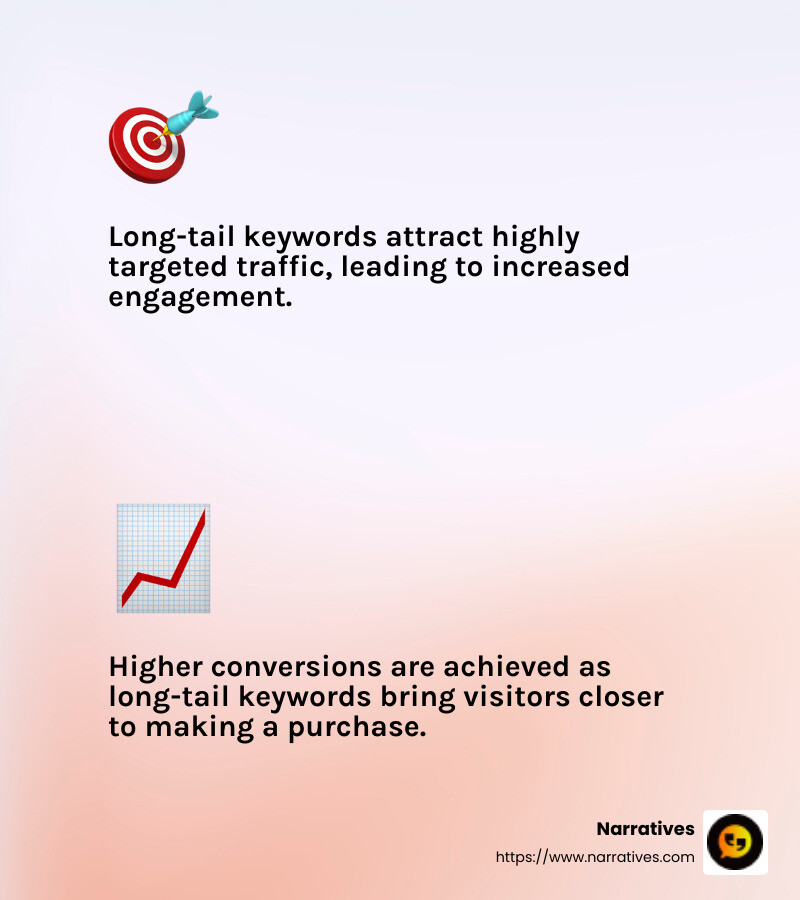
Long-tail keywords attract highly targeted traffic. When users search with these specific phrases, they have a clear intent. They're not just browsing; they're looking for something particular. For instance, someone searching for "best educational board games for kids" is likely ready to make a purchase or at least seriously considering it.
This targeted traffic means that visitors arriving at your site are more likely to find what they're looking for, leading to increased engagement and longer time spent on your pages. It's all about connecting with the right audience who are genuinely interested in what you offer.
Higher Conversions
The precision of long-tail keywords doesn't just bring more visitors—it brings the right visitors. These are people who are further down the buying funnel and closer to making a decision. This is why long-tail keywords often lead to higher conversion rates.
Consider an eCommerce store specializing in baseball bats. Instead of targeting the broad keyword "baseball bats," which is dominated by industry giants, focusing on "cheap wooden baseball bats" can attract customers ready to buy. This specificity aligns with user intent, increasing the likelihood of conversions.
In summary, a long-tail keyword strategy not only helps you stand out in a competitive market but also ensures that the traffic you attract is both relevant and ready to convert. This approach is crucial for organizations like Narratives, where reaching the right audience can amplify the impact of storytelling and community-focused initiatives.
Next, we'll explore how to identify these valuable long-tail keywords and integrate them into your strategy effectively.
How to Identify Long-Tail Keywords
Finding the right long-tail keywords is like uncovering hidden gems for your SEO strategy. Here's how you can find these valuable keywords using keyword tools, competitor analysis, and Google features.
Keyword Tools
Using keyword research tools is a great starting point. These tools help you find keywords that are specific and less competitive.
Free Tools: Start with free options like Google Keyword Planner and Answer the Public. These tools provide a list of keywords related to your niche and show you what people are searching for.
Paid Tools: For more detailed insights, consider paid tools that offer data on search volume, keyword difficulty, and related terms. These tools can generate thousands of long-tail keywords with just a few clicks. Simply enter a broad keyword, and let the tool do the magic!
Competitor Analysis
Analyzing your competitors can reveal opportunities you might have missed.
Identify Competitors: Start by identifying your main competitors. Look at their website content, blog posts, and even their social media.
Research Tools: Use tools to see which long-tail keywords your competitors rank for. This can highlight gaps in your strategy and provide new keyword ideas to target.
By understanding what works for others, you can refine your strategy and find keywords that are both relevant and achievable.
Google Features
Google itself offers several features that can help you uncover long-tail keywords.
Autocomplete Suggestions: When you start typing in the Google search bar, it suggests keywords. These are based on common searches and can be a treasure trove of ideas.
Related Searches: At the bottom of Google’s search results, you’ll find related searches. These can give you more keyword ideas and insights into what users are looking for.
People Also Ask: This feature shows questions that users frequently ask. These questions can be turned into long-tail keywords or inspire content ideas.
By using these Google features, you can tap into real user queries and adapt your content to meet their needs.
Incorporating these strategies will help you build a strong list of long-tail keywords. With these in hand, you're ready to integrate them into your content and watch your SEO efforts soar. Next, we'll dive into how to implement these keywords effectively in your strategy.
Implementing Long-Tail Keywords in Your Strategy
Now that you've gathered a list of valuable long-tail keywords, it's time to weave them into your content strategy. This step is crucial for aligning with search intent and ensuring strategic placement across your website.
Content Creation
Creating content that resonates with your audience is key. Here's how to do it:
Address User Queries: Each piece of content should aim to answer specific questions or solve problems. For example, if your keyword is "best organic skincare for sensitive skin," consider writing a detailed guide or a listicle on the topic.
Use Conversational Language: Write in a simple, engaging tone that mimics natural speech. This is especially important for voice search optimization, where users often ask questions in a conversational manner.
Incorporate FAQs: Adding a FAQ section to your content can help target long-tail keywords. Users often search in question format, so answering these directly can improve your chances of ranking.
Search Intent
Understanding the search intent behind each keyword is vital. It ensures your content meets user expectations:
Informational Intent: If users are seeking information, provide comprehensive guides or how-to articles. Use keywords naturally within the text to maintain flow and readability.
Transactional Intent: For keywords indicating a purchase intent, like "buy eco-friendly furniture," ensure your content includes clear calls to action and product links.
Navigational Intent: If users are looking for a specific page, ensure your site structure makes it easy to find. Use internal linking to guide users to relevant pages.
Strategic Placement
Placing your keywords strategically improves SEO without overstuffing:
Titles and Headings: Use long-tail keywords in titles, headings, and subheadings. This not only improves SEO but also helps readers quickly grasp the content's focus.
First 100 Words: Integrate keywords within the first 100 words of your content. This helps search engines understand the topic early on.
Meta Descriptions and URLs: Optimize meta descriptions and URLs with relevant keywords. This improves click-through rates from search results.
Alt Text for Images: Use keywords in image alt text to improve image search visibility.
By carefully crafting content that aligns with search intent and placing keywords strategically, you'll create a seamless user experience that boosts your SEO efforts. Next, let's explore common questions about long-tail keyword strategies to deepen your understanding.
Frequently Asked Questions about Long-Tail Keyword Strategy
What are long-tail keywords?
Long-tail keywords are specific search phrases that users enter into search engines. They usually consist of three or more words and are highly detailed. For example, instead of searching for "coffee," a user might search for "how to make iced coffee at home." These keywords have low search volumes individually but are collectively significant in driving traffic.
Why are long-tail keywords important?
Long-tail keywords are crucial because they are easier to rank for and bring in more targeted traffic. Since they are specific, fewer websites compete for them, making it simpler for your content to appear on search engine results pages. This specificity also means that users searching these terms are often closer to making a decision, whether it's purchasing a product or seeking detailed information.
For instance, someone searching for "best hiking boots for winter hiking" is likely ready to buy, compared to someone just looking up "hiking boots."
How can I find long-tail keywords?
To find long-tail keywords, you can use several tools and features:
Keyword Tools: Tools like Semrush and Google's Keyword Planner can help you find long-tail keywords by providing data on search volume and keyword difficulty. These tools often suggest related terms and questions that users search for.
Google Features: Use Google’s auto-complete and "related searches" features. When you start typing a query, Google suggests completions that are popular searches. Similarly, at the bottom of a search results page, you'll find related searches that can inspire long-tail keywords.
By leveraging these tools and features, you can build a robust list of long-tail keywords that align with your content strategy and target audience. This will position your site for better visibility and engagement, driving meaningful traffic to your pages.
Conclusion
In the changing digital landscape, a Long-tail keyword strategy offers a powerful way to improve your SEO efforts, particularly for non-profits and purpose-driven organizations like Narratives. By focusing on specific, less competitive keywords, you can connect more effectively with audiences who are actively seeking the impactful stories you have to share.
At Narratives, we understand the unique challenges faced by non-profits. Our mission is to lift underrepresented voices through compelling storytelling. By integrating long-tail keywords into our content, we not only improve search visibility but also ensure that our stories reach those who care deeply about social impact and community-driven change.
Storytelling is at the heart of what we do. It's about more than just ranking higher in search results; it's about inspiring action and building trust. By crafting content that resonates emotionally and aligns with user search intent, we help non-profits share their impact stories in a way that truly matters.
As you start on your own journey with long-tail keywords, these specific phrases are not just about driving traffic—they're about reaching the right people at the right time. This approach ensures that your message not only gets heard but also makes a difference.
For more insights into how we can help your organization leverage storytelling and SEO for greater impact, learn more about our services at Narratives. Let's work together to amplify your stories and drive meaningful change.


.avif)