Community Connect: A Guide to Nonprofit Engagement Success

Nonprofit community engagement is the core of impactful mission-driven organizations. It's about building meaningful connections and fostering a sense of ownership among employees, volunteers, donors, and community members. This engagement is crucial for ensuring that a nonprofit's work resonates authentically with its audience and truly addresses their needs.
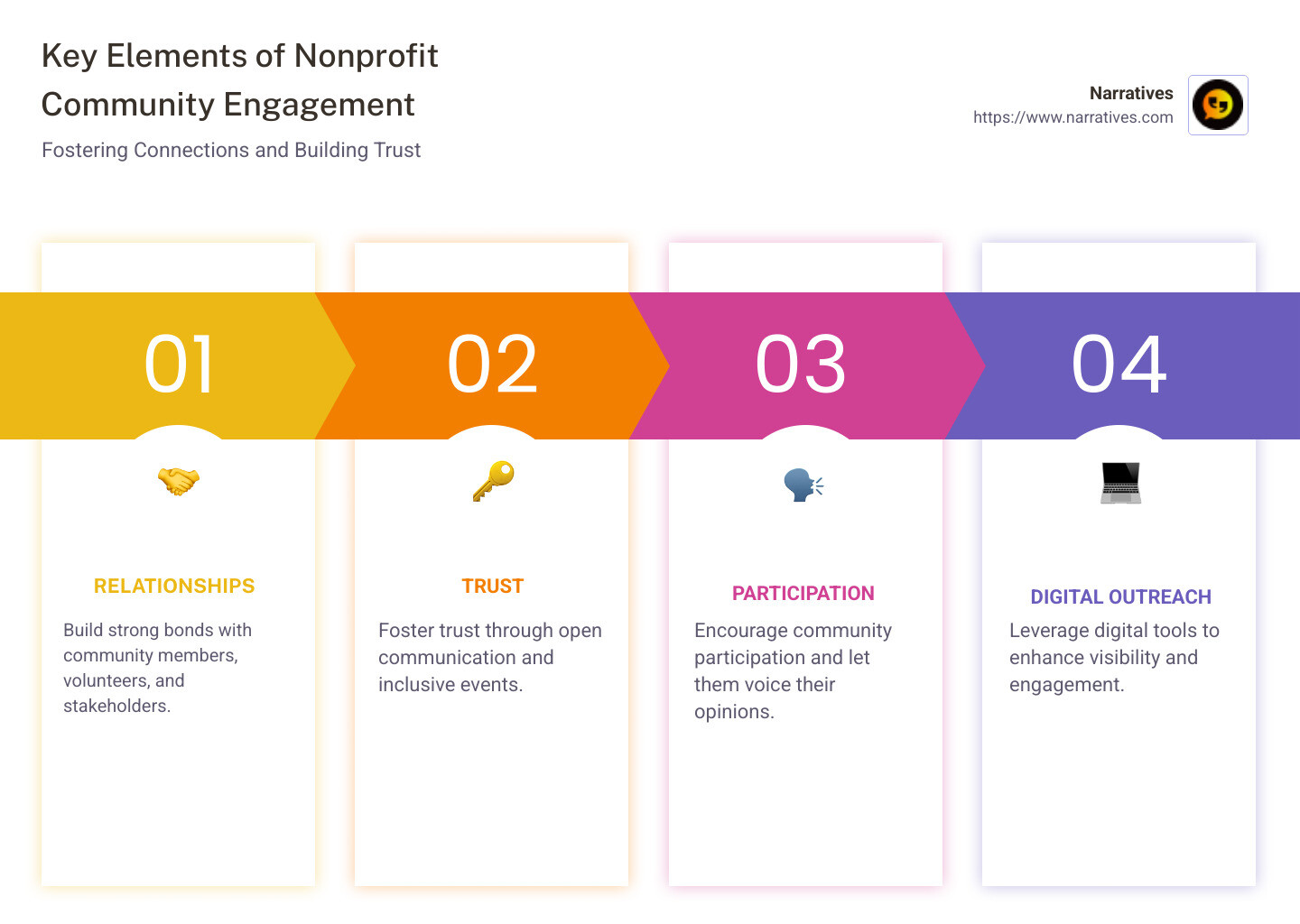
Key Points:
- Build relationships with community members, volunteers, and stakeholders.
- Foster trust through open communication and inclusive events.
- Encourage participation and let communities voice their opinions.
- Leverage digital tools and traditional outreach to improve visibility.
By focusing on these elements, nonprofits not only strengthen their community ties but also increase support and drive their missions forward. As Gwen K. Young, CEO of Women Business Collaborative, emphasized, community engagement helps align organizational activities with the aspirations and needs of the people they serve, making it deeply tied to a nonprofit’s relevance and impact.
Nonprofit community engagement terms to know:
Understanding Nonprofit Community Engagement
Key Components
Nonprofit community engagement isn't just a buzzword; it's the foundation of successful mission-driven organizations. A structured approach to community engagement is essential for creating meaningful relationships and ensuring active participation from everyone involved, from volunteers to stakeholders.
Here's a breakdown of the key components:
1. Communication Channels
Clear and open communication is the backbone of community engagement. Nonprofits need to establish effective channels to keep everyone informed and involved. This can include regular newsletters, social media updates, and community forums.
- Digital Tools: Leveraging platforms like social media and email newsletters can significantly improve a nonprofit's visibility and accessibility. These tools help keep the community updated and engaged with the organization's activities.
2. Inclusive Events
Hosting events that welcome everyone, regardless of background, is crucial. Inclusive events create a sense of belonging and encourage diverse participation.
- Examples: Participating in local fairs or organizing town halls allows nonprofits to directly engage with community members. These events serve as platforms for dialogue and feedback, demonstrating that the organization values community input.
3. Collaborative Partnerships
Building partnerships with like-minded organizations and businesses amplifies a nonprofit's reach and impact. Collaborations can lead to innovative solutions and shared resources, benefiting the community at large.
- Case Study: Joining forces for events like a fun run or restaurant week fundraiser not only raises funds but also strengthens community bonds. These partnerships showcase the power of collective action in achieving shared goals.
By focusing on these components, nonprofits can foster a strong sense of trust and accountability. As Gwen K. Young highlighted, engaging the community ensures that an organization's activities align with the needs and aspirations of those they serve. This alignment is crucial for maintaining relevance and driving impactful outcomes.
Strategies for Effective Engagement
Building Trust and Accountability
Building trust and accountability is essential for nonprofit community engagement. It's about more than just transparency; it's about creating genuine connections and ensuring that the community feels heard and valued. Here’s how nonprofits can achieve this:
Listening Tours
Listening tours are a powerful way to understand the community's needs and concerns. By visiting different neighborhoods and hosting informal meetings, nonprofits can gather insights and feedback. This direct engagement helps build trust, as community members see that their voices are being heard and considered in decision-making.
- Example: A nonprofit could organize a series of neighborhood meetings to discuss upcoming projects. This not only informs the community but also invites their input, fostering a sense of ownership.
Civic Engagement
Encouraging civic engagement is a cornerstone of building trust. Nonprofits can play a critical role in educating and mobilizing communities around important issues, such as voter participation and public policy.
- Tactics: Organizing voter registration drives or candidate forums can empower community members to participate actively in civic life. These activities demonstrate the nonprofit's commitment to supporting the community's voice in broader societal issues.
Digital Tools
Digital tools can improve engagement efforts by making it easier to communicate and collaborate. Platforms like board management software offer secure workrooms and centralized libraries for sharing information and tracking progress.
- Benefits: These tools streamline communication, making it easier for board members and volunteers to stay informed and involved. They also help maintain accountability by providing transparent access to plans and outcomes.
Trust and Accountability in Decision-Making
Trust is built through transparent and inclusive decision-making processes. Nonprofits should involve community members in planning and execution phases, ensuring their input shapes the organization's actions.
- Strategy: Establish advisory boards with community representatives to guide key decisions. This not only boosts trust but also ensures decisions align with community needs.
By implementing these strategies, nonprofits can create a foundation of trust and accountability, essential for long-term success and impact.
Examples of Successful Nonprofit Community Engagement
Case Studies
Engaging with the community is crucial for nonprofits. Let's explore some effective nonprofit community engagement examples and case studies that highlight the impact of local fairs, town halls, partnerships, fun runs, restaurant week fundraisers, and advisory boards.
Local Fairs and Festivals
Local fairs provide a great platform for nonprofits to interact with the community. By setting up booths or hosting activities, nonprofits can raise awareness about their mission and programs. These events offer a relaxed environment where people can learn about the nonprofit's work and how they can get involved.
- Example: A nonprofit might participate in a community festival by offering interactive activities or information sessions about their cause. This not only increases visibility but also fosters a sense of community involvement.
Town Halls
Town halls are excellent for creating a two-way dialogue with the community. They allow nonprofits to present their work, gather feedback, and address any concerns directly. This open communication builds trust and shows that the nonprofit values community input.
- Example: Hosting a town hall to discuss a new initiative can help the community feel included in the process. It also provides an opportunity for the nonprofit to explain their goals and receive valuable feedback.
Partnerships
Collaborating with local businesses and other organizations can amplify a nonprofit's impact. Partnerships can lead to joint events, shared resources, and a broader reach within the community.
- Example: Partnering with a local business for a community cleanup event can attract more participants and resources, enhancing the event's success and community impact.
Fun Runs
Fun runs are a popular way to engage the community while raising funds. These events promote healthy living and community spirit, attracting participants of all ages.
- Example: Organizing a fun run with local sponsors can increase community engagement and raise significant funds for the nonprofit's cause. Participants enjoy a day of fitness and fun, while supporting a meaningful mission.
Restaurant Week Fundraiser
A restaurant week fundraiser involves collaborating with local eateries to donate a portion of their sales to the nonprofit. This not only raises funds but also supports local businesses.
- Example: During a restaurant week, participating restaurants might offer special menus, with a percentage of proceeds benefiting the nonprofit. This partnership highlights community support and encourages local dining.
Advisory Board
An advisory board comprising community members can guide a nonprofit's strategies and decisions. This ensures that the organization's actions align with community needs and expectations.
- Example: Forming an advisory board with diverse community representatives can provide insights and feedback that shape the nonprofit's programs. This collaboration strengthens community ties and ensures accountability.
By incorporating these engagement strategies, nonprofits can effectively connect with their communities, fostering trust and collaboration. These case studies demonstrate the potential for impactful engagement through creative and inclusive approaches.
The Role of Technology in Enhancing Engagement
Tools and Platforms
Technology plays a pivotal role in enhancing nonprofit community engagement. By leveraging digital tools and platforms, nonprofits can streamline their operations, improve communication, and foster stronger connections with their communities.
Board Management Solutions
Nonprofits often rely on volunteer boards to guide their efforts. Board management solutions are essential for efficient collaboration and communication. These tools offer secure workrooms where board members can discuss strategies and share ideas anytime, anywhere. This improves collaboration and makes decision-making more transparent and inclusive.

Centralized Document Repositories
A centralized document repository is a key feature of board management solutions. It serves as a searchable repository for important documents, such as surveys, reports, and market intelligence. This reduces information overload and ensures that board members have easy access to the data they need to make informed decisions.
Digital Storytelling
Storytelling is a powerful way to connect with the community and share the nonprofit's mission. Digital storytelling uses multimedia content like videos, graphics, and user-generated content to tell compelling stories. This approach not only saves time but also engages audiences more effectively by showing the real-world impact of the nonprofit's work.
Multimedia Content
Creating and sharing multimedia content is crucial for engaging diverse audiences. Videos, infographics, and interactive media can convey complex information in an accessible and engaging way. By using these tools, nonprofits can reach a wider audience and encourage more community participation.
Engagement Platforms
Engagement platforms are designed to improve nonprofit engagement. They offer features like secure workrooms, centralized document repositories, and task schedulers. These tools help nonprofits keep their community engagement efforts on track and ensure accountability.
By integrating these technologies, nonprofits can improve their community engagement strategies, making them more effective and impactful. The right tools empower nonprofits to build stronger, more meaningful connections with their communities.
Frequently Asked Questions about Nonprofit Community Engagement
What are the three elements of community engagement?
Community engagement is a structured approach that helps nonprofits build meaningful relationships with their communities. It consists of three key elements: awareness, interaction, and participation.
Awareness involves spreading the word about your mission and activities. This could be through one-on-one conversations, social media campaigns, or community events that introduce your organization to a wider audience.
Interaction makes communication a two-way street. This means actively listening to your community through surveys, polls, or focus groups. By gathering feedback, nonprofits can better understand community needs and improve their services.
Participation turns awareness and interaction into action. It involves engaging community members in advocacy, partnering on events, or even inviting them to join planning committees. This deepens connections and empowers communities to take part in decision-making processes.
How can nonprofits engage in voter participation?
Nonprofits can play a crucial role in encouraging voter participation while remaining nonpartisan. They can do this by exercising their legal rights to engage in voter registration and education activities.
Voter Registration: Nonprofits can help people register to vote by organizing registration drives or providing resources on how to register. This is a powerful way to increase voter turnout and ensure that community voices are heard.
Nonpartisan Voter Engagement: While nonprofits must remain neutral and avoid endorsing candidates, they can educate voters on issues that affect their communities. By doing so, nonprofits inspire informed voting without crossing legal boundaries.
Research shows that when nonprofits encourage voting, people are more likely to participate in elections. This highlights the significant impact nonprofits can have on civic engagement.
Why is community engagement vital for nonprofits?
Community engagement is crucial for nonprofits because it builds relevance, fosters volunteerism, and ensures sustained support.
Relevance: By engaging with the community, nonprofits stay informed about local needs and preferences. This helps them tailor their programs and services, making them more effective and impactful.
Volunteerism: Engaged communities are more likely to volunteer their time and skills. Volunteers are essential for nonprofits, as they bring energy, ideas, and resources that help drive the mission forward.
Sustained Support: Building trust through community engagement leads to long-term support from donors, partners, and beneficiaries. This support is vital for the ongoing success and sustainability of nonprofit organizations.
In summary, effective community engagement is not just a "nice-to-have" for nonprofits—it's a vital component of their success and impact.
Conclusion
At Narratives, we believe in the power of storytelling to drive social impact. Nonprofit community engagement is at the heart of what we do, helping organizations connect with their communities in meaningful ways.
Storytelling is not just about sharing facts; it's about creating an emotional connection that inspires action. Our goal is to lift underrepresented voices through high-quality, emotionally resonant video and multimedia content. This approach helps nonprofits share their impact stories in a way that builds trust and increases visibility.
Social impact is more than a buzzword—it's the measurable change we strive to create in communities. By partnering with nonprofits, we aim to make a difference by highlighting the challenges they face and the solutions they offer. This not only raises awareness but also mobilizes support and resources for their causes.
Through our digital storytelling services, we empower nonprofits to reach wider audiences and amplify their message. By crafting compelling narratives, we help them engage their communities, foster participation, and drive meaningful change.
In this rapidly changing world, nonprofits need to be agile and innovative in their approach to community engagement. By leveraging storytelling, they can create lasting connections and ensure their missions resonate with those they serve. At Narratives, we're proud to be part of this journey, supporting nonprofits in their quest for a more just and equitable world.


.avif)