The Nonprofit's Guide to Digital Marketing: Making Every Click Count

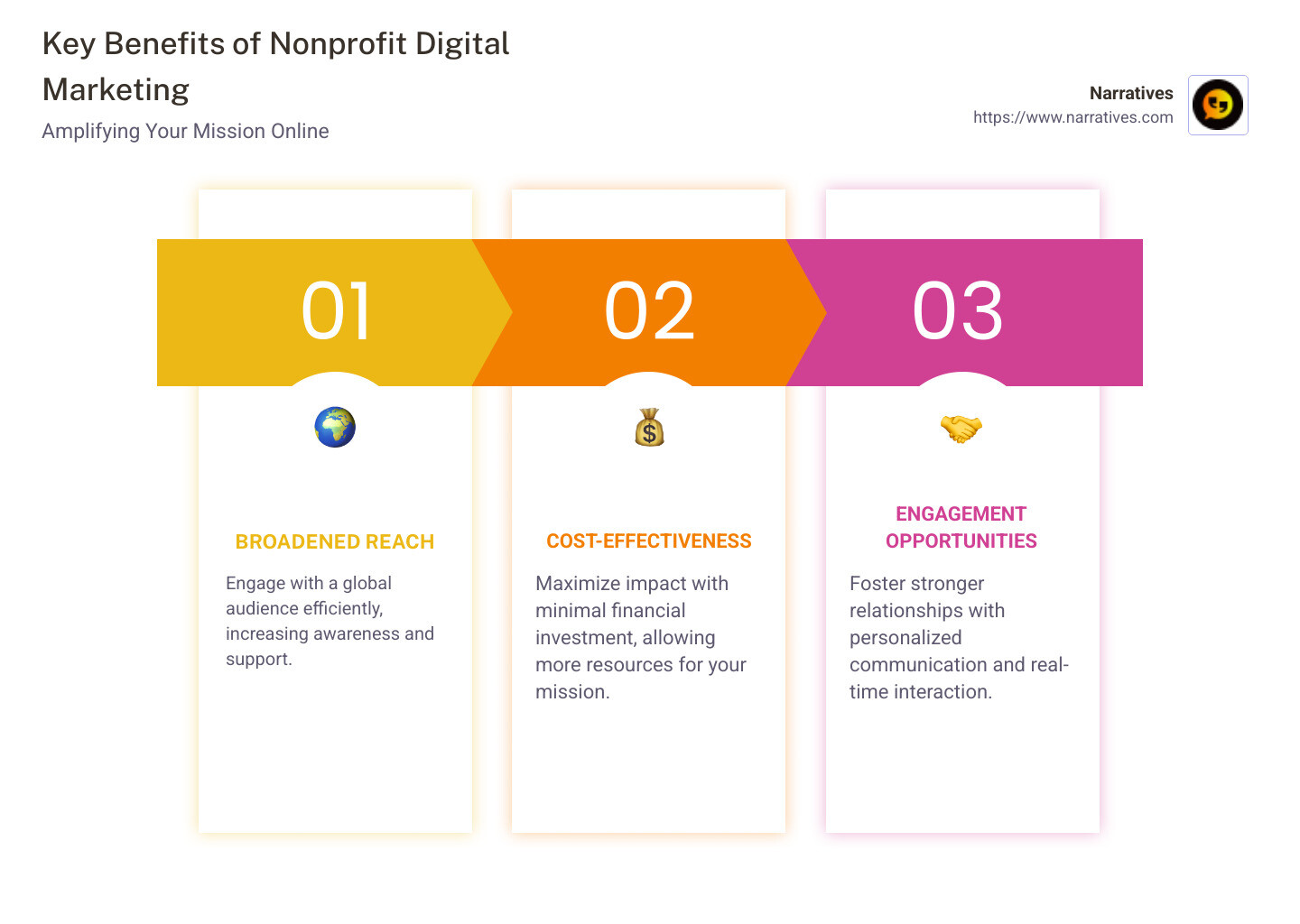
Nonprofit digital marketing is crucial for connecting with supporters and amplifying the impact of your cause. Here's why it matters:
- Broadened Reach: Engage with a global audience efficiently.
- Cost-Effectiveness: Maximize results without substantial budget increases.
- Engagement Opportunities: Foster stronger relationships through personalized communication.
Nonprofit organizations have more power than ever to spread their message far and wide. This ever-expanding online landscape offers a unique opportunity to carry out your mission—whether it's raising awareness, increasing donations, or promoting events—on a much larger scale than was once possible.
Digital marketing empowers nonprofits to connect intimately with supporters, volunteers, and donors across the globe, facilitating impactful outreach and fostering meaningful interactions. With strategies like email marketing, social media engagement, and SEO, nonprofits can not only increase visibility but also amplify their stories, making every click count.
This guide aims to equip you with the tools and insights necessary to harness the full potential of digital marketing, ensuring your organization can thrive and create significant change.
Why Digital Marketing is Essential for Nonprofits
In the busy world of digital communication, nonprofit digital marketing is not just an option—it's a necessity. Here's why it's essential for nonprofits:
Engagement
Digital marketing opens doors for nonprofits to engage with their audience like never before. Through platforms like social media and email, organizations can create a dialogue with supporters. This isn't just about broadcasting messages; it's about listening and responding, creating a two-way street of communication.
Social Media: Platforms like Facebook and Instagram allow nonprofits to share updates, stories, and calls to action in real-time. This immediacy fosters a sense of community and keeps supporters engaged and informed.
Email Campaigns: Email allows for personalized communication. By segmenting your audience, you can tailor messages to different groups, ensuring that the content is relevant and engaging.
Brand Awareness
Building a recognizable brand is crucial for nonprofit success. Digital marketing helps establish and improve your brand's identity.
Consistent Branding: Use digital channels to consistently present your mission and values. This includes using the same colors, fonts, and messaging across all platforms, so your organization is easily recognizable.
Storytelling: Share powerful stories that highlight your nonprofit's impact. Storytelling creates an emotional connection and makes your cause memorable. As Amelia Clark, a Non Profit Social Media Specialist, notes, "Nonprofit organizations give time, money, love, and/or resources to help the greater good, and one of the most critical aspects of success in social media is giving."
Online Presence
A strong online presence is the backbone of modern nonprofit marketing. It ensures that when people search for causes like yours, they find you.
Search Engine Optimization (SEO): Optimize your website and content for search engines. This helps your nonprofit appear in search results when potential supporters look for related causes. For example, if someone searches for "animal rescue in Georgia," you want your organization to be among the top results.
Visibility and Reach: Digital marketing extends your reach beyond local borders. With tools like Google Ad Grants, nonprofits can run ads that appear at the top of search results, reaching a broader audience without straining the budget.
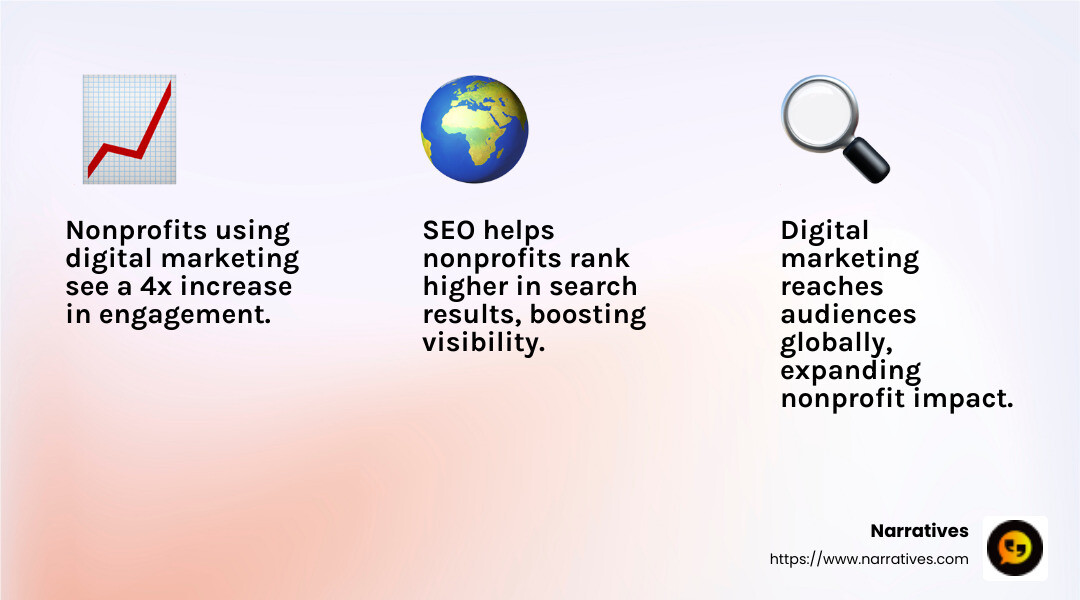
In summary, nonprofit digital marketing is essential for engaging your audience, building brand awareness, and maintaining a robust online presence. By leveraging these digital tools, your nonprofit can make every click count, driving your mission forward and creating lasting change.
Crafting a Nonprofit Digital Marketing Strategy
Creating a solid nonprofit digital marketing strategy is like building a roadmap for success. It ensures that every effort you make is aligned with your mission and goals. Let's break down the key components: goal setting, audience segmentation, and SMART goals.
Goal Setting
Start with clear goals. Before you dive into the digital world, ask yourself, "What do we want to achieve?" Your goals should be specific and focused on what matters most to your organization.
- Example: Instead of saying, "We want more followers," aim for "Increase Instagram followers from 500 to 2,000 in six months."
Setting clear goals helps you stay on track and measure success. It also keeps your team focused and motivated.
Audience Segmentation
Once you know your goals, it's time to understand your audience. Not everyone is the same, so segment your audience based on common traits.
Donor History: Group your audience by their past donations. This helps tailor your messages to new donors, repeat donors, or major contributors.
Interests and Engagement: Use data to see what interests your audience. Did they attend an event or engage in a specific campaign? Use this information to personalize your outreach.
Segmenting your audience makes your communication more relevant and effective. It's like speaking directly to each person, addressing their needs and interests.
SMART Goals
SMART goals are your best friends. They ensure that your goals are not just dreams but achievable targets.
Specific: Define exactly what you want to achieve. Instead of "raise more money," say "raise $10,000 for the new shelter by December."
Measurable: Use numbers to track progress. Track metrics like new email sign-ups or social media engagement.
Attainable: Set realistic goals. Don't aim too high or too low. Find a balance that challenges your team but is within reach.
Relevant: Ensure your goals align with your mission. Every goal should support your overall purpose.
Time-based: Set deadlines. This creates urgency and helps prioritize tasks.
Using SMART goals keeps your strategy focused and efficient. It turns vague ideas into actionable plans, ensuring that every effort contributes to your mission's success.
By focusing on goal setting, audience segmentation, and SMART goals, your nonprofit can craft a digital marketing strategy that truly makes every click count. Now, let's explore the key digital marketing channels that can help bring your strategy to life.
Key Digital Marketing Channels for Nonprofits
Nonprofits have a variety of channels to spread their message and engage supporters. Let's explore the most effective nonprofit digital marketing channels.
Social Media
Social media platforms like Facebook, Instagram, and Twitter are powerful tools for nonprofits. They allow you to share stories, engage with supporters, and build a community.
Storytelling: Share real-life stories to connect emotionally with your audience. Visual content, like photos and videos, can amplify your message and encourage sharing.
Engagement: Respond to comments and messages promptly. This builds trust and shows that you value your supporters.
Fundraising: Platforms like Facebook offer fundraising tools that enable supporters to create their own fundraising campaigns on your behalf.
Email Marketing
Email marketing remains a cornerstone of nonprofit digital marketing. It’s cost-effective and perfect for personalized communication.
Segmentation: Use segmentation to send targeted messages. For example, send different updates to first-time donors and long-term supporters.
Engaging Content: Craft eye-catching subject lines and include calls-to-action (CTAs) to encourage donations or event participation.
Automation: Automate welcome emails and thank-you messages to maintain engagement and show appreciation.
SEO (Search Engine Optimization)
SEO helps your nonprofit be found online. By optimizing your website, you can attract more visitors without paying for ads.
Keywords: Use relevant keywords in your content. For example, if you are an animal rescue, use phrases like "adopt a pet" or "animal shelter."
Content: Create valuable content that answers questions your audience might have. This can improve your search rankings.
Local SEO: Ensure your nonprofit appears in local searches by optimizing for location-based keywords.
Search Ads
Sometimes, organic reach isn't enough. Search ads can help get your message in front of more eyes quickly.
Google Ad Grants: Eligible nonprofits can receive $10,000 per month in Google Ads credit. This can be used to promote your website in search results for mission-specific keywords.
Targeted Campaigns: Run campaigns targeting specific keywords to drive traffic to your donation page or event registration.
Texting
Texting is a direct and personal way to engage supporters. With an open rate of over 98%, it’s highly effective for urgent updates.
SMS Alerts: Send quick updates about events or urgent fundraising needs. This is particularly effective for younger audiences.
Text-to-Give: Implement text-to-give options, allowing supporters to donate quickly via their phones.
By leveraging these key digital marketing channels, your nonprofit can broaden its reach and deepen its impact. Each channel offers unique strengths, and using them in combination can amplify your efforts. Now that we've covered the channels, let's dive into best practices to ensure your strategy is effective and impactful.
Nonprofit Digital Marketing Best Practices
In nonprofit digital marketing, following best practices can make all the difference. Let's explore some key strategies that can help your organization thrive online.
Storytelling
Storytelling is at the heart of engaging your audience. People connect with stories, not statistics. For example, charity: water uses compelling narratives and visuals to evoke empathy and highlight the urgency of their mission. A strong story has a beginning, a point of tension, and an ending that inspires action. Use real-life examples and testimonials to show the impact of your work.
"Good stories have three components: a strong beginning, a strong end, and a point of tension." — Jennifer Aaker
Automation
Automation can save time and ensure consistency in your communications. Imagine a donor not receiving a thank-you email after a contribution. Automation can prevent such mishaps by sending automatic welcome emails, donation confirmations, and engagement reminders. This not only streamlines your processes but also makes every supporter feel valued and informed.
User Experience
A smooth user experience on your website is crucial. If visitors struggle to find information, they might leave before engaging. Ensure your site is mobile-friendly, as many users access content on their phones or tablets. Simplify navigation and make sure important information is easy to find. A user-friendly site keeps visitors engaged longer and improves your search engine ranking.
Conversion Optimization
Finally, focus on conversion optimization to turn visitors into supporters. Use clear calls-to-action (CTAs) on your website and emails. Whether it's a "Donate Now" button or an "RSVP" link for an event, guide your audience toward taking action. Regularly analyze metrics like email open rates and conversion rates to refine your strategy and improve results.
By integrating these best practices into your nonprofit digital marketing strategy, you can improve your online presence and foster deeper connections with your audience. Now, let's address some frequently asked questions about digital marketing for nonprofits.
Frequently Asked Questions about Nonprofit Digital Marketing
How can nonprofits effectively use social media?
Social media is a powerful tool for nonprofits to connect with their audience and spread their message. Here’s how to use it effectively:
Choose the Right Platform: Start with platforms where your audience spends their time. Many nonprofits begin with Facebook due to its broad reach, but platforms like Instagram, Twitter, and LinkedIn can also be valuable, depending on your goals and audience.
Engage with Your Audience: Social media is not just for broadcasting messages. Engage with your followers by responding to comments, asking questions, and sharing user-generated content. This interaction builds a community around your cause.
Share Impactful Stories: Use storytelling to highlight the impact of your work. Share success stories, testimonials, and behind-the-scenes content that resonates emotionally with your audience.
Leverage Visual Content: Posts with images or videos tend to perform better. Use visuals to capture attention and convey your message more effectively.
Use Social Media Advertising: Platforms like Facebook offer targeted advertising options that can help you reach a specific audience. This can be particularly useful for promoting events or fundraising campaigns.
What are the benefits of email marketing for nonprofits?
Email marketing is a cost-effective way to reach your supporters. Here are some key benefits:
Personalized Communication: Emails allow you to send custom messages to different segments of your audience, making your communication more relevant and impactful.
Cost-Effective Outreach: Compared to traditional mail, email is inexpensive, allowing you to reach a large audience without a hefty budget.
Builds Strong Relationships: Regular newsletters and updates keep your supporters informed and engaged. Personalized thank-you emails and follow-ups can strengthen donor loyalty.
Encourages Action: With clear calls-to-action, emails can drive your audience to donate, volunteer, or participate in events.
Measurable Results: Email platforms provide analytics that help you track open rates, click-through rates, and conversions, allowing you to refine your strategy over time.
How do nonprofits measure digital marketing success?
Measuring the success of your nonprofit digital marketing efforts is crucial to understanding what works and what doesn’t. Here are some metrics to consider:
Email Open and Click-Through Rates: These metrics show how engaging your email content is and whether your audience is taking action after reading.
Social Media Engagement: Track likes, shares, comments, and follower growth to gauge how well your content resonates with your audience.
Website Traffic: Use tools like Google Analytics to monitor the number of visitors, page views, and the sources of your traffic.
Conversion Rate: Measure the percentage of visitors who complete desired actions, such as donating or signing up for a newsletter.
Donor Retention Rate: This metric indicates how well you’re maintaining relationships with existing supporters.
By regularly analyzing these metrics, you can identify trends, optimize your strategies, and ultimately make every click count in your digital marketing efforts.
Conclusion
In nonprofit digital marketing, storytelling is the heart of everything we do. It's not just about sharing information; it's about connecting on an emotional level. When we tell stories, we humanize our cause, making it relatable and compelling.
Narratives is dedicated to helping nonprofits lift their storytelling. By focusing on underrepresented voices, we create high-quality, emotionally resonant content that inspires action. Our approach ensures your message doesn't just reach people—it moves them.
The Power of Storytelling
A well-told story can do wonders. Take charity: water, for example. By sharing founder Scott Harrison's personal journey, they engaged audiences on an emotional level, turning viewers into passionate supporters. Their transparency and authenticity made donors feel connected to the mission, knowing exactly where their contributions went.
Empathy is key. When people see the faces and hear the voices of those you're helping, they understand the impact of their support. Stories are more memorable than statistics, and they have the power to unite communities around a cause.
Community Impact
Every nonprofit aims to make a difference. By leveraging digital storytelling, you can amplify your impact. Share the successes, challenges, and dreams of those you serve. Let your audience see the change they're part of. Whether it's through videos, blog posts, or social media, your stories can inspire others to join your mission.
At Narratives, we believe in the transformative power of storytelling. We partner with nonprofits to share their impact stories in ways that build trust, increase visibility, and drive action. By focusing on community-driven storytelling, we help you make every click count.
Ready to lift your nonprofit's storytelling? Explore our media services and see how we can help you make a greater impact.
Together, let's tell stories that change the world.

.avif)