From Heart to Headline: Nonprofit Storytelling Techniques

Nonprofit impact stories are powerful tools that go far beyond mere descriptions of charitable work. They forge emotional connections, turning abstract concepts into relatable human experiences. These stories can transform potential donors into passionate supporters.
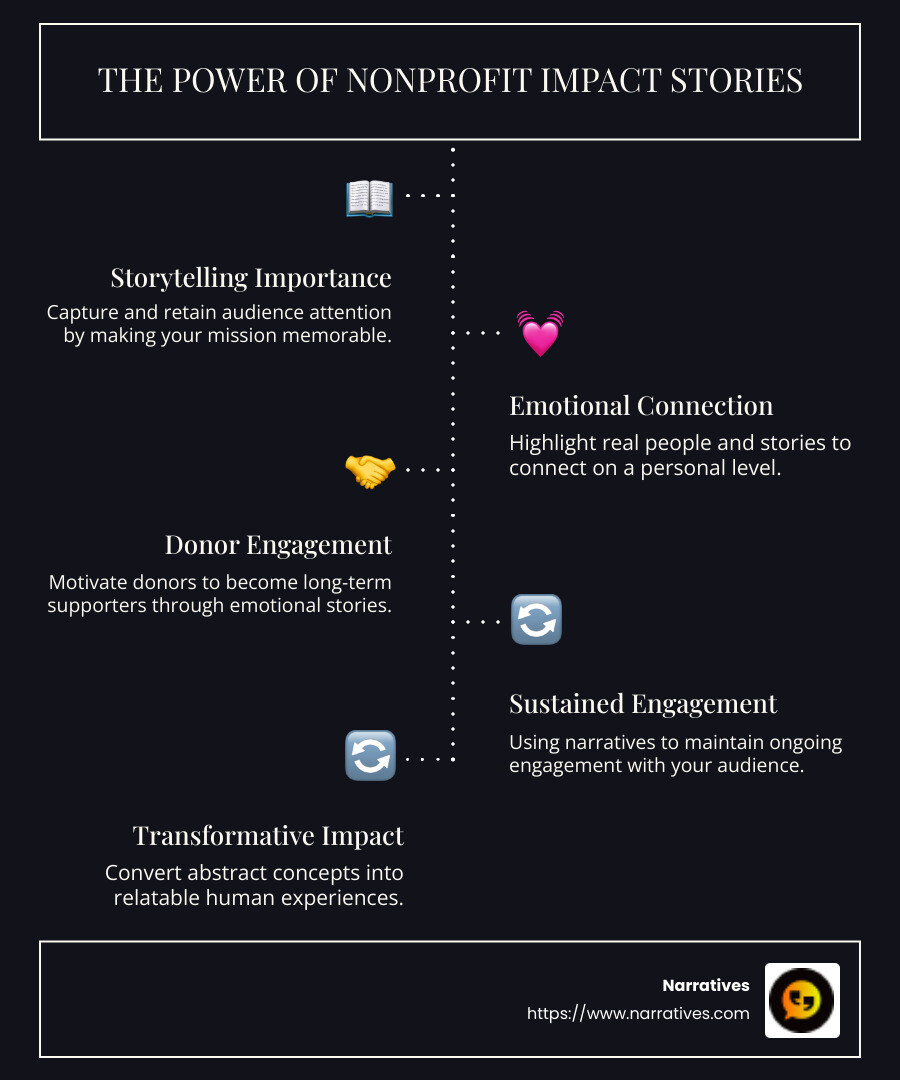
- Storytelling Importance: Good storytelling is vital because it makes your mission memorable. It's not just about what you do but who you help.
- Emotional Connection: Impact stories draw readers in by highlighting real people and their challenges, making your cause personal and urgent.
- Donor Engagement: By connecting on an emotional level, stories motivate donors to contribute and become long-term supporters.
In nonprofits, creating these emotional bonds through storytelling isn't just beneficial; it's essential for sustaining engagement and support.
Simple guide to Nonprofit impact stories:
Understanding Nonprofit Impact Stories
Nonprofit impact stories are narratives that blend anecdotal evidence with quantitative data to illustrate the real-world effects of a nonprofit's work. They go beyond just listing achievements by painting a vivid picture of the change brought about by an organization’s efforts.
What Is an Impact Story?
An impact story is a compelling narrative that shows how a nonprofit's actions lead to tangible change. It combines personal anecdotes with hard numbers to provide a complete picture of success.
Imagine a story about a young girl, Aisha, who gained access to education through a nonprofit program. Her journey from struggling to thriving is not just a tale of personal triumph; it’s supported by data showing increased literacy rates among participants in her community. This combination of personal and statistical evidence makes the story powerful.
The Role of Anecdotal Evidence
Anecdotal evidence brings a face to the statistics. It’s about sharing real stories of real people.
For instance, instead of saying, "Our program helped 500 children," you might tell the story of Carlos, a child whose life changed dramatically. This approach creates a personal connection and makes the impact more relatable.
Why do anecdotes matter? They evoke emotions and empathy, making it easier for readers to see the importance of your work. When people can relate to a personal story, they are more likely to feel connected to the cause and take action.
The Power of Quantitative Data
While stories capture hearts, data convinces minds. Quantitative data provides the hard evidence needed to back up your narrative. It shows the scale and effectiveness of your efforts.
For example, you might highlight that "90% of participants reported improved health outcomes," which supports the anecdotal stories of individuals benefiting from your health program.
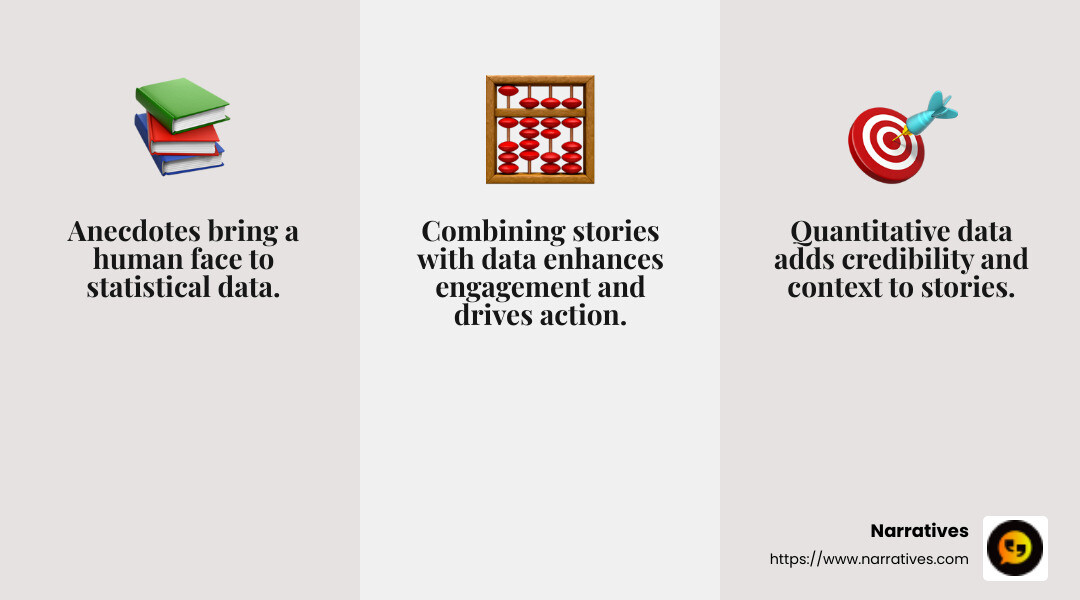
Why is data crucial? It adds credibility and context. Numbers can demonstrate the broader impact and help stakeholders understand the scope of your success. Without data, stories might seem anecdotal and less convincing.
Bringing It All Together
By merging anecdotal evidence with quantitative data, nonprofit impact stories become a powerful tool for engagement. They not only tell what was achieved but also show how it was achieved and why it matters.
These stories are essential for nonprofits looking to build lasting connections with their audience. They turn abstract achievements into personal, relatable experiences, making it easier for people to understand and support your mission.
Crafting Compelling Nonprofit Impact Stories
Creating nonprofit impact stories that resonate requires a thoughtful approach. To reach and engage your audience, focus on three key elements: audience identification, purpose clarity, and storytelling platforms.
Audience Identification
Understanding who your audience is can make or break your story. Are you speaking to potential donors, volunteers, or beneficiaries? Each group will resonate with different aspects of your story.
- Donors might be interested in the long-term impact of their contributions.
- Volunteers could be motivated by stories of personal growth and community involvement.
- Beneficiaries often relate to stories that reflect their own experiences and challenges.
Knowing your audience helps tailor your message, making it more likely to inspire action.
Purpose Clarity
Before you start crafting your story, be clear about its purpose. Ask yourself:
- What do you want to achieve with this story?
- Are you aiming to raise funds, recruit volunteers, or simply raise awareness?
A clear purpose will guide your narrative and ensure that every part of your story aligns with your goals. It helps maintain focus and prevents your story from becoming muddled or losing its impact.
Storytelling Platforms
Choosing the right platform is crucial for reaching your audience effectively. Different platforms have different strengths:
- Social Media: Great for short, impactful stories with visuals. Platforms like Instagram and Facebook can amplify your message quickly.
- Blogs: Ideal for in-depth stories that provide a detailed look at your impact. Blogs can include both narrative and data, offering a comprehensive view.
- Emails: Personalized stories in emails can create a direct connection with your audience. They are perfect for updates and calls to action.
- Videos: Engaging and emotional, videos can bring your stories to life. They’re perfect for sharing on social media and websites.
By selecting the right platform, you ensure your story reaches the right people in the most effective way.
Crafting compelling nonprofit impact stories involves more than just telling a tale. It’s about connecting with the right audience, having a clear purpose, and using the best platform to share your message. These elements work together to create stories that not only inform but also inspire and mobilize your audience.
Steps to Create Effective Nonprofit Impact Stories
Creating effective nonprofit impact stories involves a few crucial steps. Let’s dive into these, focusing on success measures, humanizing data, social ROI, and using a traditional story structure.
Success Measures
Before you can share your impact, you need to know what it is. Establishing success measures involves collecting three types of data:
- Outputs: What was done? This could be the number of meals served or workshops conducted.
- Quality: How well was it done? This might involve feedback from participants or assessments.
- Outcomes: How are participants better off? This could include improved skills or increased well-being.
These data points are your story’s backbone. Without them, even the most emotional narrative can seem speculative. Solid data gives your story credibility and depth.
Humanizing Data
Data alone can be dry. To make it resonate, you need to humanize it:
Use Concrete Details: Specifics help your audience remember and relate to your story. A story about "Sarah, a single mother who learned new skills to support her family," is more memorable than abstract numbers.
Anecdotal Narratives: Start with a personal story full of emotion and tension. Then, back it up with data. This approach hooks your audience emotionally and intellectually.
Individual Journeys: Share stories through the lens of an individual's journey. This gives your audience someone to root for and makes the impact tangible.
Humanizing data allows your audience to connect emotionally, making them more likely to engage and act.
Social Return on Investment (ROI)
Nonprofit impact stories often focus on social ROI rather than financial ROI. This means showing the social good achieved per dollar donated. For example, a pet shelter might highlight how each donation helps rescue and rehome a dog.
By translating outcomes into social ROI, you show donors the tangible impact of their contributions. This clarity can make your organization more appealing to funders looking for meaningful investments.
Traditional Story Structure
Using a traditional story structure makes your impact story familiar and engaging. Here’s a simple framework:
Exposition: Set the scene by introducing the community, urgency, and main characters. Use data to clarify who you serve.
Conflict: Describe the problem your nonprofit addresses. Use demographic data and baseline measures to highlight the need.
Rising Action: Show how your nonprofit works to solve the problem. Include input and output data as evidence of your efforts.
Climax: Highlight the turning point where your efforts result in positive change. Use outcomes and impact data to show improvements.
Falling Action & Resolution: Conclude by linking emotions to your mission and suggesting ways for the audience to support you.
This structure, with a beginning, middle, and end, helps your audience follow and connect with your story, leaving them inspired to act.
By following these steps, you can craft nonprofit impact stories that are not only compelling but also effective in engaging your audience and driving action.
10 Best Practices for Nonprofit Storytelling
Creating powerful nonprofit impact stories isn't just about sharing facts; it's about making connections. Here are ten best practices to help you tell stories that resonate.
1. Conciseness
Keep your stories short and to the point. In today's world, attention spans are short. A concise story is more likely to hold your audience's attention and leave a lasting impression. Use just enough details to convey the message without overwhelming your readers.
2. Specificity
Specific details make stories relatable and memorable. Instead of saying "a person in need," introduce "Carlos, a young artist from Topeka, Wisconsin." Specifics create a vivid picture and help your audience connect emotionally.
3. Multimedia Use
Mix text with visuals like photos, videos, and infographics. People process images faster than words, and multimedia elements can improve understanding and retention. A video of a community event, for instance, can bring your story to life.
4. Quality vs. Quantity
Focus on one powerful story rather than a list of statistics. A single, well-told story about an individual can be more impactful than a broad statement about thousands. It’s the personal touch that moves people to act.
5. Brand Consistency
Align your storytelling tone with your brand. If your organization is upbeat and positive, keep your stories light. If you usually share heartfelt narratives, don’t be afraid to evoke strong emotions. Consistency helps build trust and recognition.
6. Audience Segmentation
Tailor your stories to different segments of your audience. Younger audiences might prefer quick, visual stories on social media, while older donors might appreciate detailed narratives in newsletters. Knowing your audience ensures your message hits home.
7. Statistics Integration
Incorporate statistics to back up your stories. Numbers add credibility and show the scope of your impact. Just make sure to explain what the numbers mean and why they matter. For example, "Thanks to your support, 98% of participants reported improved well-being."
8. Supporter Involvement
Involve your supporters in your stories. Use quotes from volunteers or photos of donors in action. This not only adds authenticity but also makes your supporters feel valued and more connected to your cause.
9. Story Updates
Keep your audience engaged by revisiting stories over time. Show how a beneficiary's life has changed with continued support. These updates remind donors of the ongoing impact of their contributions and can encourage ongoing support.
10. Collaboration
Don't do it alone. Collaborate with your team, supporters, and community to find and tell stories. Different perspectives can enrich your narratives and make them more relatable. Plus, teamwork often leads to more creative and engaging content.
By following these best practices, you can create nonprofit impact stories that not only inform but also inspire action.
Frequently Asked Questions about Nonprofit Impact Stories
What is an impact story?
An impact story is a compelling narrative that showcases the real-world effects of a nonprofit's work. Unlike dry reports filled with data, impact stories weave together facts and personal experiences to create an emotional connection with the audience. These stories often feature individuals or communities who have benefited from the nonprofit's efforts, illustrating the tangible difference the organization makes.
For instance, the Pars Equality Center uses impact stories to highlight how their services empower Persian-speaking immigrants. By focusing on personal journeys and outcomes, they transform abstract goals into relatable, human experiences.
How to write an impact story?
Writing an effective impact story involves several key steps:
Identify Your Audience: Understand who you are speaking to. Tailor your story to resonate with their values and interests.
Define the Purpose: Be clear about what you want to achieve with the story. Are you aiming to raise awareness, inspire action, or demonstrate success?
Choose the Right Platform: Decide where your story will be shared. Different platforms require different approaches—what works for a video might not work for a blog post.
Craft the Narrative: Use a traditional story structure with a clear beginning, middle, and end. Highlight the problem, the solution provided by your organization, and the positive outcome.
Humanize Data: Transform statistics into stories. Instead of saying "500 people were helped," tell the story of one person whose life was changed.
Evoke Emotion: Aim to make your audience feel something—hope, empathy, or inspiration. Emotional connections drive engagement and action.
Why are impact stories important?
Impact stories are crucial for several reasons:
Emotional Connection: They create a personal bond between the audience and the nonprofit's mission. This connection can turn passive readers into active supporters.
Clarity and Engagement: Stories are more engaging than plain data. They make complex work understandable and relatable, which can be especially important in fields that seem abstract or technical.
Increased Donations and Support: By illustrating the tangible difference donors can make, impact stories can motivate people to contribute. As noted in the Comprehensive Guide to Writing Nonprofit Impact Stories, storytelling can transform potential donors into lifelong supporters.
Content Variety: They enrich your content marketing strategy. New stories continually emerge, providing fresh material for newsletters, websites, and reports.
By using these techniques, nonprofits can craft stories that not only inform but also inspire and motivate action.
Conclusion
In nonprofits, storytelling is more than just a tool—it's a powerful bridge that connects hearts and minds. At Narratives, we believe that every organization has a unique story to tell, and we're here to help bring those stories to life through digital storytelling.
Digital storytelling is about more than just sharing information. It's about creating an emotional journey that resonates with your audience. By using high-quality videos and multimedia content, nonprofits can showcase their work in a way that feels personal and impactful. This approach not only highlights the achievements but also underscores the challenges and triumphs of the communities served.
Community-driven storytelling is at the heart of what we do. By elevating underrepresented voices, we ensure that the stories told are authentic and relatable. This authenticity fosters trust and engagement, allowing nonprofits to build deeper connections with their supporters. When communities see themselves reflected in these stories, they become more invested in the mission and more likely to support it.
Nonprofit impact stories are essential for increasing visibility and driving action. They transform abstract goals into tangible outcomes, illustrating the real-world effects of a nonprofit's work. As we've discussed, these stories are not just about data; they're about people—real people whose lives have been changed for the better.
By partnering with Narratives, nonprofits can leverage our expertise to craft stories that inspire, engage, and motivate. We're committed to helping organizations share their impact in a way that resonates deeply with their audience. Whether through video, social media, or written narratives, we're here to ensure your story is heard.
Explore how we can help you share your organization's unique story by visiting our Learn More page. Let's work together to make your impact felt far and wide.


.avif)