Video SEO Unleashed: Strategies to Boost Your Video Rankings
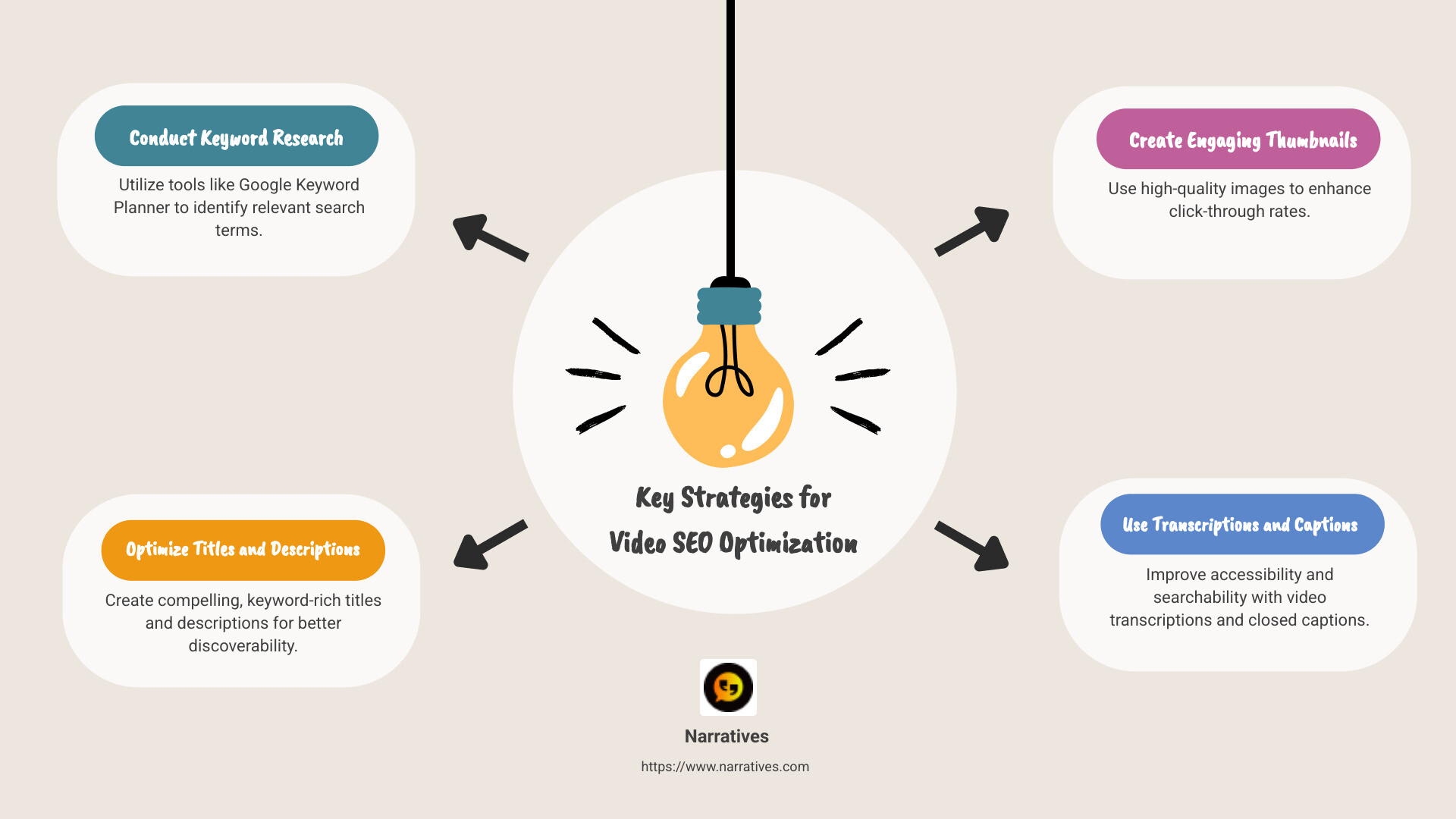
Optimizing video for SEO is a strategic move to ensure your content reaches the right audience through search engines. In a world overflowing with media, ensuring your video is easily findable can be the difference between obscurity and tremendous impact. Here are a few quick points to get your video SEO strategy rolling:
- Conduct Keyword Research: Use tools like Google Keyword Planner to find relevant terms.
- Optimize Video Titles and Descriptions: Make them compelling and keyword-rich.
- Create Engaging Thumbnails: Use high-quality images to boost click-throughs.
- Use Video Transcriptions and Captions: Improve accessibility and searchability.
- Embed Videos on Websites: Increase views and engagement directly from your webpage.
Videos are now essential storytelling tools for non-profits and advocacy groups trying to amplify their message. They serve as a powerful way to connect emotionally with audiences and drive engagement. Yet, merely producing great content doesn't suffice; it must be strategically optimized to reach its intended viewers.
We will explore effective strategies for optimizing your video content to ensure it performs well in search rankings. Whether you're a social impact organization or an agency, these insights will help you lift your story and advance your mission through digital storytelling.
Simple Optimizing video for SEO word guide:
Understanding Video SEO
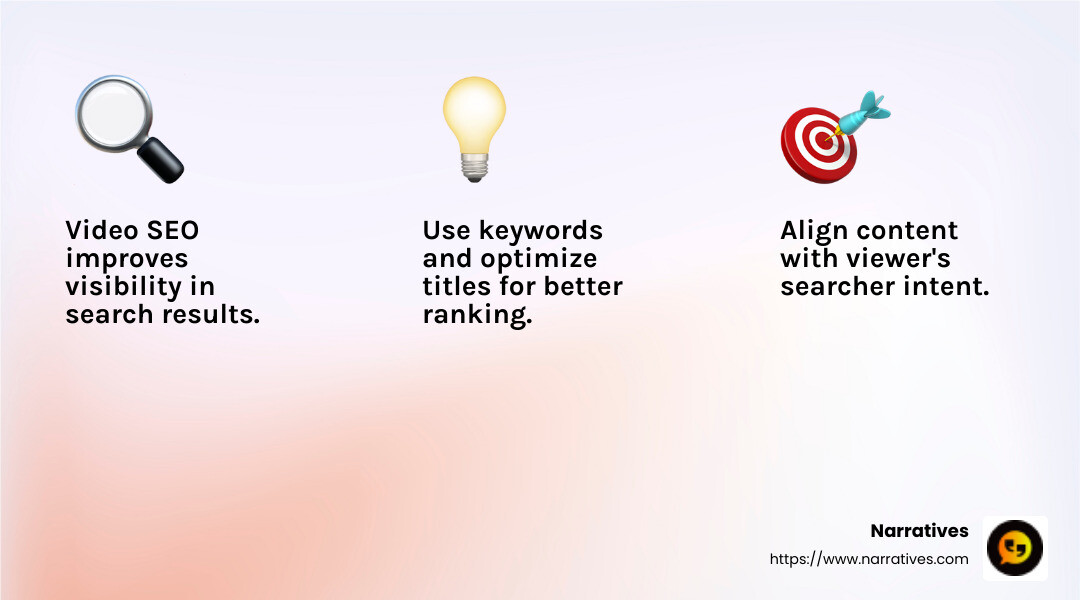
When it comes to video SEO, understanding your audience's searcher intent is key. Think of it as getting into the mind of your viewer. What are they searching for? What problems are they trying to solve? By aligning your video content with these questions, you make it more likely that your videos will appear in search results when someone types in related queries.
What is Video SEO?
Video SEO is the practice of optimizing your video content so that it ranks well on search engines like Google. The goal is to make sure your video appears in search results when someone searches for a topic your video covers. This involves using keywords, optimizing titles and descriptions, and ensuring your content is of high quality.
Understanding Searcher Intent
Searcher intent refers to what the user is really looking for when they type a query into a search engine. For example, if someone searches for "how to plant a tree," they probably want a step-by-step guide. If your video provides that, you're more likely to rank well.
To align your videos with searcher intent:
- Use keyword research tools: Tools like Google Keyword Planner can show you what people are searching for.
- Identify the type of content that ranks: Look at the search results for your target keywords to see what type of content is ranking—are they articles, videos, or a mix?
Crafting Video Content
Creating video content that aligns with searcher intent is crucial. Here are some tips to get started:
- Focus on Quality: High-quality videos with good lighting, clear audio, and engaging storytelling are more likely to be shared and watched.
- Include Transcriptions and Captions: These not only make your video accessible to more people but also help search engines understand your content better.
By understanding and implementing these aspects of video SEO, you can ensure your videos reach the right audience and achieve higher visibility in search results.
Next, we'll dive into how to create high-quality video content that captivates and engages viewers.
Optimizing Video for SEO
When it comes to optimizing video for SEO, three main elements demand your attention: keyword research, video titles, and video descriptions. Each plays a crucial role in ensuring your video content reaches its intended audience and ranks well on search engines.
Keyword Research
Keyword research is the backbone of any SEO strategy, and it's no different for video content. Keywords are the terms your audience uses when searching for content like yours. Identifying these terms helps you tailor your video so it appears in relevant search results.
- Use Tools: Tools like Google Keyword Planner and SEMrush can help you find the right keywords. These tools show you search volumes and competition levels for various keywords, allowing you to choose the most effective ones.
- Understand Searcher Intent: Consider what your audience is looking for. If your video is about "growing tomatoes," make sure to use related keywords that potential viewers might search for, like "tomato planting tips" or "best soil for tomatoes."
Video Titles
Your video title is often the first thing a viewer sees, and it plays a significant role in both attracting clicks and informing search engines about your content.
- Be Descriptive and Concise: Keep your titles under 60 characters to ensure they display fully in search results. Make sure they accurately represent your video’s content.
- Incorporate Keywords Naturally: Use your primary keyword in the title, but make sure it reads naturally and is engaging enough to entice viewers to click.
Video Descriptions
Video descriptions provide more context for both viewers and search engines. They help search engines understand what your video is about, which can improve your ranking.
- Detailed and Keyword-Rich: Aim for descriptions between 200-300 words. This length gives you enough space to include relevant details and keywords without overwhelming the audience.
- Include Calls-to-Action (CTAs): Encourage viewers to like, share, or subscribe. This not only boosts engagement but can also improve your video’s ranking.
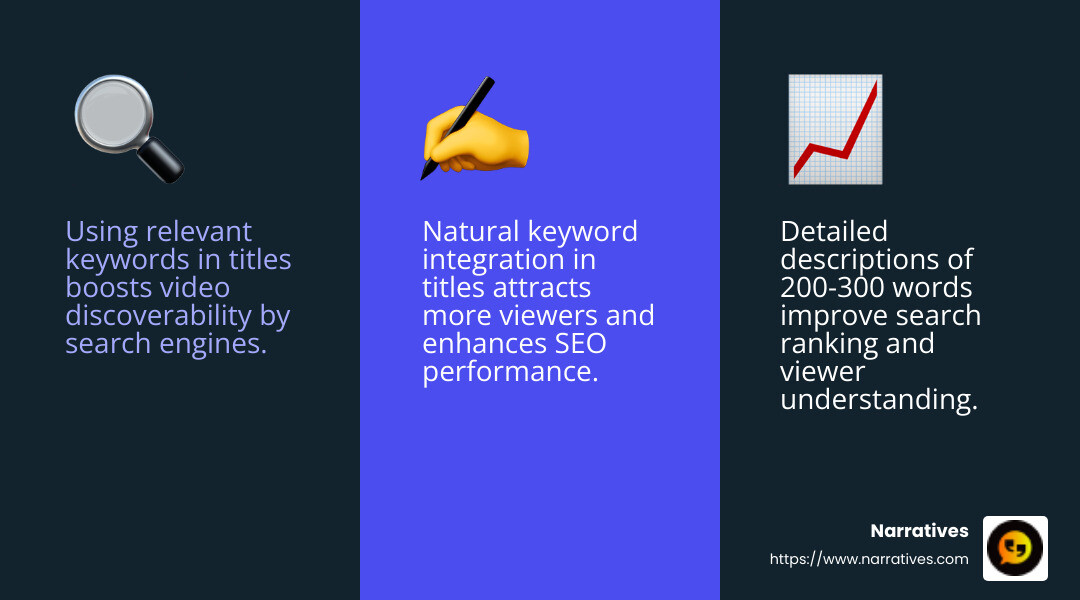
By focusing on keyword research, crafting compelling video titles, and writing detailed video descriptions, you can significantly improve your video's visibility. This approach not only helps with search engine rankings but also ensures your content reaches the right audience.
Now, let's explore how to create high-quality video content that captivates and engages viewers.
Creating High-Quality Video Content
Creating high-quality video content is essential if you want your videos to stand out and captivate your audience. Let's break down what makes a video high quality and how you can achieve it.
High-Quality Videos
High-quality videos are not just about having the latest camera or software. They’re about delivering content that resonates with your audience.
Capture Attention Quickly: The first few seconds are crucial. Start with a strong hook to keep viewers watching. Whether it’s a surprising fact or a compelling question, make sure it grabs attention right away.
Provide Value: Your videos should educate, entertain, or inspire. Always ask yourself: What will my audience gain from watching this? If the answer is clear, your video is more likely to be successful.
Production Standards
Good production standards can lift the perceived quality of your videos. Here are some basics:
Clear Audio: Invest in a good microphone. Clear audio is often more important than high-definition visuals. If your audience can’t hear you, they’ll likely click away.
Proper Lighting: Natural light is great, but if you’re shooting indoors, make sure your lighting setup is adequate. Soft, even lighting can make a big difference in how your video looks.
Steady Camerawork: Use a tripod or stabilizer to avoid shaky footage. Smooth, steady shots make your video look professional.
Viewer Engagement
Engaging your audience is key to keeping them watching and coming back for more.
Interactive Elements: Encourage viewers to engage by asking questions or prompting them to leave comments. This interaction helps build a community around your content.
Consistent Branding: Use consistent colors, fonts, and graphics to create a recognizable brand. This helps viewers associate certain visuals with your content, making it more memorable.
Storytelling: People love stories. Incorporate storytelling elements into your videos to make them more relatable and compelling.
By focusing on these aspects, you can produce high-quality videos that not only meet production standards but also engage and delight your viewers. This foundation paves the way for the next step: implementing effective video SEO strategies to ensure your content reaches its full potential.
10 Proven Video SEO Tips
Conduct Keyword Research
Before you hit "record," it's crucial to understand what your audience is searching for. Keyword research is the backbone of optimizing video for SEO. Use tools like Google Keyword Planner, SEMrush, or Ahrefs to find relevant keywords with a good balance of search volume and competition. This helps ensure your video content aligns with what people are actively searching for.
Optimize Video Titles and Descriptions
Your video title and description act as a billboard for your content. Crafting a compelling title is essential. Keep it under 60 characters to avoid truncation in search results. Include your primary keyword naturally to improve visibility.
In the description, provide a detailed overview of your video, incorporating keywords seamlessly. Aim for 200-300 words to give search engines enough context. Don't forget to add a call-to-action (CTA) to encourage viewers to engage with your channel.
Create Engaging Thumbnails
Thumbnails are the first thing viewers notice. An eye-catching thumbnail can significantly boost your video's click-through rate (CTR). Use high-quality images that accurately represent your video's content. Tools like Canva make it easy to design custom thumbnails that stand out. A great thumbnail can be the difference between a scroll and a click.
Use Video Transcriptions and Closed Captions
Adding transcriptions and closed captions to your videos serves a dual purpose. They make your content accessible to hearing-impaired viewers and provide search engines with more data to index. This can improve your video's chances of appearing in relevant search results. You can create transcriptions manually or use automated services like Rev or Temi.
Embed Videos on Your Website
Embedding your videos on your website can improve your SEO strategy. It provides additional context for search engines and can drive more traffic to your site. Create a video sitemap to help search engines index your videos efficiently. This involves submitting information like the video title, description, and thumbnail URL to Google. Proper embedding ensures your videos are easily findable, maximizing their reach.
By following these proven tips, you can optimize your videos for search engines, ensuring they reach the right audience and achieve the visibility they deserve. Next, we'll explore how to create high-quality video content that keeps viewers engaged and coming back for more.
Frequently Asked Questions about Video SEO
What is Video SEO?
Video SEO is the art of optimizing video content to make it more findable on search engines like Google and YouTube. The goal is to ensure that your videos appear in search results when potential viewers are looking for content related to your niche. By doing so, you increase the chances of attracting more views, subscribers, and traffic to your site.
The process involves several key strategies, such as keyword research, optimizing video titles and descriptions, and creating engaging thumbnails. When done right, Video SEO can significantly boost your video's visibility and reach.
How Can I Optimize My YouTube Channel?
Optimizing your YouTube channel involves a few important steps to ensure that both your channel and its videos are easily findable. Here are some best practices for YouTube SEO:
Channel Keywords: Use relevant keywords that describe the type of content you produce. This helps YouTube understand your channel's focus and target audience.
Channel Description: Craft a concise yet informative description with important keywords. This helps viewers and search engines understand what your channel is about.
Playlists: Organize your videos into playlists based on themes or topics. This not only improves user experience but also increases the chances of your videos being watched consecutively.
Custom Thumbnails: Always use custom thumbnails that are visually appealing and relevant to your video's content. This can significantly improve click-through rates.
Consistent Branding: Maintain consistent branding across your channel, including profile pictures, banners, and video intros. This helps in creating a recognizable and professional image.
What Are the Best Practices for Video SEO?
To make the most of video SEO, consider these best practices:
Focus on Quality Content: Create videos that are informative, engaging, and high-quality. This encourages viewers to watch longer and engage with your content.
Optimize Metadata: Use relevant keywords in your video title, description, and tags. This helps search engines understand your content better.
Engage with Your Audience: Encourage comments, likes, and shares. Engagement signals to search engines that your content is valuable.
Use Transcriptions and Captions: These not only make your videos accessible but also provide additional text for search engines to crawl.
Regularly Update Content: Keep your channel active by regularly uploading new content. This signals to both viewers and search engines that your channel is alive and worth following.
By following these best practices, you can improve your video SEO strategy, making your content more likely to reach and engage the right audience. Next, we'll dig into how to create high-quality video content that captivates viewers and keeps them coming back for more.
Conclusion
At Narratives, we believe in the power of digital storytelling to amplify the voices of non-profits and purpose-driven organizations. Our approach is all about telling stories that resonate emotionally, inspire action, and build trust. By focusing on video SEO, we help these organizations increase their visibility and impact.
Non-profits often face the challenge of getting their message heard in a crowded digital space. This is where video SEO becomes crucial. It's not just about creating videos; it's about ensuring these videos reach the right audience. By optimizing video titles, descriptions, and thumbnails, we make sure that the stories of these organizations are not just told, but also heard.
Our strategy involves using storytelling-related keywords that are often overlooked. This helps us establish domain authority and differentiate from others by focusing on non-profit partnerships and community-driven narratives. We aim to rank for long-tail, high-intent keywords, building consistent, organic traffic that supports both inbound lead generation and brand awareness.
Through our work, we aim to lift underrepresented voices, helping non-profits share their impact stories in a way that inspires action. This is more than just a service; it's a commitment to making a difference through video and multimedia content.
If you're a non-profit or a purpose-driven organization looking to improve your digital storytelling, learn more about how we can help. Let's work together to share your story with the world.


.avif)