Purpose-Driven Marketing: The Heart of Brand Storytelling

Purpose-driven marketing strategies are not just about selling products—they are about connecting deeply with the values and needs of your audience. At its core, this approach involves embedding your mission and values into every aspect of your marketing to foster genuine relationships and build meaningful stories. For organizations focused on social impact, philanthropic efforts, or advocating change, purpose-driven marketing offers a powerful way to tell authentic stories that resonate emotionally and create lasting connections with their audience.
- Align your brand with social values and commitments.
- Build emotional connections by engaging in genuine storytelling.
- Drive community and audience engagement through shared purpose and goals.
This approach isn't solely about doing good; it's strategically beneficial too. By connecting with stakeholders on shared values, brands can generate more trust and loyalty, turning customers into advocates.
We'll explore why purpose-driven marketing is a vital part of brand storytelling and how you can implement it effectively in your own campaigns. Stay tuned as we dig into strategies, examples, and the tangible benefits of aligning your marketing with a deeper purpose.
Important Purpose-driven marketing strategies terms:
The Rise of Purpose-Driven Marketing Strategies
In today's ever-changing world, purpose-driven marketing strategies have become essential for brands seeking to connect with their audiences on a deeper level. Consumers are no longer satisfied with companies that simply offer quality products or services. They want brands that stand for something meaningful and align with their own values.
Social Purpose as a Brand Pillar
A strong social purpose is at the heart of effective purpose-driven marketing. Brands like Salesforce and Accenture have shown that integrating social and environmental values into their core operations not only improves their public image but also contributes to their financial success. These companies have demonstrated that it's possible to be both "for good" and "for profit."
For instance, Burger King's #BKMeltdown campaign aims to eliminate plastic toys from their meals by 2025, reflecting a commitment to environmental sustainability. This move resonates with consumers who prioritize eco-friendly practices.

Consumer Demand for Ethical Brands
The demand for brands with a clear social purpose is driven by consumers, particularly Gen Z, who are passionate about issues like climate change and social justice. This generation uses social media and other digital platforms to hold brands accountable, and they expect companies to take a stand on important issues.
According to a study highlighted by Accenture, over 60% of new-generation consumers are attracted to brands based on their ethical values and purpose. This trend indicates that companies that amplify their positive social and environmental impacts are likely to see increased revenues.
Building Brand Loyalty Through Shared Values
When brands align their values with those of their consumers, they foster a sense of loyalty that goes beyond traditional brand-consumer relationships. By engaging in authentic storytelling and demonstrating a commitment to shared values, brands can turn customers into advocates.
A great example is Under Armour's campaign to promote voter turnout, which not only aligned with the brand's values but also resonated with customers who value civic engagement. This kind of initiative helps build strong emotional connections and improves brand loyalty.
In Summary
Purpose-driven marketing is not just a trend—it's a shift in how brands engage with their audiences. By focusing on social purpose, meeting consumer demands for ethical practices, and building loyalty through shared values, brands can create meaningful connections that drive long-term success.
Key Elements of Purpose-Driven Marketing
Authenticity: The Heartbeat of Trust
Authenticity is crucial in purpose-driven marketing strategies. It's about being genuine and true to what your brand stands for. When a brand is authentic, it resonates with people. They can sense when a company is sincere or just jumping on the latest trend.
A study from Edelman's 2020 Trust Barometer found that 92% of people want their CEO to speak out on issues like diversity and climate change. This shows that authenticity isn't just about words—it's about actions that align with your brand's core values.
Transparency: Building Bridges
Transparency goes hand in hand with authenticity. It's about being open and honest in all communications. Brands that are transparent foster trust and credibility.
PepsiCo, for example, has acceptd transparency by showcasing creativity and supporting emerging artists through their Lifewtr brand. This initiative not only highlights transparency in their operations but also aligns with consumers who value creativity and inspiration.
Shared Values: Creating Connections
Shared values are the backbone of strong brand-consumer relationships. When a brand's values align with those of its audience, it creates a powerful connection. This connection can turn customers into loyal advocates.
A great example of shared values in action is Under Armour's campaign to promote voter turnout. It aligned with the brand's commitment to civic engagement and resonated with consumers who value participation in democracy.
Incorporating authenticity, transparency, and shared values into your marketing strategy can transform how your brand is perceived. It creates a narrative that not only tells your story but also invites your audience to be part of it.
By focusing on these key elements, brands can build trust, foster loyalty, and create meaningful connections that go beyond mere transactions.
Now, let's explore some successful examples of purpose-driven marketing.
Successful Purpose-Driven Marketing Examples
Let's explore some standout examples of purpose-driven marketing strategies that have made a real impact.
Patagonia: Environmental Stewardship
Patagonia is a shining example of a brand that lives its purpose. Known for its commitment to the environment, Patagonia has built its brand around protecting the planet. Their mission statement, "We're in business to save our home planet," is more than just words. It's a call to action.
The #CrudeAwakening campaign is a testament to their dedication. This initiative aimed to protect coastlines from oil spills, and with the support of their community, they helped pass three laws imposing stricter regulations on offshore drilling. Patagonia's efforts show how a brand can lead with purpose and create tangible change.
Dove: Redefining Beauty
Dove's Real Beauty campaign is a classic example of purpose-driven marketing done right. In 2003, Dove conducted a study revealing that only 3% of women considered themselves beautiful. This insight sparked a movement to change perceptions.
The campaign included initiatives like the "Dove Real Beauty Sketches," which highlighted the gap between how women see themselves and how others see them. This powerful message resonated globally, with the "You’re More Beautiful Than You Think" ad going viral and amassing over 85 million views on YouTube.
Dove's approach not only challenged societal norms but also liftd self-confidence, making it a core part of their brand identity for nearly two decades.
Ripple Foods: Plant-Based Progress
Ripple Foods is another brand making waves with its purpose-driven approach. They introduced a milk alternative made from pea protein, targeting not just vegans but traditional milk drinkers. By marketing their product as an environmentally friendly choice, Ripple Foods encouraged consumers to switch from dairy to plant-based alternatives.
Their "Our Progress, Your Impact" campaign highlighted how small changes in consumer habits could lead to significant environmental benefits. Ripple Foods demonstrates that aligning a product with a broader purpose can drive consumer engagement and promote sustainability.
These examples illustrate how purpose-driven marketing strategies can be a powerful tool for brands. By aligning their mission with their marketing efforts, these companies have not only built strong brand identities but also made a positive impact on society.
Next, we'll explore how to implement these strategies effectively in your own business.
How to Implement Purpose-Driven Marketing Strategies
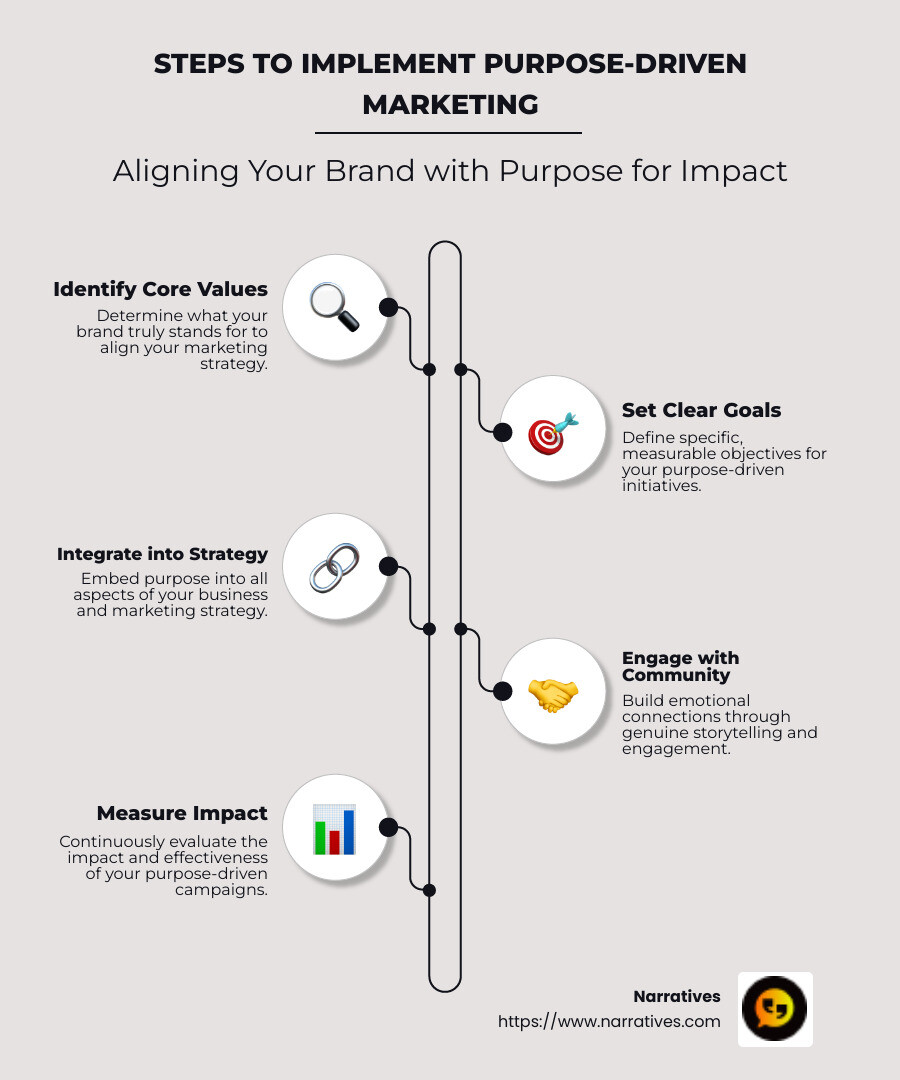
Implementing purpose-driven marketing strategies requires a thoughtful approach. Let's break it down into three key steps: setting clear goals, aligning with core values, and integrating these strategies into your business model.
Set Clear Goals
The first step is to define what you aim to achieve with your purpose-driven marketing. Are you looking to increase brand loyalty, drive social change, or both? Clear goals provide direction and help measure success.
Example: Dove's Real Beauty Campaign
Dove set a clear goal to redefine beauty standards. By focusing on boosting self-esteem, they not only impacted societal perceptions but also strengthened their brand identity.
Align with Core Values
Your marketing strategy must resonate with your brand's core values. This alignment ensures authenticity, a critical component for building trust with your audience.
Example: Patagonia's Environmental Commitment
Patagonia's commitment to environmental stewardship is deeply embedded in its core values. Their campaigns, like #CrudeAwakening, reflect this commitment, creating a consistent and authentic brand image.
Integrate into Business Strategy
Purpose-driven marketing shouldn't be an afterthought; it must be woven into the fabric of your business strategy. This integration ensures that every aspect of your business reflects your purpose, from product development to customer service.
Example: Ripple Foods
Ripple Foods integrates sustainability into its business model by offering plant-based milk alternatives. Their "Our Progress, Your Impact" campaign is a direct reflection of their commitment to environmental sustainability.
Practical Steps for Integration
Develop a Consistent Voice: Ensure your messaging reflects your purpose across all platforms. Consistency builds trust and reinforces your brand's identity.
Identify Your Audience: Understand who shares your values. Create personas to tailor your messaging and engage with your audience meaningfully.
Build Credibility: Establish yourself as a thought leader in your area of purpose. Share stories and insights that highlight your commitment and expertise.
Select the Right Channels: Choose platforms where your audience is most active. Engage them with content that aligns with your purpose.
Track and Adjust: Use key performance indicators (KPIs) to measure the impact of your strategies. Gather feedback to refine your approach and ensure it remains aligned with your goals.
By following these steps, you can effectively implement purpose-driven marketing strategies that resonate with your audience and drive meaningful change.
Next, we'll address some frequently asked questions about purpose-driven marketing.
Frequently Asked Questions about Purpose-Driven Marketing Strategies
What is purpose-driven marketing?
Purpose-driven marketing is a strategy where a brand aligns its values and mission with the needs and values of its audience. This approach goes beyond just selling products or services. It focuses on creating a positive impact on society and building strong emotional connections with customers.
Think of it as a way to show that your brand cares about more than just profits. It's about making a difference and standing for something meaningful. For instance, a company might focus on environmental sustainability, social justice, or community support.
How can purpose-driven marketing benefit my brand?
Purpose-driven marketing can bring numerous benefits to your brand:
Builds Trust and Loyalty: Customers are more likely to support brands that align with their values. By showing commitment to a cause, you can build a loyal customer base that trusts your brand.
Differentiates Your Brand: In a crowded market, having a clear purpose can set your brand apart. It gives customers a reason to choose your products over others.
Drives Long-term Growth: Brands with a strong purpose often see long-term growth. This happens because they attract passionate customers who are willing to support them over time.
Encourages Innovation: Focusing on a purpose can inspire creativity and innovation within your company. It pushes you to find new ways to deliver on your brand's mission.
What are some examples of purpose-driven marketing strategies?
Here are a few examples of brands successfully using purpose-driven marketing strategies:
Dove's Real Beauty Campaign: Dove aimed to redefine beauty standards by promoting self-esteem and positive body image. This campaign resonated with many and strengthened Dove's brand identity.
Patagonia's Environmental Commitment: Patagonia focuses on environmental stewardship. Their campaigns, like #CrudeAwakening, highlight their dedication to protecting the planet, which aligns with their core values.
Ripple Foods' Sustainability Efforts: Ripple Foods offers plant-based milk alternatives as part of their commitment to sustainability. Their "Our Progress, Your Impact" campaign reflects their dedication to reducing environmental impact.
These examples show how integrating purpose into marketing can create impactful campaigns that resonate with audiences.
Next, we'll explore how Narratives uses purpose-driven strategies to create social impact and community-driven storytelling.
Conclusion
At Narratives, we believe in the power of purpose-driven marketing strategies to create meaningful change. Our mission is to lift underrepresented voices and champion social impact through storytelling. We work closely with non-profits and purpose-driven organizations to craft stories that inspire action and foster community-driven storytelling.
Social Impact Through Storytelling
By focusing on social impact, we help organizations share their stories in ways that resonate deeply with their audiences. Our approach goes beyond traditional marketing. We aim to create a ripple effect that not only raises awareness but also drives real-world change.
For example, our work with non-profits often highlights the challenges and triumphs of the communities they serve. This not only builds empathy but also encourages support from individuals who share the same values. When people see the impact of their contributions, it strengthens their connection to the cause.
Community-Driven Storytelling
Community-driven storytelling is at the heart of what we do. We believe that stories have the power to unite people and drive collective action. By giving a voice to those who are often unheard, we create a platform for change.
Our storytelling strategies focus on authenticity and transparency. We ensure that the stories we tell reflect the true essence of the communities we serve. This builds trust and fosters a sense of belonging among audiences.
In conclusion, purpose-driven marketing is not just a strategy; it's a commitment to making the world a better place. At Narratives, we are proud to be part of this movement, using storytelling to drive social impact and build stronger communities.
Learn more about how we can partner with you to create powerful, purpose-driven stories that make a difference. Explore our services and join us in shaping a better future through storytelling.


.avif)