How to Tell Your Brand's Story on Social Media: Tips and Tricks

Storytelling in social media is not just about promoting a brand; it's about creating a connection. When done well, storytelling can transform a faceless brand into an entity that's relatable and trustworthy. This is crucial for non-profit organizations and social impact-driven brands looking to amplify their missions. Here's why storytelling matters:
- Emotional Connection: Stories resonate more than facts. They evoke emotions and help build empathy between a brand and its audience.
- Brand Identity: A compelling story conveys values and mission, giving the brand a unique identity that stands out.
- Increased Engagement: Stories engage and inspire action, whether it's through likes, shares, or community involvement.
In today's digital world, storytelling in social media is an essential tool for marketers, especially those in non-profits and social impact organizations. It turns concepts into compelling narratives that not only inform but inspire action.
Storytelling in social media word roundup:
Understanding Storytelling in Social Media
Social media storytelling is an art and a science. It involves crafting stories that resonate with your audience on platforms like Instagram, Facebook, or Twitter. The goal is to create an emotional connection that fosters engagement and builds community.
Emotional Connection
Stories have a unique power to evoke emotions. This emotional pull is what makes storytelling so effective in social media. When audiences feel something, they are more likely to remember and engage with your content. A story that touches the heart can transform a simple post into a memorable experience.
For instance, during the coronavirus outbreak, many brands shared stories of their efforts to help those in need. These narratives not only showcased their social responsibility but also generated a wave of appreciation and loyalty from their audience.

Audience Engagement
Engaging your audience is more than just getting likes or shares. It's about creating a dialogue and building a community. When you tell a story that resonates, your audience is more likely to interact with your content, share it, and even contribute their own stories.
To achieve this, it's crucial to understand your audience. Use social listening tools to uncover what topics resonate with them and analyze the sentiment around your brand. This insight helps you craft stories that not only capture attention but also encourage participation.
- Tip: Encourage your audience to share their own experiences related to your story. This not only boosts engagement but also enriches your brand narrative with diverse perspectives.
Building Trust Through Authenticity
Authenticity is key in social media storytelling. Audiences are savvy and can spot insincerity from a mile away. Share real stories from within your organization, such as behind-the-scenes content or employee testimonials. This transparency fosters trust and strengthens your brand's credibility.
By focusing on authentic stories that evoke emotions and engage audiences, brands can create a powerful presence on social media. This approach not only improves brand identity but also builds lasting relationships with the audience.
Key Techniques for Effective Storytelling
Using Feedback from Your Audience
Storytelling in social media thrives on authenticity and emotional resonance. But how do you ensure your stories hit the mark? By listening to your audience.
Audience Insights and Social Listening
To craft stories that truly resonate, you need to understand your audience's desires and concerns. Social listening is your best friend here. By monitoring comments, mentions, and direct messages, you can gather invaluable insights into what your audience loves and what they wish to see more of.
For example, when Cava noticed a surge in comments about their roasted sweet potatoes, they responded with a video celebrating the return of this fan favorite. This not only delighted their audience but also reinforced Cava's commitment to listening and adapting to customer feedback.
Narrative Techniques and Emotional Weight
Once you have your audience insights, it's time to weave them into your storytelling. Use classic narrative techniques to construct a compelling story arc:
- Characters: Introduce relatable characters, whether they're your employees, customers, or even your brand itself.
- Conflict and Resolution: Every good story needs a problem and a solution. Highlight how your brand or product resolves a common issue your audience faces.
By incorporating these elements, you can create stories with emotional weight that leave a lasting impression.
Authenticity is crucial. Audiences crave genuine stories that reflect real experiences and values. Avoid jumping on trends just for the sake of it. Instead, focus on your brand's unique narrative. Patagonia, for example, stays true to its values of environmentalism and quality, which resonates deeply with its audience.
- Tip: Share behind-the-scenes content or personal stories from your team to add a layer of authenticity to your brand narrative.
Engagement Through Collaboration
Finally, involve your audience in the storytelling process. Encourage them to share their experiences and perspectives related to your brand. This not only enriches your narrative but also fosters a sense of community and belonging.
By using audience feedback and focusing on authenticity, you can craft stories that not only engage but also build trust and loyalty. This approach transforms your audience from passive consumers into active participants in your brand's journey.
8 Storytelling Frameworks for Social Media
Crafting engaging stories on social media can seem daunting. However, utilizing established storytelling frameworks can simplify the process and improve your brand's narrative. Let's explore eight effective storytelling frameworks you can use right away.
1. The Before-and-After Method
This framework is straightforward and impactful. You start by describing a problem your audience faces. Then, paint a picture of an ideal scenario—what life could be like without this problem. Finally, present your solution that bridges the gap between the current struggle and the desired outcome.
- Ideal for: Email campaigns, promotional offers, or blog links.
- Example: A LinkedIn post by James Parry effectively uses this method by stating, "the world is your oyster," presenting the solution in the same breath.
2. The Monomyth (Hero’s Journey)
In a monomyth, the hero starts on a journey, faces challenges, and emerges transformed. This narrative taps into universal themes of struggle and triumph, making it relatable and inspiring.
- Ideal for: Personal stories or case studies.
- Example: Consultant Elizabeth Dankoski shares her journey to success in a compelling video, highlighting her change.
3. Simon Sinek’s Golden Circle
This framework emphasizes starting with "why"—the intrinsic motivation behind your brand. It’s not just about what you do, but why you do it. This can be a powerful way to connect with your audience on a deeper level.
- Ideal for: Brand mission statements or vision-focused content.
- Example: Use this framework to uncover and share the core purpose driving your brand’s actions.
4. Emotional Stories
Stories that evoke emotions are memorable and shareable. Tap into feelings of joy, sadness, or surprise to create a connection with your audience.
- Ideal for: Customer testimonials or brand milestones.
- Example: Share a heartfelt customer story that highlights how your product made a difference in their life.
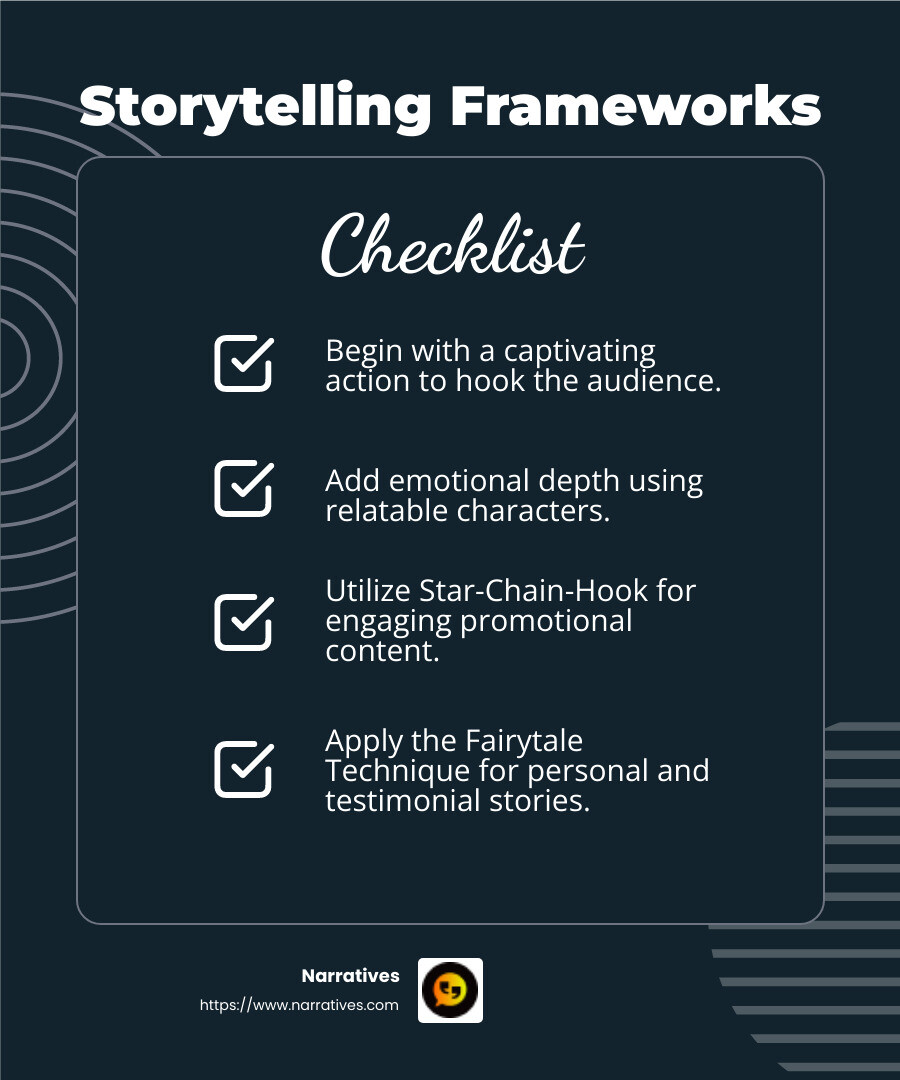
5. Action Start
Begin your story with an action or event that grabs attention immediately. This approach pulls readers in and encourages them to keep reading or watching.
- Ideal for: Social media posts and videos.
- Example: Start a post with "Today, we..." to create intrigue and engagement from the first sentence.
6. Emotional Weight
Adding emotional weight to your stories ensures they resonate. Use relatable characters and real-life scenarios to make your narrative impactful.
- Ideal for: Brand stories and product launches.
- Example: Craft a narrative around a common problem your audience faces and how your brand provides a solution.
7. Star-Chain-Hook
This method involves starting with a positive opening (Star), followed by a series of benefits or facts (Chain), and closing with a call-to-action (Hook).
- Ideal for: Promotional content and tips.
- Example: Coach Trace Fisher’s posts often use this structure to engage and inform.
8. The Fairytale Technique
This age-old storytelling method starts with "Once upon a time" and leads to a happy ending. It's simple, engaging, and universally understood.
- Ideal for: Personal stories and client testimonials.
- Example: Business coach Justin Welsh uses this technique to outline his journey, culminating in a positive outcome.
By leveraging these storytelling frameworks, you can create compelling narratives that captivate your audience and improve your brand's presence on social media.
Leveraging Social Media Platforms for Storytelling
Storytelling in social media is all about using the right platforms to share your brand's narrative. Each platform has its unique strengths and audience preferences. Let's explore how you can use these platforms effectively.
Platform-Specific Strategies
1. Instagram
Instagram is a visual platform, perfect for sharing stories through images and short videos. Use Instagram Stories and Reels to share behind-the-scenes content, customer testimonials, or product launches. The ephemeral nature of Stories creates a sense of urgency and excitement.
2. Facebook
Facebook's vast user base makes it ideal for reaching a broad audience. Use Facebook Live to engage with your audience in real-time. Share long-form content through posts or videos to tell in-depth stories. Facebook's algorithm favors content that sparks conversation, so encourage comments and shares.
3. LinkedIn
LinkedIn is the go-to platform for B2B storytelling. Share professional success stories, case studies, or industry insights. Use LinkedIn Articles to dive deeper into your brand's mission and values. Highlight employee achievements to add a human touch to your brand.
4. Twitter
Twitter is great for real-time storytelling. Use Twitter threads to unfold a narrative over several tweets. Engage with trending topics and hashtags to increase visibility. Short, impactful stories work best here, so keep your messages concise.
Video Content
Video content is king when it comes to storytelling. It captures attention and conveys emotions effectively. Did you know that 85% of internet users in the US watch video content monthly?
- YouTube: Create a series of videos about your company, employees, or customers. Keep videos short but high-quality to maintain interest.
- Instagram Reels and TikTok: Use these platforms for creative, fun, and engaging short videos. They're perfect for showcasing your brand personality and connecting with a younger audience.
Multimedia Storytelling
Combining different media types can enrich your storytelling. Use images, videos, and text together to create a more engaging experience.
- Infographics: These are great for breaking down complex information into digestible visuals. Use them to share statistics or success stories.
- Slideshows: Platforms like Instagram and LinkedIn allow you to post multiple images in a carousel, perfect for step-by-step guides or showcasing product features.

By tailoring your storytelling approach to each platform, you can maximize engagement and connect with your audience more effectively. Next, we'll explore frequently asked questions about storytelling in social media.
Frequently Asked Questions about Storytelling in Social Media
What is brand storytelling?
Brand storytelling is the art of creating a narrative around your brand that resonates with your audience. It's not just about selling products; it's about sharing your brand's values, mission, and the impact you make. This storytelling approach helps build a strong emotional connection with your audience, making them more likely to engage with your brand.
Brand storytelling can take many forms, such as sharing customer success stories, highlighting employee achievements, or showcasing your brand's history and evolution. The key is to be authentic and consistent in your messaging. When done right, brand storytelling can transform your audience into loyal brand advocates.
How can storytelling boost social media engagement?
Storytelling in social media is a powerful tool for boosting engagement because it taps into the emotional side of your audience. When people connect emotionally with a story, they are more likely to comment, share, and engage with the content. This increased interaction can lead to higher visibility on social platforms, as algorithms often favor content that generates conversation.
According to a Q2 2024 Sprout Pulse Survey, over 40% of consumers will unfollow brands whose values don't align with their own. This highlights the importance of aligning your storytelling with your audience's values to maintain engagement.
Using narrative techniques like characters, conflict, and resolution can make your stories more compelling. Additionally, incorporating feedback from your audience through comments and social listening can help refine your storytelling approach, ensuring it resonates with your target audience.
What are some examples of successful storytelling campaigns?
Several brands have mastered the art of storytelling in social media, creating campaigns that resonate with their audiences. Here are a few noteworthy examples:
Dove: Dove's campaigns focus on real people rather than celebrities, making their stories relatable and authentic. Their emphasis on real beauty and self-esteem has struck a chord with audiences worldwide.
Nike: Nike's cause-driven campaigns, such as their Equality campaign, use the power of sport to address social issues like discrimination and equality. By partnering with influential athletes, Nike has successfully positioned itself as a brand that stands for more than just products.
Intel: Intel uses Instagram to share stories about their company, founders, and products. By highlighting their achievements and milestones, Intel builds trust and respect with their audience.
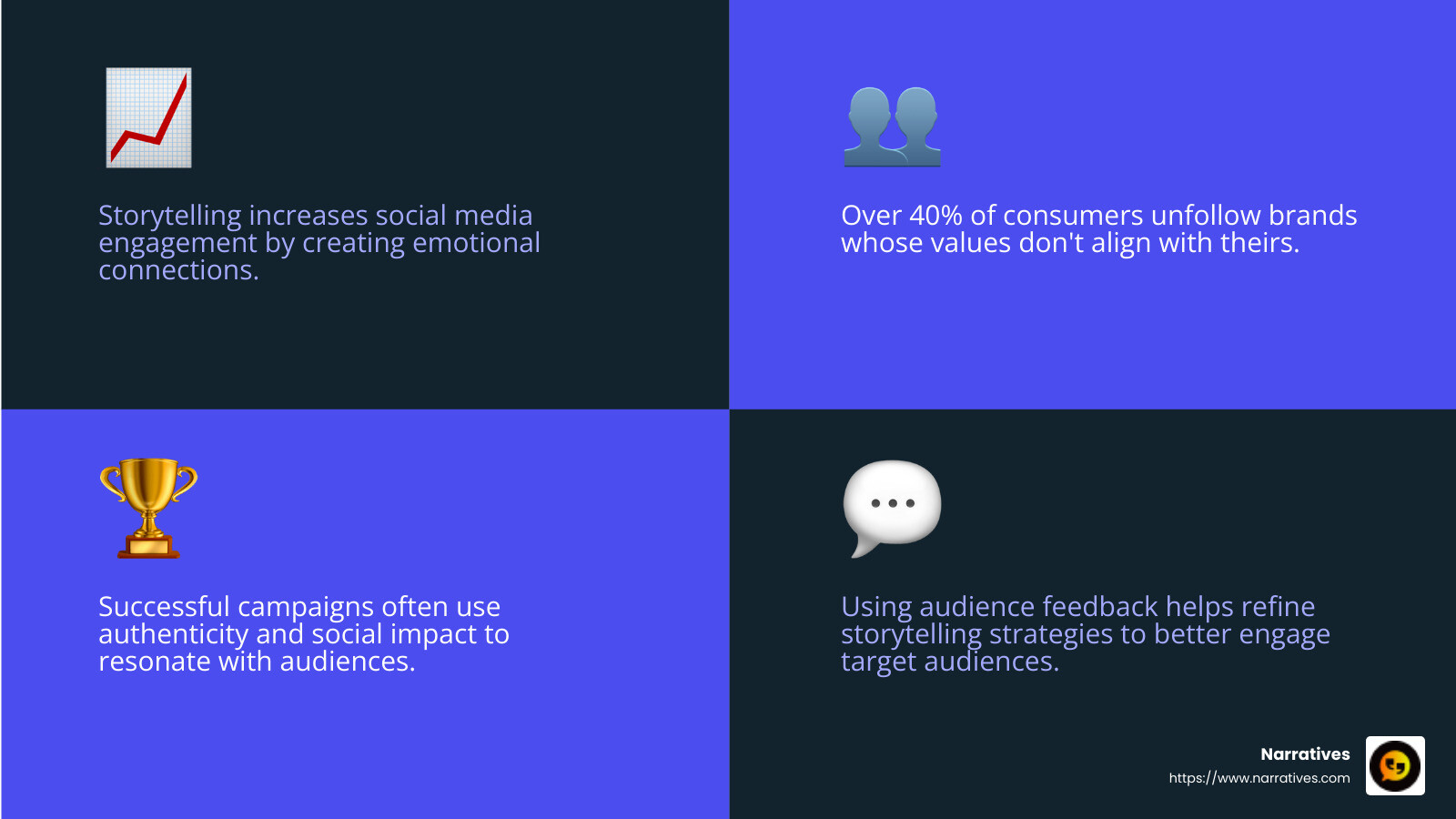
These examples demonstrate how storytelling can lift a brand's presence on social media, creating a deeper connection with their audience. By focusing on real stories and aligning with audience values, brands can achieve remarkable engagement and loyalty.
Conclusion
In today's digital world, purpose-driven storytelling is more important than ever. It's not just about sharing your brand's features or benefits; it's about creating narratives that resonate deeply and inspire action. At Narratives, we believe in the power of storytelling to amplify underrepresented voices and drive community impact.
Narratives takes pride in partnering with non-profits and purpose-driven organizations to craft stories that matter. By focusing on emotionally resonant content, we help these organizations share their impact in a way that builds trust and increases visibility. Our approach is all about elevating voices and highlighting the real stories behind the statistics.
Purpose-driven storytelling is not just a marketing tool; it's a way to foster genuine connections and build communities. When brands share their values and challenges authentically, they invite their audience to be part of a larger movement. This creates a sense of belonging and motivates audiences to engage and support.
As we continue to steer the evolving digital landscape, the key to successful storytelling lies in adaptability. Embracing new technologies, staying true to authenticity, and championing sustainability are essential. Brands that can transform their narratives into community-driven movements will lead the way in creating meaningful change.
At Narratives, we are committed to being your digital storytelling partner, helping you share your unique story with the world. Together, we can create narratives that not only captivate but also inspire and drive positive action.
Learn more about how we can help you tell your story effectively on our service page. Let's work together to make a difference through storytelling.


.avif)