Telling Stories That Matter: A Guide to Meaningful Narratives

Telling stories that matter is about more than just entertaining tales. It's a powerful tool for connection and community building.
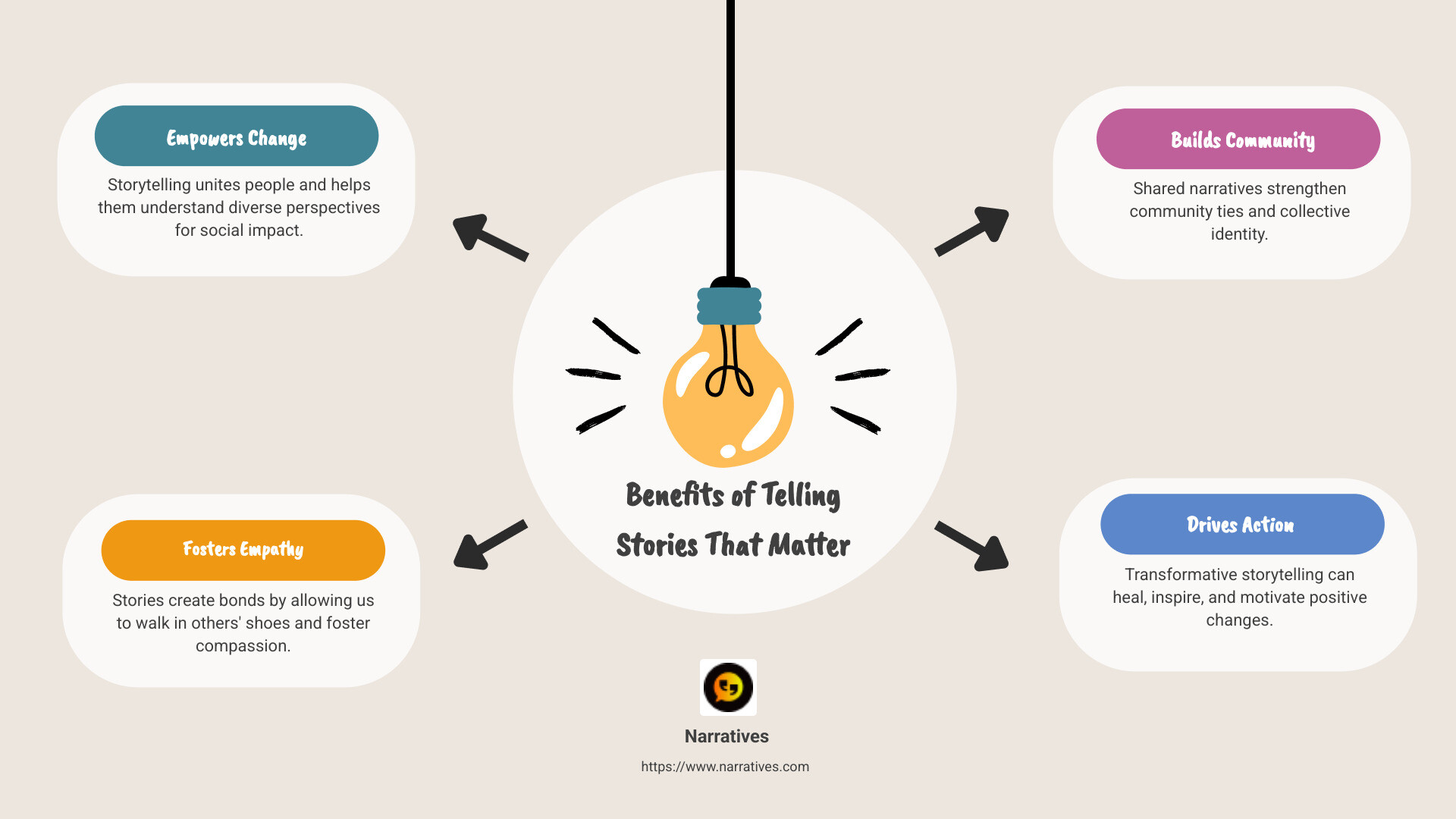
- Empowers change: Storytelling brings people together, helping them understand diverse perspectives and unite for social impact.
- Fosters empathy: Stories create bonds by letting us walk in others' shoes, fostering compassion.
- Builds community: Shared narratives strengthen community ties and collective identity.
Storytelling isn't just for enjoyment. It's a transformative force that can heal, inspire, and drive action. By sharing relevant and meaningful stories, organizations can amplify their mission and impact their communities positively.
In the current climate of identity crises and social divides, stories have the unique power to bridge gaps and challenge injustices. Whether weaving narratives for social advocacy, diversity initiatives, or community building, storytelling is a tool for creating change.
Similar topics to Telling stories that matter:
- Digital storytelling techniques
- digital and multi platform storytelling
- innovative digital storytelling products and platforms
The Science Behind Storytelling
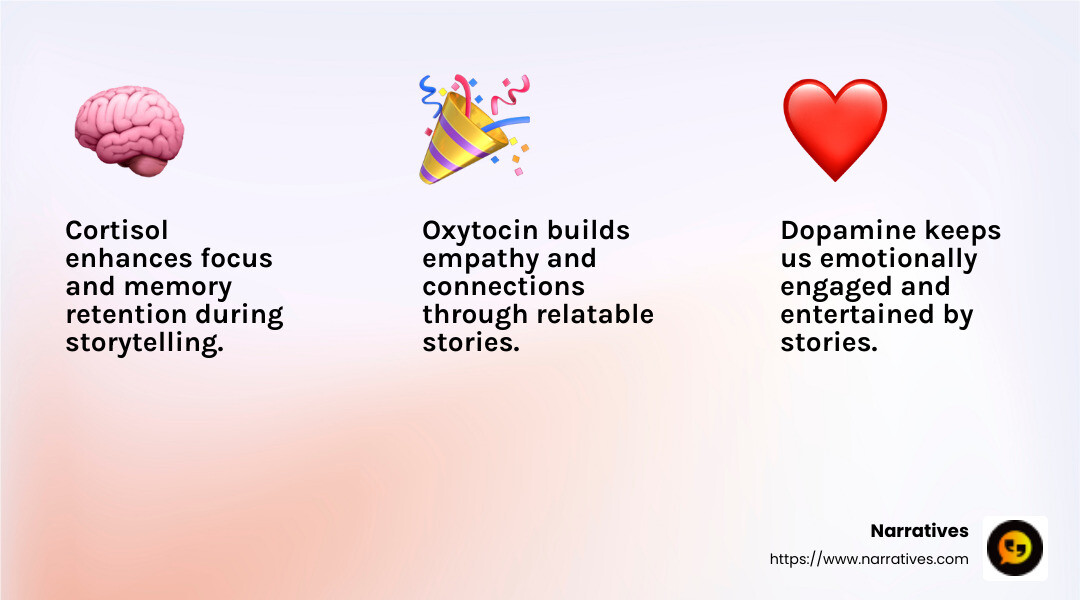
Stories aren't just words; they're a complex dance of chemicals in our brains. When we hear a story, our brains release cortisol, dopamine, and oxytocin. These chemicals play a crucial role in how stories affect us.
Cortisol: The Memory Maker
Cortisol helps us focus and remember details. When a story grabs our attention, it's cortisol at work. This hormone ensures we remember the key points, making storytelling a powerful tool for conveying important messages.
Dopamine: The Engagement Engine
Dopamine is all about pleasure and engagement. When a story excites us or keeps us on the edge of our seats, that's dopamine doing its job. It improves our emotional response and keeps us hooked, which is why stories are so captivating.
Oxytocin: The Empathy Builder
Oxytocin is often called the "love hormone." It fosters trust and empathy. When a story moves us, makes us feel connected to the characters, or brings us closer to the storyteller, it's oxytocin working its magic. This connection is what makes storytelling such a powerful tool for building relationships and communities.
Telling stories that matter is about leveraging these chemicals to create meaningful connections. By understanding the science behind storytelling, we can craft narratives that not only captivate but also inspire change and foster empathy.
In the next section, we'll explore how to identify and craft powerful stories that resonate with audiences on a deeper level.
Identifying and Crafting Powerful Stories
Telling stories that matter starts with identifying narratives that resonate with people on a personal level. Stories of personal change, courage, and authentic emotion are the backbone of powerful storytelling.
Personal Change: The Catalyst for Connection
Stories of personal change are compelling because they mirror our own journeys. They show growth, change, and the challenges faced along the way. When we hear about someone overcoming obstacles, it inspires us to tackle our own challenges.
Consider the story of Quan Huynh, who transformed from a prison lifer to a successful entrepreneur. His journey is a testament to the power of personal change. By sharing such stories, we can inspire others to believe in the possibility of change and growth.
Courage: The Heart of Heroism
Courageous stories captivate because they involve risk and bravery. They often highlight individuals stepping out of their comfort zones to make a difference. These stories are not just about the absence of fear but about taking action despite it.
A powerful example is the story of Haris Shirzai and his family, who faced immense challenges seeking asylum. Their courage in the face of adversity shines a light on the human spirit’s resilience. Sharing stories of courage can motivate others to act bravely in their own lives.
Authentic Emotion: The Bridge to Empathy
Authentic emotion is the glue that holds a story together. It’s what makes a narrative relatable and moving. When storytellers show vulnerability and genuine feelings, they create a space for empathy and connection.
"Stories empower and enrich us and can help us build communities to challenge injustices, build potential, and realize the power of change."
To craft stories with authentic emotion, focus on real experiences and feelings. Whether it’s joy, sorrow, or hope, conveying these emotions honestly invites the audience to connect on a deeper level.
By focusing on personal change, courage, and authentic emotion, we can craft stories that not only captivate but also inspire and transform. In the next section, we’ll dig into techniques for effective storytelling, exploring how to use first-person narratives, vulnerability, and authenticity to make your stories resonate even more.
Telling Stories That Matter
Telling stories that matter is about embracing diversity, traditions, and customs. These elements enrich narratives and create connections that transcend boundaries.
Embracing Diversity
Diversity in storytelling means including voices and perspectives from different backgrounds. It’s about recognizing and celebrating the unique experiences that shape individuals and communities.
Consider the story of Melani Douglass, a descendant of Frederick Douglass. Her narrative intertwines her rich family heritage with her personal aspirations. By sharing diverse stories like hers, we can foster understanding and empathy among different cultures.
Celebrating Traditions
Traditions are the threads that weave communities together. They provide a sense of continuity and belonging. Sharing stories about traditions helps preserve cultural heritage and pass it on to future generations.
For example, the Pars Equality Center supports Persian-speaking immigrants by highlighting their cultural practices. This not only honors their past but also strengthens their identity in a new environment.
Honoring Customs
Customs are the everyday practices that define a community’s way of life. They offer insight into values and beliefs. When we share stories about customs, we invite others to learn and appreciate different ways of living.
Storytelling about customs can be as simple as explaining a traditional meal or a unique celebration. These narratives open doors to dialogue and mutual respect.
By focusing on diversity, traditions, and customs, we can tell stories that connect us all. In the next section, we’ll explore techniques for effective storytelling, including the power of first-person narratives and the importance of vulnerability and authenticity.
Techniques for Effective Storytelling
To tell stories that truly resonate, consider using these techniques: first-person narrative, vulnerability, and authenticity. These elements can transform a simple tale into a powerful connection between the storyteller and the audience.
First-Person Narrative
First-person narratives are compelling because they bring stories to life through personal experience. When a storyteller uses "I," it creates an immediate connection with the audience. This approach allows for a deeper exploration of personal change and the emotions involved.
For example, in the nonprofit sector, individuals often say, "I am not the story." Yet, when they share their personal journeys, they reveal vulnerabilities and triumphs that engage and inspire. Encouraging first-person storytelling empowers both the storyteller and the audience to connect on a human level.
Embracing Vulnerability
Vulnerability is about showing the parts of ourselves we often hide. It's about sharing failures and uncertainties, not just successes. Stories of failure are particularly impactful because they highlight resilience and the lessons learned along the way.
In social change, not every initiative succeeds immediately. Sharing these stories of trial and error can provide valuable insights and inspire others to take risks. A story without a happy ending is simply one whose ending hasn't arrived yet.
Authenticity
Authenticity means being genuine and true to oneself in storytelling. It involves sharing real emotions and experiences without embellishment. Authentic stories are relatable and foster trust.
Consider the storytelling approach of Melani Douglass, who shares her rich family heritage intertwined with her personal dreams. Her authenticity allows others to connect with her narrative on a deeper level, fostering empathy and understanding.
By incorporating first-person narratives, embracing vulnerability, and maintaining authenticity, storytellers can create impactful and meaningful connections. These techniques help craft narratives that are not only heard but felt, encouraging audiences to engage and reflect.
In the next section, we’ll address common questions about storytelling, including how to make stories more interesting and the qualities that define a good storyteller.
Frequently Asked Questions about Storytelling
How to tell more interesting stories?
Telling stories that matter starts with focusing on the elements that captivate your audience. Here are a few tips to make your stories more engaging:
Start with a hook: Grab attention from the first sentence. Use an intriguing fact, a surprising question, or a vivid description to draw listeners in.
Use vivid details: Paint a picture with your words. Describe scenes, emotions, and actions in a way that allows your audience to visualize and feel the story.
Include conflict or tension: Every compelling story has a challenge or obstacle. This keeps the audience invested in finding out how it will be resolved.
End with a takeaway: Leave your audience with something to ponder. It could be a lesson learned, a call to action, or a thought-provoking question.
What are the qualities of a good storyteller?
A good storyteller possesses several key qualities that help them connect with their audience:
Empathy: Understanding and sharing the feelings of others makes stories relatable and meaningful.
Authenticity: Being genuine and true to oneself builds trust and engagement with the audience.
Adaptability: Being able to adjust the story to fit the audience and context ensures relevance and connection.
Passion: Enthusiasm for the story and its message is contagious and captivates listeners.
How can storytelling inspire meaningful conversations?
Storytelling is a powerful tool for sparking dialogue and fostering understanding. Here's how it can inspire meaningful conversations:
Shared experiences: Stories that highlight common experiences can bring people together and open up discussions about shared values and goals.
Diverse perspectives: Sharing stories from diverse voices and backgrounds enriches conversations and broadens understanding.
Emotional connection: Stories that evoke emotions can lead to deeper, more personal conversations about feelings and beliefs.
Challenging norms: Stories that question the status quo can provoke thought and encourage discussions about change and innovation.
By understanding these aspects of storytelling, you can craft narratives that not only engage but also inspire and connect people on a deeper level. In our next section, we'll dig into the conclusion, discussing the role of narratives in social impact and community-driven storytelling.
Conclusion
Narratives are more than just stories; they are powerful tools for social impact and community-driven storytelling. At Narratives, we believe in the transformative power of storytelling to lift underrepresented voices and create meaningful change.
The Role of Narratives in Social Impact
Stories have the unique ability to bridge gaps and foster understanding. By highlighting diverse perspectives and experiences, narratives can challenge stereotypes and promote empathy. This is especially important in social impact work, where understanding and addressing complex issues is crucial.
For example, sharing the personal journey of a community leader can illuminate the struggles and triumphs of a broader group, inspiring others to take action. As seen in the work of organizations like charity: water, storytelling can evoke empathy and drive support for critical causes. By focusing on authentic, emotionally resonant content, we can help non-profits share their impact stories in a way that inspires action, builds trust, and increases visibility.
Community-Driven Storytelling
Community-driven storytelling is about giving a voice to those who are often unheard. It's about creating a platform where people can share their own stories, in their own words. This approach not only empowers individuals but also strengthens community bonds.
When people see their stories reflected in the media, they feel valued and heard. This can lead to a greater sense of belonging and community engagement. By partnering with non-profits and purpose-driven organizations, Narratives aims to create content that resonates deeply with audiences and fosters a sense of community.
In conclusion, telling stories that matter is at the heart of what we do at Narratives. By focusing on social impact and community-driven storytelling, we strive to create a world where every voice is heard, and every story is valued.
Ready to start your storytelling journey? Explore our services and see how we can help you share your story with the world.


.avif)