Community Crafting: A Guide to Building Engaging Online Spaces

Building online communities is akin to planting seeds for a bountiful harvest of brand loyalty. But why is this so crucial today?
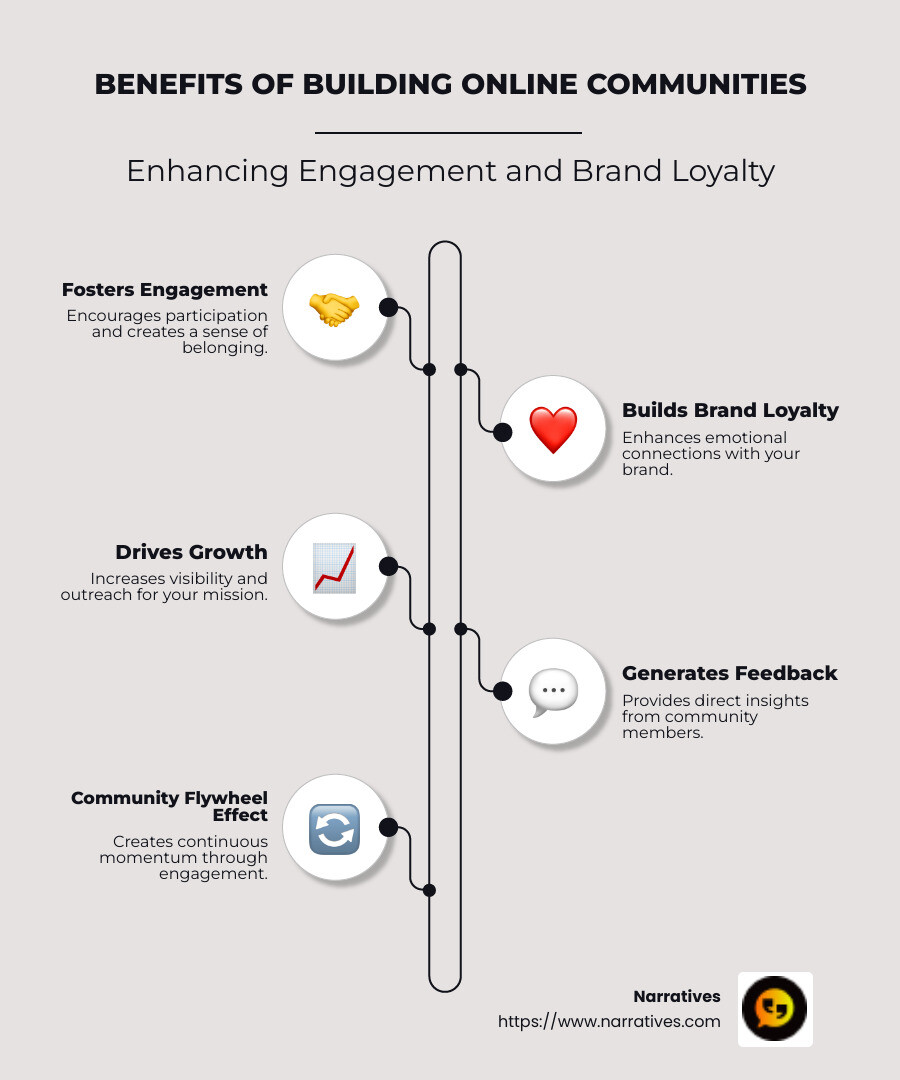
- Fosters Engagement: Communities encourage participation and create a sense of belonging among members.
- Builds Brand Loyalty: Dedicated communities improve emotional connections with your brand.
- Drives Growth: Active communities can lead to increased visibility and outreach for your mission.
- Generates Feedback: Direct insights from community members help refine strategies and initiatives.
In today's digital era, understanding the mechanics of cultivating these spaces can be a game-changer for organizations focused on social impact and storytelling. The community flywheel is a concept that emphasizes the continuous momentum and growth of online communities through active member engagement and dynamic interactions. When executed effectively, this approach not only builds strong brand loyalty but also nurtures a vibrant ecosystem where ideas can flourish and missions can gain widespread support.
The essence of a thriving online space lies in its ability to foster genuine connections and resonate with like-minded souls ready to champion a cause. It is where engagement, trust, and advocacy converge to create lasting relationships and meaningful impact.
Building online communities word roundup:
- Digital marketing for social causes
- Social media video storytelling
- Inbound lead generation strategies
Understanding the Purpose of Building Online Communities
Start with Why
The first step in building online communities is understanding the "why" behind them. Knowing your purpose is like setting a compass for your journey. It guides every decision you make and ensures your community aligns with your organization's goals.
Jenny Sowyrda, Manager of Community Strategy and Operations at HubSpot, emphasizes the importance of a clear goal and mission statement. She says, "Know why you’re building a community (from a business perspective) and who you’re building a community for. You should have a clear goal and mission statement and understand what perspective and expertise you bring to this persona that another community isn’t or couldn’t." 
Audience Needs
Once you have clarity on your purpose, the next step is understanding your audience's needs. Alyssa Martin from HeyOrca advises, “My top tip for building a community online is to make sure that you fully understand who your community is before starting."
Recognizing what your audience is passionate about and the challenges they face helps you tailor your community to serve them effectively. This understanding guides you in choosing the right content, communication style, and activities that resonate with your community members.
Community Goals
Setting clear community goals is crucial. These goals should align with both your organization's objectives and the needs of your audience. For example, if your aim is to boost engagement, creating spaces for open dialogue and feedback is essential. If brand awareness is your goal, encouraging word-of-mouth recommendations can be a powerful strategy.
A study from the University of Michigan found that customers are more likely to spend more after joining a company’s online community. When community goals are met, they can lead to tangible benefits like increased traffic and revenue. 
The purpose of building online communities is to create a space where your mission and audience's needs intersect. This intersection is where true engagement, loyalty, and impact are born.
Identifying and Engaging Your Ideal Audience
Audience Demographics
Understanding who your community is starts with demographics. This includes age, gender, profession, and location. Knowing these basic details helps you tailor your content and engagement strategies. For example, a community aimed at young professionals might focus on career growth and networking opportunities.
Alyssa Martin from HeyOrca suggests gathering data on your current customers or target demographic. This can guide you in selecting the most effective channels for community building.
Psychographics
Demographics are just the beginning. To truly connect, dig into psychographics—values, attitudes, and lifestyles. What do your potential members care about? What are their hopes and dreams?
Qetsiyah Jacobson, a Social Media Community Manager at HeyOrca, recommends immersing yourself in niche communities to understand your audience better. Platforms like Facebook Groups and Reddit are great places to start.
Engagement Strategies
Once you know your audience, it's time to engage them. Here are some strategies:
Ask Questions: Engage members by asking for their opinions on topics related to the community. This could be about current events, community changes, or even simple daily topics like "What are you cooking for dinner tonight?"
Share Personal Stories: Personal stories evoke emotions and prompt others to share their experiences. This creates a sense of belonging and connection.
Acknowledge Contributions: Recognize and appreciate the efforts of active members. Public acknowledgment can encourage more participation.
Host Events: Organize virtual or in-person events that align with members' interests. This not only boosts engagement but also attracts potential new members.
Use Visuals and Tags: Make your posts visually appealing and easy to find. Use images and tags to improve content visibility.
By focusing on both demographics and psychographics, you can craft a community experience that resonates deeply with your audience. Engaging members with thoughtful strategies ensures they feel valued and connected, driving the success of your online community.
Choosing the Right Platform for Your Community
Selecting the right platform is crucial when building online communities. The platform you choose will shape the member experience and define how you engage with your audience. Let's explore the key factors to consider: platform features, control, and audience interest.
Platform Features
When evaluating platforms, start by listing the features you need. Do you want discussion forums, video sharing, or event hosting capabilities? Each platform offers different tools, so prioritize what matters most for your community.
For example, if video is central to your strategy, look for platforms that support video content. As noted in the research, 88% of marketers see video as vital, and it can significantly boost engagement in your community.
Control
Control over your community's environment is another critical factor. Platforms like Facebook or LinkedIn offer easy access to large audiences but limit your control. You must adhere to their rules and deal with potential distractions like ads.
On the other hand, an owned community—like one hosted on your website—gives you full creative freedom. You can design the community experience and manage member interactions without external interference.
Audience Interest
Understanding what platforms your audience already uses can guide your decision. If your audience is active on professional networks, LinkedIn might be a natural fit. Camille Trent from Teal suggests starting on public channels to build credibility and gather insights before moving to a private community.
Conduct research to uncover where your audience spends their time online. This ensures you meet them where they are, rather than asking them to adapt to a new platform.
By carefully considering platform features, control, and audience interest, you can choose the best environment for your community. This decision sets the foundation for a thriving, engaged community that aligns with your goals.
Building and Launching Your Online Community
Once you've chosen the right platform, it's time to focus on building and launching your online community. This process involves effective onboarding, a strategic promotion plan, and possibly a soft launch to ensure everything is running smoothly.
Onboarding
Onboarding is your first chance to make a great impression. A smooth onboarding process helps new members feel welcome and understand how to engage with the community.
Welcome Messages: Send automated welcome emails to new members. This can include a brief guide on how to get started, community guidelines, and links to popular discussions.
Tutorials: Consider creating short tutorials or videos to guide members through using the platform. This can reduce confusion and encourage participation.
Engagement Prompts: Encourage new members to introduce themselves in a dedicated forum thread. This fosters a sense of belonging and encourages interaction from the start.
Promotion Plan
To attract members, you need a well-thought-out promotion plan. Simply building the community isn't enough; you must actively invite and excite potential members.
Leverage Existing Channels: Use your website, email lists, and social media to spread the word. Encourage your sales and customer service teams to inform current customers about the community.
Invite Contacts: Reach out to professional contacts who may be interested in joining. This can include partners, industry peers, or anyone who aligns with your community's goals.
Collaborate with Influencers: Partner with influencers who share your target audience. Micro-influencers, in particular, can be cost-effective and highly engaging.
Soft Launch
A soft launch is an optional but valuable step. It allows you to test the community with a small, select group before going public.
Internal Soft Launch: Start by inviting trusted colleagues to explore the community. Their feedback can help identify issues and improve the experience.
Public Soft Launch: Extend the invitation to a select audience, like loyal customers or volunteers. Encourage them to provide feedback and suggestions.
BigFish Games' soft launch of Dungeon Boss in the Apple Canada store is a great example. They gathered user feedback in a closed environment, allowing them to refine the game before its global launch.
By focusing on onboarding, creating a robust promotion plan, and considering a soft launch, you set the stage for a successful community launch. These steps ensure that when you open your community to the world, it is welcoming, engaging, and ready to grow.
Maintaining and Growing Your Community
After launching your community, the real work begins: maintaining and growing your community. This involves prioritizing quality over quantity, securing member buy-in, and consistently adding value to ensure your community thrives.
Quality Over Quantity
A common pitfall for many online communities is focusing too much on the number of members rather than the quality of interactions. A large community may seem impressive, but if engagement is low, it can feel like a ghost town.
Curate Your Members: Carefully select who joins your community. This isn't about being exclusive; it’s about ensuring that every member adds value and contributes positively. Think of it as inviting people to a dinner party where everyone has something interesting to share.
Engage Actively: Keep conversations meaningful and spam-free. Encourage thoughtful discussions and be quick to moderate any inappropriate content. This helps maintain a positive and welcoming atmosphere.
Paul Munford's Lean Luxe community is a great example of this approach. By being selective about membership, he ensures that discussions remain engaging and relevant, keeping members actively involved.
Member Buy-In
For your community to succeed, members need to feel invested. They should see themselves as part of something bigger and believe their participation matters.
Encourage Ownership: Give members roles or responsibilities. Whether it's moderating a forum or leading a discussion, having a stake in the community fosters a deeper connection.
Celebrate Contributions: Recognize and reward active members. This could be through shout-outs, badges, or exclusive content. Acknowledging their efforts encourages ongoing participation.
Adding Value
Continuously adding value is crucial to keeping members engaged and attracting new ones. Members should feel that being part of your community improves their experience with your brand or topic of interest.
Host Events: Organize virtual or in-person events that align with members' interests. This can be webinars, workshops, or social meetups. Events provide dynamic ways to interact and learn.
Offer Exclusive Content: Provide members with content they can't find elsewhere. This might be expert interviews, behind-the-scenes looks, or early access to new products or features.
By focusing on quality interactions, securing member buy-in, and consistently adding value, you can ensure your community not only grows but flourishes. As you nurture your community, you'll create a vibrant space where members are eager to participate and contribute.
Frequently Asked Questions about Building Online Communities
How to build an online community?
Building an online community starts with understanding your audience and their needs. Identify a niche that resonates with them. For instance, if you're in the fitness industry, focus on specific topics like workout routines or nutrition tips. This creates ample opportunities for members to engage and share their experiences.
Next, define clear goals for your community. What do you want to achieve? Is it brand loyalty, increased engagement, or customer support? Without a clear purpose, members won't have a compelling reason to join.
Once you have your niche and goals, choose the right platform that aligns with your needs. Consider platforms that offer features like discussion forums, chat rooms, and multimedia sharing. This fosters interaction and collaboration among members.
Finally, plan a soft launch to test your community before going live. This allows you to gather feedback and make necessary adjustments. Successful communities require ongoing management and engagement.
What are the best platforms for online communities?
Choosing the right platform is crucial for your community's success. Look for platforms that offer control, flexibility, and features that match your community's needs. Some platforms provide real-time notifications, making it easy for members to stay connected.
Consider platforms that allow you to brand your community with your colors and logos. This ties the community to your brand and makes it more recognizable.
That while free platforms like social media are tempting, they often come with privacy concerns and distractions. Opt for platforms that prioritize user privacy and offer a seamless experience.
How can I engage my community members effectively?
Effective engagement is key to a thriving community. Here are some strategies:
Start Conversations: Pose questions or topics that encourage members to share their thoughts. Use polls or discussion boards to gather opinions and spark discussions.
Host Events: Organize webinars or workshops that align with your community's interests. Events provide dynamic ways for members to interact and learn.
Recognize Contributions: Celebrate active members with shout-outs or badges. Acknowledging their efforts encourages ongoing participation.
Use Multimedia: Incorporate videos into your community content. Videos are engaging and help convey authenticity, making your community more relatable.
By implementing these strategies, you can foster meaningful interactions and keep your community vibrant and engaged.
Conclusion
Narratives and storytelling are at the heart of creating impactful online communities, especially for non-profits and purpose-driven organizations. At Narratives, we believe in elevating underrepresented voices through powerful multimedia content. This approach not only builds trust but also inspires action and increases visibility for the causes we champion.
Storytelling is a tool that can transform your online community from a simple gathering place into a dynamic hub of engagement and support. By sharing stories that resonate with your community, you can foster a sense of belonging and purpose. These stories can be personal experiences, success tales, or challenges overcome. They connect members on a deeper level, creating an emotional bond that strengthens the community.
Non-profit partnerships can benefit immensely from a well-crafted online community. These partnerships allow organizations to reach broader audiences and amplify their impact. By collaborating with like-minded entities, non-profits can share resources, ideas, and support, ultimately driving more meaningful change.
Building an online community is not just about technology or platforms—it's about creating a shared space where stories are told, connections are made, and change is inspired. At Narratives, we are dedicated to helping non-profits and purpose-driven organizations harness the power of storytelling to make a difference. Learn more about how we can help you craft a compelling community experience.


.avif)