Once Upon a Time: Effective Storytelling Techniques Revealed
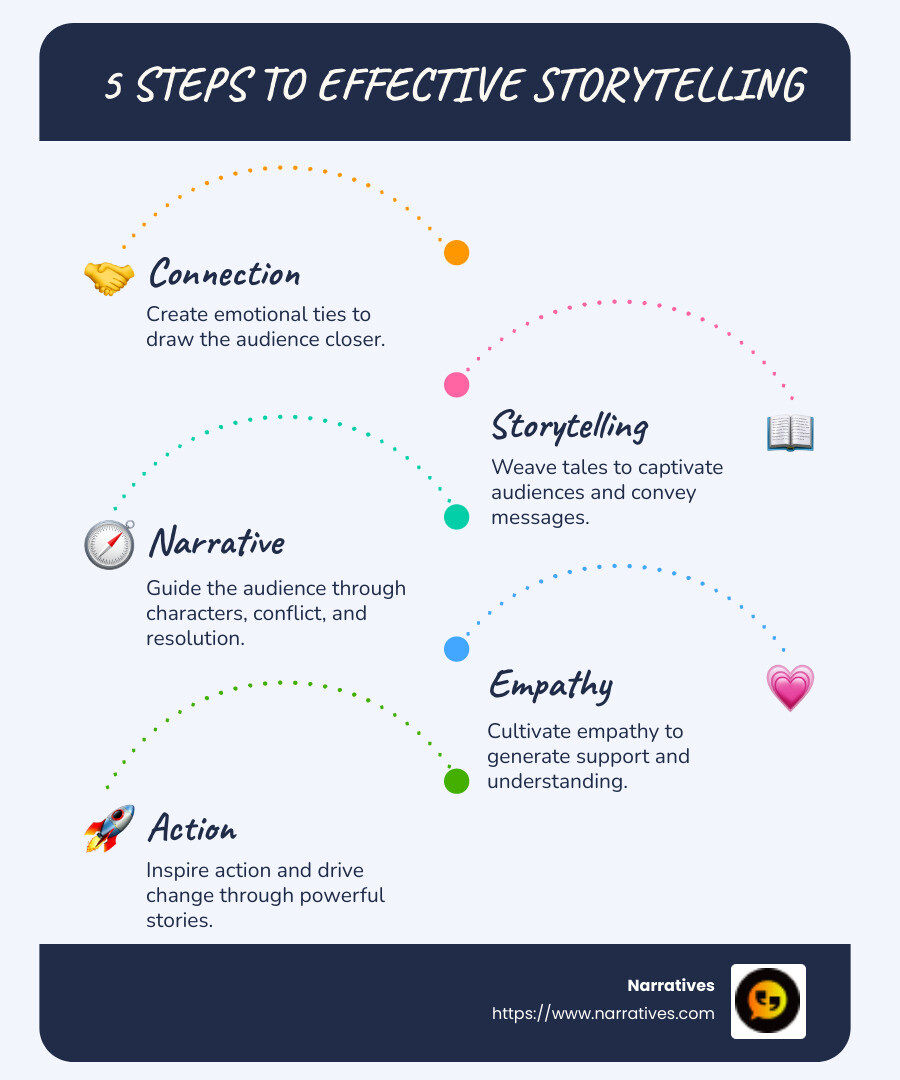
Effective storytelling techniques are the secret sauce to creating a meaningful connection with your audience. A compelling storytelling narrative has the power to persuade, inspire, and transform not just what people know, but how they feel. Here’s a quick rundown of what makes effective storytelling so impactful:
- Connection: Stories create emotional ties and draw people closer, fostering genuine relationships.
- Storytelling: The art of weaving tales to captivate audiences, convey messages, and evoke emotions.
- Narrative: The structured way in which stories are told, guiding the audience through a journey filled with characters, conflict, and resolution.
Successful storytelling techniques are a vital tool for non-profits, social impact organizations, and brand communicators alike. They help drive mission-based messaging by crafting stories that resonate and inspire action.
Imagine a presentation that's not just filled with data, but one that takes listeners on a journey, showing them a path from challenges to solutions. Through stories, empathy is cultivated, and support is generated—not unlike the impact seen in riveting TED talks, which use narrative mastery to hook audiences.
In today’s world, storytelling is more essential than ever. For those who wish to amplify their message and drive change, understanding these techniques is the key to open uping profound engagement and meaningful dialogues.
Effective storytelling techniques glossary:
Understanding Effective Storytelling Techniques
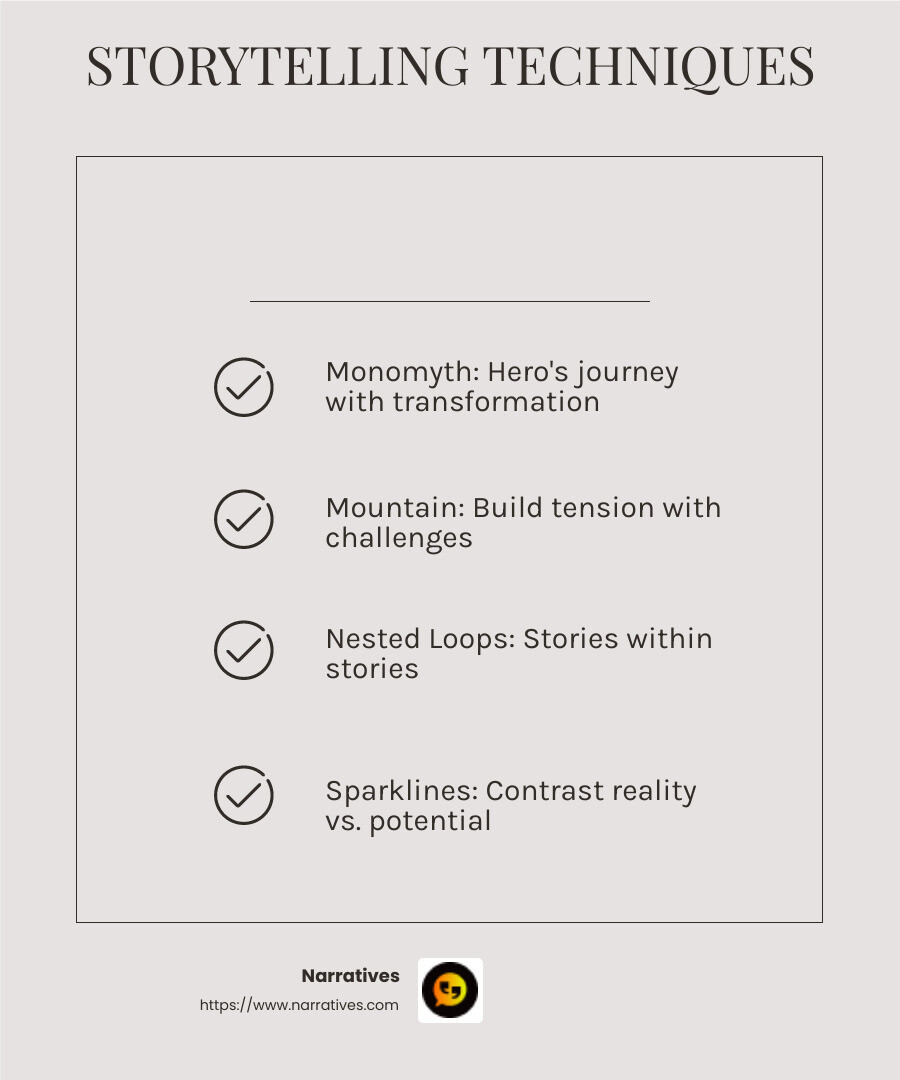
Effective storytelling techniques are the backbone of engaging narratives. Let's explore some classic methods that can transform your presentations into captivating stories:
Monomyth
Also known as the hero's journey, the monomyth is a timeless structure. It follows a hero who starts on an trip, faces a crisis, and returns transformed. This technique is perfect for showing personal growth or the journey of an organization. Think of it as taking your audience on a journey from the familiar to the unknown and back, enriched with newfound wisdom.
Mountain
The mountain structure builds tension gradually, leading to a climactic peak. It's like watching a TV series where each episode raises stakes until the grand finale. Use this to highlight overcoming challenges and steadily building towards a powerful conclusion. This technique is ideal for stories that may not have a neat, happy ending but are deeply satisfying.
Nested Loops
Imagine stories within stories, like Russian dolls. Nested loops place the core message at the center, surrounded by supporting narratives. This technique helps elaborate on the central idea by providing layers of context and meaning. It's like peeling an onion, where each layer reveals more depth and insight.
Sparklines
Sparklines contrast what is with what could be. This technique is powerful for motivational speeches, showing the gap between reality and potential. By highlighting this contrast, you inspire change and encourage your audience to bridge that gap.
In Medias Res
Start in the middle of the action to grab attention immediately. This technique, known as "in medias res," drops your audience right into the excitement, bypassing lengthy introductions. It's an excellent way to hook your audience from the get-go and keep them engaged.
Converging Ideas
When different ideas or storylines blend into a single powerful message, you have converging ideas. This technique is great for showing how diverse elements come together to create something new. It's like weaving multiple threads into a single, strong rope.
False Start
Begin with a seemingly predictable story, then flip it on its head. A false start surprises your audience and keeps them on their toes. It's an effective way to discuss failures and the lessons learned from them, showing resilience and innovation.
Petal Structure
The petal structure organizes multiple stories around a central theme. Each story is a petal that contributes to the whole, revealing different facets of the central message. This technique is perfect for complex topics with multiple perspectives, creating a rich mix of narratives.
Understanding these effective storytelling techniques can transform your presentations into compelling narratives that resonate with your audience. Whether you're crafting a personal tale or a brand story, these techniques will help you connect on a deeper level and inspire meaningful action.
8 Classic Storytelling Techniques for Engaging Presentations
Let's explore eight powerful storytelling techniques that can make your presentations truly engaging and memorable:
Monomyth
Monomyth, or the hero's journey, is a classic storytelling structure. This technique involves a hero who starts on a quest, faces challenges, and returns transformed. It's ideal for presenting personal growth or organizational change. Think of it as a journey that takes your audience from the familiar to the unknown and back, enriched with wisdom.
Mountain
The mountain structure is all about building tension. It starts with setting the scene, followed by a series of challenges that lead to a climax. This technique is perfect for stories where the journey is as important as the destination. It's like a TV series that keeps you hooked until the grand finale.
Nested Loops
Nested loops involve stories within stories, much like layers of an onion. The core message is at the center, surrounded by supporting narratives that add context and depth. This technique helps to elaborate on the central idea, peeling back layers to reveal more insights.
Sparklines
Sparklines contrast the current state with a vision of what could be. This technique is powerful for motivational speeches, showing the gap between reality and potential. By emphasizing this contrast, you inspire your audience to bridge the gap and strive for change.
In Medias Res
Start your story in the thick of the action with in medias res. This technique grabs attention right away, skipping lengthy introductions. It's an excellent way to hook your audience immediately and maintain their interest throughout the presentation.
Converging Ideas
Converging ideas bring together different storylines or concepts into a single, cohesive message. This technique is great for illustrating how diverse elements can create something new and powerful. It's like weaving multiple threads into a strong, unified narrative.
False Start
A false start begins with a seemingly predictable story that takes an unexpected turn. This technique surprises your audience, keeping them engaged and attentive. It's effective for discussing failures and the lessons learned, showcasing resilience and adaptability.
Petal Structure
The petal structure organizes multiple stories around a central theme. Each story acts as a petal contributing to the whole, offering various perspectives on the main message. This technique is perfect for complex topics with multiple viewpoints, creating a rich mix of narratives.
Understanding these effective storytelling techniques can transform your presentations into compelling narratives that resonate with your audience. Whether you're sharing a personal tale or a brand story, these techniques will help you connect on a deeper level and inspire meaningful action.
The Science Behind Storytelling
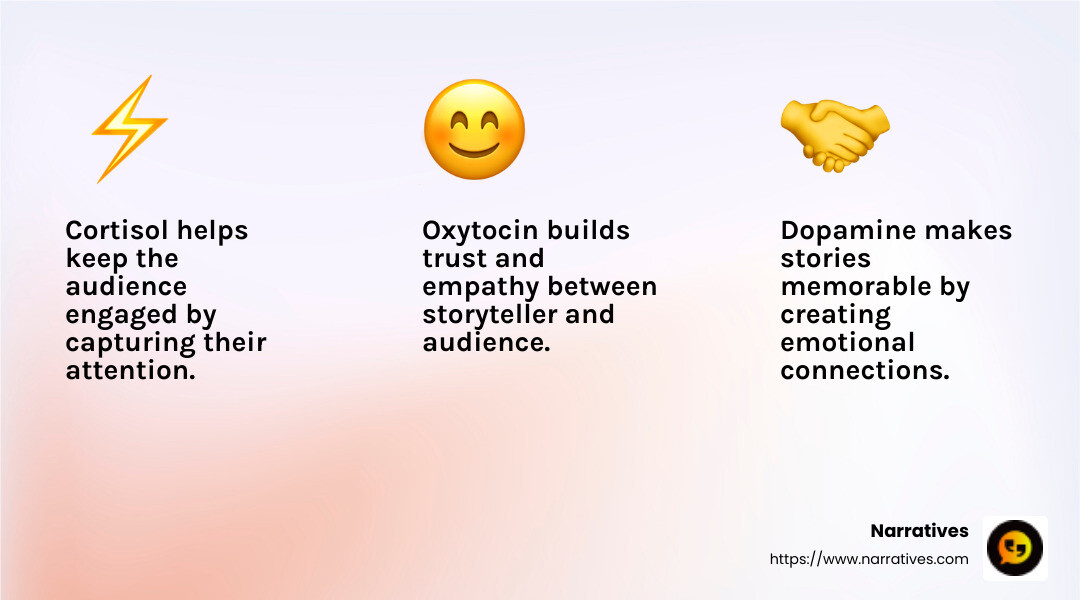
Storytelling isn't just an art; it's also a science. When we tell or listen to stories, our brains release a cocktail of chemicals that can shape our emotions and reactions. Let's explore how these brain chemicals—cortisol, dopamine, and oxytocin—play a crucial role in effective storytelling techniques.
Cortisol: Capturing Attention
Cortisol is often called the "stress hormone." It's released when we encounter something that grabs our attention or makes us feel alert. In storytelling, this is crucial. A well-crafted narrative with tension or conflict can trigger cortisol release, ensuring the audience stays focused and engaged. For example, a suspenseful plot twist or a cliffhanger can keep listeners on the edge of their seats, eager to learn what happens next.
Dopamine: Creating Emotional Engagement
Dopamine is associated with pleasure and reward. When a story resonates emotionally, dopamine is released, making us feel good. This is why stories that evoke strong emotions—like joy, sadness, or excitement—tend to be memorable. A compelling narrative that takes the audience on an emotional rollercoaster can leave a lasting impression, encouraging them to remember and share the story.
Oxytocin: Building Connection and Trust
Oxytocin is often referred to as the "love hormone" because it fosters feelings of trust and empathy. When stories are personal, relatable, or showcase vulnerability, oxytocin levels can increase, promoting a sense of connection between the storyteller and the audience. This is why stories that highlight human experiences, challenges, and triumphs can effectively build rapport and trust.
The Power of Brain Chemistry in Storytelling
Understanding the role of these chemicals can improve your storytelling. By crafting narratives that trigger cortisol, dopamine, and oxytocin, you can create stories that not only capture attention but also resonate emotionally and foster connections. This scientific approach to storytelling can be particularly powerful in presentations, marketing, and even non-profit campaigns, where engaging the audience is key to driving change and action.
Storytelling is a bridge that connects us on a deeper, emotional level, making it a vital tool in any communicator's toolkit. By leveraging the science behind storytelling, you can transform your narratives into powerful agents of change.
How to Become a Better Storyteller
Becoming a better storyteller is like building a bridge between you and your audience. Here's how you can make that bridge strong and inviting.
Enthusiasm and Energy
Start with enthusiasm. If you're excited about your story, your audience will be too. Show your passion through your energy. Use gestures, change your tone, and make eye contact. This keeps your audience on their toes and eager to hear more.
Confidence and Clarity
Confidence is key. Know your story well and believe in its value. This will help you deliver it with clarity. Keep your language simple and your message clear. When your audience can easily follow your story, they’re more likely to connect with it.
Listening and Engaging
Great storytellers are also great listeners. Pay attention to your audience's reactions. Are they nodding along, or do they look confused? Adjust your story in real-time to keep them engaged. Ask questions or involve them in the story. This makes them feel like part of the journey.
Empowering and Authenticity
Use your stories to empower others. Share tales of overcoming challenges or achieving dreams. This inspires your listeners to reflect on their own potential. Be authentic. Share your true experiences and emotions. This vulnerability makes you relatable and builds trust.
Adaptability and Creativity
Be adaptable. Every audience is different, so tweak your story to fit the mood and context. Use your creativity to add unique twists or vivid imagery that captivate your audience. A creative story stands out and is more likely to be remembered.
Empathy and Vulnerability
Empathy allows you to connect deeply with your audience. Understand their emotions and weave them into your story. Show your vulnerability by sharing personal experiences. This openness creates a bond and makes your story more impactful.
By focusing on these elements, you can transform your storytelling skills. You'll not only capture attention but also leave a lasting impression. Let's move on to some frequently asked questions about effective storytelling techniques.
Frequently Asked Questions about Effective Storytelling Techniques
What are some examples of effective storytelling techniques?
Effective storytelling techniques are tools that help make your story engaging and memorable. Here are a few popular ones:
Monomyth: Also known as the hero's journey, this technique involves taking a character on a transformative trip. It's a classic structure used in stories like "The Lion King" and "Star Wars."
Nested Loops: This technique layers multiple stories within each other. The main story is at the center, surrounded by others that improve the main message. It's like peeling back layers to reveal a core truth.
In Medias Res: This technique starts the story in the middle of the action. It grabs attention right away, making the audience eager to learn what led to this point.
Each of these techniques serves a unique purpose and can be adapted to fit different types of stories.
How can storytelling be used in presentations?
Storytelling in presentations can transform dry facts into compelling narratives. Here's how:
Engage Your Audience: Start with a relatable story or anecdote to grab attention. This sets the stage for your message and makes it more relatable.
Simplify Complex Ideas: Use stories to break down complex information. A well-told story can make difficult concepts easier to understand and remember.
Create Emotional Connections: Stories evoke emotions, which can make your message more impactful. Use this to persuade and inspire your audience.
Highlight Key Points: Use stories to emphasize the main takeaways of your presentation. People are more likely to remember a story than a list of bullet points.
By incorporating storytelling techniques, you can make your presentations more engaging and effective.
Why is storytelling important for non-profits?
Storytelling is crucial for non-profits because it helps build connections and drive action. Here's why:
Raise Awareness: Stories highlight the impact of a non-profit's work. They bring attention to issues and encourage people to care.
Inspire Action: Compelling stories can motivate people to donate, volunteer, or support a cause. They show the real-world impact of contributions.
Build Community: Sharing stories from the communities they serve helps non-profits foster a sense of belonging and shared purpose.
Humanize Data: Instead of just presenting statistics, stories put a human face on the numbers, making the message more relatable and powerful.
For non-profits, storytelling is a powerful tool that can amplify their mission and engage supporters on a deeper level.
Conclusion
In effective storytelling, Narratives stands out as a guide for non-profits and purpose-driven organizations. By focusing on amplifying underrepresented voices, we help these organizations share their impact stories in a way that truly resonates. This isn't just about telling stories; it's about creating a ripple effect of social impact and community-driven change.
The Power of Non-Profit Partnerships
Our collaboration with non-profits is rooted in a shared vision: making the world a better place through storytelling. By crafting emotionally resonant multimedia content, we enable these organizations to highlight their missions and the communities they serve. This partnership is more than just business; it's a commitment to building a more empathetic and connected world.
Driving Social Impact
Storytelling is a powerful tool for driving social change. By sharing real stories, we can bring attention to important issues, inspire action, and foster understanding. Our approach ensures that these stories are not just heard but felt, creating a lasting impact on audiences and encouraging them to contribute to meaningful causes.
Community-Driven Storytelling
At the heart of our mission is community-driven storytelling. We believe that the most powerful stories come from within the communities themselves. By giving a platform to these voices, we help build a sense of belonging and shared purpose. This approach not only lifts individual stories but also strengthens the community's collective voice.
In conclusion, Narratives is more than a content agency; it's a partner in change. Through our work, we strive to make storytelling an agent of change, one story at a time. For organizations looking to lift their impact through powerful storytelling, partner with us and let's create stories that inspire action and build a better future.


.avif)