Lead the Way: Essential Nonprofit Lead Generation Techniques

Non-profit lead generation is crucial for organizations looking to expand their reach and build a supportive community. Here's what you need to know:
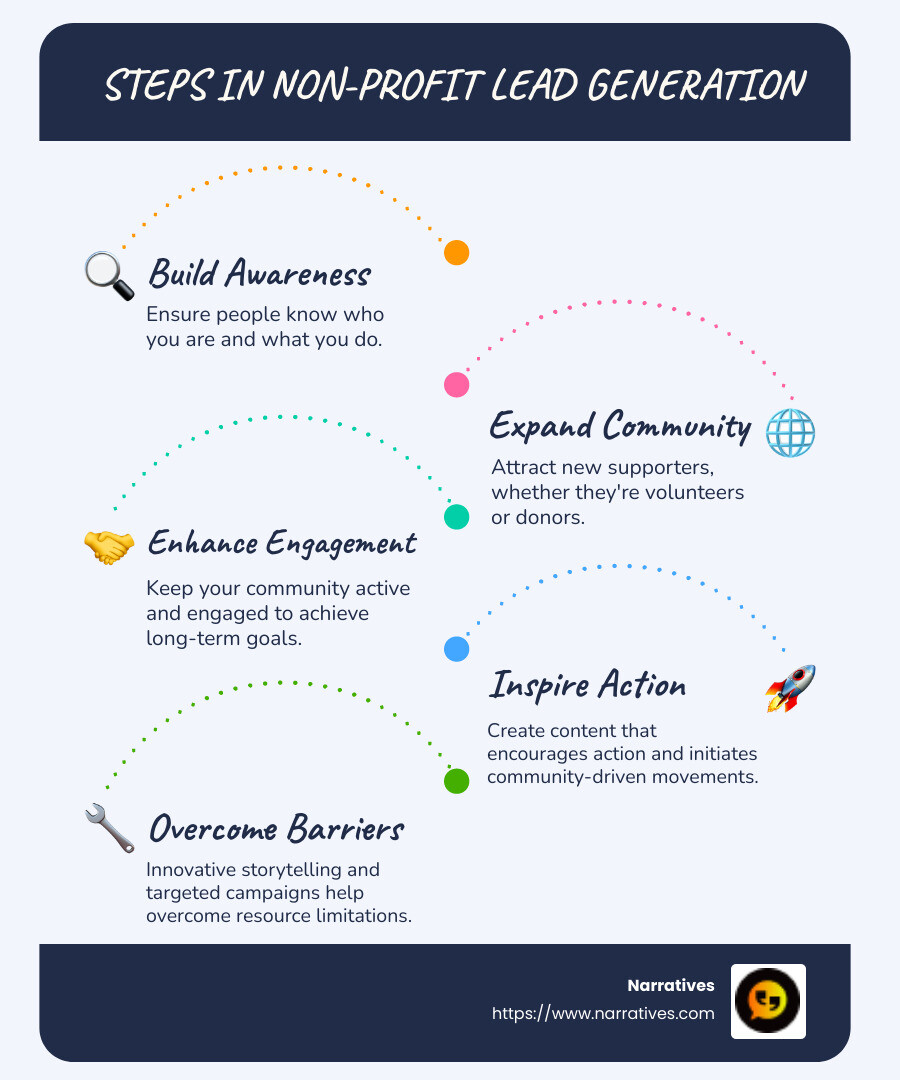
- Lead Generation Helps Build Awareness: Raising awareness is key. It's about ensuring people know who you are and what you do.
- It Expands Your Community: Attract new supporters, whether they're volunteers or donors.
- Improves Engagement: Keeping your community active and engaged is essential for achieving long-term goals.
While the concept of lead generation is often associated with profit-driven businesses, it plays a pivotal role for nonprofits too. For nonprofits, it's about finding potential donors, volunteers, and advocates dedicated to your cause.
The challenge for these organizations, however, lies in their resources. Many nonprofits operate with tight budgets, limited personnel, and an overwhelming workload. This makes it hard to focus on strategies that can amplify their mission.
Understanding lead generation within a nonprofit context requires looking beyond traditional methods. It's about storytelling that resonates, creating content that encourages action, and inspiring a community-driven movement. Through innovative approaches such as compelling digital storytelling and targeted campaigns, nonprofits can overcome these barriers. The key is ethical, engaging content that reaches hearts and fosters genuine connections.
Common Non-profit lead generation vocab:
Understanding Non-profit Lead Generation
Non-profit lead generation is the process of attracting and nurturing potential supporters for your organization's mission. This involves identifying individuals who are likely to become donors, volunteers, or advocates. For nonprofits, lead generation isn't just about increasing numbers—it's about building a community that believes in your cause.
Definition
Lead generation for nonprofits is the method of identifying and cultivating potential supporters. According to Oxford, it's about finding those who are interested in your mission and encouraging them to engage with your organization. This could mean attending events, volunteering, or making donations.
Benefits
The benefits of lead generation for nonprofits are numerous:
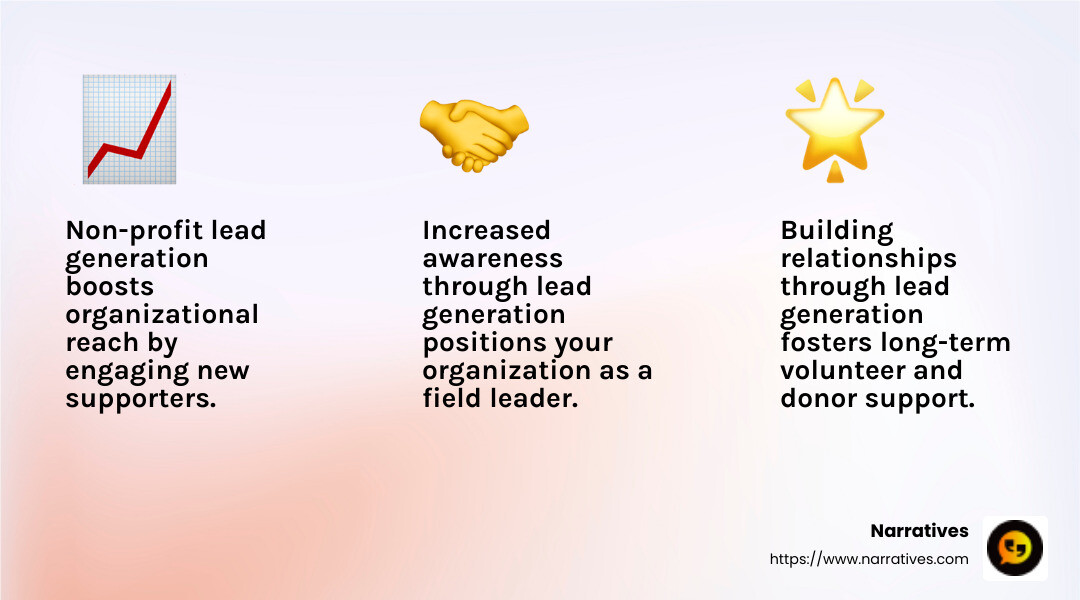
Increased Awareness: Generating leads helps spread the word about your mission. When more people know about your work, your organization becomes a recognized leader in your field.
Expanded Reach: By targeting new audiences, you can increase your pool of prospective supporters. This is vital for growth and sustainability.
Improved Relationships: When you engage with potential supporters, you build relationships that can lead to long-term involvement. This could mean more donations or sustained volunteer efforts.
Outcomes
Successful lead generation can lead to several positive outcomes for nonprofits:
More Donations: As potential donors learn more about your organization and its impact, they're more likely to contribute financially.
Increased Volunteer Participation: Engaging and educating potential volunteers can lead to a stronger, more dedicated volunteer base.
Stronger Advocacy: When individuals are informed and passionate about your cause, they can become advocates, spreading your message even further.
In conclusion, non-profit lead generation isn't just a marketing strategy—it's a vital part of creating a thriving, engaged community that supports and furthers your mission.
Proven Strategies for Non-profit Lead Generation
To thrive, nonprofits must master the art of non-profit lead generation. This involves not just attracting potential supporters but also engaging them in meaningful ways. Let's explore some proven strategies that can help your nonprofit succeed.
Social Media
Social media is a powerhouse for connecting with potential supporters. Platforms like Facebook, Instagram, and Twitter allow you to reach a wide audience. Strategic planning is key. Know where your target audience hangs out online and tailor your content for each platform. Use visual storytelling—images, videos, and infographics—to capture attention. Regular updates and active engagement help maintain a vibrant social media presence, making your mission visible and engaging.
Email Marketing
Email marketing remains a staple for nonprofits. According to the 2023 M+R Benchmarks, email accounted for 14% of all online revenue for nonprofits. Building a strong email list is crucial. Offer valuable content like newsletters and impact stories to encourage sign-ups. Personalize your emails to resonate with different audience segments. This not only boosts engagement but also strengthens relationships with potential supporters.
Quizzes
Quizzes are a fun way to engage your audience while collecting leads. They can educate participants about your cause and encourage them to share their contact information. For instance, a quiz about environmental issues can both inform and inspire action. Offering incentives, like open uping a small donation for each quiz completion, can improve participation and lead acquisition.
Advocacy Campaigns
Advocacy campaigns are powerful tools for mobilizing support. By launching petitions or encouraging advocacy actions, you can engage individuals who are passionate about your cause. Pair these actions with lead-generation ads on platforms like Care2 or Rally Starter. This not only raises awareness but also attracts those ready to take action and support your mission.
Direct Ask
Sometimes, the simplest approach is the most effective. A direct ask invites individuals to join your community. Whether through a social media post, an email, or a personal message, a straightforward invitation can be compelling. Ensure that your call to action is clear and easy to follow. Consistent, enjoyable communication will keep your supporters engaged and eager to contribute.
Incorporating these strategies into your non-profit lead generation efforts can significantly improve your organization's ability to attract and engage supporters. Next, we'll explore how to create effective lead magnets that resonate with your audience.
Creating Effective Lead Magnets for Nonprofits
Creating lead magnets is like crafting a unique gift for each potential supporter. They are designed to offer something valuable in exchange for contact information, helping you grow your community. Let's break down the essential steps to make your lead magnets effective.
Audience Understanding
Before you create anything, know your audience. Who are they? What do they care about? Use surveys, focus groups, or analytics to gather this information. Understanding your audience's pain points and motivations will help you craft a lead magnet that speaks directly to their needs.
Goal Setting
Clearly define what you want to achieve with your lead magnet. Are you looking to increase donations, raise awareness, or build your email list? Your goals should align with your nonprofit’s mission. For instance, if your goal is to educate the public about environmental issues, your lead magnet could be an eBook on sustainable living.
Lead Magnet Types
There are several types of lead magnets you can use:
eBooks and Whitepapers: Offer in-depth insights on topics related to your cause. For example, a nonprofit focused on education could provide a guide on enhancing literacy skills.
Webinars: Host live sessions to share knowledge and engage with your audience. These can be Q&A sessions, expert talks, or updates on your latest initiatives.
Checklists and Templates: Provide practical tools that your audience can use. An environmental nonprofit might offer a checklist for reducing household waste.
Quizzes and Assessments: Create interactive experiences that educate and engage. A mental health nonprofit could design a quiz to help users identify stress triggers.
Design Tips
Design plays a crucial role in the success of your lead magnet. Here are some tips:
Provide Value: Ensure your content is well-researched and offers actionable insights. Your lead magnet should be something your audience can't easily find elsewhere.
Eye-Catching Layout: Use an attractive and professional design to grab attention. This includes using clear headings, engaging visuals, and a clean layout.
Clear Call-to-Action: Make it easy for your audience to take the next step. Whether it’s signing up for a newsletter or downloading a resource, the process should be simple and straightforward.
By focusing on these elements, your lead magnets will not only attract potential supporters but also engage them in meaningful ways. Next, we'll dig into how digital storytelling can amplify your nonprofit's success.
Leveraging Digital Storytelling for Non-profit Success
Storytelling isn't just a tool—it's a necessity for non-profit lead generation. Stories can create emotional connections, making your cause unforgettable. Let's explore how digital storytelling can lift your nonprofit's mission.
Emotional Resonance
At the heart of effective storytelling is emotional resonance. People are more likely to support a cause they feel connected to emotionally. Share stories that highlight real-life impacts and personal journeys. For example, a nonprofit working with homeless individuals might tell the story of a person who found stability through their programs.
Tip: Use quotes from those you help, like "This program changed my life," to create a heartfelt connection. This approach not only draws in potential supporters but also strengthens relationships with existing ones.
Multimedia Content
Multimedia content is a powerful way to bring stories to life. It combines visuals, audio, and text to engage different senses. Here are some types of multimedia content you can use:
Videos: Short, impactful videos can showcase your work and its impact. A two-minute video featuring testimonials and project highlights can be more engaging than a lengthy report.
Podcasts: Share interviews with beneficiaries, volunteers, or experts in your field. Podcasts offer a personal touch and can be consumed on the go.
Infographics: Use infographics to present data and statistics in a visually appealing way. They can simplify complex information and highlight key achievements.
Example: A wildlife conservation nonprofit could use a combination of videos and infographics to show the before-and-after effects of their conservation efforts.
Community Engagement
Storytelling is not just about broadcasting your message; it's about creating a dialogue. Encourage your community to share their stories and experiences related to your cause. This approach not only amplifies your message but also fosters a sense of belonging and shared purpose.
Engagement Strategies:
Social Media Campaigns: Use platforms like Instagram or Facebook to run campaigns where supporters share their stories using a specific hashtag.
Online Forums: Create spaces for discussion where your community can connect and share experiences.
Interactive Events: Host virtual events where participants can share their stories live. This could be a storytelling night or a panel discussion.
By integrating these elements into your strategy, your nonprofit can harness the power of digital storytelling to create lasting emotional connections, engage your community, and ultimately drive your mission forward. Next, we'll tackle some frequently asked questions about non-profit lead generation.
Frequently Asked Questions about Non-profit Lead Generation
How can nonprofits use social media for lead generation?
Social media is a powerful tool for non-profit lead generation. It helps reach broad audiences and target specific groups. Here's how nonprofits can harness its power:
Targeted Ads: Platforms like Facebook and Instagram offer robust targeting options. Use these to reach audiences based on demographics, interests, and behaviors. This approach can maximize your advertising efforts, even on a budget.
Community Building: Create groups or forums on social media. Encourage discussions and share updates to foster a sense of belonging. Regular engagement is key to sustaining interest.
Content Sharing: Share stories, updates, and achievements regularly. Use multimedia content like videos and infographics to make posts more engaging.
Example: A nonprofit focusing on environmental issues could run a campaign encouraging followers to share their eco-friendly practices using a specific hashtag.
What are the best types of lead magnets for nonprofits?
Lead magnets are vital tools for attracting new supporters. They offer value in exchange for contact information. Here are some effective types:
eBooks and Whitepapers: Provide in-depth information on topics related to your mission. They educate and inspire potential supporters.
Quizzes and Assessments: Interactive tools that engage users and provide personalized feedback. They are fun and can reveal insights about your audience's interests.
Webinars: Offer real-time interaction and education. Use them to showcase your expertise and provide updates on your initiatives.
Tip: Choose lead magnets that align with your audience's interests and your organization's goals to maximize their impact.
How do you measure the success of lead generation efforts?
Measuring success is crucial to improving your lead generation strategies. Here are some key metrics to track:
Conversion Rates: Measure the percentage of visitors who provide their contact information. This indicates how compelling your lead magnets are.
Engagement Metrics: Track likes, shares, and comments on social media. High engagement suggests your content resonates with your audience.
Traffic and Source Analysis: Use analytics tools to see where your traffic comes from. Identify which channels are most effective for lead generation.
Example: A nonprofit using Google Ads should monitor click-through rates and adjust targeting to improve performance.
By regularly analyzing these metrics, nonprofits can optimize their strategies, ensuring continuous improvement and maximizing their impact.
Conclusion
At Narratives, we believe in the transformative power of storytelling to lift nonprofit missions. Through community-driven storytelling, nonprofits can not only share their impact but also build trust and inspire action. This approach ensures that underrepresented voices are heard, fostering a deeper connection with audiences.
Non-profit lead generation is more than just collecting contacts; it's about creating meaningful relationships. By using emotionally resonant multimedia content, nonprofits can engage supporters more effectively. This engagement leads to increased visibility and support for their causes.
Building domain authority is crucial for nonprofits aiming to establish themselves as thought leaders. By focusing on storytelling-related keywords and producing high-quality content, nonprofits can improve their search engine rankings. This strategy not only improves brand awareness but also drives organic traffic, supporting long-term lead generation goals.
Incorporating community-driven storytelling into your strategy can significantly boost your nonprofit's success. By partnering with us at Narratives, you can harness the full potential of digital storytelling to amplify your mission and reach new heights.
Find how we can help you share your impact stories and inspire action by visiting our media services page.
Together, let's lead the way in nonprofit storytelling and make a lasting difference.


.avif)