Engage and Inspire: How to Craft Winning Nonprofit Outreach Strategies

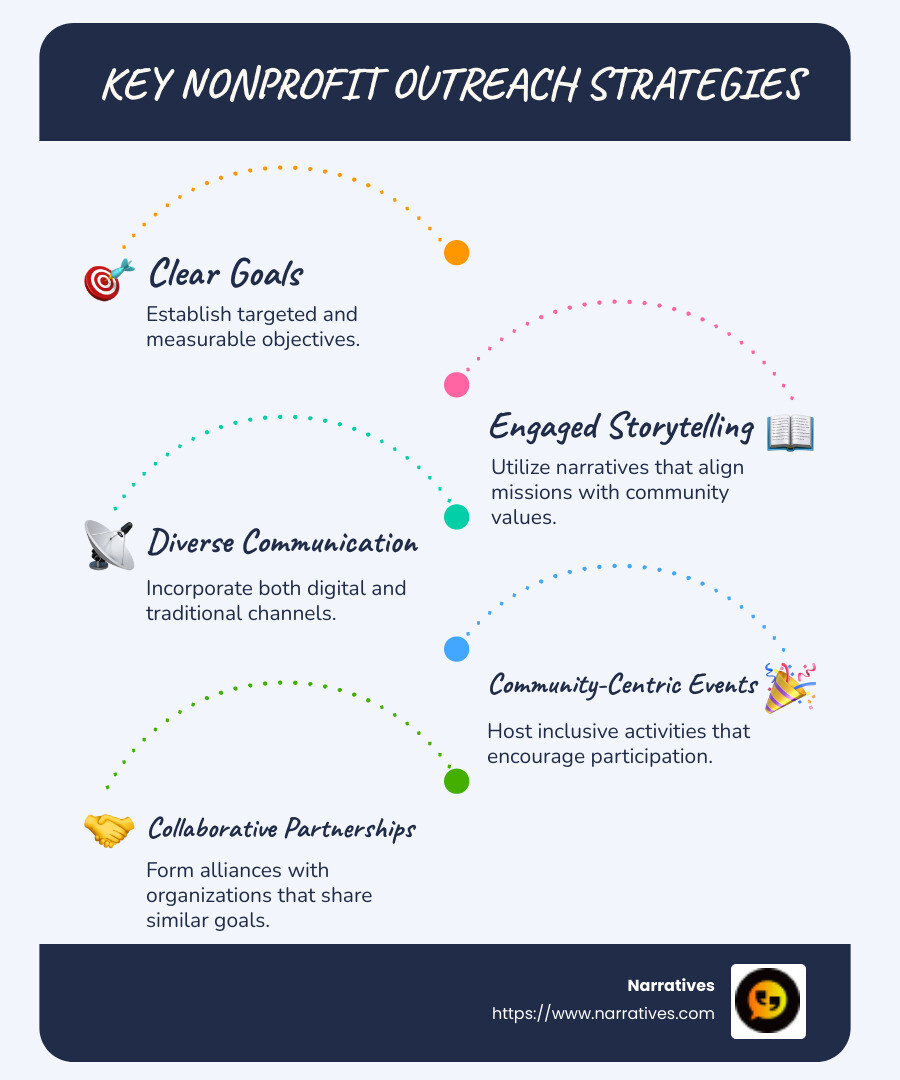
Nonprofit outreach strategies are essential tools that connect organizations with their communities, foster meaningful interactions, and amplify mission-driven storytelling. These strategies are not just about reaching out; they're about building lasting relationships that resonate and inspire action. Here's a quick rundown of what effective nonprofit outreach strategies involve:
- Clear Goals: Understand what you aim to achieve and set tangible targets.
- Engaged Storytelling: Use powerful narratives to connect your mission with people's values.
- Diverse Communication Channels: Leverage both digital platforms and traditional methods.
- Community-Centric Events: Foster an inclusive environment through events and activities.
- Collaborative Partnerships: Join forces with like-minded organizations and groups.
Community engagement forms the backbone of any successful nonprofit outreach effort. It's like Gwen K. Young aptly noted, engaging the community ensures that "purpose-driven activities align with the aspirations and needs of the people they serve."
By weaving compelling stories into your outreach fabric, you lift your cause's visibility and encourage valuable interactions. Prioritizing these strategies helps nonprofits not only to spread their messages but also to create impactful social change.
Nonprofit outreach strategies terms made easy:
Understanding Nonprofit Outreach Strategies
Nonprofit outreach strategies are crucial for building connections and fostering engagement with your community. At the core of these strategies are three important concepts: needs-based segmentation, targeted communications, and advocacy approaches.
Needs-Based Segmentation
Imagine trying to communicate with everyone the same way. It would be like speaking one language to a room full of multilingual people. Needs-based segmentation helps you avoid this by understanding the diverse needs and motivations of your audience. Instead of a one-size-fits-all approach, you group your audience into segments based on their specific needs and attitudes. This approach, while common in the commercial sector, is underused in nonprofits.
By segmenting your audience, you can tailor your messages to resonate more deeply. For instance, donors who value tangible results might respond better to stories about specific project outcomes, while others might be more moved by personal stories of change. The key is to understand what drives your audience and use that insight to craft messages that connect.
Targeted Communications
Once you have segmented your audience, it's time to focus on targeted communications. This means crafting messages that speak directly to the interests and concerns of each segment. Think of it as having a conversation where you know exactly what the other person is interested in. This approach not only increases engagement but also builds trust and loyalty among your supporters.
For example, a nonprofit focused on environmental conservation might send detailed project updates to donors interested in sustainability, while sharing success stories with those who are more emotionally driven. By aligning your communications with the preferences of each segment, you ensure that your message is both heard and valued.
Advocacy Approaches
Advocacy is about rallying your community around a cause. It's about inspiring action and mobilizing support. Effective advocacy campaigns use storytelling to create empathy and drive engagement. They encourage community members to take specific actions, such as signing petitions or participating in rallies.
A successful advocacy approach is clear about its goals and uses compelling narratives to highlight the importance of the cause. For instance, an environmental group might share stories of local wildlife threatened by climate change, urging the community to support conservation efforts. These stories not only inform but also inspire people to act.
In summary, understanding and implementing nonprofit outreach strategies involves recognizing the unique needs of your audience, crafting messages that resonate, and inspiring collective action through advocacy. By focusing on these areas, nonprofits can build stronger relationships and achieve greater impact in their communities.
Key Elements of Effective Nonprofit Outreach
When it comes to nonprofit outreach strategies, there are three key elements that can make or break your efforts: clear goals, stakeholder consultation, and market research. Let's explore each of these components to understand why they are essential.
Clear Goals
Setting clear goals is like having a roadmap for your outreach strategy. Without it, you may find yourself lost or heading in the wrong direction. Start by defining what you want to achieve. Are you aiming to increase donations, expand volunteer participation, or raise awareness about a specific cause?
Once your goals are set, determine the steps needed to achieve them. Assign responsibilities, set deadlines, and estimate costs. This structured approach not only keeps your team on track but also allows you to measure success effectively.
Example: A nonprofit aiming to increase volunteer sign-ups might set a goal to recruit 50 new volunteers in the next quarter. They would then outline specific actions, such as hosting informational webinars or community events, to reach this target.
Stakeholder Consultation
Engaging with stakeholders is crucial for understanding the needs and perspectives of everyone involved in your mission. Stakeholders include donors, volunteers, board members, and the communities you serve. By consulting with them, you gain valuable insights that can shape your outreach efforts.
How to Engage Stakeholders:
- Donors: Ask for feedback on donation methods and preferences.
- Volunteers: Inquire about their experiences and suggestions for improvement.
- Board Members: Discuss strategic directions and budget considerations.
- Community Members: Hold focus groups to gather input on new initiatives.
Consultation ensures that your outreach strategy is aligned with the needs and expectations of those who matter most to your organization.
Market Research
Understanding the landscape in which you operate is vital for effective outreach. Market research helps you identify opportunities and challenges within your community. It also allows you to assess what other organizations are doing and how you can differentiate your efforts.
Steps for Conducting Market Research:
- Identify Competitors: Look at organizations with similar missions and learn from their successes and challenges.
- Spot Gaps: Find unmet needs in your community that your organization can address.
- Gather Data: Use surveys, interviews, and data analysis to understand community needs and preferences.
For instance, if local high school students need more volunteer opportunities, your nonprofit could create programs that cater to this demand, filling a community gap and engaging a new audience.
By focusing on clear goals, stakeholder consultation, and market research, your nonprofit can craft outreach strategies that are not only effective but also resonant with your community. These elements lay the foundation for building trust and achieving lasting impact.
7 Tips for Building an Effective Outreach Strategy
Crafting a successful nonprofit outreach strategy requires a thoughtful approach. Here are seven tips to help you engage your community, communicate proactively, and strengthen donor relationships.
1. Foster Community Involvement
Involve your community in every step of your outreach efforts. This means engaging them in planning, execution, and evaluation. When people feel included, they are more likely to support your mission.
How to Foster Involvement:
- Volunteer Opportunities: Offer diverse roles that match different skill sets and interests.
- Feedback Channels: Create easy ways for community members to share their thoughts and ideas.
- Collaborative Events: Host events that encourage interaction and partnership among community members.
2. Communicate Proactively
Don’t wait for your audience to reach out to you. Be the first to communicate updates, news, and opportunities. Regular communication builds trust and keeps your organization top-of-mind.
Proactive Communication Tactics:
- Regular Updates: Send out newsletters or updates to keep your community informed.
- Personalized Messages: Tailor your communication to address the specific interests and needs of different audience segments.
- Social Media Engagement: Actively post and respond to comments on social platforms to maintain an ongoing dialogue.
3. Engage Donors with Compelling Stories
Donors want to feel connected to your cause. Use storytelling to illustrate the impact of their contributions and the importance of their continued support.
Storytelling Strategies:
- Success Stories: Share real-life examples of how donations have made a difference.
- Visual Content: Use images and videos to bring stories to life.
- Donor Recognition: Highlight donor contributions in your communications to show appreciation and inspire others.
4. Understand Your Audience
Knowing who you're talking to is key. Conduct surveys and focus groups to understand what your community needs and values. This knowledge will help you tailor your outreach efforts effectively.
5. Build Partnerships
Partner with local organizations, businesses, and leaders to expand your reach and resources. These collaborations can amplify your message and provide new opportunities for engagement.
6. Use Digital Tools
Digital tools can improve your outreach efforts by making communication more efficient and far-reaching. Consider using email marketing platforms, social media management tools, and CRM systems to streamline your processes.
7. Measure and Adapt
Regularly assess the effectiveness of your outreach strategies. Use metrics to determine what’s working and what’s not, and be ready to adapt your approach as needed.
Metrics to Monitor:
- Engagement Rates: Track how often your audience interacts with your content.
- Donation Levels: Monitor changes in donation amounts and frequency.
- Feedback: Collect and analyze feedback to identify areas for improvement.
By focusing on these tips, your organization can create a robust outreach strategy that not only engages but also inspires your community to act. This proactive approach will help you build stronger relationships and achieve greater impact.
Nonprofit Outreach Strategies for Community Engagement
To effectively engage your community, nonprofit outreach strategies should focus on building connections and fostering participation. Here are three powerful approaches: collaborative partnerships, inclusive events, and digital tools.
Collaborative Partnerships
Partnering with local businesses, schools, or other organizations can significantly boost your outreach efforts. These partnerships allow you to tap into shared resources and networks, reaching a broader audience.
How to Build Successful Partnerships:
- Identify Aligned Goals: Look for organizations with missions that complement yours. This alignment ensures mutual benefits and smoother collaboration.
- Set Clear Expectations: Define what each party hopes to achieve and outline roles and responsibilities to avoid misunderstandings.
- Co-Host Events: Joint events or campaigns can maximize impact. For example, a charity might partner with a local restaurant to host a fundraising dinner, where a portion of the proceeds supports the charity's cause.
Inclusive Events
Inclusive events bring people together, creating a sense of community and belonging. These events should cater to diverse groups and encourage active participation.
Tips for Hosting Inclusive Events:
- Accessible Venues: Choose locations that are easily accessible to all community members, including those with disabilities.
- Diverse Activities: Plan activities that appeal to various interests and age groups to ensure everyone feels welcome.
- Feedback Opportunities: Use events as a platform to gather input from attendees about their needs and preferences.
Digital Tools
Leveraging digital tools can improve your outreach by making communication more efficient and widespread. These tools help you stay connected with your audience and streamline your efforts.
Digital Tools to Consider:
- Social Media Platforms: Use platforms like Facebook, Instagram, and TikTok to share engaging content and interact with your audience. With over 5 billion social media users, these platforms offer vast outreach potential.
- Email Marketing: Regular newsletters keep your supporters informed about updates and upcoming events. Make sure your emails are engaging and personalized to maintain interest.
- CRM Systems: Implement Customer Relationship Management tools to keep track of interactions with your supporters. This data helps tailor your communication and improves relationship management.
By focusing on collaborative partnerships, inclusive events, and digital tools, your nonprofit can foster community engagement that is both meaningful and impactful. These strategies not only improve visibility but also build trust and long-term support for your mission.
15 Outreach Strategies Examples for Effective Community Engagement
To truly connect with your community, it's crucial to employ a variety of nonprofit outreach strategies. Here are three key examples that can make a significant impact: social media campaigns, email newsletters, and community events.
Social Media Campaigns
Social media is a powerhouse for outreach. Platforms like Facebook, Instagram, and Twitter allow nonprofits to reach a vast audience. They are ideal for sharing stories, promoting events, and engaging directly with followers.
Key Tactics for Social Media Outreach:
- Use Hashtags: Incorporate relevant hashtags to increase the visibility of your posts.
- Visual Content: Share eye-catching infographics and videos to capture attention.
- Engage with Followers: Respond to comments and messages to build a community.
- Run Polls and Surveys: Gather feedback and insights from your audience.
Example: An environmental nonprofit might use Instagram to share success stories and eco-friendly tips, encouraging followers to adopt sustainable practices.
Email Newsletters
Email newsletters are a direct way to keep your community informed and engaged. They allow you to share updates, highlight achievements, and promote upcoming events.
How to Optimize Email Newsletters:
- Personalize Content: Address recipients by name and tailor content to their interests.
- Include Clear CTAs: Encourage readers to take action, whether it's attending an event or volunteering.
- Share Valuable Updates: Keep your community in the loop with news and opportunities.
Example: A nonprofit focused on education could send monthly newsletters featuring success stories, volunteer opportunities, and upcoming projects.
Community Events
Hosting events, whether virtual or in-person, is an excellent way to build connections. Events offer a platform for face-to-face interaction, fostering deeper relationships.
Popular Types of Community Events:
- Workshops and Seminars: Offer educational sessions on topics relevant to your mission.
- Fundraising Events: Raise funds while engaging with your supporters.
- Volunteer Days: Organize service days to encourage community involvement.
Example: A local government might host a town hall meeting to discuss community concerns, allowing residents to voice their opinions and contribute to solutions.
By leveraging these nonprofit outreach strategies, you can effectively engage your community. Social media campaigns, email newsletters, and community events are powerful tools that not only increase your organization's visibility but also build trust and foster long-term support.
Frequently Asked Questions about Nonprofit Outreach Strategies
How to create a community outreach plan?
Creating a community outreach plan involves a structured approach. Start by defining your goals. What do you want to achieve? Whether it's raising awareness or increasing volunteer participation, clear objectives are crucial.
Next, segment your audience based on their needs and interests. Tailor your communication to resonate with each group. This ensures your message is relevant and impactful.
Finally, choose the right outreach tactics. Use social media, email newsletters, or community events to reach your audience. Each channel has its strengths, so select those that align with your goals and audience preferences.
What are the benefits of nonprofit outreach strategies?
Effective nonprofit outreach strategies foster meaningful relationships and build trust within the community. When people feel connected to your mission, they are more likely to support your cause.
Outreach efforts also increase your organization's visibility. By consistently engaging with your audience, you raise awareness and attract new supporters. This expanded reach can lead to more donations, volunteers, and partnerships.
Moreover, outreach creates opportunities for collaborative partnerships. By working with other organizations, you can pool resources and amplify your impact.
How can nonprofits measure outreach success?
To measure outreach success, start with goal setting. Define what success looks like for your organization. Is it a certain number of new donors? Increased event attendance? Clear goals provide a benchmark for success.
Next, focus on result tracking. Use metrics like email open rates, social media engagement, and event attendance to gauge effectiveness. Regularly review these metrics to understand what's working and what needs improvement.
Finally, gather feedback from your community. Surveys and direct conversations can provide insights into how your outreach efforts are perceived and where they can be improved.
By following these steps, nonprofits can ensure their outreach strategies are both effective and impactful.
Conclusion
In nonprofit outreach, Narratives stands as a guide for organizations striving to make a difference. Through the power of digital storytelling, we help nonprofits lift their voices and share their impactful stories. This approach not only builds trust but also fosters a deep connection with audiences.
Digital storytelling is more than just sharing facts—it's about creating an emotional journey that inspires action. By using high-quality, emotionally resonant video and multimedia content, organizations can engage their communities in a meaningful way. This method is particularly effective in capturing the essence of a nonprofit's mission and the positive changes it's driving.
The impact of this storytelling approach is profound. Not only does it increase an organization's visibility, but it also improves social impact by rallying more support and resources. When people see the real-world effects of their contributions, they're more likely to continue their support and become advocates for the cause.
Moreover, by positioning ourselves as the go-to partner for digital storytelling, we ensure that underrepresented voices are heard and celebrated. This commitment to inclusivity amplifies the reach and effectiveness of nonprofit outreach efforts.
For organizations looking to harness the power of storytelling and create lasting change, partnering with Narratives can be a game-changer. Our expertise in crafting compelling stories helps nonprofits not only reach their goals but exceed them, creating a ripple effect of positive social impact.
Explore more about how we can help your organization tell its story and inspire action by visiting our Media Services page. Together, we can make a difference.


.avif)