From Clicks to Causes: Mastering Nonprofit Digital Marketing

Nonprofit digital marketing strategy is all about making your mission heard in a world full of noise. If you're managing nonprofit marketing and communications, effectively using digital channels can lift your cause.
Here's a quick snapshot to get you started:
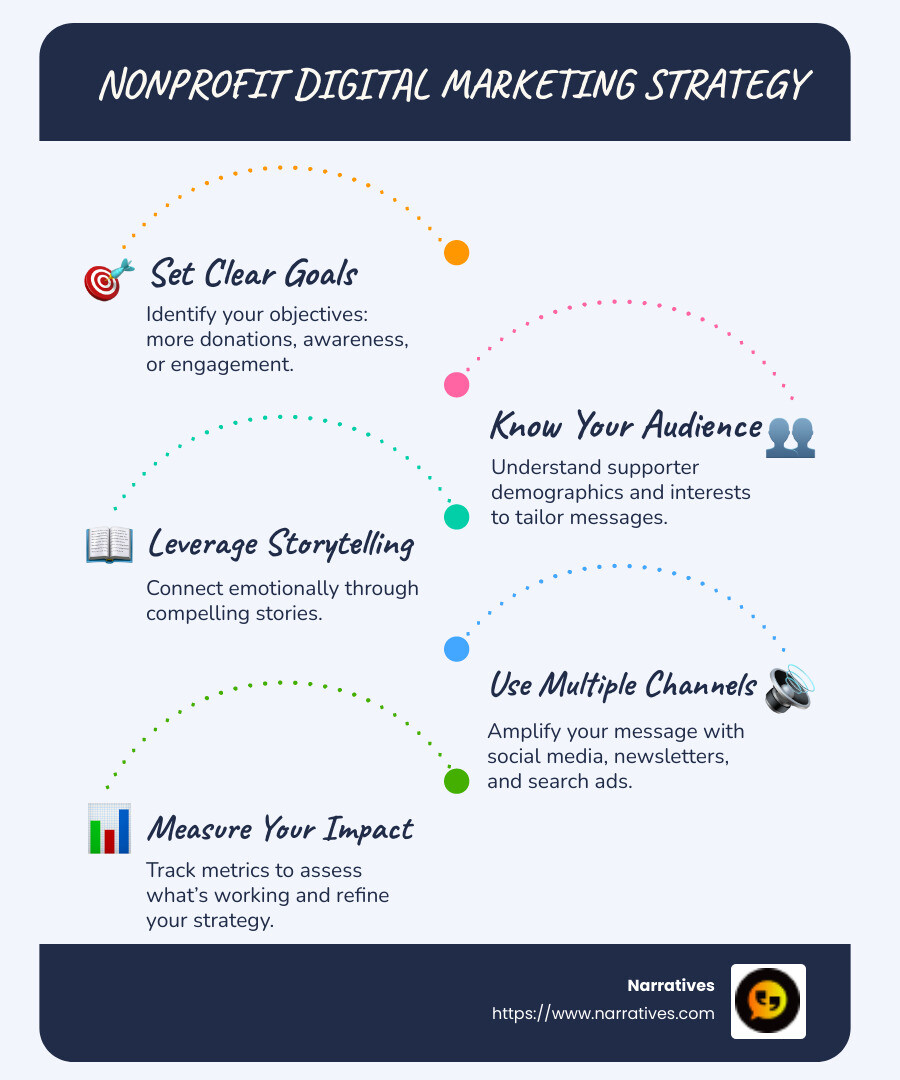
- Set Clear Goals: Determine what you want to achieve. Is it more donations, greater awareness, or community engagement?
- Know Your Audience: Understand your supporters' demographics and interests to tailor your messages.
- Leverage Storytelling: Use stories to connect emotionally with your audience.
- Use Multiple Channels: Social media, newsletters, and search ads can amplify your message.
- Measure Your Impact: Track metrics to see what's working and adjust your strategy accordingly.
Nonprofits today have a golden opportunity to harness the power of the internet to tell their stories and drive change. Digital marketing enables organizations not only to reach a wider audience but to engage with them on a deeper, more personal level.
More than just clicks, it's about changing digital interactions into meaningful connections that propel your mission forward. Through thoughtful strategy and compelling storytelling, digital marketing can turn passive observers into passionate supporters.
Find more about Nonprofit digital marketing strategy:
Importance of Nonprofit Digital Marketing
A strong online presence is essential for nonprofits looking to thrive. Nonprofit digital marketing is not just about reaching more people; it's about engaging them in ways that create lasting impact.
Engagement
Engagement is the heartbeat of digital marketing for nonprofits. It's not enough to simply broadcast your message; you need to create a dialogue. Social media platforms like Facebook, Instagram, and Twitter are perfect for this. They allow you to interact directly with your audience, answer questions, and build relationships.
Consider this: a nonprofit that actively engages with its followers on social media can increase donor retention rates by up to 60%! 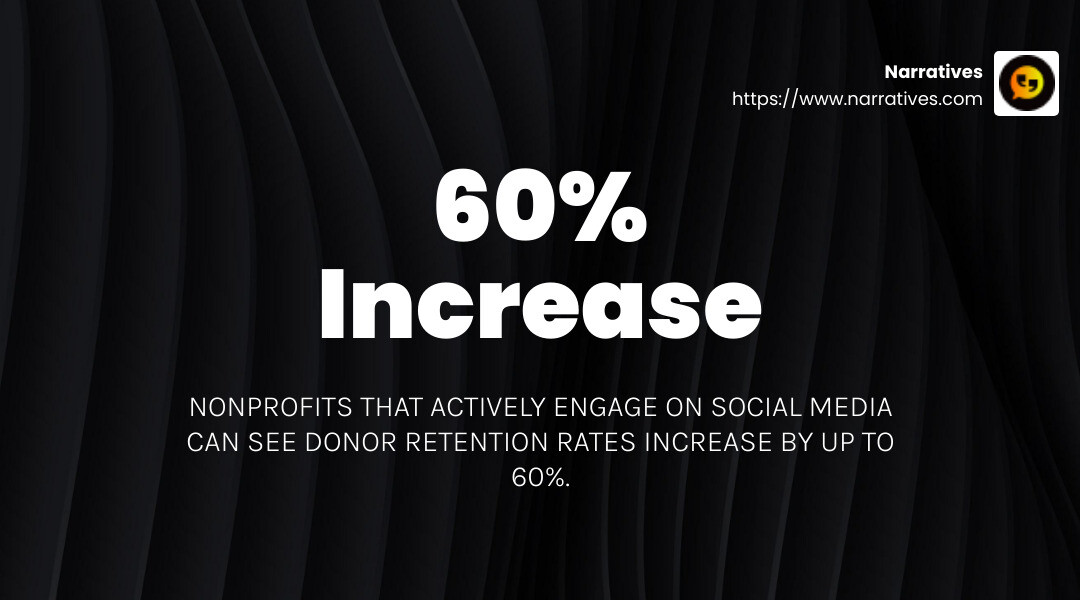 This means more sustained support for your cause.
Brand Awareness
Digital marketing also helps build brand awareness. When people recognize your nonprofit, they're more likely to support it. Through consistent messaging and visual branding across digital channels, you can make your organization easily recognizable.
A strong brand presence online means that when someone thinks of a cause, they think of you. This can lead to increased donations, volunteer sign-ups, and event participation.
Online Presence
An effective online presence goes beyond social media. Your website is a crucial tool. It's often the first place potential supporters go to learn about your mission. A well-designed, user-friendly website can guide visitors to take action, whether it's donating, signing up for a newsletter, or attending an event.
Ensure your website is mobile-friendly, easy to steer, and accessible to everyone. This not only improves user experience but also boosts your search engine rankings, making it easier for people to find you.
Digital marketing opens doors that traditional methods can't. It allows nonprofits to reach global audiences, share impactful stories, and turn clicks into causes. By leveraging digital tools, nonprofits can amplify their voice, expand their reach, and ultimately, make a greater difference in the communities they serve.
Crafting a Nonprofit Digital Marketing Strategy
Creating a compelling nonprofit digital marketing strategy begins with setting clear goals, understanding your audience, and crafting specific targets. Let’s break down how to do this effectively.
Define Your Goals
Start by identifying what you want to achieve with your digital marketing efforts. This could be increasing donations, boosting volunteer sign-ups, or raising awareness for a specific campaign. Your goals should align with your nonprofit's mission and be specific enough to guide your actions.
For example, instead of a vague goal like "increase donations," aim for something more concrete: "Raise $20,000 through online donations by the end of the quarter." This clarity helps your team stay focused and motivated.
Audience Segmentation
Understanding your audience is crucial. Not all supporters are the same, and they shouldn't be treated as such. Segment your audience based on factors like age, location, interests, and donation history. This allows you to tailor your messages, making them more relevant and engaging.
For instance, you might send different emails to first-time donors compared to long-term supporters. This personalized approach can significantly increase engagement and response rates.
SMART Goals
To ensure your goals are clear and achievable, use the SMART framework:
- Specific: Clearly define what you want to achieve.
- Measurable: Set criteria to measure progress.
- Achievable: Ensure the goal is realistic.
- Relevant: Align with your nonprofit's mission.
- Time-bound: Set a deadline for achieving the goal.
Here's a change of a general goal into a SMART goal:
- General Goal: Grow our email subscriber list.
- SMART Goal: Add 1,000 new subscribers to our email list and raise an additional $50,000 in sales revenue by the end of the year.
This approach not only clarifies what success looks like but also provides a roadmap for how to get there.
Crafting a nonprofit digital marketing strategy with clear goals, audience understanding, and SMART targets sets the stage for effective and impactful outreach. It ensures that every effort is purposeful and contributes to your mission in a measurable way.
Key Components of a Nonprofit Digital Marketing Strategy
When diving into a nonprofit digital marketing strategy, focus on four key components: social media, email marketing, digital advertising, and website optimization. Each plays a vital role in enhancing your online presence and engaging supporters effectively.
Social Media
Social media is a powerful tool for nonprofits. It allows you to connect with audiences on platforms they already use. From Facebook and Instagram to Twitter and LinkedIn, these channels offer a way to share your mission and engage with supporters.
Why is social media important?
- Reach: Social media can extend your reach to a global audience, allowing you to garner support from people far beyond your local community.
- Engagement: It's an interactive platform where you can have conversations, answer questions, and build relationships.
- Storytelling: Share stories, updates, and successes to keep your audience informed and emotionally connected to your cause.
Email Marketing
Email marketing remains one of the most effective ways to communicate directly with your supporters. It's personal, customizable, and allows you to segment your audience for targeted messaging.
Key Benefits of Email Marketing:
- Direct Communication: Reach supporters directly in their inboxes with personalized messages.
- Automation: Use automation to send welcome emails, thank you notes, and updates without manual effort.
- Segmentation: Tailor your messages based on supporter behavior and preferences for better engagement.
Digital Advertising
Digital advertising is an investment that can yield significant returns. Platforms like Google Ads and Facebook Ads can help you target specific demographics and drive traffic to your website or campaigns.
Advantages of Digital Advertising:
- Targeting: Reach the right audience with precise targeting options.
- Measurable Results: Track the success of your campaigns with detailed analytics.
- Scalability: Adjust your budget and reach as needed to maximize impact.
Website Optimization
Your website is the cornerstone of your online presence. It should be easy to steer, informative, and optimized for search engines to ensure people can find you online.
Key Aspects of Website Optimization:
- User Experience: Ensure your website is user-friendly and mobile-responsive.
- SEO: Implement search engine optimization strategies to improve visibility in search results. Think about keywords your audience might use, like "animal rescue in Georgia," and incorporate them naturally into your content.
- Content: Keep your content fresh and aligned with your mission. Regularly update it with stories, news, and resources that resonate with your audience.
By integrating these components into your nonprofit digital marketing strategy, you can create a cohesive and effective approach that drives engagement, increases visibility, and supports your mission. Each element complements the others, working together to amplify your reach and impact.
Next, let's explore the best practices that can lift your digital marketing efforts to the next level.
6 Best Practices for Nonprofit Digital Marketing
Crafting a successful nonprofit digital marketing strategy requires more than just knowing the key components. To truly stand out, nonprofits should incorporate these six best practices into their approach:
1. Visual Storytelling
Visuals are powerful. They capture attention and convey emotions quickly. Use photos and videos to tell the stories of those you help. Highlight the impact of your work through compelling images and short films. For instance, showcasing a video of a community event or a beneficiary's journey can connect emotionally with your audience, encouraging them to support your cause.
2. Data-Driven Decisions
Data isn't just numbers; it's insight. Use it to refine your strategy. Collect data from your website, social media, and email campaigns. Analyze trends to see what resonates with your audience. Regular A/B testing can reveal what works best. For example, testing different email subject lines can show which ones lead to more opens and clicks.
3. Partnerships
Collaborate with other organizations to expand your reach. Partnerships can help you access new audiences and resources. For instance, if your nonprofit focuses on environmental issues, partnering with a local eco-friendly business can improve your credibility and visibility. LinkedIn is a great platform to find potential partners and build relationships.
4. Automation
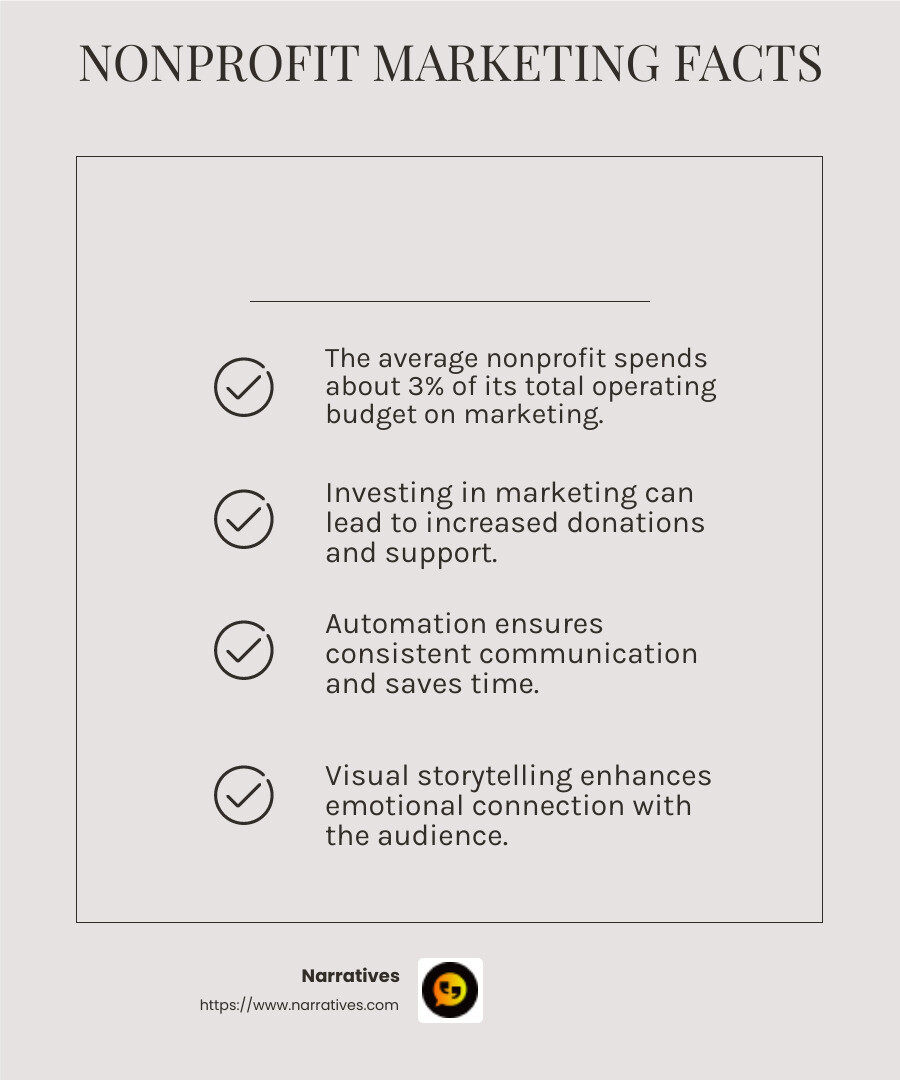
Automation saves time and ensures consistent communication. Set up automated emails for new subscribers, donation confirmations, and thank-yous. This keeps your audience engaged without overwhelming your team. Plus, it ensures no one feels forgotten or undervalued.
5. Content Strategy
A strong content strategy is essential. Diversify your content by using blog posts, videos, infographics, and more. This not only keeps your audience engaged but also improves your SEO. Share stories that align with your mission and values to build trust and authority. Content isn't just about information; it's about connection.
6. Budget Allocation
Allocate your budget wisely. The average nonprofit spends about 3% of its total operating budget on marketing. While it might be tempting to cut corners, investing in marketing can lead to increased donations and support. Prioritize spending on strategies that offer the best return on investment, like digital advertising and content creation.
By implementing these best practices, nonprofits can improve their digital marketing strategy, ensuring their message reaches the right people and inspires action. These practices are not just about following trends but about aligning with your mission and maximizing your impact.
Evaluating and Improving Your Nonprofit Digital Marketing Strategy
Once you've implemented your nonprofit digital marketing strategy, it's crucial to evaluate its effectiveness regularly. This involves looking at metrics, setting key performance indicators (KPIs), and monitoring performance. Let's break it down:
Metrics Matter
Metrics offer a snapshot of how well your strategy is performing. They tell you if your emails are being opened, if your social media posts are reaching the right people, and if your website is engaging visitors. Common metrics to track include:
- Email open and click-through rates: These show how engaging your email content is.
- Campaign conversion rate: This measures how many people take the desired action, like donating or signing up.
- Donor retention rate: This tells you how well you're keeping your current supporters engaged.
Using these metrics helps you identify what's working and what needs tweaking. For example, if your email open rates are low, you might need to test different subject lines or send times.
Setting KPIs
Key Performance Indicators (KPIs) are specific, measurable goals that align with your broader objectives. They help you focus on what's important and measure success. For instance, if one of your goals is to increase online donations by 10%, your KPI could be the actual percentage increase in donations over a set period.
KPIs should be SMART: Specific, Measurable, Achievable, Relevant, and Time-bound. This approach ensures your goals are clear and trackable, making it easier to adjust your strategy as needed.
Performance Monitoring
Regularly monitoring performance is essential for continuous improvement. Use tools like Google Analytics, social media insights, and email marketing software to gather data. These tools provide detailed reports on user behavior, engagement, and conversion rates.
- Google Analytics: Offers insights into website traffic, user behavior, and conversion paths.
- Social Media Insights: Platforms like Facebook and Instagram provide analytics on post reach, engagement, and audience demographics.
- Email Marketing Software: Tracks email performance, including open and click rates.
By consistently monitoring these metrics, you can make informed decisions. Did a recent blog post attract new subscribers? Did a social media campaign increase engagement? Use this data to refine your strategy.
Evaluating and improving your nonprofit digital marketing strategy is an ongoing process. It's about understanding what resonates with your audience and adapting to their needs.
Next, let's dive into some frequently asked questions about nonprofit digital marketing strategy.
Frequently Asked Questions about Nonprofit Digital Marketing Strategy
How can nonprofits leverage digital marketing effectively?
Nonprofits can harness digital marketing by focusing on storytelling, engaging content, and strategic outreach. Here are some key strategies:
Storytelling: Share compelling stories about your mission and impact. This builds emotional connections with your audience. For example, Defy Ventures uses storytelling to share how they help inmates become entrepreneurs, reducing recidivism.
Targeted Outreach: Use data to understand your audience's preferences and behaviors. This allows you to tailor your messaging and reach the right people. Tools like social media and email marketing platforms can help segment your audience effectively.
Cost-Effective Channels: Use low-cost digital channels like social media, email, and content marketing. These platforms allow you to reach a broad audience without a hefty budget. As noted in research, digital marketing often requires only about 3% of a nonprofit's operating budget.
What are the benefits of a strong digital strategy for nonprofits?
A well-crafted digital strategy offers numerous benefits:
Increased Reach: Digital marketing eliminates geographical barriers, allowing you to connect with supporters worldwide in seconds. This expanded reach can significantly boost your nonprofit's visibility.
Improved Donor Engagement: Engaging content and personalized communication can strengthen relationships with donors. This leads to better donor retention and increased support.
Improved Efficiency: Automating repetitive tasks and using data-driven tools can improve operational efficiency, freeing up resources to focus on your mission.
Better Data Management: Digital tools help collect and analyze data, providing insights into donor behaviors and campaign performance. This data empowers informed decision-making and strategy adjustments.
How do you measure the success of a nonprofit digital marketing strategy?
Success measurement involves tracking specific metrics and KPIs:
Key Metrics: Monitor email open rates, social media engagement, and website traffic. These metrics provide insights into how well your content is performing and resonating with your audience.
KPIs: Set SMART goals that align with your organization's objectives. For example, if your goal is to increase volunteer sign-ups by 20%, track the actual increase over a set timeframe.
Performance Tools: Use tools like Google Analytics for website data, social media insights for engagement metrics, and email marketing software for campaign performance. These tools offer detailed reports to guide your strategy refinement.
By focusing on these areas, nonprofits can effectively leverage digital marketing, enjoy its benefits, and measure success to ensure continuous improvement.
Next, we'll explore the conclusion and how Narratives uses digital storytelling to drive community engagement.
Conclusion
At Narratives, we believe in the power of digital storytelling to transform how nonprofits connect with their communities. Our mission is to lift underrepresented voices through high-quality, emotionally resonant video and multimedia content. This approach helps nonprofits share their impact stories in a way that inspires action, builds trust, and increases visibility.
Community-driven storytelling is at the heart of what we do. By focusing on the stories of those who benefit from nonprofit work, we help organizations create a deeper connection with their audience. This connection not only raises awareness but also encourages ongoing support and engagement.
Our strategy is simple: use storytelling to make complex issues relatable and human. By crafting narratives that resonate on an emotional level, we empower nonprofits to amplify their message and reach a wider audience. This approach aligns perfectly with the growing demand for content that is not only informative but also engaging and authentic.
We invite you to explore how our digital storytelling services can improve your nonprofit's outreach efforts. Find more about how we can help you share your impact stories by visiting our media page.
When digital presence is crucial, partnering with a dedicated storytelling expert like Narratives can be a game-changer for your nonprofit. Let's work together to create a more empathetic and connected world, one story at a time.


.avif)