Toolkit for Change: Crafting Nonprofit Stories That Resonate

Nonprofit storytelling toolkit is your gateway to turning mission-driven narratives into powerful catalysts for change. In social impact, it’s not just about data or financial reports—it's stories that touch hearts and drive action. Nonprofits know their work is vital, yet they often struggle to create compelling content that resonates beyond statistics.
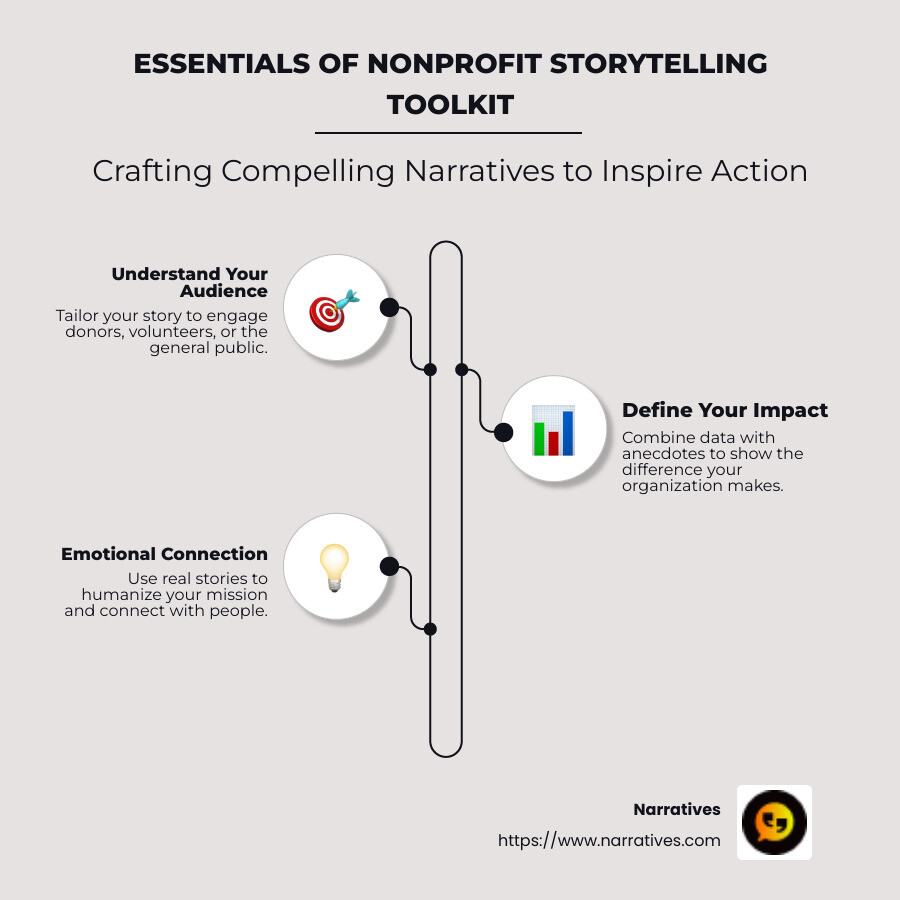
Here's a quick guide to the essentials of nonprofit storytelling toolkit:
Understand Your Audience: Know who you’re speaking to. Whether it's donors, volunteers, or the general public, tailor your story to engage and inspire them.
Define Your Impact: Combine data with personal anecdotes to show the difference your organization makes. This isn't just about what you do, but how lives are changed.
Emotional Connection: Use real stories to humanize your mission. People connect with people, not just causes.
Community-Driven Approach: Highlight stories that showcase the communities you help. Let them be the heroes of your narrative.
Nonprofit storytelling is about building a narrative that people can relate to and support. It’s about elevating voices and focusing on the collective journey toward a better world. We will dig into strategies and tools that will help you craft stories that not only inform but inspire and mobilize communities toward a common goal.
Key terms for Nonprofit storytelling toolkit:
- effective storytelling for nonprofits
- nonprofit storytelling workshop
- engaging community through storytelling
Understanding Nonprofit Storytelling
Nonprofit storytelling is more than just sharing facts. It's about creating a narrative that resonates and inspires action. Let's break down the key elements:
Impact Storytelling
Impact storytelling combines both anecdotal and quantitative evidence to showcase the changes your nonprofit brings about. It's not just about what you do, but how it transforms lives. For example, pairing a personal story of a community member with data on how many people your program has helped can create a powerful narrative that resonates with donors and stakeholders.
Ethical Storytelling
Ethical storytelling is crucial. It involves sharing stories in a way that respects the dignity and privacy of those involved. This means obtaining consent and ensuring that the stories told are accurate and respectful. Use tools like a Media Consent Form to document permissions and guide your storytelling process.
Trauma-Informed Practices
When working with individuals who have experienced trauma, it's important to be sensitive and avoid retraumatization. A trauma-informed approach ensures the well-being of storytellers, audiences, and your team. This could involve using guidelines like the Trauma-Informed Storytelling Toolkit which provides techniques for conducting interviews that prioritize emotional health and safety.
By understanding and implementing these elements, nonprofits can craft stories that not only inform but also inspire and engage their audience. This approach not only builds empathy but also mobilizes support for your cause.
Nonprofit Storytelling Toolkit Essentials
In nonprofit storytelling, having the right tools can make all the difference. A Nonprofit storytelling toolkit is designed to streamline the process, making it easier to collect, craft, and share compelling narratives.
Data and Imagery in Storytelling
Incorporating data and imagery into your storytelling can significantly boost engagement and impact. Data visualization helps translate complex information into easy-to-understand visuals. This makes it more accessible and engaging for your audience. For instance, using charts or infographics to depict your organization's impact can highlight key achievements at a glance.
Imagery, on the other hand, brings stories to life. Photos and videos can evoke emotions and connect viewers to the people and causes your nonprofit supports. They serve as a visual testimony to the change your organization is fostering. Consider using platforms like Tumblr to organize and store these valuable assets, ensuring they are readily available for your storytelling needs.
Tools for Story Collection
Collecting stories is often the most challenging part of nonprofit storytelling. But with the right tools, it becomes a manageable task. Here's how you can organize and streamline story collection:
Story Calendar: This tool helps you plan and organize your storytelling efforts. By mapping out important dates and deadlines, you can ensure that you have the right stories ready at the right time. It aligns your storytelling with your fundraising and communication calendar, ensuring consistency and strategic planning.
Google Forms: An evergreen tool for collecting stories from staff and volunteers. It's simple, accessible, and allows for easy submission of stories. This tool eliminates logistical barriers, making it straightforward for anyone in your organization to contribute stories at any time.
Trello: Use Trello to create a story bank. This project management tool is perfect for visualizing the status and progress of each story. It helps keep track of what stories are collected, in progress, or ready for use. Trello's flexibility allows you to customize your boards to fit your storytelling workflow.
By leveraging these tools, nonprofits can efficiently gather and organize stories, ensuring a steady stream of engaging content. This not only improves your storytelling but also strengthens your connection with your audience, driving further engagement and support for your cause.
Crafting Stories that Inspire Action
Trauma-Informed Storytelling Practices
Creating stories that truly resonate and inspire action requires more than just good writing. It's about building empathy, crafting narratives that connect emotionally, and ensuring the well-being of everyone involved—especially when dealing with sensitive topics.
Empathy Building
Empathy is the cornerstone of impactful storytelling. When your audience can relate to the experiences of others, they're more likely to engage and respond. But how do you build empathy effectively? Start by highlighting the human side of your stories. Share personal anecdotes, challenges, and triumphs. This approach not only makes your stories more relatable but also helps your audience see the real impact of their support.
Narrative Crafting
A well-crafted narrative is essential for emotional resonance. Focus on the core elements: character, conflict, goals, and change. Introduce a compelling character who faces a relatable conflict. Show their journey towards achieving a goal and how they change or grow as a result. This structure not only keeps your audience engaged but also clearly communicates the importance of your cause.
Safety and Retraumatization
When working with individuals who have experienced trauma, it's crucial to prioritize their safety and avoid retraumatization. The Trauma-Informed Storytelling Toolkit provides guidelines for conducting interviews and gathering stories with sensitivity. Techniques like Trauma-Informed Interview Guidelines help ensure that storytellers feel safe and respected throughout the process.
Storyteller Wellness
Maintaining the emotional health of storytellers is vital. Incorporate practices like Body Scan Meditation for Storyteller Wellness to support their well-being. This mindfulness practice helps storytellers manage stress and maintain emotional balance, allowing them to share their stories without feeling overwhelmed.
By integrating these trauma-informed practices into your storytelling approach, you not only create more powerful narratives but also foster a supportive environment for everyone involved. This commitment to empathy, safety, and wellness ensures that your stories not only inspire action but also uphold the dignity and respect of those whose stories you share.
This leads us to the next step: sharing and distributing your stories effectively across various platforms.
Sharing and Distributing Your Stories
Once you've crafted compelling stories, it's time to share them with the world. Leveraging multimedia content, video storytelling, and social media channels can amplify your message and reach a broader audience.
Multimedia Content
Incorporating multimedia elements like images, graphics, and audio can significantly improve your storytelling efforts. Multimedia content is not only more engaging but also helps convey complex messages in digestible formats. For instance, data visualization can transform statistics into compelling narratives, making your story more relatable and memorable.
Video Storytelling
Video is a powerful medium for storytelling. It combines visuals, sound, and narrative to create an immersive experience. According to research, our neural activity increases five times when listening to a story, making video an ideal tool for capturing attention and driving engagement. Consider creating short videos that highlight personal stories, showcase your organization's impact, or provide behind-the-scenes glimpses of your work. These videos can be shared on platforms like YouTube, Vimeo, or directly on your organization's website.
Social Media Channels
Social media is an indispensable tool for distributing your stories. Platforms like Facebook, Instagram, and Twitter allow you to reach diverse audiences and engage with them in real-time. Use these channels to share snippets of your stories, promote video content, and encourage interaction. By crafting posts that invite comments, shares, and discussions, you can foster a community around your cause and increase your reach.
When using social media, tailor your content to fit each platform's strengths. For example, Instagram is ideal for visual storytelling, while Twitter is great for concise, impactful messages. Also, consider using hashtags to increase visibility and connect with broader conversations related to your cause.
By effectively sharing and distributing your stories through multimedia content, video storytelling, and social media channels, you can maximize your nonprofit's impact and inspire action. These strategies ensure your stories reach the right audience, spark meaningful conversations, and ultimately drive change.
Frequently Asked Questions about Nonprofit Storytelling
How to create an unforgettable gala experience?
Creating an unforgettable gala experience involves more than just a fancy venue and good food. It's about crafting a narrative that resonates with your audience and aligns with your organization's mission. Here's how to do it:
Theme and Story Integration: Choose a theme that complements your organization's mission and weave it into every aspect of the event. For example, if your nonprofit supports education, use stories of students whose lives have been changed by your programs.
Engage Through Storytelling: Use live storytelling to connect emotionally with your audience. Invite beneficiaries or volunteers to share their personal experiences. This real-life connection can leave a lasting impression.
Multimedia Elements: Improve the storytelling with multimedia presentations. Use videos and slideshows to visually showcase your impact. This can help maintain audience engagement and make the stories more memorable.
Interactive Experiences: Create interactive stations or exhibits where attendees can engage with your work. This could be virtual reality experiences or hands-on demonstrations that bring your stories to life.
Call to Action: End the night with a strong call to action. Encourage attendees to support your cause, whether through donations, volunteering, or spreading the word.
By focusing on storytelling and engagement, you can create a gala experience that not only entertains but also inspires action.
Define impact storytelling in a social good context?
Impact storytelling in a social good context is about showcasing the transformative effects of your organization's work. It's not just about what you do but the difference you make. Here's how it's defined:
Narrative Statement: An impact story combines anecdotal and quantitative evidence to illustrate the changes brought about by your projects or programs. It includes activities, results, and the extent to which these can be attributed to your efforts.
Humanizing Data: While data is crucial, it should be presented in a way that is relatable and engaging. Use personal stories to humanize the data, as this can increase empathy and understanding among your audience.
Outcome-Focused: Impact storytelling focuses on outcomes—how participants are better off as a result of your work. This means going beyond outputs (what was done) and quality (how well it was done) to highlight real-world changes.
By defining impact storytelling in this way, nonprofits can effectively communicate their value and inspire support from donors and stakeholders.
What are some nonprofit storytelling examples?
Nonprofit storytelling can take many forms, each custom to different audiences and platforms. Here are a few examples:
Video Stories: Organizations like Defy Ventures use video to tell powerful stories of change. By highlighting personal journeys, they showcase the broader impact of their programs.
Photo Essays: A series of impactful images combined with narrative text can tell a compelling story. This format is ideal for platforms like Instagram, where visual content thrives.
First-Person Narratives: Sharing stories directly from those impacted by your work can be incredibly powerful. These narratives can be shared on blogs or newsletters to engage your audience emotionally.
Infographics: Changing complex data into visual stories can make your impact more accessible. Infographics can be shared across social media or included in reports to highlight key achievements.
By exploring these examples, nonprofits can find inspiration for their own storytelling efforts, ensuring they resonate and engage effectively with their audience.
Conclusion
As we wrap up our exploration of nonprofit storytelling, it's clear that Narratives is more than just a digital storytelling partner. We are committed to elevating underrepresented voices through high-quality, emotionally resonant content. Our approach is rooted in the belief that every story has the power to inspire action, build trust, and increase visibility for nonprofits.
Digital storytelling is a vital tool for nonprofits aiming to connect with their audience on a deeper level. By crafting stories that resonate, we help organizations showcase their impact in a way that is both engaging and memorable. This isn't just about telling stories; it's about creating a narrative that moves people and prompts them to get involved.
One of our core missions is to amplify the voices of those who are often unheard. By focusing on underrepresented voices, we provide a platform for individuals and communities to share their stories and experiences. This not only enriches the narrative landscape but also fosters a more inclusive and empathetic society.
At Narratives, we believe in the transformative power of storytelling. Whether through video, multimedia content, or other innovative formats, our goal is to help nonprofits tell their stories in a way that truly resonates. We invite you to learn more about how we can help your organization harness the power of storytelling to drive change and make a lasting impact.
Together, let's continue to share stories that matter and create a brighter future for all.


.avif)