Ethical Content Creation: Navigating the Moral Maze

Ethical content creation is all about creating and sharing content responsibly. At its core, it is the practice of aligning content with principles of morality—prioritizing transparency, trust-building, and ethical responsibility. Doing this effectively ensures that content respects individuals' rights and contributes positively to society.
- Transparency is about being open and honest in your content, from sourcing to sharing.
- Trust-building revolves around maintaining honesty and reliability, which are crucial for gaining audience loyalty.
- Ethical responsibility is your duty to create content that recognizes diversity and differences, encouraging inclusion.
With these principles in place, creators can inform, educate, and inspire their audiences, helping foster a more inclusive and honest dialogue across platforms. Let's explore what it means to create ethically sound content and why it’s vital in today's digital age.
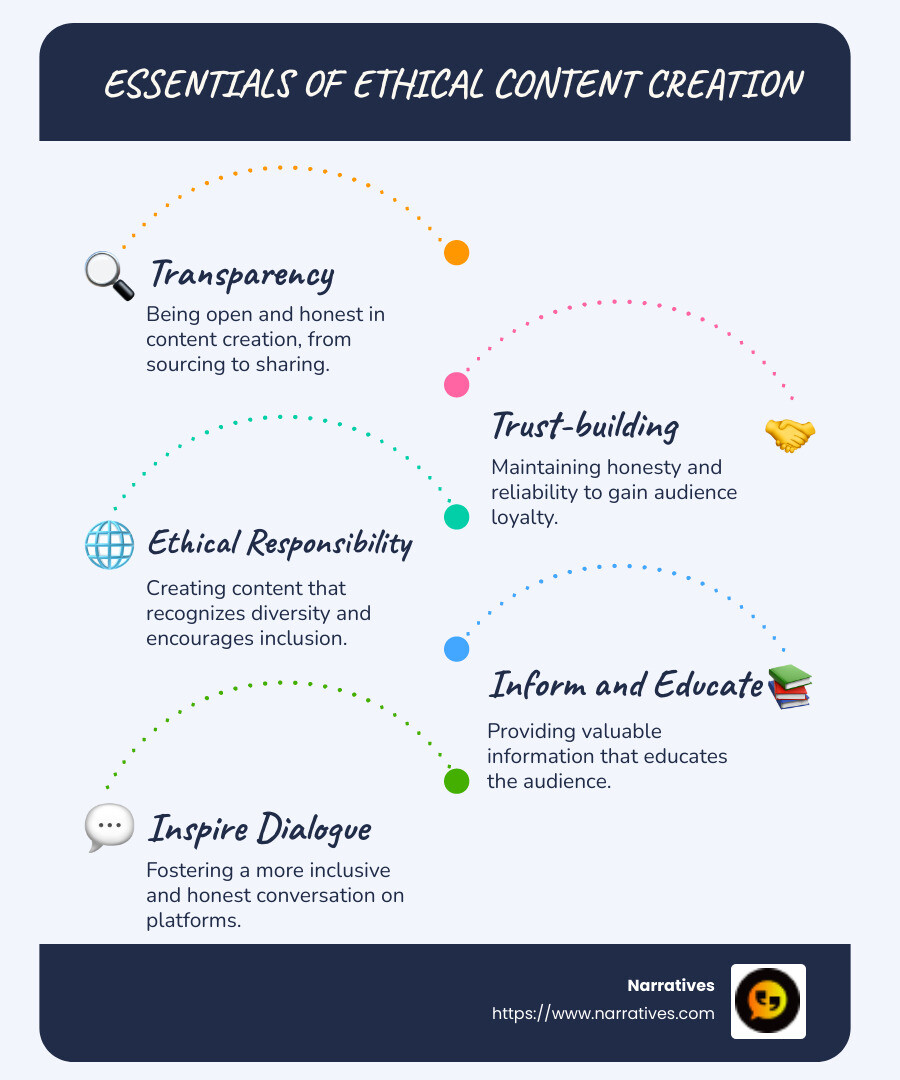
Ethical content creation word guide:
Understanding Ethical Content Creation
Ethical content creation is about more than just producing information—it's about doing so with honesty, transparency, and integrity. These core principles ensure that content not only informs but also respects and uplifts its audience.
Honesty
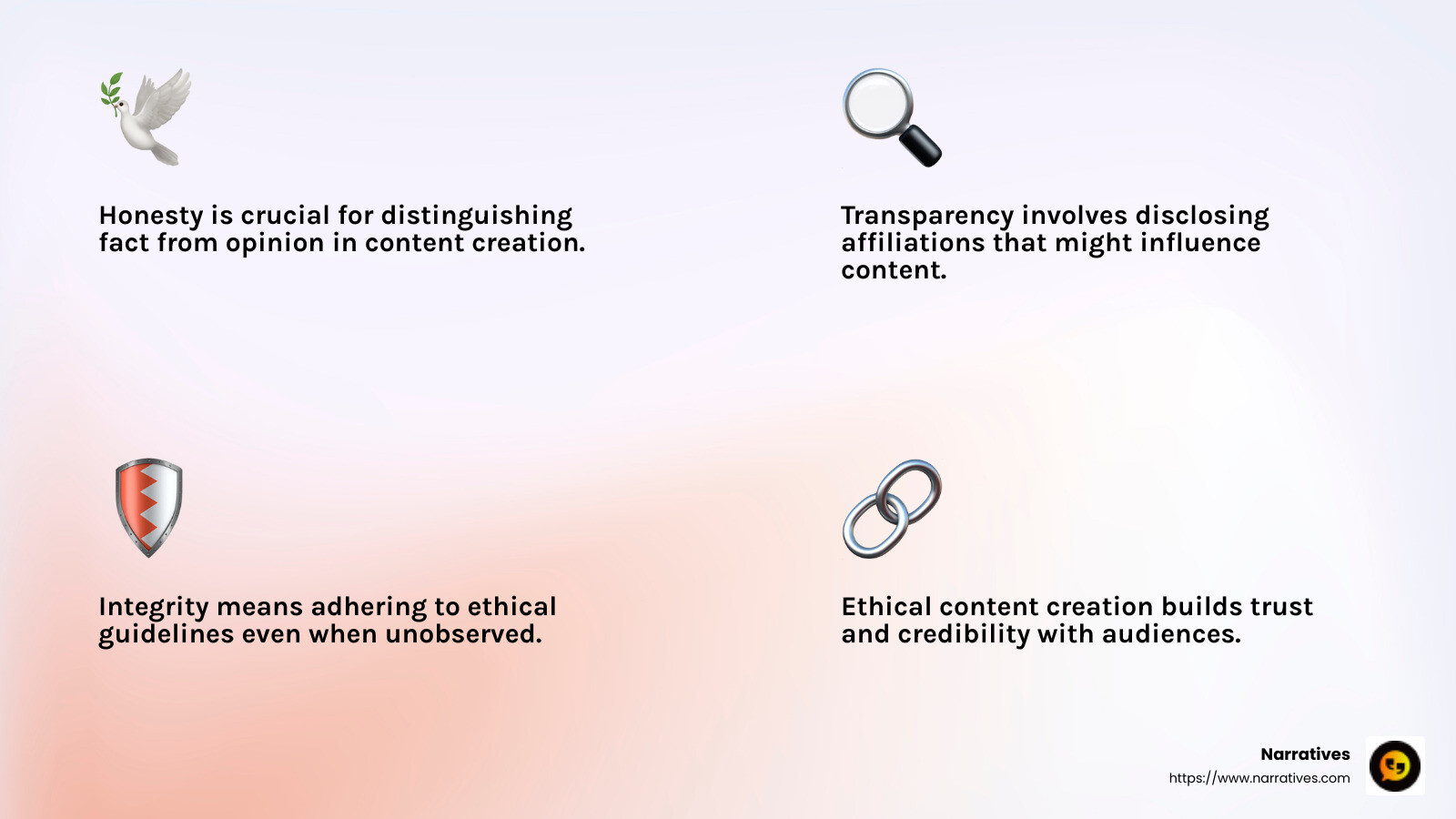
Honesty is the foundation of ethical content. It means presenting facts as they are and clearly distinguishing between fact and opinion. This is crucial because content often outlasts its immediate relevance, impacting future audiences. As the Blogger and Content Creator’s Code of Ethics states, "Present your opinion as your opinion. Never present opinion, interpretation or conjecture as fact."
Transparency
Transparency goes hand-in-hand with honesty. It's about being open about your sources, intentions, and any potential conflicts of interest. For example, always disclose any relationships or affiliations that might influence your content. This openness builds trust with your audience, as they know what biases might be present. As one executive noted, having a clear statement about data ethics on a corporate website can help maintain transparency and trust.
Integrity
Integrity is about sticking to your ethical guidelines no matter the situation. It involves making the right choices even when no one is watching. This means using ethical content creation tools and resources, like fact-checking tools, to ensure accuracy. It also means being critical of your own biases and striving to present content that is fair and balanced.
When creators prioritize these principles, they not only build credibility but also contribute to a more informed and ethical digital space. This approach not only benefits the audience but also fosters long-term sustainability for the creator.
The Importance of Ethical Content Creation
Creating content ethically is more than a moral choice—it's a strategic advantage that builds trust and credibility with your audience. When you prioritize transparency and honesty, people start to see your content as a reliable source of information. This trust isn't just a feel-good factor; it’s a foundation for long-term relationships.
Trust and Credibility
Trust is hard to earn and easy to lose. Ethical content creation helps you maintain your audience's trust by ensuring that the information you provide is accurate and well-researched. According to the Blogger and Content Creator’s Code of Ethics, "Always give credit where credit is due." This means attributing sources properly and being transparent about your content's origins. When people know they can rely on your content, they're more likely to return and even recommend it to others.
Positive Impact
Ethical content creation can have a positive impact on society. By promoting values like diversity and inclusion, you can help challenge stereotypes and advocate for marginalized communities. This kind of content doesn't just inform—it inspires change. For instance, the PhotoShelter Ethics Board focuses on artificial intelligence to guide ethical decision-making, prioritizing transparency and authenticity in their software and content. This approach not only protects the well-being of content consumers but also improves a brand's reputation.
Long-term Sustainability
Sustainability in content creation is about building a loyal audience over time. When you prioritize ethical practices, you cultivate relationships based on mutual respect and trust. This leads to increased audience retention and brand loyalty. Ethical content creators often find that their commitment to honesty and transparency leads to sustainable success. As noted in the research, "Ethical content creation often fosters long-term sustainability by building a loyal and engaged audience."
In summary, ethical content creation isn't just about doing the right thing. It's about building a foundation of trust, having a positive social impact, and ensuring the sustainability of your content strategy. This approach benefits everyone involved—from creators to consumers—by fostering an environment of respect and integrity.
Key Principles of Ethical Content Creation
When creating content, certain principles serve as the backbone of ethical practices. These principles ensure that the content not only informs but also respects and uplifts the audience. Let's explore the key elements: transparency, authenticity, and inclusivity.
Transparency
Transparency is about being open and honest with your audience. It involves clearly stating the sources of your information and any affiliations that may influence your content. According to the Blogger and Content Creator’s Code of Ethics, "State your allegiances to stay independent." This means disclosing any relationships, financial or otherwise, that might affect your objectivity. When readers know where your information comes from, they can trust it more.
- Source Disclosure: Always reveal your sources unless doing so could harm them. Transparency in sourcing builds credibility and allows others to verify the information.
- Intentions and Conflicts: Be upfront about your intentions and any conflicts of interest. This openness fosters trust and shows you have nothing to hide.
Authenticity
Authenticity means staying true to your brand's voice and values. It's about creating content that genuinely reflects who you are and what you stand for. Authentic content resonates more with audiences because it feels real and relatable.
- Genuine Voice: Use your unique voice to connect with your audience. Avoid trying to mimic others or present a false image.
- Honest Representation: Ensure that all content, from text to images, accurately represents the subject matter. This builds trust and strengthens your brand's identity.
Inclusivity
Inclusivity is about making sure your content speaks to and respects a diverse audience. It involves using language and imagery that are free from discrimination and stereotypes. This principle not only broadens your audience but also promotes a more equitable society.
- Diverse Perspectives: Incorporate different viewpoints and experiences in your content. This not only enriches the narrative but also makes it more relatable to a wider audience.
- Accessible Content: Design your content to be accessible to everyone, including those with disabilities. This commitment to inclusivity shows respect for all audience members.
By focusing on transparency, authenticity, and inclusivity, content creators can build trust and foster positive relationships with their audience. These principles not only improve the quality of the content but also contribute to a more ethical and responsible digital landscape.
As we explore how these principles apply to non-profit organizations, we'll see how ethical content creation can drive social impact and give voice to underrepresented communities.
Ethical Content Creation for Non-Profits
Non-profit organizations have a unique opportunity to harness the power of ethical content creation. By focusing on social impact, community-driven storytelling, and amplifying underrepresented voices, non-profits can foster meaningful connections and drive positive change.
Social Impact
Creating content with a social impact means producing materials that not only inform but also inspire action. Non-profits can use their platforms to highlight pressing issues and encourage audiences to get involved.
Awareness Campaigns: Develop campaigns that bring attention to critical social issues. For example, Pars Equality Center effectively showcases its initiatives to support Persian-speaking immigrants, highlighting the challenges they face and the solutions offered.
Call to Action: Encourage your audience to participate in initiatives, whether through volunteering, donating, or spreading the word. This engagement can lead to tangible changes in the community.
Community-Driven Storytelling
Non-profits thrive on stories that resonate with their communities. By involving the community in the storytelling process, organizations can create content that feels personal and genuine.
Collaborative Stories: Work with community members to share their experiences and insights. This approach not only enriches the narrative but also empowers individuals to have their voices heard.
Local Heroes: Highlight the efforts of local changemakers and volunteers. By showcasing their stories, non-profits can inspire others to take action and contribute to the cause.
Underrepresented Voices
Amplifying underrepresented voices is crucial for creating a more inclusive and equitable society. Non-profits can play a pivotal role in bringing these voices to the forefront.
Platform for All: Ensure that your content includes diverse perspectives, especially those from marginalized communities. This not only enriches the dialogue but also fosters a sense of belonging.
Authentic Representation: Use imagery and narratives that reflect the true diversity of the community. Avoid stereotypes and ensure that all voices are represented accurately and respectfully.
By embracing ethical content creation, non-profits can drive social impact, create powerful community-driven stories, and give a platform to underrepresented voices. This approach not only strengthens the organization's mission but also builds a more inclusive and empathetic digital landscape.
We'll address some common questions about ethical content creation and how it can be effectively implemented.
Frequently Asked Questions about Ethical Content Creation
What is the primary goal of ethical content creation?
The primary goal of ethical content creation is to ensure honesty and provide unbiased information to audiences. This means presenting facts accurately and clearly, without misleading or manipulating the audience. It’s about being transparent and maintaining integrity in all forms of content, whether it’s a blog post, a video, or a social media update.
Honesty is the cornerstone of ethical content. When content creators are truthful, they build trust and credibility with their audience. This trust is crucial for long-term relationships and positive engagement.
"Words and images are powerful weapons that should be used with the utmost care." - Blogger and Content Creator’s Code of Ethics
How can content creators ensure their content is ethical?
Content creators can ensure their content is ethical by following a few key guidelines:
Transparency: Always be open about the sources of your information and any potential biases. If you have a connection to the topic you’re discussing, disclose it to your audience.
Guidelines: Establish clear ethical guidelines for content creation. These should include principles like honesty, accuracy, and respect for all individuals.
Fact-Checking: Use reliable sources and tools to verify the information before sharing it. This helps in maintaining accuracy and preventing the spread of misinformation.
Inclusivity: Aim to include diverse perspectives in your content. This not only enriches the narrative but also ensures that no voices are left unheard.
By adhering to these practices, content creators can produce material that is both ethical and impactful.
What are some examples of ethical content creation?
Ethical content creation can take many forms, but here are a few examples:
Social Media Ethics: On platforms like Twitter and Instagram, being ethical means avoiding sensationalism and clickbait. Instead, focus on providing value and engaging with your audience in meaningful ways.
Unbiased Storytelling: Whether it’s a news article or a documentary, unbiased storytelling means presenting multiple perspectives and avoiding favoritism. It’s about letting the audience form their own opinions based on the facts.
Community Engagement: Engage with your audience by asking for feedback and encouraging open discussions. This not only improves the quality of your content but also builds a sense of community.
Ethical content creation is about more than just following rules; it’s about creating a digital space where everyone feels respected and informed. As we continue exploring this topic, we’ll see how these principles can be applied in different contexts and platforms.
Conclusion
As we wrap up our exploration of ethical content creation, it's clear that Narratives is at the forefront of this vital movement. Our mission is to lift underrepresented voices through digital storytelling, making us a trusted partner for non-profits and purpose-driven organizations. By focusing on high-quality, emotionally resonant video and multimedia content, we help these organizations share their impactful stories in ways that inspire action, build trust, and increase visibility.
Digital storytelling with Narratives is more than just a service; it's a commitment to ethical principles. We ensure every piece of content is crafted with honesty, transparency, and integrity. This approach not only improves the credibility of the stories we tell but also strengthens the connection between non-profits and their audiences.
Our partnerships with non-profits are built on a foundation of mutual respect and shared values. We understand the importance of social impact and community-driven storytelling. By working closely with our partners, we ensure that every story we tell is both authentic and impactful.
"The internet needs more empathy. It starts by humanizing the news." - Narratives
By prioritizing ethical content creation, Narratives is not only shaping the future of digital storytelling but also contributing to a more inclusive and responsible digital landscape. We invite you to learn more about our approach and how we can help your organization amplify its message through our ethical storytelling practices.
Learn more about how Narratives can support your storytelling needs.


.avif)